
Standard Bank faces complaint over alleged greenwashing and misleading advertising
Read more
IOL
iol.co.za

Standard Bank faces complaint over alleged greenwashing and misleading advertising

Standard Bank has been criticized and received nine allegations of greenwashing and misleading advertising because, it is claimed, the bank made unsubstantiated and factually distorted statements regarding its climate goals.

Climate activists filed a complaint with the Advertising Regulatory Board (ARB) against Standard Bank. The complaint concerns violations of the Code of Advertising Practice regarding honesty, substantiation, and environmental claims.

Standard Bank's Response to the ARB Complaint

The accusations relate to the bank's public communications, specifically the Standard Bank Group Report to Society 2025, the Climate Related Financial Disclosures Report 2025, and various investment advertisements on the corporate website. Proponents of the complaint argue that these materials constitute advertising aimed at shaping public opinion and promoting services.

It is alleged that the bank systematically and deceptively presents itself as an industry leader in sustainable development by using unfounded claims about its commitment to achieving net-zero financed emissions by 2050, expanding renewable energy financing, and reducing credit risk related to fossil fuels and thermal coal.

The complaint was filed by human rights lawyers on behalf of the coalition Fossil Free South Africa (FFSA) and StopEACOP on Wednesday. Gail Shimmel, Executive Director of the ARB, confirmed receipt of the complaint and stated that the regulatory body will conduct an assessment to determine its validity.

Ross Lindstrom, a representative for Standard Bank, stated that the bank is aware of the reports concerning the ARB complaint and emphasized that the lender takes any such claims seriously. Lindstrom added that despite a firm commitment to supporting Africa's transition to a low-carbon economy and meeting stated sustainability goals, he does not believe that supporting renewable energy and sustainable finance is incompatible with responsibly supporting Africa's broader needs for energy and economic development within the Just Transition.

Lindstrom noted: 'Our approach recognizes that Africa's decarbonization path must be inclusive, balanced, and account for the realities of the continent's development needs. We are one of the leading financiers of renewable energy and sustainable infrastructure in Africa and continue to increase support for projects that contribute to the continent's transition to a more sustainable future.' He also clarified that 'all financing decisions are subject to rigorous governance processes and comprehensive environmental, social, and governance assessments. When assessing projects, we apply recognized international frameworks and standards and consider a range of factors, including environmental impact, social aspects, human rights, governance requirements, and economic development goals. Our approach is further guided by our publicly available Climate Policy.'

Activists Link Greenwashing Claims to EACOP

Activists argued that Standard Bank's environmental claims are misleading and untrue due to its operational financing of the East African Crude Oil Pipeline (EACOP). This project is a massive cross-border hot pipeline spanning 1,443 kilometers, running from Uganda to Tanzania, which will compel both governments to engage in heavy oil extraction for nearly three decades to recoup capital costs.

It is projected that at peak production, the project will emit up to 34 million tonnes of carbon dioxide equivalent (CO2e) annually, totaling 379 million tonnes over its 25-year lifespan. Furthermore, the pipeline route passes through vital freshwater systems, 158 Ugandan wetlands, eleven rivers, and 44 protected ecological zones.

The complaint pointed out that by using images of clean energy and hyperbole while simultaneously financing a major fossil fuel project, the bank allegedly violates the ARB Code, which strictly requires that environmental marketing be truthful, fully substantiated, and transparent, without concealing critical contradictions.

It was also asserted that the bank violated numerous provisions of Section II of the ARB Code, which mandates that advertising be prepared honestly and responsibly, without exploiting consumer trust. The complaint further alleged that Standard Bank breached Appendix G of the ARB Code, which establishes a Special Standard for Environmental Claims, requiring all direct or indirect environmental representations, including corporate goals, declarations, and visuals, to be accurate, highly specific, properly qualified, and entirely free of vague or incomplete commentary.

Activists added that the bank's advertising also violated appendix rules because its statements and imagery contain direct and indirect environmental claims about its financial services that are vague, exaggerated, incomplete, or unqualified. They stated that the advertising could mislead consumers and abuse public trust by failing to provide justification, omitting key details of the bank's involvement in oil, gas, and infrastructure development, and presenting ambitious goals without realistic plans. Activists concluded that the complaint aims to force Standard Bank to confirm or withdraw its climate statements, provide evidence of its response regarding EACOP, and face penalties for violating the Code. They stressed that the bank's environmental advertising constitutes greenwashing because it exaggerates its leadership in sustainable finance while concealing significant facts about its current fossil fuel financing, thereby creating a misleading impression that violates advertising codes.

Similar stories

Regulator fines FNB R1 million for violating POPIA personal information protection law
Read more
techcentral.co.za

Regulator fines FNB R1 million for violating POPIA personal information protection law

The regulator imposed a fine of one million rand on First National Bank (FNB) after discovering that a incorrectly configured function in the FNB application allowed 696 customers to view mortgage applications belonging to 88 other individuals. Furthermore, the bank failed to rectify this error despite two reports from customers.

The fine relates to a violation of Section 105 of the Protection of Personal Information Act (POPIA), which governs the improper handling of bank account numbers. In this case, the account numbers of nine of the 88 affected individuals were disclosed. The regulator announced the fine on October 27; on the same day, a fine of R500,000 was announced for the Central Johannesburg TVET College.

Details of Access Violation

According to the enforcement notice, signed by the regulator's chairperson Pansi Tlakululi and dated October 21, some account holders were mistakenly classified as FNB employees. This granted them access within the banking application to a list of names and identification numbers of individuals with incomplete mortgage applications. Clicking on a name opened the full application, containing contact details, physical address, income and salary information, and in some cases, account numbers.

The customer first notified FNB about the possibility of viewing other customers' applications on March 30, 2022. A second customer reported the same issue on May 3, 2022. In both instances, the regulator found that FNB had revoked the individual's access but treated the report as an isolated incident rather than a personal data compromise, and did not notify the regulator. The regulator only intervened after receiving a complaint in September 2022.

In the notice, the regulator stated: "FNB failed to remedy this personal information privacy vulnerability even after two warnings from two parties who knew they should not have accessed such personal data." It characterized FNB's handling of these incidents as "negligent" and questioned how long the information would have remained exposed if the regulator had not intervened.

Consequences of Data Leak

The regulator noted that the disclosed information exposes affected customers to risks of identity theft, SIM card fraud, and attempts to bypass 'know your customer' bank checks. The risk was compounded by the fact that data from credit bureaus from previous leaks in Experian and TransUnion were already circulating online, which criminals could combine with FNB data to create more complete victim profiles.

The notice extends beyond the application leak. The regulator also found that FNB could not legally justify collecting personal information from newspapers based on the section of POPIA it relied upon. The bank collects such information primarily for vetting politically exposed persons—individuals holding prominent public offices whom banks are required to vet more thoroughly under anti-money laundering rules. The regulator ruled that a newspaper is not a 'public register' as defined by the law. FNB must now document whether any other lawful basis permits the collection of such data and cease collection if no such basis exists.

FNB's record retention schedule also allowed for the indefinite storage of certain personal data, including cancelled employee tax certificates and securities registers, without specifying a legal basis. The bank is obliged to appoint a records management company to destroy such documents and provide the regulator with a certificate of destruction.

Additionally, the regulator ordered FNB to amend its privacy notice because it relies on bases such as 'legitimate interest' for sharing customer information, which are not valid exceptions for further processing under POPIA, and fails to list all customer rights under the law. FNB must provide the regulator with proof of compliance within 90 days and has 30 days to appeal the enforcement notice.

Hangi Mbedzi, the regulator's acting senior manager for POPIA, told SABC News that the fines reflect the seriousness of the violations and the risks they pose to affected individuals. TechCentral contacted FNB for comment, including information on the bank's intention to appeal the enforcement notice.

eThekwini Residents Report Sharp Increase in Bills and Disconnection Threats After Smart Meter Implementation
Read more
iol.co.za

eThekwini Residents Report Sharp Increase in Bills and Disconnection Threats After Smart Meter Implementation

Residents and community associations in the eThekwini municipality are expressing serious concern over widespread billing errors, significant balance increases, and threats of illegal service disconnection following the launch of the smart water meter installation program.

The smart water metering program aims to replace outdated traditional meters with modern technology to reduce water losses, improve consumption control, enhance billing accuracy, and ensure fair distribution of Free Basic Water.

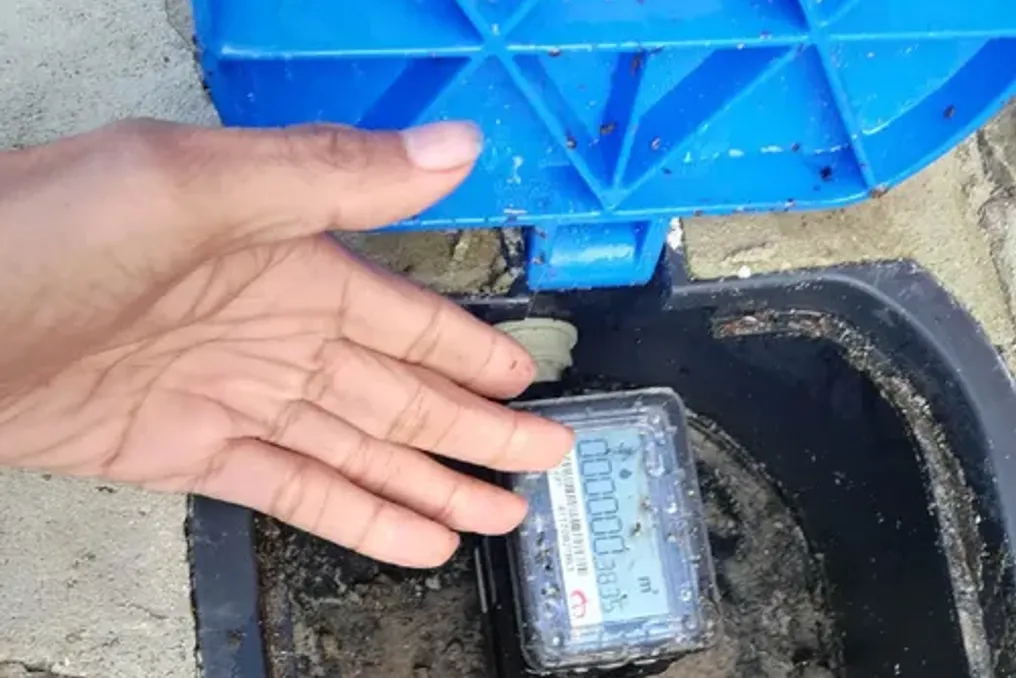
A resident of eManzimtoti and chairman of the legislative body's permanent oversight committee, Lawrence de Clercq, reported a sharp increase in his bill after the municipality replaced his meter with a smart one that showed a constant zero reading. His usual monthly bill was around 2000 rand. After not receiving his April bill, he contacted the administration and learned that he allegedly owed 65,000 rand.

A plumber inspected the property and found a minor leak, which de Clercq said could not explain such an increase. He noted that the new meter was not recording consumption, while charges continued to be based on estimates. De Clercq raised this issue with the Sizakala Customer Service Centre in eManzimtoti and received a promise that the bill would be suspended, the meter replaced, and incorrect charges annulled. However, these assurances were not kept.

“Then suddenly, a week or two ago, I received a notification that they were going to disconnect the water,” de Clercq recounted. He visited the municipal head office in Durban, where officials again promised to suspend the bill. Shortly after, his son called and reported that a municipal employee was at the property intending to cut off the electricity.

De Clercq explained that the water and electricity departments were not coordinating their actions: although the water bill was suspended, there was no such prohibition for electricity, so employees came to disconnect it. Nevertheless, they were unable to disconnect services to de Clercq. He added, “Even though they put it on hold, nothing happens. It just continues; every month it gets higher.”

Yogesh Naidu, Chairman of the Reservoir Hills Payers Association, stated that he is aware of numerous cases where payers have faced erroneous billing, inflated expenses, or disconnection threats after the installation of smart meters. Naidu emphasized that reports are coming not only from eManzimtoti but also from other electoral wards, indicating that this is not an isolated incident but a systemic failure in both meter calibration and municipal management.

He stated that the implementation of smart meters in eThekwini is marred by technical defects, questionable installation methods, and administrative failures, leading to inflated bills and unjustified disconnections. Naidu questioned the quality of the meters and the standards applied to the contractors installing them. The association has helped residents file formal objections, request adjustments to anomalous bills, and pay for average consumption while investigations are underway.

He reported that some issues were resolved through interaction with the eThekwini Revenue Management unit, but maintained that residents remain vulnerable to disconnection while valid disputes are pending review.

Ish Praladh, President of the eThekwini Payers and Residents Association, noted that payers are facing 'absurd' billing. He advised residents to send meter readings and photos to the municipality, and to carry a copy of the dispute form. If a disconnection team arrives at home, they should present this dispute form.

An eThekwini municipality representative, Senzelwe Mzila, confirmed that the smart meter program is aimed at improving billing accuracy and reducing water losses. Mzila explained that if a faulty meter or irregular reading is detected, the meter is checked, repaired, or replaced. If the error is confirmed, the bill is adjusted according to actual or average consumption, and corresponding charges are corrected.

He also stated that credit control measures should not be applied to amounts that are being disputed within a properly filed dispute. Customers must continue to pay the non-disputed portion or their average consumption until the dispute is resolved. Mzila concluded that the City continues to strengthen coordination between its revenue management and service delivery units so that disputed bills are correctly flagged, and urged customers with billing or metering questions to visit the nearest Sizakala Customer Service Centre.

Popular