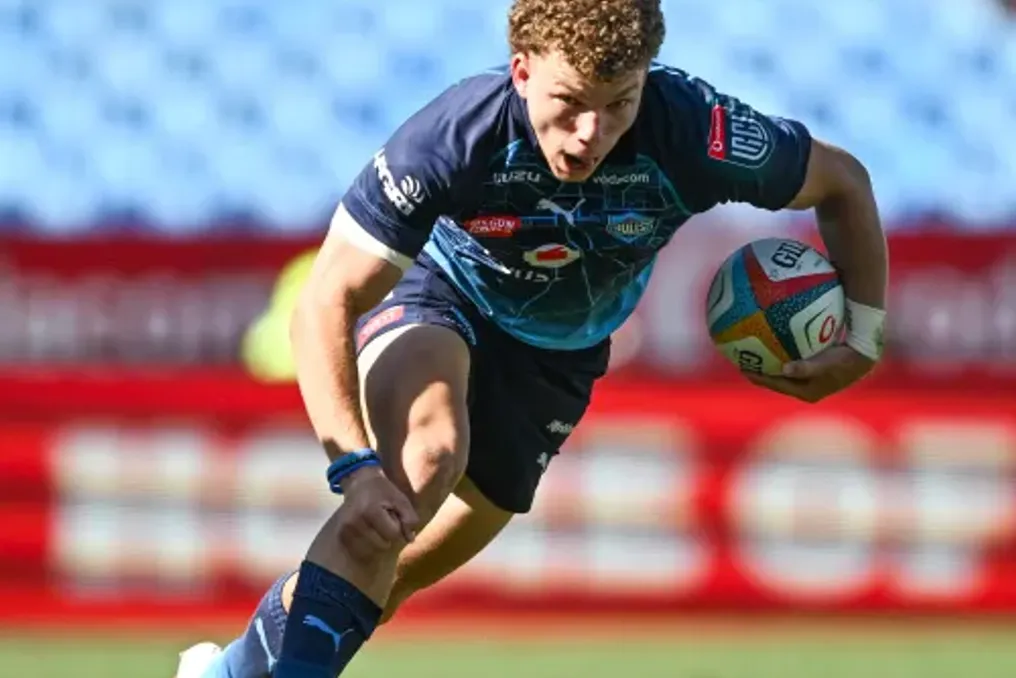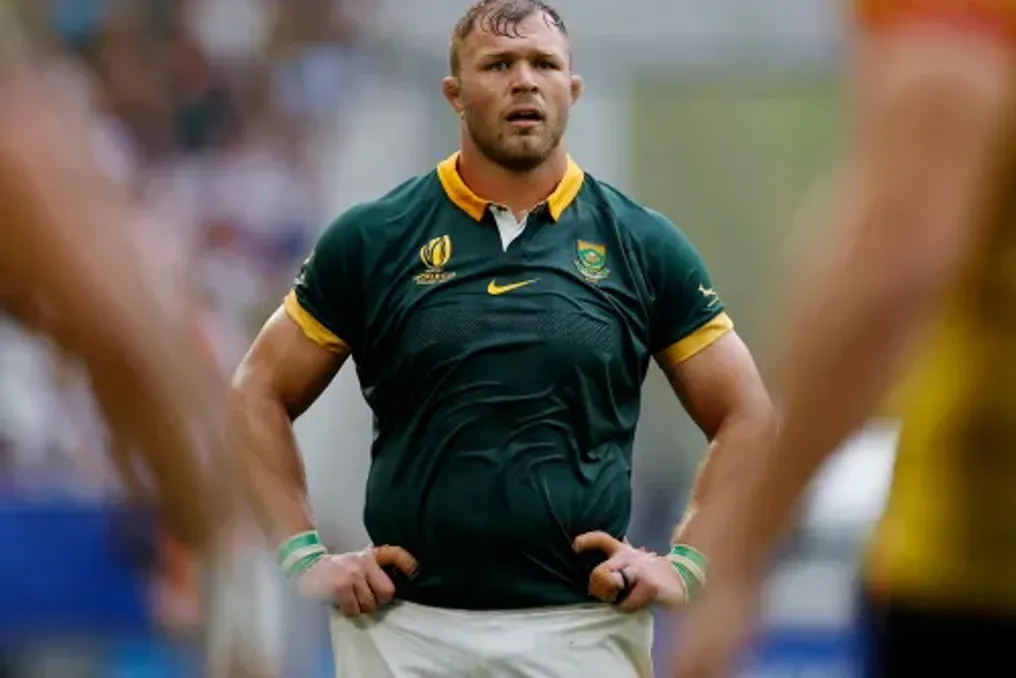
Duane Vermeilain: The Story of the South African National Team Player Who Differs from Henry Pollock
Read more
IOL
iol.co.za

Duane Vermeilain: The Story of the South African National Team Player Who Differs from Henry Pollock

Henry Pollock's recent clash with disappointed opponents from Leicester during halftime reminded the author of Duane Vermeilain's playful suggestion earlier this year to return from retirement for five minutes to play against a young England player in July.

This incident also brought back memories of an interview with Vermeilain conducted several years ago, which confirmed that these two men are fundamentally different. Vermeilain obviously did not have privileges at birth.

Vermeilain started playing rugby at the age of seven. He did so barefoot in the middle of winter snow in De-Duursend, in the heart of the Western Cape's wine region. At the time, Duane had recently moved to the cold Cape from his hometown of Nelspruit, one of the warmest regions in the country. Being significantly younger than the other players, his small feet trembled during the break. He wanted to come out, but instead, he rubbed his soles with 'Deep Heat' and continued playing.

This was just the beginning for a player who grew into a powerful South African national team fighter. He was nicknamed Thor, The Rock, and Great Duane. It was also at the age of seven that he lost his father to illness and was forced to take responsibility for his family.

Vermeilain recalls: 'When my father died, my mother had a hard time. She worked two jobs to support us. She left early in the morning, and I had to help my sister. I did her hair. She went to school with strange buns, but we managed.' He continues: 'My father played club rugby and played for Boland. I remember how much he loved rugby, and when he died, I decided to go as far as possible in this sport to please him. I knew he was watching from above. I also wanted to make my mother proud.'

This little boy from De-Duursend eventually became one of the most formidable players for the South African national team. However, even by his standards, his return to international rugby at the 2015 World Cup was outstanding. The famous match where Japan beat the 'Boks' in their first game led coach Heineke Meier to say that if there was anything he would change, it would be Vermeilain's selection for that game.

The recipient of the 2014 'South African Player of the Year' award did not play that year after a serious neck injury while playing for the Stormers in Super Rugby. His cervical vertebrae were connected in a hospital in Durban, followed by three months of careful recovery before the World Cup. Despite expectations of an easy victory over the 'Brave Blossoms', he was not included in the squad. To give him another week of recovery, Meier selected Peter-Steph du Toit at flanker on the blind side, Shalqe Burger was moved to number 8, and Francois Roux completed the trio of reserves. Japan's fast play exposed the imbalance in this trio.

Meier condemned his mistake and fielded Vermeilain the following week against tough men at Villa Park in Birmingham. He played all 84 minutes in a 46-6 defeat to the physically strongest team in the world. It was a match worthy of the 'Man of the Match' award in his first rugby after almost a broken neck. The 'Boks' also presented a private award—a hunting knife—to the player who, in their opinion, demonstrated the greatest presence in defense. Vermeilain won this award too.

During Meier's coaching tenure, Vermeilain won so many such knives that Shalqe Burger once joked that Vermeilain could open a gun shop.

After the match against Samoa, Vermeilain noted: 'I wanted to be thrown into deep water. I told the coach about it. I don't want to do trifles on the bench. I knew Samoa would bring out the best in me because I thrive in confrontation. There is an Afrikaans word I like, it's called 'vasbyt'—I can't translate it, but it's something like 'perseverance'. '

Vermeilain possesses an infectious fighting spirit. He becomes the rallying point when things get tough, and his way of breaking through the gain line with the ball in hand and diving into tackles with reckless courage is incredibly inspiring.

When the 'Boks' beat England in the 2019 World Cup final, Vermeilain received the 'Man of the Match' award. In the weeks following the 32-12 victory, Vermeilain shared wonderful thoughts on how the World Cup was won. In his book 'Stronger Together,' he wrote: 'In our squad of 33 players, perhaps four grew up in a 'normal' family environment, without experiencing daily hardships. For the vast majority, this was not reality. Whether in childhood or adulthood, we experienced the kind of trauma that distorts and shapes every cell of ours. Some lost a parent or sibling. Some had no one. Many were forced to become a father figure in a family that depended on them, even if they weren't ready for it.' He added: 'And yet, despite their difficulties, they had the discipline and dedication to succeed in a team environment that rewarded them with the Webb Ellis Cup.'

Vermeilain noted that the players understood that they were united by factors beyond rugby skills. 'I will only confidently go into battle with people who have nothing to lose,' Vermeilain stated. 'These are people who pour their soul into the fight, who tell fate to hell—I am the master of my destiny. When Rasile selects the team, he selects character, or what he calls the 'warrior gene'.' He explained that 'he selects players with a 'never give up' attitude, for whom the struggle for survival and redemption was the default setting from an early age. A coach can teach you to pass and kick the ball, but the warrior gene cannot be instilled in someone who doesn't have it. And this character, this golden thread, ran through our entire squad.'

Vermeilain explains that when Rasile took over as coach in 2018, he was dissatisfied that the players spoke too easily about playing to inspire struggling South Africans. Rasile told the players that they had to earn the right to do so by becoming a winning team. 'South Africa won the World Cup thanks to a squad of men who understood what it meant to fight for something they believed in. This fight was to become the best team in the world. Only then would we have the right to inspire others. We were asked to step out of the spotlight and into the shadow, where champions are separated from mere contenders. And we did it.'

For Vermeilain, the warrior gene did not appear automatically upon putting on the South African national team jersey; he forged it long before he put it on.

This column is based on a chapter from Mike Greenaway's bestseller 'The Fireside Springbok.'
Similar stories

Petersen fulfills childhood dream by becoming Sharks team manager
Read more
iol.co.za

Petersen fulfills childhood dream by becoming Sharks team manager

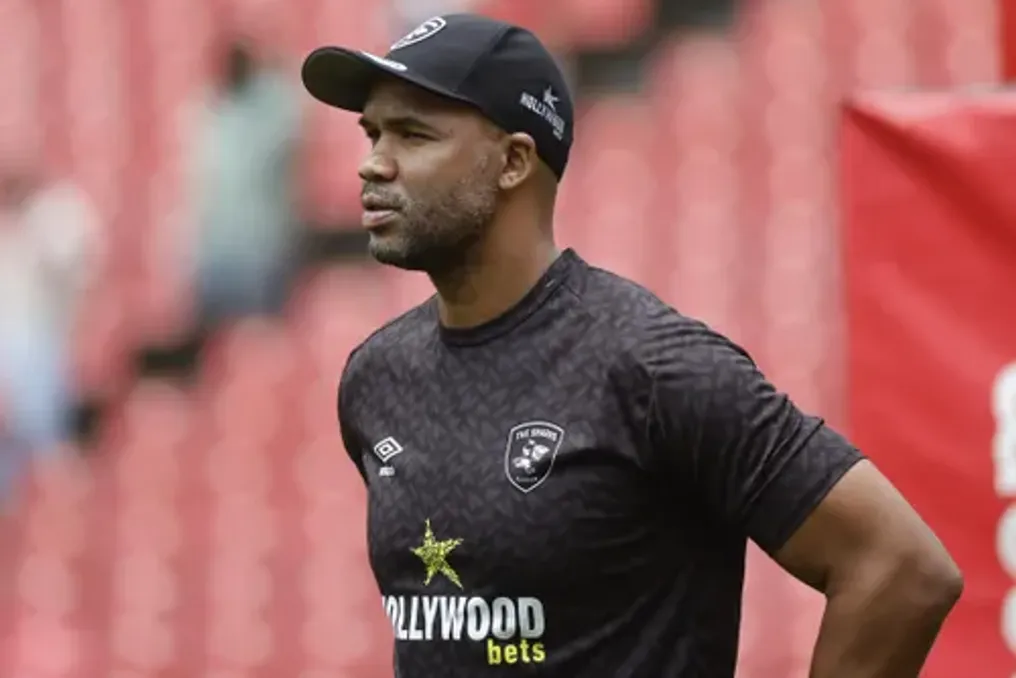
JP Pietersen, who dreamed of playing for the Sharks team as a child, is now doing something he could barely imagine as an eight-year-old boy after more than three decades: he is coaching the club he loved his entire life. And he is achieving significant success.

In the current season, the Sharks have won four out of five matches, defeating Ospreys, Leinster, and Cardiff in the URC, and have also started strongly in the Challenge Cup with an away victory over Lyon. The next difficult match is scheduled against Munster at Thomond Park stadium on Saturday, but Pietersen already sees signs that the fighting spirit and pride he aims to restore at Kings Park are beginning to show.

For 40-year-old Pietersen, this job goes beyond simply managing a rugby team; it has deep personal meaning. He recalls: 'I remember meeting Andre Joubert and Henry Honeyball when I was eight or nine years old. I was absolutely thrilled. Just being near them was unreal. That's when I first fell in love with the Sharks. Growing up, I was a Shark from day one. I liked their style of play.'

His dream led him through the gates of Kings Park after school in 2005. Even then, just being among the players he once idolized was almost overwhelming. His first appearance for the Sharks was against Boland in the Currie Cup. He laughs recalling: 'I walked onto the field, and people probably thought I was just a ball boy. I went into the dressing room and couldn't speak; I was so nervous. But then I came alive and scored two touchdowns. It was special.'

A year later, Pietersen played in green and gold, debuting for the Springboks against New Zealand. This was followed by a brilliant career, including three Rugby World Cups, 24 test touchdowns, appearances in Japan, England, and France, and 197 matches for his beloved Sharks. He notes: 'I am forever grateful for how the Sharks shaped me into the best person I am today. Summarizing the Sharks, this brand and organization gave me everything. The Sharks allowed me to travel the world and make friends abroad. This strengthened my resilience and positively impacted my life. I created many memories on the field, and it's time for us to create new ones.'

After retiring in 2021, Pietersen immediately moved into coaching, first working in the Sharks' youth structures, and then leading the Currie Cup team. In 2024, he led them to a domestic title, beating the Lions at Ellis Park. After John Plamtree's departure, he was appointed interim head coach of the Sharks last December and received a permanent appointment in February.

He draws on extensive experience gained under some of the most influential rugby coaches. He says his coaching style is a 'cross-pollination of influences.' He learned from Dick Muir the importance of building confidence and giving players freedom to make decisions. Plamtree, in turn, taught him the value of attacking ambition and the intolerance of complacency in a winning team. Jake White's analytical approach and unwavering belief in the game plan also left an indelible mark. Pietersen recalls White telling the players in Twickenham in 2006, after beating England, that they would win the World Cup the following year. 'I learned from Jake to be confident in our plan and see it through.'

He also learned lessons from other Springboks coaches. Pieter de Villiers showed him how to relieve pressure on players, and Heineke Maier impressed him with his focus on people and the contribution of individuals to the collective. Perhaps the most interesting coaching lesson came during two seasons in Japan under Robbie Deans, former Crusaders coach. 'I learned a lot from Robbie about analyzing individuals. He insisted on not becoming too emotional before a game, but being more technical and confident in the game plan. As a player, you are your own coach because you must analyze your opponent.'

These lessons are now part of Pietersen's own methods as he tries to bring the Sharks back to the qualities that made them such a formidable force. 'I wanted to bring back the fight and pride in the jersey, but not with words, but with actions. I want fans to see us fighting for 80 minutes. The Sharks have always been a team that never gives up. We always find a way to participate in the game or win it.' A satisfying example of this philosophy was the 36-21 victory over Cardiff at Arms Park. Losing 21-17 at the hour mark and battling the wind, the Sharks scored three touchdowns in the final quarter, securing five valuable points.

'It just shows the character and belief of the group,' says Pietersen. 'When we were under pressure, playing against the wind, the old Sharks could easily lose 50-17. But we held on despite the injuries sustained. A great thing about this team, the Sharks warriors, is that they found a way to cope with this and bond.'

Pietersen is satisfied with the progress but knows that the away match against Munster will be another serious test. 'We were delighted to get five points in Cardiff. But we are also keeping our feet on the ground, knowing that we have a huge match against Munster in Limerick.'

His sporting philosophy is simple and based on determination, which led him from a dreamer-schoolboy to a Springboks star, and now to head coach. 'I always say that the impossible does not exist. I wasn't the most talented guy, but I believe that with hard work and a big dream, anything can be achieved. Dream, work hard, be disciplined, be brave, and show yourself. We worry so much about what might go wrong that sometimes we forget what awaits us.'

Rassie selected the Springboks squad for the National Team World Cup
Read more
iol.co.za

Rassie selected the Springboks squad for the National Team World Cup

The announcement of the Springboks squad always brings both joy and disappointment. The 37-player squad prepared by Rassie Erasmus for the European National Team World Cup in November was no exception. Analysts are examining these changes as both winners and those who ended up on the losing list.

Winners

Earlier this year, Blitzbok fans wondered where coach Philip Snyman found his new standout player whose surname commentators struggled to pronounce. This player from Ceres in the Western Cape was a member of the Sharks junior team, and thanks to his excellent play in the sevens, JP Petersen promoted this fullback/flyhalf into the senior team's starting lineup at the end of the last URC season. Young athletes either succeed or fail at this level, and Giliomee was one who succeeded.

Zek Siyaya

Similar to Giliomee, Siyaya played in the Sharks starting lineup at the end of the last URC when coach JP Petersen had nothing but the opportunity to gain a lot of new for the new season by trying young players. At only 18 years old, Siyaya instantly became a sensation, revealing his potential and versatility by playing fullback, flyhalf, and winger. Sharks fans were disappointed when Giliomee moved to the Bulls in early October, but Siyaya's performances as a match-day fullback compensated for that loss.

Marco Jansen engaged in a verbal spat with Matt Renshaw during the South Africa vs Australia match
Read more
www.aajtak.in

Marco Jansen engaged in a verbal spat with Matt Renshaw during the South Africa vs Australia match

During the second match of the test series between Australia and South Africa, tension peaked on the fourth day of play (October 21) at Saint George Park in Hickeborough. South African fast bowler Marco Jansen exchanged words and looked at Matt Renshaw after dismissing him.

The exact content of their conversation could not be determined. This incident occurred in the 30th over of Australia's first innings. Marco Jansen bowled a short ball close to the wicket on the fourth delivery of that over, which Renshaw attempted to defend. The ball touched the outside edge of the bat and flew towards the gully, where Simon Harmer made a brilliant forward dive catch.

Simon Harmer once again demonstrated outstanding fielding. Despite the ball being quite low, he managed to safely catch it with both hands while leaning forward. This dismissal gave South Africa a significant advantage. Matt Renshaw had previously played a crucial role in Australia's victory in the Durban match, making his dismissal critical for South Africa. Jansen's bowling and Harmer's excellent catch allowed the home team to put pressure on the opposition.

The home team, South Africa, declared its first innings at 425/9. South African captain Temba Bavuma scored an impressive 179 runs. Additionally, Marco Jansen contributed 85 runs, and Simon Harmer scored 82 runs. From Australia's side, Scott Boland took five wickets. In response, the Australian team managed only 99 runs in their first innings, giving South Africa a massive lead of 326 runs. Marco Jansen showed powerful bowling, taking five wickets. Subsequently, Australia, batting in the follow-on, scored 156 runs, losing 4 wickets. The fifth day of the match will now be extremely important.

Popular