
How to make a natural cockroach spray from three household ingredients
Read more
Aaj Tak
www.aajtak.in

How to make a natural cockroach spray from three household ingredients

The appearance of cockroaches in the kitchen, under the sink, in the bathroom, or in dark corners is a common problem; however, they can spread various diseases and dirt. Expensive market sprays and cleaning agents with chemical components are often harmful to health and come with a strong odor.

It is possible to prepare a powerful and natural spray to eliminate cockroaches using just three simple ingredients found at home, which will help get rid of the insects immediately.

To create the spray, the following components are needed: boric acid powder—two tablespoons (it is considered the most effective agent for exterminating cockroaches); white vinegar—half a cup (for cleaning and eliminating odors); dish soap or liquid soap—one tablespoon (so that the solution adheres and blocks the cockroaches' breathing); water—from one to one and a half cups.

First, pour one to one and a half cups of water into a spray bottle. Then, add half a cup of white vinegar and one tablespoon of dish soap to this water, mixing the mixture thoroughly. After that, pour two tablespoons of boric acid powder into the resulting liquid. Close the bottle tightly and mix well so that the boric acid completely dissolves in the water. This results in a ready-made, natural, and effective cockroach spray.

The spray should be sprayed in places where there is suspicion of cockroaches or their eggs, such as under the sink, behind the stove, under the refrigerator, near the trash can, in the corners of the bathroom, and other dark places. When spraying, be sure to wear gloves and keep children and pets away from the treated area. Since boric acid can be dangerous to health, it must be stored away from food and beverages.

Similar stories

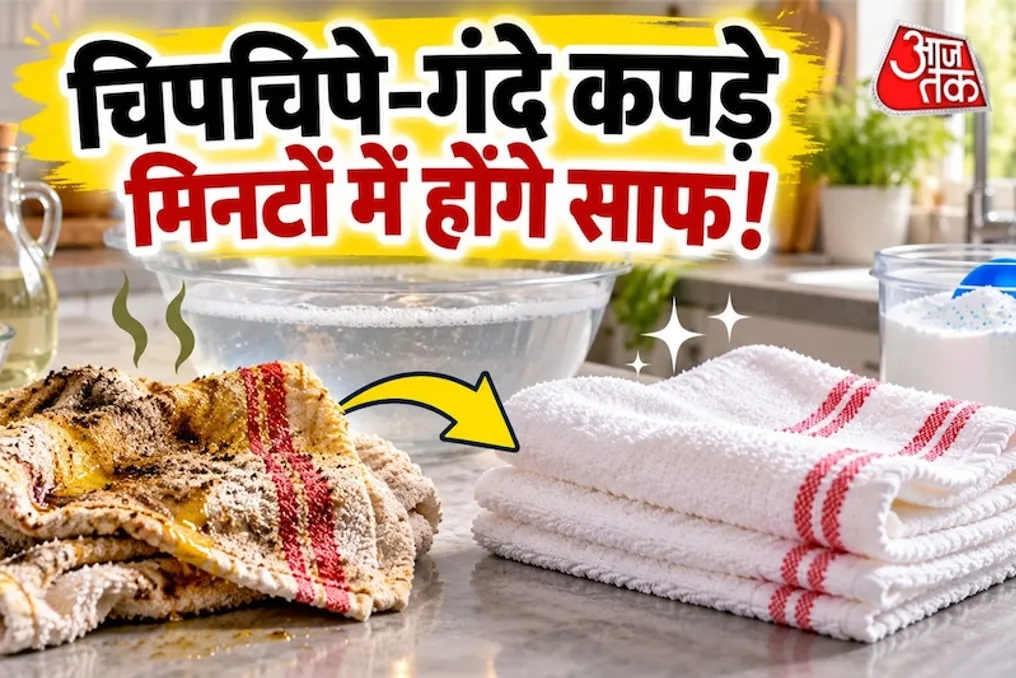
5 home ways to clean greasy and smelly kitchen towels
Read more
www.aajtak.in

5 home ways to clean greasy and smelly kitchen towels

Kitchen towels are used very often when cooking—from wiping hands to cleaning stoves and countertops. Over time, they accumulate grease, oil, and spices, becoming sticky and dirty. Sometimes the contamination is so deep that even after multiple washes, the towels remain unclean, and an unpleasant odor begins to appear in them.

Instead of throwing away such towels or buying new ones, they can be cleaned using simple home methods. Five effective ways are presented that will help reduce greasiness and eliminate odors from kitchen rags.

1. Removing stubborn grease with hot water and detergent

If a layer of oil and fat has formed on the kitchen towels, hot water combined with dish soap will help. Dish soap is specifically designed to remove grease, and hot water helps loosen the grease residue. It should be remembered, however, that the water should not be too hot; the temperature must be adjusted according to the instructions on the towel's label.

2. Removing grease and odor with white vinegar

Sometimes, even after washing, the towels retain the smell of spices and oil. In such cases, white vinegar can be used, as it can help reduce dirt levels and get rid of unpleasant aromas.

3. Cleaning old stains and stickiness with baking soda

Baking soda is effective for removing old stains from spices and oil, and it also helps combat odors remaining in the fabric. If the grease on the towel is heavy, it is recommended to first treat the stain with a small amount of dish soap, and then soak it in a solution with baking soda.

4. Lightening oily and spicy stains with lemon

Yellow traces from turmeric, oil, and spices often appear on kitchen towels. Lemon can be used to remove them. However, it should be noted that lemon does not guarantee the complete disappearance of all types of stains. Before applying lemon juice to colored fabrics, always test its effect on an inconspicuous area, as the acid can cause discoloration. It is also not recommended to leave the towels with lemon in direct sunlight for a long time.

5. Proper washing and drying of towels

Relying only on folk remedies is not enough to keep kitchen towels clean; the correct washing and drying process is also crucial. If wet and greasy towels remain in one place for a long time, an unpleasant odor can intensify in them.

In this regard, the following recommendations must be observed:

Fan Cleaning Tips: How to Clean a Ceiling Fan Using a Pillowcase Before Diwali
Read more
www.aajtak.in

Fan Cleaning Tips: How to Clean a Ceiling Fan Using a Pillowcase Before Diwali

With the approach of the Diwali festival, a general cleaning of the entire house begins. The most challenging task is often cleaning the ceiling fan, as dust and cobwebs must be removed from all corners. The process of taking down the fan and the subsequent fall of all dirt and dust onto the bed or floor causes a lot of trouble.

If you want to quickly and effortlessly tidy up your fans before this Diwali, an old and proven method will help you. Below is the simplest way to clean a ceiling fan without removing it, using an old pillowcase.

Fan Cleaning Tips:

First, take any old cotton or microfiber pillowcase that you no longer use. Then, standing on a stable ladder or chair, carefully insert one fan blade into this case so that the blade is completely inside, similar to how a pillow is covered with a case.

After that, grab the open end of the case with both hands and gently pull it outwards. With this movement, all the black dust and dirt settled on the blade will remain inside the case. Not a single particle of dust will fall onto the floor or objects below.

The same procedure should be repeated for all other fan blades. For a final shine, if there are greasy spots or stubborn stains remaining on the fan after removing the dry dust, you can wipe the fan with a damp cloth containing a small amount of vinegar or liquid soap. This will make the fan look brand new and shiny.

How to make natural shampoo from retta and hibiscus at home, avoiding chemicals
Read more
www.aajtak.in

How to make natural shampoo from retta and hibiscus at home, avoiding chemicals

Modern expensive shampoos and hair care products often contain many harmful chemical substances, such as sulfates and parabens, which weaken the hair from the inside. This leads to hair loss, premature graying, and loss of shine. If you strive for strong and clean hair without chemicals, you can apply a traditional method known since ancient times. The combination of retta and hibiscus flowers is a real blessing for hair: retta provides deep cleansing, while hibiscus makes hair soft, thick, and shiny.

Below is a simple instruction on how to prepare this remedy at home.

The following ingredients are needed for preparation: 10-12 dried rettas (without seeds), 5-6 fresh or dried hibiscus flowers, 4-5 hibiscus leaves (optional), 3-4 cups of water, and 1 tablespoon of shikakai or amla powder (if available).

First, you need to remove the seeds from the retta and soak it together with the hibiscus flowers in 3-4 cups of water overnight in one container. In the morning, this mixture should be placed on the stove and slowly boiled for 15-20 minutes so that all the beneficial substances from the retta and hibiscus dissolve in the water. When the mixture thickens and the retta becomes soft, turn off the heat and let it cool. Then, it should be thoroughly rubbed (crushed) by hand and strained. (It is advisable to separate the foaming and smooth liquid).

Your homemade natural herbal shampoo is ready. When washing your hair, apply it to wet hair, gently massage the scalp, and leave it on for 2-3 minutes, then rinse with clean water. This natural shampoo can be stored in an airtight bottle in the refrigerator for up to one week.

Popular