LPG prices rise by 50 rupees in Pakistan due to supply crisis
Read more
Aaj Tak
www.aajtak.in

LPG prices rise by 50 rupees in Pakistan due to supply crisis

The global gas crisis, triggered by the conflict between the US and Iran, has significantly impacted Pakistan, where there is an acute shortage of LPG. The population faces constant price increases, and the government of Shehbaz Sharif has no plans to provide assistance. The problem of rising LPG prices has flared up again in Karachi, negatively affecting residents' family budgets.

In Karachi, the cost of LPG has approached double the state tariffs, demonstrating the government's inability to alleviate consumers' plight. According to the latest data on LPG price hikes in Pakistan, the price of domestic gas was increased by exactly 50 Pakistani rupees.

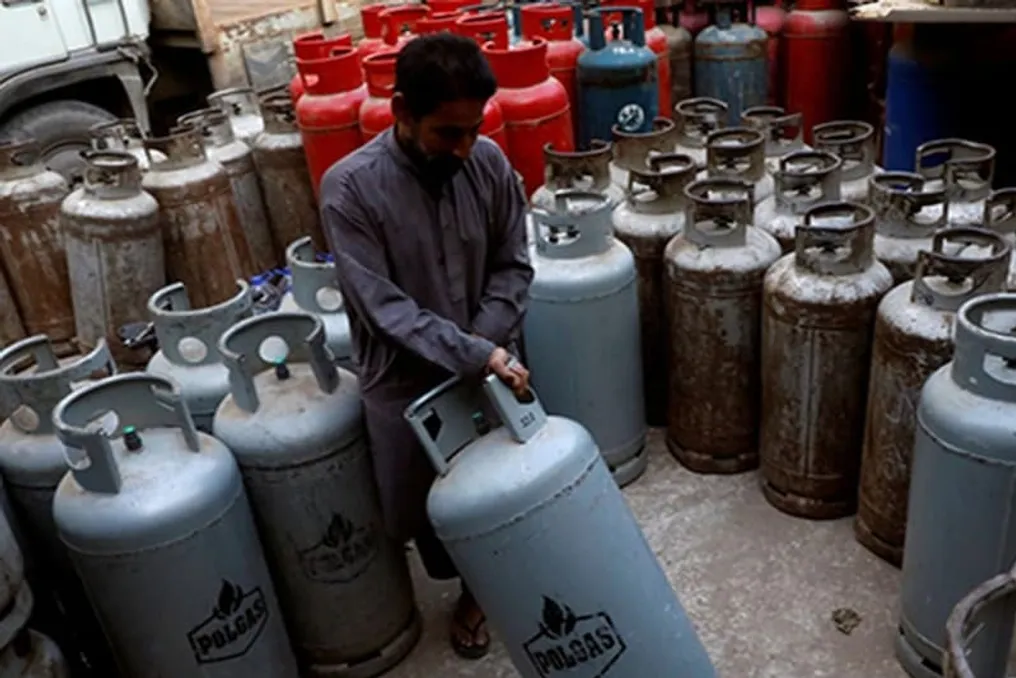
Karachi residents have faced another serious blow to their budgets. As reported by the agency citing 'The Express Tribune', there has been a sharp jump in the price of liquefied petroleum gas (LPG) in Karachi. In just 24 hours, the price rose by 50 rupees per kilogram, reaching 550 rupees per kilogram in the Pakistani market.

According to 'The Express Tribune', the reason for the rise in LPG prices in Pakistani markets is linked to Iran. Sources indicate that a shipment of LPG from Iran failed to reach the Karachi markets, leading to a significant drop in supply. Local gas marketing companies are exploiting this situation to set arbitrarily high prices.

The situation has been worsened by Pakistan closing its border with Iran on October 17, which completely halted LPG imports. Previously, LPG cylinder prices reached levels between 4500 and 8200 rupees, and local gas companies continue to increase them.

LPG sellers note that marketing companies are selling gas at very high prices, which makes doing business difficult. Many sellers reported a drop in sales by up to 50% after the recent price increase, as rising costs forced customers to reduce purchases. Nevertheless, households without access to piped natural gas (PNG) have no alternative fuel source.

Pakistani consumers state that despite the increase in LPG prices, they have no choice but to buy gas. This gas crisis raises concerns about a widespread increase in the cost of living. The rise in fuel expenses could potentially lead to higher transportation costs, tandoor products, and bakery goods, burdening all consumers in the region.

Market experts warn that the situation could worsen if LPG supplies to Pakistan from Iran remain disrupted and the government and officials do not take effective measures. They emphasize that the lack of strict control and adherence to regulations will allow suppliers and marketing companies to continue profiting from the shortage, jeopardizing consumer safety.

Similar stories

Five Major Changes Take Effect in India on November 1: From LPG Prices to Toll Payment Rules
Read more
www.aajtak.in

Five Major Changes Take Effect in India on November 1: From LPG Prices to Toll Payment Rules

The last day of October marks the approach of November, which will bring a series of significant transformations (Rule Change From 1st November) affecting both households and citizens' financial status. These changes concern pricing for gas cylinders, Goods and Services Tax (GST) rules, and the terms for using platforms to pay road tolls.

The first change relates to LPG cylinder prices. As is customary monthly, on November 1, 2026, oil and gas companies will adjust the prices for LPG cylinders and publish new tariffs. Earlier, at the beginning of October, the price of a commercial 19 kg LPG cylinder was increased by up to 62.50 rupees. Meanwhile, the cost of a domestic 14 kg LPG cylinder remained unchanged. However, there is a possibility of price changes on November 1. Additionally, tariffs for Aviation Turbine Fuel (ATF) may also change.

The second change concerns the annual toll pass. The central government plans to modify the rules for toll passes. Starting November 1, a new annual toll pass costing 1500 rupees will be introduced for residents living near toll roads. This pass is available to private vehicle owners residing within a 20 km radius of a toll plaza.

Furthermore, other changes are occurring related to traffic movement. In Delhi, entry of old vehicles registered in other states and not meeting the BS6 standard will be banned from November 1 until January 31, 2026, as part of the Cold Wave Action Plan. On the other hand, all types of transport will no longer be allowed on the new Mumbai-Pune expressway link. The Maharashtra State Police have decided on a permanent ban on heavy goods vehicle movement on this route, and this new rule takes effect on November 1.

The third change pertains to alcohol purchase payment rules. Starting November 1, payment rules for alcohol will change in Tamil Nadu. The Tamil Nadu State Marketing Corporation (TASMAC) has made an important decision: for the retail sale of alcoholic bottles valued over 1000 rupees, digital payments will now be mandatory. This means that cash will not be accepted when purchasing alcohol worth more than a thousand rupees in a store.

The fourth change is related to GST. On November 1, the third change concerning GST will take place. These changes may ease the situation for entrepreneurs and small traders. According to reports, an automatic tax refund approval system will be implemented in some cases to reduce delays and lessen the paperwork burden on businesses. Furthermore, a new reporting system will be introduced for entrepreneurs with an annual turnover of less than 50 million rupees who directly provide goods or services to customers.

The fifth change applies to mobile users. Fifth on the list of changes effective November 1 is an innovation concerning mobile users. According to a central government order, a new rule comes into force on November 1. Based on a directive issued by the Department of Telecommunications (DoT), all mobile users will be required to display the caller's name. Previously, many people used applications like Truecaller to find out the name of a caller from an unknown number. In this regard, the DoT has instructed telecom service providers to implement Caller Name Presentation (CNAP) starting November 1, 2026.

Milk product prices increased in Tamil Nadu, including ghee, butter, and sweets for Diwali festival
Read more
www.aajtak.in

Milk product prices increased in Tamil Nadu, including ghee, butter, and sweets for Diwali festival

There is an increase in the prices of dairy products in Tamil Nadu, including ghee, butter, and various sweets, which occurred ahead of the Diwali festival. The regional government announced a significant rise in the cost of the products.

The main source of this increase is the brand Aavin, which has raised prices across its entire range. Aavin is a well-known dairy brand in Tamil Nadu and operates under the aegis of the Tamil Nadu Cooperative Milk Producers Federation Limited (TCMPF). This organization purchases milk from farmers through cooperatives and sells finished dairy products.

This price hike is the first such adjustment initiated by the Tamil Nadu government under the leadership of Talapathy Vijay (TVK Govt). Following the announcement of price increases for Aavin products, consumers will have to pay more for ghee, butter, yogurt, lassi, as well as sweets and biscuits made from these products. The new rates come into effect on October 28, 2026.

Specifically, regarding Aavin brand ghee, the 100 ml pack, which previously cost 80 rupees, will now be sold for 95 rupees. For the 200 ml pack, the price has also risen from the previous 160 rupees to 180 rupees.

As for butter, the 100-gram yogurt pack, which previously cost 60 rupees, will now cost 10 rupees more, reaching 70 rupees after the recent price adjustment. Additionally, new rates have been set for other dairy products.

The price increase did not only affect the aforementioned dairy products. It is also expected that the price rise will be reflected in sweets intended for Diwali. The brand has increased the cost of its sweets and biscuits.

Indian Rupee Strengthens Against US Dollar for Eighth Day Thanks to Jio IPO and Reserve Bank Actions
Read more
www.aajtak.in

Indian Rupee Strengthens Against US Dollar for Eighth Day Thanks to Jio IPO and Reserve Bank Actions

The strengthening of the Indian rupee against the US dollar continued for the eighth trading session. On October 21, the rupee rose by 29 points at the start of trading, reaching the level of 94.62 per dollar. This growth was driven by the inflow of foreign dollars related to the Jio Platforms IPO, as well as measures taken by the Reserve Bank of India (RBI). Nevertheless, the rupee's rise was limited by high crude oil prices and a strong US dollar.

In the interbank currency market, the rupee opened on Wednesday at 94.78 per dollar, subsequently strengthened, and reached 94.62 per dollar. Previously, on Monday, the rupee closed at 94.91 per dollar. The currency market was closed on Tuesday due to the Dashera holiday.

The main reason for the rupee's strengthening was the inflow of dollars from foreign investors associated with the Jio Platforms IPO. This IPO was open to public investment on Wednesday. Analysts note that during the share distribution process, foreign investors are using a strategy of selling dollars to acquire rupees. This increased the inflow of dollars into the domestic currency market and supported the rupee.

According to Amir Macda, a commodities and currency market analyst at Choice Broking, in addition to the inflow of foreign dollars from the Jio IPO, RBI measures also contributed to the rupee's strengthening. He explained that during the IPO distribution, foreign investors actively used the Sell/Buy Swap mechanism. In this process, investors sell dollars in the spot market, receiving rupees, and then enter into an agreement to buy back dollars after a certain period, which is usually less than a week.

The rupee also received support due to intervention by the Reserve Bank of India. The RBI can control significant fluctuations in the rupee by buying or selling dollars in the currency market according to needs. RBI support was cited as one of the reasons for the rupee's strengthening on Wednesday, as it helped limit the demand for the dollar. However, despite the rupee's rise, pressure on the currency market has not completely disappeared. High crude oil prices remain a problem for India, as the country imports a significant portion of its needs. Rising oil prices may force importers to spend more rupees to purchase dollars, which will increase pressure on the rupee.

On Wednesday, the US dollar index traded with a slight increase of 0.06%, reaching the level of 101.58. This index reflects the strength of the US dollar compared to six major foreign currencies. At the same time, on the international market, Brent crude oil futures rose by 1.42%, reaching $110.33 per barrel. The rise in oil prices poses a challenge to the rupee. It is worth noting that on Tuesday, the US dollar index fell by approximately 0.2% and reached a three-week low, which was linked to the decreased attractiveness of the dollar due to US Treasury bond yields and falling oil prices.

According to Amir Macda from Choice Broking, during Wednesday's trading, the rupee may remain in the range of 94.00 to 94.75 against the US dollar. However, the market direction will depend on the inflow of dollars related to foreign investments, RBI actions, and crude oil prices. Finerex also offered various strategies for importers and exporters. According to their forecast, the level of 94.73 per dollar could be a good opportunity for importers to purchase dollars in the near future. Exporters, meanwhile, are advised to wait for the 94.95 level to sell dollars or hedge. Finerex advised importers to buy according to October's needs to avoid high premiums, emphasizing that the decision to actually buy or sell should be made considering business needs, bank rates, and risks.

Popular