How Diwali is Portrayed in Bollywood Films: From Light to Darkness
Read more
IOL
iol.co.za

How Diwali is Portrayed in Bollywood Films: From Light to Darkness

In Indian cinema, Diwali rarely serves merely as a backdrop; directors utilize this Festival of Lights as a powerful emotional amplifier, a symbol of moral victory, and a key catalyst for dramatic turns.

The visual splendor created by lit diyas, fireworks fountains, and rich traditional attire provides filmmakers with a vibrant palette to explore themes ranging from family unity and romance to tragedy and moral irony.

Many blockbusters have used Diwali as a theme to showcase family reunions and emphasize the sanctity of home, cultural heritage, and the emotional significance of returning to one's roots.

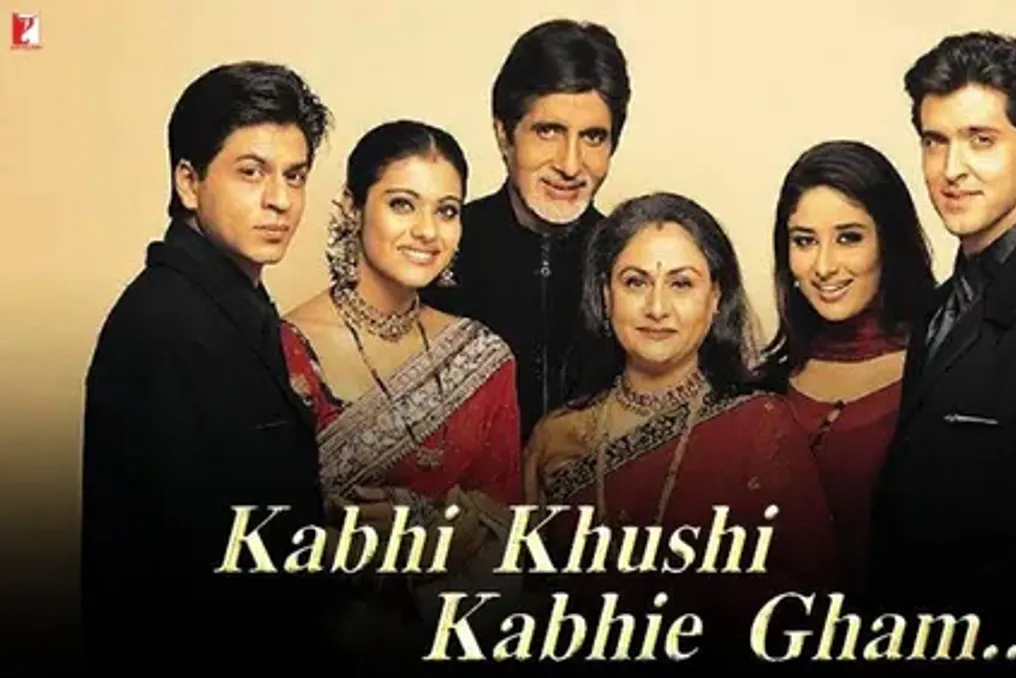
One of the most famous examples is the iconic film 'Kabhi Khushi Kabhie Gham' (2001), where director Karan Johar created a family saga containing perhaps the most recognizable Diwali scene in modern Hindi cinema.

The central conflict of the film begins with a lavish Diwali ceremony at the Raichand family mansion. The visuals of golden lamps, richly decorated traditional clothing, and the grand illuminated multi-story house demonstrate the family's immense wealth and adherence to tradition. The scene culminates at a pivotal moment when the matriarch, Nandini (Jaya Bachchan), intuitively senses the arrival of her son Rahul (Shah Rukh Khan) via helicopter, stepping forward with a 'aarti'. Here, Diwali embodies maternal intuition and the unbreakable bond of family.

However, even before this film, in 'Hum Aapke Hain Koun..!' (1994), Suresh Bardajya used festival scenes as the structural foundation of the narrative. The song 'Dikhtana' plays during the Diwali celebration, where an announcement of pregnancy is made amidst the exchange of gifts and twinkling lights. The festival acts as a unifying factor between two families, strengthening traditional Indian social structures.

But not in all Bollywood films associated with Diwali is the theme reduced to the triumph of light over darkness. Although Diwali traditionally signifies the victory of light over gloom and good over evil, several notable films subvert this trope, using the brightness of the festival to amplify the shadows of character downfall.

In Mahesh Manjrekar's dark crime drama 'Vaastav: The Reality' (1999), Diwali accentuates the tragic transformation of the protagonist, Raghu (Sanjay Dutt). Returning home on Diwali night after immersing himself in Mumbai's criminal underworld, Raghu, gleaming in gold, presents his mother with the famous line about his pachasa tola (over half a kilogram) gold chain. The glittering lights and festive atmosphere sharply contrast with the mother's sorrow over her son's criminal life. This scene transforms a time of spiritual enlightenment into a stark depiction of moral decay.

Prakash Mehra's classic film 'Zanjeer' (1973) also utilized Diwali as the tragic origin of the 'Angry Young Man' persona played by Amitabh Bachchan. As a child, his character, Inspector Vijay, witnesses the murder of his parents on Diwali night, the sound of gunshots muffled by the roar of festive fireworks. This trauma leaves him with a recurring nightmare of a white horse linked to the killer, making Diwali a psychological trigger rather than a joyous celebration.

Filmmakers have also used the freedom of expression that Diwali affords to advance romantic storylines and challenge social constraints.

In the film 'Mohabbatein' (2000), Aditya Chopra uses Diwali as a means of defiance. The action takes place in an authoritarian gurukul (boys' hostel) run by the stern director Narayan Shankar (Amitabh Bachchan). The students secretly organize a joint Diwali celebration with a neighboring girls' school. Through the song 'Pairon Mein Bandhan Hai', the glow of diyas and fireworks becomes a visual metaphor for romantic freedom shattering rigid, dark authoritarian rules.

Kamal Haasan's comedy 'Chachi 420' (1997) used a firework incident during Diwali to drive the main plot. When a faulty firework injures a young girl during Diwali, her estranged father (disguised as an elderly nanny) saves her, securing a job as a governess to stay close to his daughter. The festive chaos serves as a realistic narrative bridge for family reconciliation.

In a sharp departure from commercial gloss, Chetan Anand's war film 'Haqeeqat' (1964) presented the haunting composition 'Kaise Diwali Manayein Hu,' performed by soldiers stationed on frozen borders during the Sino-Indian War of 1962. The film uses Diwali to remind viewers of the human cost of national security, contrasting domestic celebrations with the cold reality of the battlefield.

Thus, Diwali in Indian cinema transcends mere visual spectacle. It represents a universal narrative canvas where light is used not just to illuminate the frame, but to reveal moral choices, emotional bonds, and the internal conflicts of characters. Whether it is a grandiose melodrama of homecoming or the somber silence of a hero confronting his demons, Diwali remains one of the most potent storytelling tools throughout decades of Indian cinema.
Similar stories

The History of Bollywood and Hollywood Relations: From Plot Borrowing to Licensed Remakes
Read more
iol.co.za

The History of Bollywood and Hollywood Relations: From Plot Borrowing to Licensed Remakes

For decades, Indian filmmakers borrowed plots from Hollywood or other foreign film industries to create their own films in local languages. The main idea was to take a successful film, transplant it into the Indian cultural context, and infuse it with emotional melodramas, high-stakes romance, and lavish musical sequences.

Long before formal intellectual property agreements became standard practice in the global entertainment business, Bollywood frequently drew inspiration from Hollywood. This phenomenon, encompassing unregistered plot borrowings, creative localization, and official studio remakes, has defined some of the biggest hits and intriguing failures in the history of Hindi cinema. The dynamic between original Hollywood works and their Bollywood counterparts demonstrates a fascinating intersection of cross-cultural adaptation, artistic translation, and an evolving legal landscape.

In the 1970s, 1980s, and 1990s, international copyright enforcement was virtually non-existent in global film markets. Hindi screenwriters regularly adapted foreign films without official licensing, viewing the process not as infringement but as translating a good story for a completely different audience. It is important to note that during that era, 'copying' a Hollywood film rarely meant creating an exact replica; to succeed at the Indian box office, the narrative had to be carefully 'masalaized.'

A nineteen-minute Western thriller or a Hollywood romantic comedy required expansion into a three-hour epic, which included musical interludes transforming narrative moments or internal monologues into multi-song soundtracks. Additional storylines were also added, featuring comic companions, patriarchal family dynamics, and motifs of dramatic revenge, while moral values were adjusted according to traditional social values and family structures.

Notable examples of adaptations before 2000 include 'Sholay' (1975), which merged the plot of mercenaries from Western films like 'The Magnificent Seven' (1960) and 'Seven Samurai' (1954) with the aesthetic of cult comedy and revenge drama, creating one of Indian cinema's greatest epics. The film 'Chachi 420' (1997) followed the theme of 'Mrs. Doubtfire' (1993), replacing the lead character voiced by Robin Williams with a traditional Indian dancer and father, weaving classic music and domestic family politics into the farce of disguise. 'French Kiss' (1995) was transformed into 'Pyar To Hona Hi Tha' (1998), which became a hit at the Indian box office due to its emphasis on traditional wedding ceremonies and family values.

With the advent of the new millennium, as old large cinemas gave way to multiplexes, the viewer demographic shifted towards urban youth who increasingly watched original American films. Directors such as Sanjay Gupta, Vikram Bhatt, and David Dhawan built entire filmographies based on adapting Western action films and comedies for the local audience.

Sanjay Gupta's film 'Kante' (2002) famously adapted Quentin Tarantino's 'Reservoir Dogs' (1992). The action unfolded in Los Angeles with Indian stars (including Amitabh Bachchan and Sanjay Dutt). 'Kante' translated Tarantino's non-linear heist dynamic into a highly stylized, hyper-masculine thriller. Tarantino himself later noted that he appreciated how 'Kante' expanded the characters' backstories beyond the structure of the original film's 'bottle episode.'

Similarly, Amir Khan's 'Ghajini' (2008) adapted Christopher Nolan's 'Memento' (2000). While Nolan's indie classic relied on a cerebral, reverse narrative structure, 'Ghajini' transformed the premise of short-term memory loss into a high-octane action-romance filled with body transformations, viral dance numbers, and tropes of emotional revenge. 'Ghajini' became the first Hindi film to cross the historical box office threshold of 100 crore.

The era of wild, unregistered Western adaptations suddenly ended in the late 2000s. As major Hollywood studios, including 20th Century Fox, Warner Brothers, and Disney, opened direct distribution and production offices in Mumbai, legal control tightened. A key catalyst was 2009, when Warner Brothers threatened a lawsuit against the producers of 'Banda Yeh Bindaas Hai,' an unregistered remake of 'My Cousin Vinny' (1992). The resulting out-of-court settlement signaled to the Mumbai film community that appropriating intellectual property was no longer a viable business model.

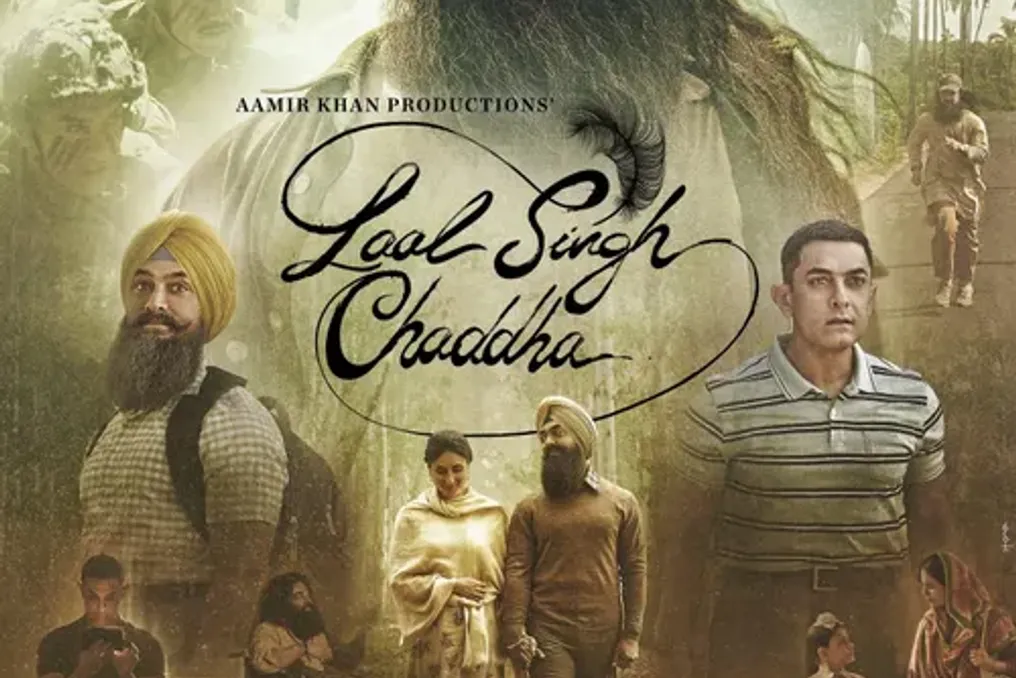
This legal shift marked the beginning of the era of officially licensed Hollywood remakes. 'We Are Family' (2010) was an official remake of 'Stepmom' (1998) and was produced under a joint venture between Karan Johar's Dharma Productions and Sony Pictures. 'Bang Bang!' (2014) represented an official, high-budget license of 'Knight and Day' (2010) from 20th Century Fox, starring Hrithik Roshan and Katrina Kaif. 'Laal Singh Chaddha' (2022) was an official adaptation of Paramount's 'Forrest Gump' (1994), starring Aamir Khan, who spent over ten years securing rights and adapting key moments of American history (such as Vietnam and Watergate) into Indian historical events (like the Emergency and the 1983 Cricket World Cup).

However, remakes are not always successful. The massive success of 'The Italian Job,' remade in Hindi as 'Players' (2012), ended in complete failure because it failed to resonate with the local audience. Conversely, when a foreign concept is meticulously adapted to account for local emotional, familial, and social realities, it ceases to be a mere copy and becomes a unique work of art.

Today, as international streaming services make global content instantly accessible, the era of covert plot borrowing is practically over. Nevertheless, the legacy of these adaptations remains a testament to the fluid, cross-pollinating nature of world cinema, demonstrating how one story can be reinterpreted to touch audiences across different ends of the planet.

Faisal Malik to play Kumbhakarna in 'Ramayana' film, inspired by Hulk's image
Read more
www.aajtak.in

Faisal Malik to play Kumbhakarna in 'Ramayana' film, inspired by Hulk's image

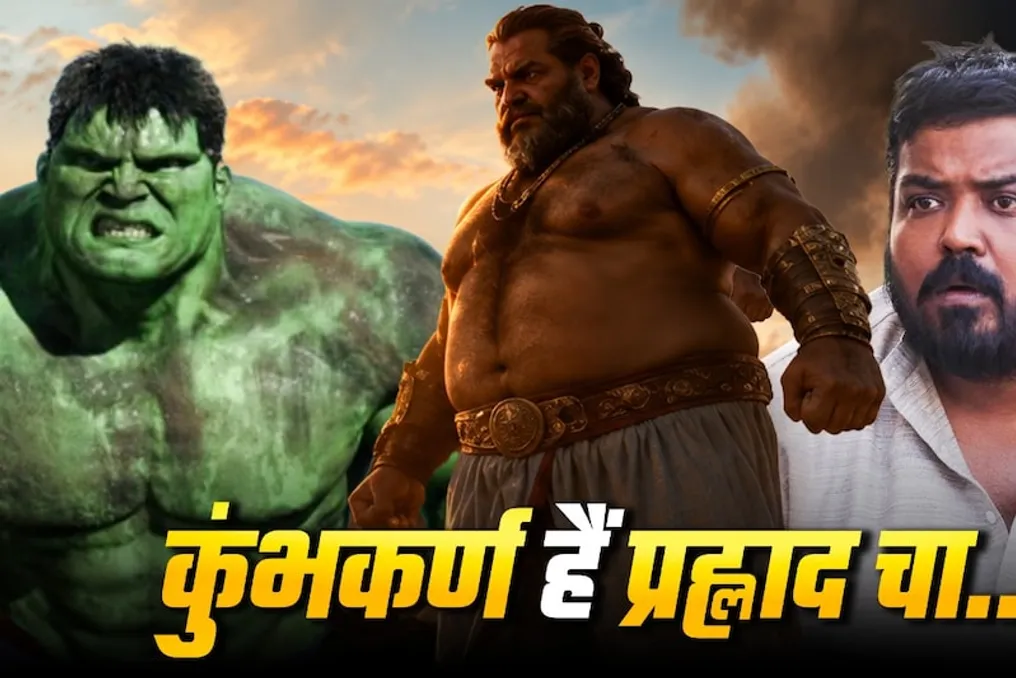
In Hollywood science fiction films, audiences have seen very powerful characters, such as in the 'Lord of the Rings' franchise. Over the last two decades, when speaking of a character with immense strength and a gigantic physique, the Hulk is primarily recalled. The image that Mark Ruffalo embodied in the Marvel universe has gained worldwide recognition. Now, inspired by the Hulk, Faisal Malik, known from the series 'Panchayat,' will play Kumbhakarna in Nitish Tiwari's film 'Ramayana.'

Recently, in an interview, Faisal Malik shared his experience portraying the role of Kumbhakarna in 'Ramayana.' The trailer for the film hints at the stature of Kumbhakarna, Ravana's brother. The epic states that Kumbhakarna's length is 600 drotics, which could correspond to between 1800 and 2400 feet.

Speaking about the preparation to bring this giant Asura to the screen, Faisal noted that everyone is familiar with the Hulk and how Mark Ruffalo transforms into this enormous green character. When he began imagining what he would look like in the role of Kumbhakarna, the Hulk appeared in his imagination.

Faisal Malik gained particular fame for his role as Prikhlad Cha in the web series 'Panchayat.' Additionally, he appeared in minor roles in films such as 'Bandy Vasepur.' However, the role of Kumbhakarna in 'Ramayana' is one of the most significant in his career.

He described the experience of working on the film as fulfilling a dream. Faisal stated that the opportunity to play Kumbhakarna in 'Ramayana' was the realization of his dream. Since everyone grew up watching 'Ramayana,' it was great luck for him to get a chance to play one of its characters. Nevertheless, he emphasized that this world is completely different for him because Kumbhakarna is not an ordinary person; he possesses a colossal body and spent six months in a deep sleep. Portraying all these aspects on screen presents a complex task.

Previously, Nalin Dave played Kumbhakarna in the television series 'Ramayana' by Ramandan Saag in 1987, and this role is still considered one of the memorable portrayals of this character.

It should be noted that 'Ramayana' is being created by Prime Focus Studios Namita Malhotra in collaboration with DNEG and Yash Ki Monster Mind Creations. The film will be released in two parts. Ranbir Kapoor will play Lord Rama, Sai Pallavi Sita, Yash Ravana, Ravi Dubey Lakshmana, and Sani Deol Hanuman. The first part of the film will be released worldwide on November 5, 2026, and the second part on Diwali 2027. Both parts of the film will be released in Hindi, Tamil, Telugu, Kannada, and Malayalam languages in India.

Popular