A new health guideline has gained prominence in the last two years, succeeding the recommendation to walk 10,000 steps daily and consume five portions of fruits and vegetables daily. Currently, the guidance suggests including 30 types of plant-based foods in the weekly diet.
This trend is based on a 2018 study which demonstrated that individuals who reported consuming at least 30 categories of vegetables per week had a more diverse gut microbiota compared to those who consumed fewer than ten types. Subsequent research reinforced that adopting a diet rich in vegetable variety can optimize the composition of the gut microbiota, bringing known benefits such as the reduction of inflammatory processes and increased longevity and quality of life.
Initially, the idea of consuming 30 types of vegetables per week seemed daunting and almost unattainable, raising concerns about the need to prepare complex salads at every meal and managing the large amount of fiber. However, after one week of practice, the author reported that it was surprisingly simple, exceeding the goal and consuming 51 types of plant-based foods.
More vegetables, greater microorganism diversity
There is no strict obligation to reach exactly 30 types of vegetables. Rob Knight, director of the Microbiome Innovation Center at the University of California in San Diego, USA, led the research that popularized this suggestion. According to Knight, the number 30 does not have a specific justification, given that few participants in the study exceeded this mark. The researcher emphasizes that people who consume 20 or 25 varieties can also reap similar health benefits, with the greatest gains noted in those with a less varied diet; if the variety is already reasonable, additional increase will not bring such expressive benefits.
The recommendation of 30 types of vegetables has become a kind of challenge, where each distinct food item scores one point. Items are categorized into six groups: fruits, vegetables and legumes, whole grains, pulses (such as beans, lentils, and chickpeas), nuts and seeds, and herbs and spices. Tea, coffee, and chocolate are also counted, as they all contain beneficial substances, such as antioxidants.
Federica Amati, a nutrition researcher at Imperial College London, UK, was surprised to note that spices are part of this list. She points out that studies indicate that adding a combination of seasonings to meals can generate measurable changes in the gut microbiota in just 48 hours. Some sources suggest assigning a quarter point to each tea, coffee, or herb consumed. Amati explains that small dietary modifications can quickly alter what she calls the intestinal 'microorganism ecosystem,' but for the effects to be lasting, maintaining variety over time is crucial. Furthermore, Amati highlights that this advice encourages the consumption of foods beyond the usual ones, such as apples, cucumbers, and bell peppers. Scientific studies indicate that low consumption of whole grains, nuts, and seeds is among the main risk factors for premature mortality.
Although consuming so many different foods can represent a high cost, especially for those who purchase many fresh products, the author managed to combine fresh ingredients with pantry items and frozen products during their experience.
My week with over 30 vegetables
During the experimental period, breakfast maintained the routine of overnight soaked oats, supplemented with chia seeds and yogurt, but there was variation in the added fruits. Due to lack of time for lunch, sandwiches or leftovers from the previous night's dinner were chosen, which helped prevent waste. Dinner, on the other hand, required more planning, focusing on not repeating ingredients and prioritizing recipes that incorporated a good diversity of vegetables, while maintaining a familiar culinary style.
On Monday, dinner consisted of a chickpea tagine, a quick and flavorful recipe from BBC Good Food, enriched with peas to increase fiber. The vegetables consumed that day included oats, blueberries, chia seeds, cabbage, peas, chickpeas, couscous, tomato, onion, and raisins, in addition to various spices counted as a single item.
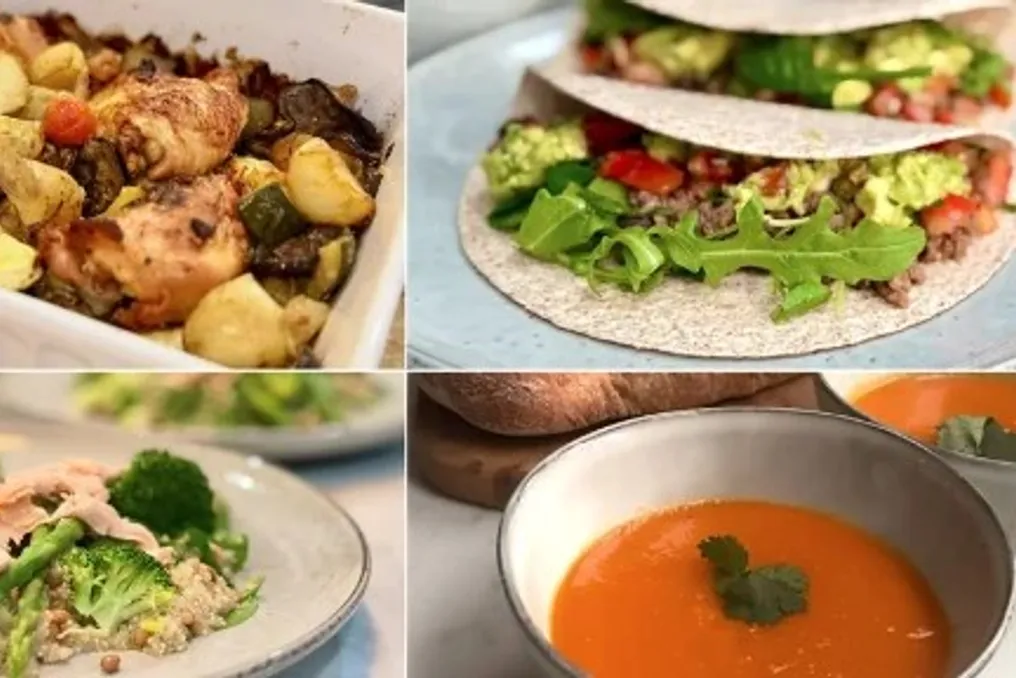
On Tuesday, Selena Wu, a nutritionist at King's College London, UK, advises including fiber through nuts or seeds in breakfast cereals, or by serving a sandwich accompanied by a salad, as was done for lunch. Dinner was a quinoa salad with green lentils, asparagus, and grilled salmon. The vegetables consumed that day were raspberry, tangerine, apple, quinoa, broccoli, spinach, asparagus, lemon, garlic, and chives.
Wednesday brought a curry, a frequent recipe, but a new version was tried, adding sweet potato and red bell pepper, served with green beans. The family enjoyed it, and the dish used a considerable variety of spices. The items consumed included coffee, banana, cashew, coconut milk, sweet potato, green beans, and brown rice, in addition to red bell pepper.
On Thursday, being close to the 30 vegetable goal, the focus remained on maximizing ingredient variation within the established plan. A simple and quick soup was prepared with onion, garlic, carrot, lentils, and sweet potato, accompanied by sourdough bread and salad. A healthy smoothie made of frozen banana, cocoa powder, and cashews was also made. The registered vegetables were tea, cocoa powder, cashews, pumpkin seeds, red lentils, and arugula.
On Friday, it became more challenging to find new foods, since each item could only be counted once. Despite this, fruits, vegetables, and legumes continued to be included, even with repetition. Tracking herbs and spices was also complicated. The day was dedicated to tacos, whose filling was made with black beans and ground meat, using ripe avocados for a good guacamole and tomato sauce. The vegetables consumed were whole wheat tortillas, cucumber, black beans, avocado, and fresh cilantro.
Saturday, due to the rush, stir-fried pasta with tempeh was chosen, a cooked and fermented soy product, although another protein could have been used. The children did not approve of the dish, and preparing the tempeh generated a slight bitterness, leading to a second, simpler pasta dish. The items consumed were dried mango, peanuts, tempeh, olive, Chinese mustard greens, baby corn, and sesame seeds.
Sunday, with decreasing willingness to try new recipes, the oven was decided upon for most of the preparation, making roasted chicken with vegetables on the same tray, accompanied by a salad. He managed to finish the week without needing to go to the supermarket, utilizing what was left in the fridge, such as eggplant, zucchini, and potatoes, in addition to thawed chicken thighs. The vegetables of the day were carrot, eggplant, zucchini, and potato.
Changes that are here to stay
At the end of the week, the total reached was approximately 51 types of vegetables. The most difficult aspect was organizing the menu and preparing distinct dishes after an exhausting day, but it is expected that this will become easier with the repetition of recipes. There was also a surplus of food, which ensured healthy lunches the next day, and snack consumption was reduced, avoiding restaurants and generating savings. Even the children, usually demanding, tried more new foods.
The most surprising thing was discovering that such intense preparation was not necessary; with usual meals, it would already be possible to get close to 30 points. It is notable how, when considering coffee, tea, chocolate, spices, and whole grains, the number of vegetable types quickly reaches 30, provided the dietary base is already healthy. However, the author intends to maintain the variation of weekly purchased ingredients and seek ways to integrate more vegetables into meals, keeping his stock of nuts and seeds for continuous use.