
Officials assure that the court ruling will not disrupt the supply of antiretroviral drugs
Read more
IOL
iol.co.za

Officials assure that the court ruling will not disrupt the supply of antiretroviral drugs

The Department of Health (DoH) reassured patients, stating that the recent High Court ruling regarding tenders will not lead to disruptions in the supply of antiretroviral (ARV) drugs.

This response followed the decision issued by the Pretoria High Court on October 20. The court granted the department 120 days to redistribute the awarded awards and cancelled part of the tender allocations amounting to 15.5 billion rand.

Two companies were contesting the tender: Cipla Medpro Manufacturing and Hetero Drugs. The court dismissed Hetero's application but ruled in favor of Cipla.

Hetero had asked the court to review and annul the DoH's decision to exclude it from awards for items 13 and 23. Cipla received three awards totaling 214 million rand, while Hetero received five awards totaling 678 million rand.

However, Cipla was challenging the awarding of items 13 and 23, which concerned monthly and three-monthly packs of three HIV treatment medications: dolutegravir, lamivudine, and tenofovir. Cipla argued that these items should not have been split into two different competitions because they included the same medications, only in different quantities.

Judge Graham Girdwood agreed with this view, ruling that the awards for both items were unconstitutional and therefore invalid. The court noted that Cipla is a long-standing ARV manufacturer that has demonstrated the ability to supply more than half of the estimated demand for item 13 and nearly half for item 23. Furthermore, Cipla manufactures these drugs at its own facility in KwaZulu-Natal.

Girdwood also disqualified two companies, Innovata and Viatris, from further consideration for any awards related to items 13 and 23 because they submitted bids with expired licenses. The judge also emphasized that these companies should not have progressed beyond the first stage.

Department of Health welcomes court decision

In a statement released on Thursday, the department expressed approval of the court's decision to dismiss Hetero's application, noting that it respects the court's role in ensuring public procurement operates within the legal framework. The DoH stated that it will continue to guarantee fairness, transparency, and legal compliance in procurement processes. The department also emphasized that procurements must ensure the best value for money, strengthen public trust, and protect the continuous availability of quality ARV drugs for patients dependent on the public health system.

Furthermore, the department added that this ruling will not jeopardize the distribution of ARVs, and patients will continue to receive their medication. The DoH reported that it is working with provincial departments, warehouses, and suppliers to ensure continuity of supply.
Similar stories

Sewing needle found in woman's abdomen; doctors were surprised after hospital visit
Read more
www.aajtak.in

Sewing needle found in woman's abdomen; doctors were surprised after hospital visit

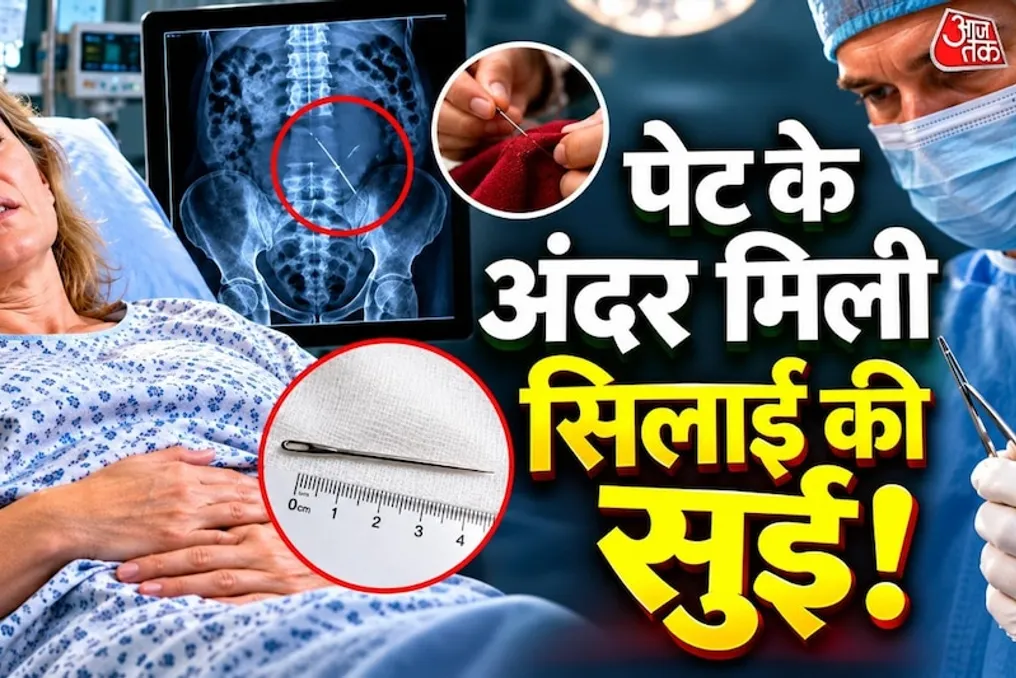
Sometimes minor health issues can have unexpected causes. This happened to a 50-year-old woman in Australia. She suddenly experienced severe abdominal pain. When she sought medical attention at the hospital, doctors were shocked: a sewing needle, about 4 centimeters long, was discovered inside her abdomen. The woman herself did not know how this object had entered her body.

This case was documented by doctors from John Hunter Hospital in Australia in a medical report. According to the report, the woman felt intense abdominal pain that lasted for about a day. Subsequently, she went to the emergency department. Upon examination, mild tenderness was noted upon palpation of the abdomen, along with a rapid pulse—heart rate reached approximately 130 beats per minute. General blood tests showed no serious abnormalities. Doctors then performed a computed tomography (CT) scan, which revealed a metallic object about 4 centimeters long in the left side of the abdomen. Initially, the doctors could not determine how this object had gotten inside.

The woman was kept under observation all night. When the pain subsided, she was discharged with a warning to return to the hospital if the pain recurred. However, the pain returned the next day. An X-ray revealed that the metallic object inside the abdomen had shifted. At this point, the woman recalled something old: before the incident, she had been sewing and had fallen asleep. She hypothesized that she might have accidentally lain on a sewing needle in her sleep, allowing it to penetrate her skin without her realizing it.

The main concern for the doctors was that the moving needle could damage the intestines or blood vessels. This could lead to serious internal injuries, bleeding, or infection. Therefore, the doctors decided to perform surgery to remove the needle using laparoscopic surgery, which allows intervention through small incisions without the need for large cuts.

During the operation, doctors found a small collection of blood near the tissue supporting the small intestine. Locating the needle itself was difficult. Using several X-rays and specialized equipment, they were able to pinpoint the needle's location. It was determined that the needle was lodged in a specific fatty tissue inside the abdomen called the Greater Omentum, which is a layer of fat around the abdominal organs. The needle was near a part of the large intestine. The doctors carefully extracted it. Fortunately, during the operation, the woman's intestines and other organs were unharmed.

The day after the successful removal of the needle, the woman remained under observation. She was discharged the day after the surgery. Later, she developed a mild infection around her navel, which the doctors treated with oral antibiotics. In their report, the doctors noted that foreign objects entering the body can change position, posing a risk of intestinal perforation, infection spread, and blood vessel damage.

Death toll from Ebola outbreak in DR Congo exceeds 5000
Read more
cgtn.com

Death toll from Ebola outbreak in DR Congo exceeds 5000

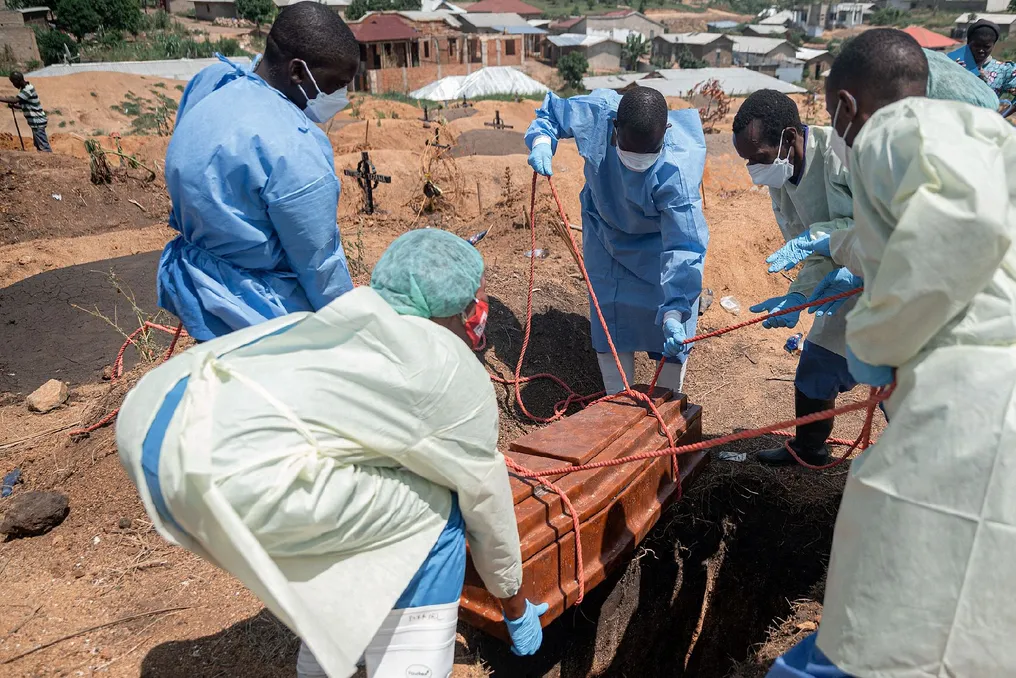
According to government data, the number of victims of the Ebola outbreak in the Democratic Republic of Congo (DRC) has exceeded 5000. More than 10,000 confirmed cases have been registered since the outbreak was declared in May.

The epidemic, caused by the Bundibugyo virus, has spread to eight of the country's twenty-six provinces. This is the deadliest Ebola outbreak ever recorded in the DRC and the second largest globally after the 2014–2016 outbreak in West Africa.

The effectiveness of response measures was hampered by security issues, delays in infection detection, and overloaded medical facilities. A significant number of deaths occurred in communities rather than in treatment centers, highlighting difficulties with early case detection and providing timely patient care.

In September, an independent scientific review organized by the Africa Centres for Disease Control and Prevention (Africa CDC) noted positive trends in some regions, including a decrease in cases and deaths in parts of the Ituri province. However, the review warned that virus transmission is not uniformly controlled across all affected areas; in some health zones, particularly in North Kivu, there is an increase in incidence. Persistent community deaths and gaps in contact tracing were also noted as serious problems.

Africa CDC reported that there are currently no approved vaccines or specific treatments for the Bundibugyo virus, although research in this area continues. Furthermore, the outbreak has spread beyond the DRC: cases have been reported in Uganda, Kenya, and Nigeria. The World Health Organization (WHO) has also registered a case in France, indicating the risk of further international spread.

Popular