The global housing problem is primarily evident in cities, where nearly half of humanity resides. According to the UN-Habitat World Cities Report 2026, up to 3.4 billion people lack access to safe, reliable, and adequate housing. More than a billion of these live in conditions of 'insecure tenure' in informal settlements and slums, characterized by overcrowding, environmental risks, and limited access to basic services.
These conditions negatively affect human potential, worsen public health, impede access to public services, and condemn people to cycles of economic vulnerability. Urban poor also suffer from environmental threats. As cities now house approximately 3.7 billion people under pressure related to housing affordability, aging infrastructure, climate risks, and social inequality, the housing issue has transformed from a local problem into a global imperative.
As part of the Global Celebration of World Cities Day 2026, dedicated to highlighting this crisis, the event kicked off in Fuzhou, Fujian Province in eastern China, under the slogan 'Urban Renewal: Adequate Housing for All.' This draws global attention to the urgent need for safe and affordable housing.
China's Response
China is actively addressing this issue through large-scale urban reconstruction. According to the National Bureau of Statistics, by the end of 2025, China's urbanization rate reached 67.89%, with over 950 million people living in cities. The focus has shifted from simple construction to improving the quality of development.
During the Fourteenth Five-Year Plan (2021–2025), the Ministry of Housing and Urban-Rural Development reported that over 240,000 old residential complexes were renovated, improving the lives of 110 million people. These works included the installation of 129,000 new elevators, the creation of 3.4 million parking spaces, and the establishment of 64,000 public facilities such as elderly care centers and kindergartens.
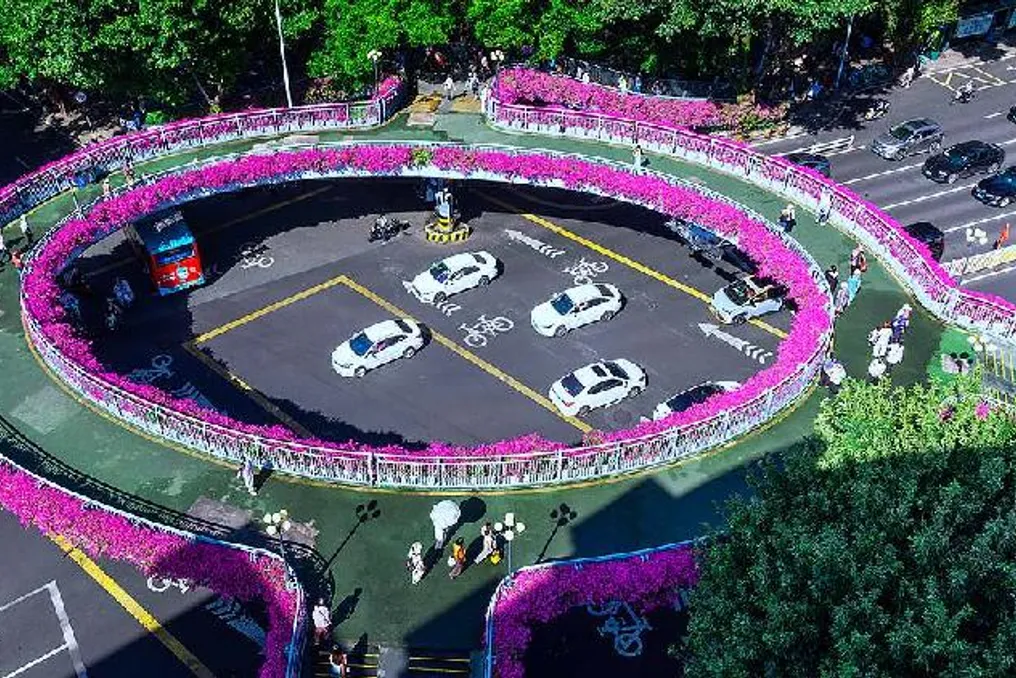
Underground utilities have also been modernized: approximately 840,000 kilometers of water, gas, and heat pipelines were updated or replaced—a distance equivalent to about 21 Earth circumferences. Over 18,000 'pocket parks' and 25,000 kilometers of urban green paths have appeared on the surface. Furthermore, 56,000 residential complexes have become more convenient and accessible for the elderly, and over 28 million square meters of recreational and sports areas have been added.
As the host city of the current event, Fuzhou embodies this philosophy in practice. This city, with a history exceeding 2,200 years, is known for its picturesque landscape where mountains, rivers, and residential areas coexist harmoniously. In 2026, Fuzhou's forest cover reached 55%, and over 1,800 kilometers of green paths connect more than 1,500 parks.
Fuzhou has also intensified efforts to improve housing conditions: 1,264 old residential complexes were renovated, 116 redevelopment projects in old districts were launched, and 103,000 units of affordable housing were built. The city is also working to enhance climate resilience by constructing or renovating 1,835 kilometers of water, sewage, and gas pipelines, and installing 6,756 smart sensors in its utility network, bridges, and tunnels.
A Platform for Global Urban Dialogue
In 2022, China and UN-Habitat jointly established the Global Award for Sustainable Cities (Shanghai Award), and Fuzhou received this award in 2023. Rafael Tutz, Director of the UN-Habitat Global Solutions Department, noted that China has accumulated extensive experience in urban renewal, community improvement, and enhancing the quality of urban life, adding that Fuzhou provides an important platform for global dialogue this year.