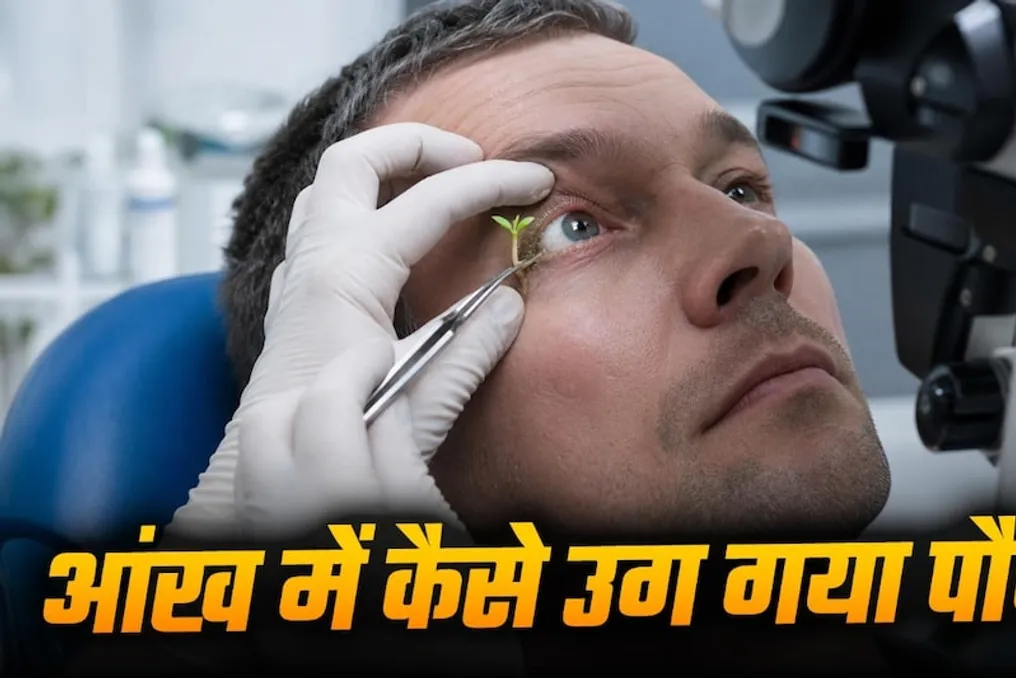
Russian man found to have a sprouted plant in his eye; he suffered from headaches for four months
Read more
Aaj Tak
www.aajtak.in

Russian man found to have a sprouted plant in his eye; he suffered from headaches for four months

A striking case occurred in Russia where a man suffered for a long time from severe headaches and vision problems. Examinations revealed that a plant seed was inside his eye, which began to sprout and form a small shoot whose roots penetrated the delicate tissue of the eye.

This incident took place in the Siberian region of Russia. A man named Maxim Sleptsov, who was 42 years old at the time of discovery, had been experiencing headaches, eye swelling, and worsening vision for several months. Initially, he assumed it was due to a minor eye injury but was unaware of the seed rooting inside the organ of sight.

Maxim, whose profession is a welder and plumber, had previously visited a friend in the remote area of Abiuski in Siberia. They were planning to go fishing and gather wild berries. During this visit, an accident occurred: a tree branch suddenly hit him in the face and entered his eye. After that, his eye started to hurt, itch, and become red, and tears flowed from it. He rinsed his eye with water, thinking he had removed a small piece of wood, and did not give the incident much importance.

However, the real problems started later. A very small seed, detached from the tree, remained inside his eye. Over time, it began to sprout in his eye, which he did not know about.

Initially, Maxim expected the eye injury to heal on its own. Nevertheless, his condition gradually worsened: his eye constantly swelled, and his vision began to suffer. Simultaneously, he developed severe headaches, resembling migraines, which persisted even after waking up in the morning. He struggled with these unpleasant symptoms for about four months. Due to the remoteness of his residence, it was difficult for him to quickly reach a specialist ophthalmologist.

Finally, when he managed to get to the city of Yakutsk, he went to the emergency department. During the examination, doctors saw something completely unexpected.

The examination established that the seed, having entered the eye, had sprouted. Its root reached a length of about 3 millimeters and penetrated the conjunctiva—the thin membrane covering the white part of the eye. The chief physician of the hospital, Ivan Lutskan, noted that the most surprising thing was that the seed had not just gotten stuck, but had released roots that reached the delicate tissues of the eye.

After the diagnosis, the doctors decided to remove the seed. This procedure was performed by ophthalmologist Elizaveta Karpova using local anesthesia. Local anesthesia ensured numbness in the treatment area so that the patient would not feel pain during the intervention. The doctor carefully extracted the seed from the eye using a syringe. The doctor emphasized that he had never encountered such a case before. According to the medics, if the seed had remained inside and continued to grow, it could have led to serious complications, including loss of vision.

After the seed was removed, Maxim felt immediate relief. He expressed joy that the doctors had timely determined the true cause of his discomfort. This case is surprising because the seed, which entered the eye after a minor branch injury, slowly sprouted and caused problems for many months. The article concludes with a warning: if pain, redness, or blurred vision persists after an eye injury, it should not be ignored, and one should consult an ophthalmologist.
Similar stories

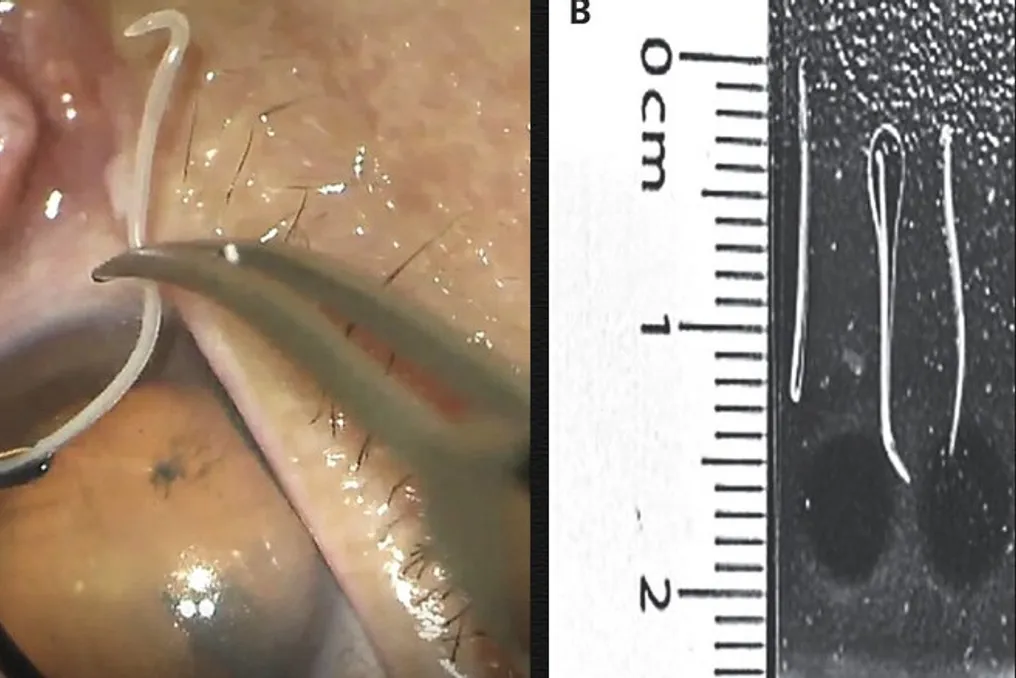
Doctors removed eleven live worms from the eyes of a 71-year-old farmer in South Korea
Read more
nplus1.ru

Doctors removed eleven live worms from the eyes of a 71-year-old farmer in South Korea

A 71-year-old farmer and plant grower sought treatment at a South Korean ophthalmology clinic, who had previously been considered healthy. He complained of blurred vision, redness, and a foreign body sensation in both eyes, symptoms that persisted for two months.

During an examination using a slit lamp, doctors discovered signs of inflammation, including conjunctival injection and corneal epithelial erosions. Furthermore, the presence of mobile whitish round worms was noted in the upper and lower layers of the conjunctiva of both eyes.

Under local anesthesia, a medical professional successfully extracted eleven live worms using a fine forceps. These worms ranged in length from 11 to 20 millimeters.

This clinical case was documented by doctors Ji Eun Song and Kyuseong Jo from Kangwon National University Medical School and published in The New England Journal of Medicine.

Tooth found above teenager's eye; study reveals unusual feature
Read more
www.aajtak.in

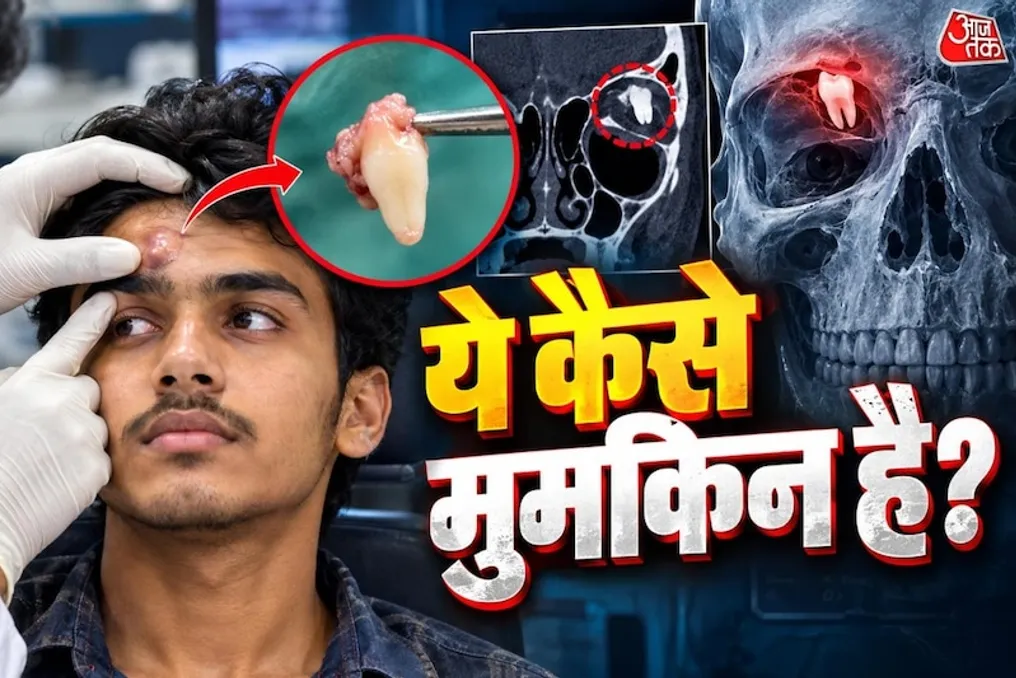
Tooth found above teenager's eye; study reveals unusual feature

Teeth usually appear in the mouth, but a striking case was recorded in Madurai, Tamil Nadu. A sixteen-year-old boy developed a tooth near the upper eyelid of his left eye. Initially, there was swelling above the eye that was not accompanied by pain.

After the swelling persisted for about a month, doctors conducted an examination and discovered that the dense white protrusion was actually a tooth. This case was identified at Arvind Eye Hospital in Madurai. Through examination and computed tomography (CT), the medics determined that the boy had developed a fully formed tooth in the upper part of his eye. Medically, this condition is called an Ectopic Tooth.

According to the report, the sixteen-year-old boy had swelling on the upper eyelid of his left eye for about a month, with no initial pain. Later, two hard white formations became visible between the eye and the eyebrow. These protrusions prompted doctors to conduct a thorough examination. When any lump or abnormal swelling appears around the eye, the cause must be determined, as it can be caused by both common problems and rare medical conditions.

In this case, doctors first tried to understand the situation after the initial examination.

After examining the boy's eye, the doctors ordered a CT scan. This procedure allows for detailed images of the body's internal structures, helping doctors to locate swelling, lumps, or abnormal structures. The scan showed a structure resembling a tooth developing in the upper part of the eye. It was established that both the crown and the root of the tooth were present, not just a dense formation. Doctors also ruled out the possibility that it was part of a rare tumor called a teratoma, which can contain various tissues such as hair, bone, and teeth. However, in this case, the extracted tooth was not part of such a tumor, and the case was classified as an ectopic tooth.

An ectopic tooth is a condition where a tooth forms outside its usual location, i.e., not in the jaw, but somewhere else in the body. Although teeth usually develop in the jaw, in some rare cases they are found in the nasal area, on the palate, or behind the cheekbone in the maxillary sinus. Depending on the location of the tooth's development and surrounding organs, different problems can arise. If the tooth develops where it puts pressure on surrounding tissues, nerves, or other structures, it can cause complications.

In this boy's case, the tooth was located in the upper part of the eye. According to the doctors, based on the available medical data, this is the first registered case of an ectopic tooth specifically in this part of the eye. Nevertheless, this does not mean that cases of teeth appearing in other abnormal places in the body have never been recorded.

After completing all examinations, the doctors performed surgery to remove the tooth located above the boy's eye. According to the report, the tooth was fully formed and showed no signs of teratoma tissue. The area around the eye is very sensitive, as it contains eye muscles, nerves, and other vital structures. Therefore, before detecting and removing any abnormal structure, it is crucial to accurately determine its location, which is aided by studies like CT. The tooth was successfully removed. For the doctors, this case was particularly significant because the tooth developed not in the mouth, but above the eye.

Currently, there is no definitive answer to this question. Tooth formation occurs during the early stages of organism development. Anomalies that occur during this process can lead to improper tooth development. However, the exact reason why a tooth developed in this part of the eye has not been established. Thus, it cannot be stated that the tooth appeared due to any single specific cause. The doctors identified it as an ectopic tooth, but the exact cause remains unclear.

This case highlights that the cause of an abnormal swelling or lump in the body cannot be determined based solely on external observation. To establish the true cause, a doctor's consultation and appropriate medical tests are necessary. If you notice swelling, a hard lump, or any unusual protrusion on the skin around the eye, you should not ignore it or attempt to treat it yourself; you must consult a doctor.

Popular