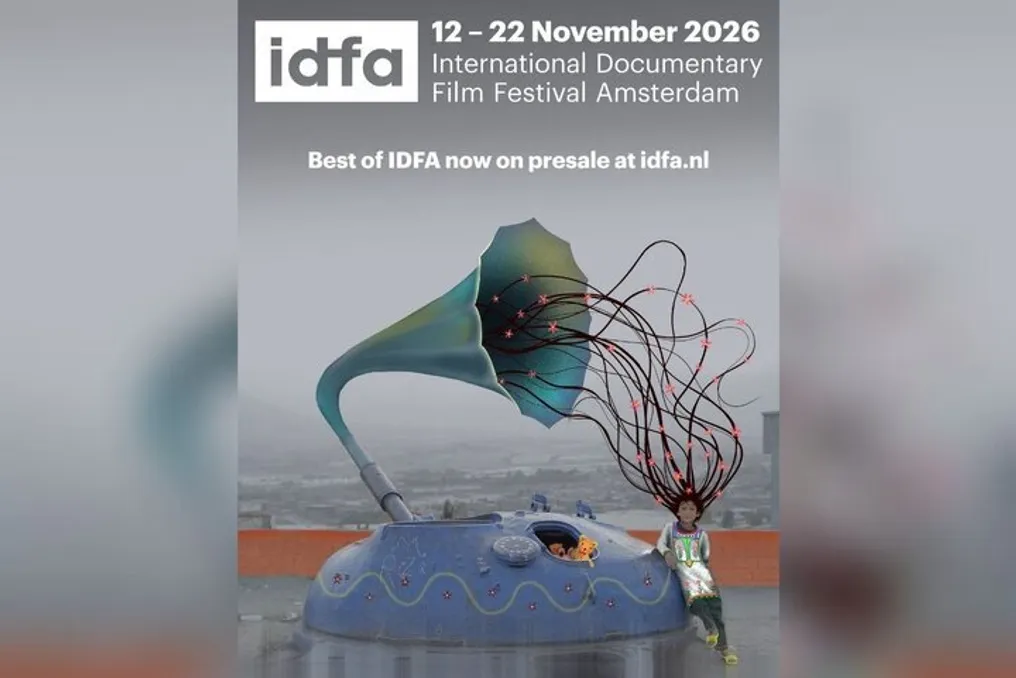
Iranian team created trailer for the International Documentary Film Festival Amsterdam (IDFA) 2026
Read more
Tehran Times
www.tehrantimes.com

Iranian team created trailer for the International Documentary Film Festival Amsterdam (IDFA) 2026

An Iranian team has prepared an official promotional trailer for the International Documentary Film Festival Amsterdam (IDFA) 2026. This project became possible after the creators of the film 'Fox Under the Pink Moon,' co-directed by Mehrdad Oskouei and Soraya Ahlaqi, received an invitation from the festival following the success of their work at IDFA 2025, according to ISNA.

The trailer's creation involved editor Mohammad Babaei and composer Afshin Azizi. Azizi shared on social media that their vision was to create something more than just a festival trailer—a work reflecting the pressing issues of modernity: the world, women, children, and hope for a better future.

He added that amid ongoing war and violence around the world, they aimed to create something that spoke of humanity, compassion, and hope through imagery, animation, music, and sound. The collaboration with IDFA, which they have always considered home for global documentarians, was a special experience for them.

Since 2022, IDFA has invited artists from its community to develop the festival's visual campaign, allowing them to interpret IDFA and explore the connection between art, documentary, and the world.

Continuing the Artistic Dialogue

For the 2026 edition, this creative dialogue is continued by director Mehrdad Oskouei and co-director Soraya Ahlaqi, the authors of the film 'Fox Under the Pink Moon,' which won the IDFA award for Best Film in the International Competition in 2025. Their joint work develops the theme initiated by the film, where Soraya's drawings served as a way to contemplate memory, displacement, and conflict.

This 76-minute documentary is a co-production of Iran, France, the United Kingdom, Denmark, and the USA. It premiered globally at the festival and received its first international award. The film features 16-year-old Soraya, who creates stunning drawings and sculptures that combine beauty and darkness. This determined sculptor and illustrator from Afghanistan has been trying to leave Iran and join her mother in Austria for five years.

The central idea of this year's festival campaign is visual transformation. The trailer combines fragments from previously shown documentaries at IDFA: footage testifying to destruction, migration, and the long-term consequences of conflicts. However, these images are not static; Soraya draws directly on them, transforming scenes of violence and devastation through her own visual language. Her illustrations do not attempt to hide or erase reality but react to it, opening space for another perspective.

The image of destruction can give rise to an unexpected gesture of beauty. Through drawing and animation, documentary footage becomes a canvas for imagination, connecting memory and the present, destruction and hope. This approach echoes the main idea of 'Fox Under the Pink Moon': art can change our perception of the world without denying its realities. Soraya's work acknowledges violence and suffering while insisting that beauty, tenderness, and hope can exist alongside them.

The creation of the campaign reflects the realities upon which it is based. It has become a mosaic of international collaborations forged across borders, time zones, and vastly different circumstances. Soraya worked on the campaign from a refugee shelter, where she currently lives in Berlin, while Mehrdad coordinated the project from France. Composer Afshin Azizi created the soundtrack from the Netherlands, and editor Mohammad Babaei assembled the trailer from Iran. Soraya's drawings were animated by Ukrainian animator Alina Milkina, working from Kyiv while the city continued to be subjected to Russian bombings.

Thus, the campaign is not just a piece about war, displacement, and resilience; it is also shaped by these realities. Its creators bring their experiences of migration, conflict, and distance into the process. Together, they demonstrate the connections that art can forge even when physical boundaries impede communication.

Emotionally, the trailer moves through four interconnected states: war, destruction, migration, and hope. Instead of presenting them as a linear journey, the campaign allows these experiences to intersect and coexist, reflecting the complexity of modern life. Documentary footage serves as a starting point for imagination. Drawings interrupt and transform it. Animation gives it movement and new meaning. The result is not an attempt to make complex realities more palatable, but an invitation to view them differently.

According to the IDFA website, this largely aligns with what IDFA itself strives for. Documentary cinema confronts us with reality while simultaneously creating a space where images can be questioned, shared, and transformed through dialogue. This year's campaign embodies that belief. Art cannot negate violence, but it can change our view of it. And by changing our view, it can help us envision what might come next.

IDFA is a leading international institution for documentary film, providing a platform for exchange, collaboration, and inspiration, bringing together filmmakers, artists, audiences, and professionals from around the world. Its broad activities include a public film and new media festival, funding initiatives, markets, talent development, and educational programs, as well as a year-round documentary center in the Amsterdam Fundelpark.
Similar stories

Iran and Syria jointly inscribed the tradition of making and playing the oud on the UNESCO Intangible Heritage list
Read more
www.tehrantimes.com

Iran and Syria jointly inscribed the tradition of making and playing the oud on the UNESCO Intangible Heritage list

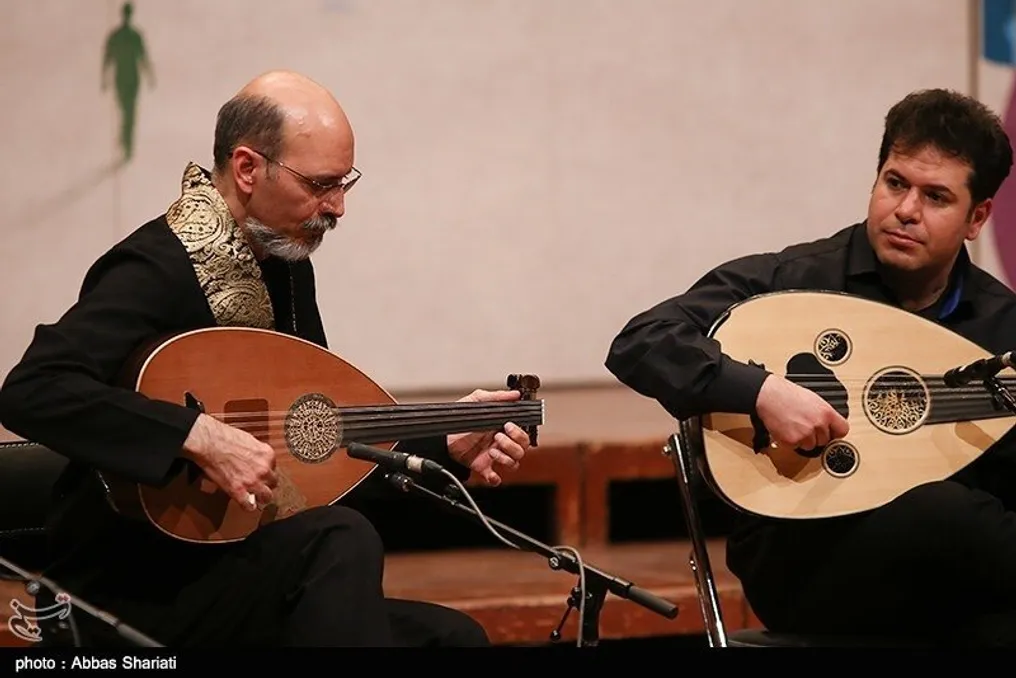
The oud, a stringed instrument with a characteristic pear-shaped body and resonant melodies, has long been part of the musical traditions of Iran and the wider West Asian region. The mastery of its creation and performance, passed down through generations of masters and musicians, received international recognition in 2022. Iran and Syria jointly inscribed this tradition into the UNESCO List of Intangible Cultural Heritage of Humanity.

This inscription was adopted at the 17th session of the Intergovernmental Committee for the Safeguarding of the Intangible Cultural Heritage, held in Rabat, Morocco, from November 28 to December 3, 2022. Thanks to this addition, the number of elements of Iran's intangible cultural heritage increased to eighteen.

The oud is a stringed instrument resembling a lute, known for its warm and expressive sound. Musicians play it by resting the instrument on their leg, using one hand for fingerpicking and the other for plucking the strings. The instrument's ability to create rich melodic and harmonic tones makes it suitable for both solo performances and ensembles accompanying folk songs and dances.

Creating an oud requires patience and specialized woodworking skills. The most distinctive part is the pear-shaped resonator box, which is usually made of walnut wood and plays a key role in shaping the instrument's resonance. According to traditional methods described in Iran's nomination, making an oud can take about 25 days, including stages of wood preparation and processing. Water and steam are used to increase the durability and ease of wood processing.

A typical oud has five pairs of strings, although some variations may include a sixth string. Differences in construction and string tension allow musicians to produce a wide range of timbres and adapt the instrument to various musical styles.

Beyond its physical form, the oud embodies a body of knowledge encompassing material selection, woodworking, instrument construction, and musical performance. Its historical presence is reflected in artistic depictions, literary works, and miniature painting, serving as a testament to its place in the region's cultural memory.

In the southern regions of Iran, this instrument and its associated musical traditions hold particular significance among certain Arab and Bakhtiari communities, especially in the provinces of Khuzestan, Bushehr, and Hormozgan. Oud music is also practiced and valued in other parts of the country, including Tehran, Kurdistan, Shiraz, Isfahan, and Khorasan.

The tradition is maintained through formal education and apprenticeship. Music schools, art centers, colleges, and universities teach oud playing, while experienced performers pass on their knowledge through direct instruction. The making of the oud, traditionally performed mainly by men, is also attracting more women, expanding participation in this craft.

Iran included this tradition in its National Heritage List as early as 2018, before submitting a multinational application with Syria for UNESCO recognition.

The inclusion of the oud in the UNESCO list complements Iran's extensive registry of intangible cultural heritage, which includes Radif Iranian music, Bakshi music from Khorasan, the art of making and playing the kamancheh, the traditional craft of the dotar, carpet weaving, Ta'zieh, Nakkali storytelling, and miniature painting.

The joint recognition of oud craftsmanship and performance underscores the importance of preserving living traditions that transcend national borders. Their continuity depends not only on preserving techniques and instruments but also on ensuring that the associated knowledge, music, and cultural practices remain part of the daily life of future generations.

Iranian Delegation Visits Advanced Technology Exhibition in Japan
Read more
www.tehrantimes.com

Iranian Delegation Visits Advanced Technology Exhibition in Japan

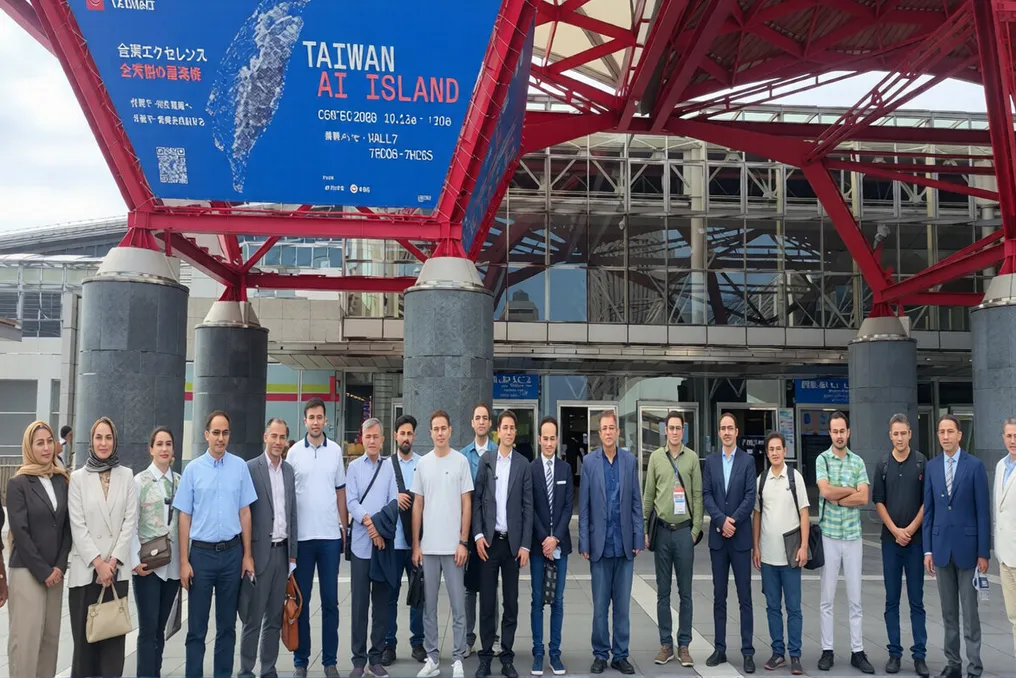
An Iranian delegation, comprising 17 companies engaged in scientific research and development, participated in the Combined Exhibition of Advanced Technologies (CEATEC), which took place from October 13 to 16 at the Nippon Convention Center in Tiba, Japan. The delegation was supported by the Prosperity and Innovation Fund.

The event provided a significant opportunity for technology experts, industrialists, and knowledge-based firms to familiarize themselves with the latest trends, products, and innovations in artificial intelligence, robotics, Internet of Things, and digital transformation, as reported by the IRNA agency.

On October 15, representatives of knowledge-based companies visited the Tokyo Innovation Base (TIB) and participated in networking sessions to establish professional interactions with experts in the innovation ecosystem. During the visit, Iranian and Japanese representatives held bilateral (B2B) meetings, exploring opportunities for joint commercialization of technologies, expanding international markets, and promoting ties between the two countries.

In parallel with the exhibition, the Iranian delegation held a meeting with the Iranian Ambassador to Japan, where potential directions and obstacles for developing scientific and technical and economic cooperation between Iran and Japan were discussed.

CEATEC 2026 showcased a vision of the future society, integrating the newest services and technologies that reflect global changes. Under the slogan 'Transformation,' the exhibition emphasized the new value brought by change through innovative solutions, practical exhibits, and programs.

The main goal of the event was to accelerate the implementation of advanced technologies in the real sector of society, such as AI, and to stimulate inter-industry cooperation to create practical business projects.

In January, Japanese Ambassador Tamaki Tsukada stressed the importance of strengthening scientific ties with Iranian universities across various fields, especially in new technologies, artificial intelligence (AI), and advanced materials. The Ambassador quoted IRNA, stating that science and industry are the main indicators of power in the 21st century and play a crucial role in scientific diplomacy.

These statements were made during a meeting with Mohammad Shokrikh, Rector of the Iran University of Science and Technology (IUST). The Ambassador noted that Iran's scientific capabilities and potential have never been fully presented to Japan, and stated that this is his primary task. He also expressed readiness to facilitate interaction between IUST and Japanese universities.

For his part, Shokrikh detailed the university's achievements in science, research, and industry. He proposed faculty and student exchanges, joint educational courses and scientific projects, the establishment of joint laboratories, and cooperation in science and technology parks.

Referencing a consortium of five leading Iranian technological universities—Tehran University, Tehran Medical University, Amkirab University of Technology, Sharif University of Technology, and Iran Medical University (UT5)—an official representative stated that this consortium could lay the foundation for expanding scientific contacts between top Iranian technological universities and Japanese universities, which was positively received by the Japanese side.

Popular