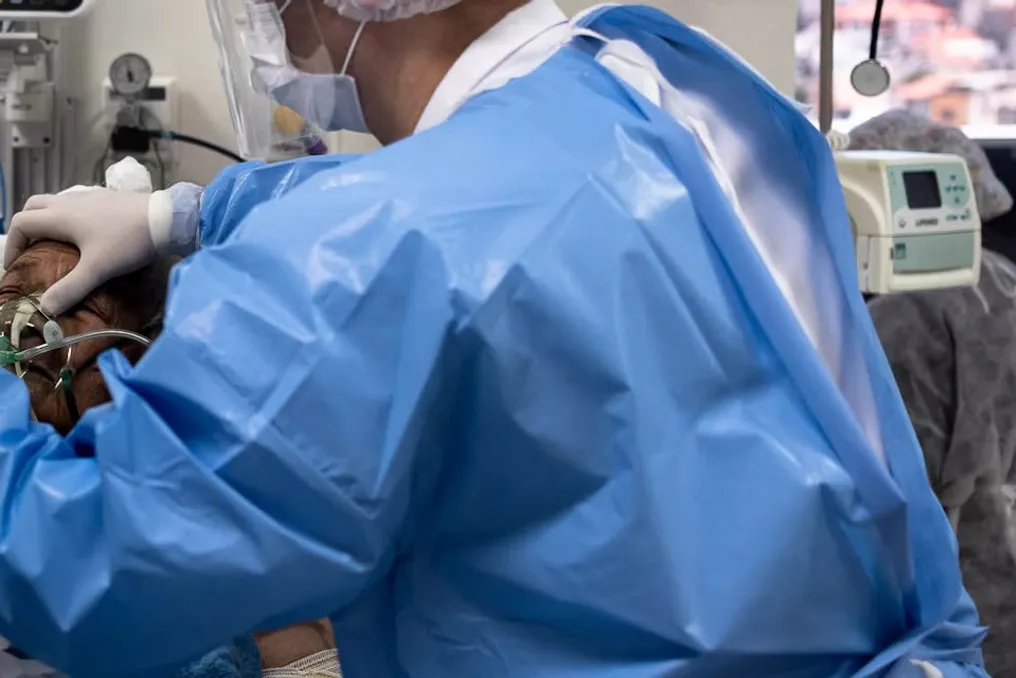
The interruption or postponement of medical appointments due to events such as pandemics or floods can have serious consequences for individuals with cancer, who depend on rapid diagnosis, constant treatment, and specialized monitoring. Maintaining oncological care during emergencies is not just a matter of service organization, but a vital priority to save lives and reduce social disparities.
In Brazil, this challenge is aggravated by the high incidence of the disease, with cancer being the second leading cause of mortality in the country. Projections from the International Agency for Research on Cancer (IARC) indicate a potential increase of 84% in annual cases between 2022 and 2050.
Cancer in extreme situations
This scenario requires more than just expanding prevention, diagnosis, and treatment capacity; it requires preparing the healthcare system itself to operate continuously in the face of increasingly frequent and interconnected crises. Notable examples, such as the Covid-19 pandemic and the floods in Rio Grande do Sul in 2024, demonstrated how distinct emergencies can harm healthcare assistance.
During times of crisis, procedures and appointments may be suspended, health units may lose functionality, and patients may face problems with mobility and access to medication and clinical follow-up. The impacts are more severe for those who already face social, territorial, and economic barriers.
The Brazilian experience shows that crisis preparedness must explicitly include cancer control. Although the Unified Health System (SUS) ensures universal and free access, obstacles related to financing, regional differences, and coordination between services persist.
Resilience, in this context, means the ability to anticipate risks, absorb shocks, adjust service organization, and learn from mitigation tactics used. This implies not only restoring hospitals after an emergency but preserving all phases of the oncological journey, from prevention and diagnosis to palliative care.
This vision was discussed in a national workshop held in Rio de Janeiro in December 2025. The event was organized by IARC, the Pan American Health Organization (PAHO), and the National Cancer Institute (INCA), bringing together experts in public policy, health professionals, researchers, and civil society representatives. The focus was on defining action priorities, based on the experiences of Covid-19 and the floods in Rio Grande do Sul. The discussions culminated in a scientific article published in the journal The Lancet Regional Health – Americas.
The article highlighted that strengthening resilience requires coordinated actions on four fronts: governance, service delivery, resources, and financing. The lack of reliable data, for example, prevents the location of patients with interrupted treatment. Without coordination among managers, referral to other services becomes more complex, and lack of funds can delay the response.
Five priorities to strengthen cancer control in Brazil and the SUS
The first priority is to integrate oncological care into emergency response and preparedness plans. Contingency plans must specify which services must remain active, how to restructure care flows, and how to ensure the continuity of vital treatments. It is crucial that there is an agreement between the Union, states, and municipalities so that these measures can be applied in various locations.
The second goal is to improve and unify health information systems, which are currently dispersed. Data that can be exchanged between systems helps identify patients with pending exams or appointments, monitoring interruptions and reallocating demand among units. It is equally necessary to ensure that managers and professionals have access to the necessary information to decide, while maintaining the security of personal data.
The third priority involves protecting infrastructure and the workforce. Hospitals, radiotherapy services, laboratories, transport networks, and supply systems must be included in contingency plans. It is also necessary to train professionals to act in exceptional circumstances, providing clear protocols, support teams, and communication channels that facilitate the reorganization of care.
The fourth priority is to plan the resumption of care with a focus on equality. Reactivating services based only on operational capacity, ignoring clinical and social needs, can accentuate existing inequalities. Patients with higher clinical risk, paralyzed treatments, and access difficulties must be identified and prioritized, with support from primary care.
Finally, it is imperative to establish flexible financing mechanisms for emergencies. The ability to mobilize funds quickly, rebuild damaged structures, and temporarily increase service offerings defines the speed of recovery. Clarity on financing and pre-defining responsibilities help prevent the response from depending solely on improvised solutions.
Preparing the system to protect lives
These guidelines do not imply creating a system parallel to the SUS. On the contrary, they point to the need to reinforce existing mechanisms, improve regional articulation, and incorporate resilience into routine health planning. The experience gained in primary care, care networks, and national cancer control policies provides a solid foundation for progress.
However, effective implementation depends on firm commitments: well-defined institutional responsibilities, sufficient resources, indicators of care continuity, and evaluation methods capable of converting the lessons of each crisis into lasting improvements. The participation of patients and civil society entities is fundamental to discovering barriers that administrative metrics may not reveal.
Considering the projected growth in cancer cases and the possibility of simultaneous crises occurring, the issue transcends the simple expansion of care under normal conditions; it is about preventing emergencies from interrupting access to oncological diagnosis and treatment. Strengthening the resilience of cancer control means understanding that care must be planned before the crisis, protected during it, and improved in the recovery phase.
Thus, it is believed that this situation represents an opportunity to reaffirm the SUS's commitment to universality and equity. A system ready to face adversity not only handles emergencies better but also enhances its capacity to provide dignified, coordinated, and timely care to the population.