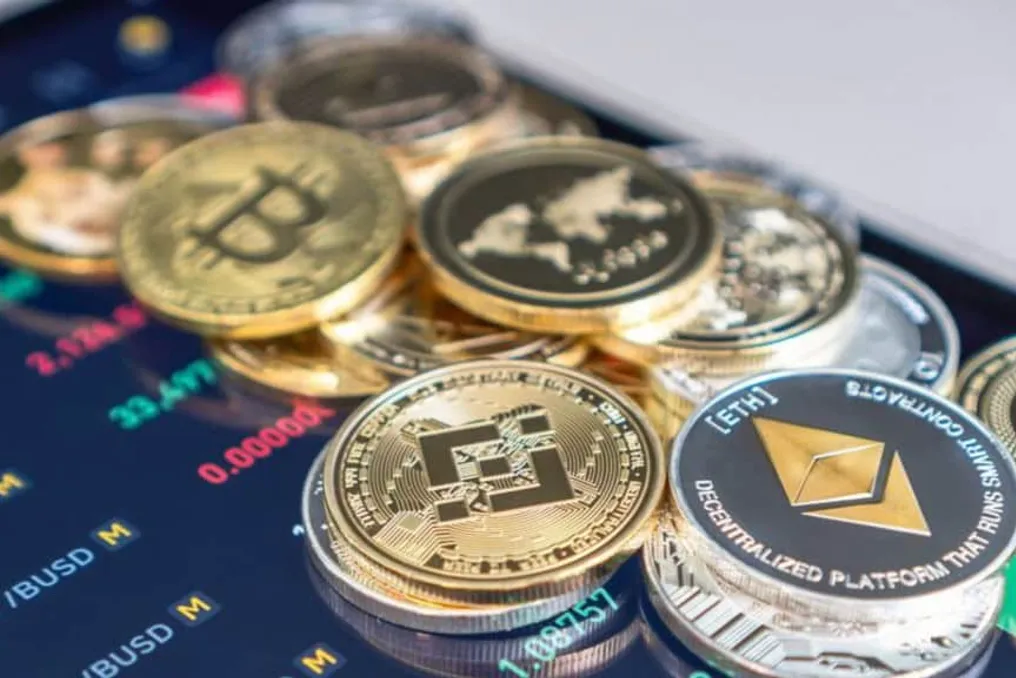
Hackers stole $6.3 billion (equivalent to approximately 33.71 billion Brazilian reais) from Binance, the world's largest cryptocurrency exchange. Analysts consider this incident the largest in the sector's history.
This incident caused a market drop, prompted industry companies to freeze some funds, and raised questions about the security of digital asset trading platforms.
According to the American blockchain analytics company TRM Labs, the attackers gained access to Binance wallets across 10 different networks and transferred the majority of the funds in about 20 minutes. The company linked this attack to North Korean groups, noting technical similarities with previous thefts attributed to Pyongyang, including the 2025 hack of the Bybit exchange, which was investigated by the FBI.
Chainalysis reported that it could not yet confirm the cause of the intrusion. By 9:30 AM Brazilian time, the company had identified at least $5.912 billion (approximately 31.63 billion Brazilian reais) in stolen assets.
Mark Karpeles, former head of the Mt. Gox exchange, told Reuters that Binance's assets appear to be distributed across different systems. He speculated that the hacker might have obtained valid authorization to move funds in certain platform systems and possibly even access to a private key.
Binance cooperated with partners to block the affected resources and managed to localize about $3 billion (16.05 billion Brazilian reais). Co-founder Yi He confirmed that the company would cover all losses resulting from the attack.
Other companies also participated in efforts to prevent the movement of funds. Binance's initial investigation showed that the breach might have started with the compromise of one engineer's computer. This access allowed the attacker to penetrate one of the exchange's systems and execute unauthorized withdrawals.
The company stated that user deposits were unaffected and expected to resume withdrawals within 48 hours after the attack. Binance also holds a customer protection fund composed entirely of Bitcoin.
For Kenneth Goh, Director of Private Capital Management at UOB Kay Hian, the attack on one of the world's largest exchanges should prompt investors to pay more attention to asset custody and platform responsibility in case of security failures.
The market reacted to the incident with decreased trading. Bitcoin fell by more than 3%, reaching a six-week low of $76,368. Ethereum also lost over 3%, dropping to $2,178. Coinbase shares fell by 4.8%, and Strategy shares dropped nearly 6% in extended trading in the United States.
Amanda He, Investment Director at ChainUp Investment, told Reuters that the initial drop might have been caused by the cryptocurrency being sold by the attacker himself. In her opinion, this step contributed to spreading investor concerns during the Asian session. She mentioned that her company sold positions held on Binance and converted the proceeds into stablecoins.
For Tim Sun, Senior Researcher at HashKey Group, the pause in deposits and withdrawals on Binance could negatively affect capital flow between platforms and impact market makers responsible for providing buy and sell prices to facilitate trades.
Liquidity concerns are also featured in assessments by Damon Xu, founder of 1Token. Commenting to Reuters, he predicted a reduction in strategies involving simultaneous operations across different exchanges and the use of leverage, which allows trading with borrowed funds. Xu believes that decentralized platforms may benefit from potential capital and commercial activity shifts.
Jeff Ko, Lead Analyst at ViaBTC, assessed to Reuters that Bitcoin might face less selling pressure because its transactions are tracked on the blockchain, making it difficult to move stolen funds without leaving traces. Ethereum, conversely, might experience greater pressure due to the availability of tools that facilitate obscuring transaction origins.