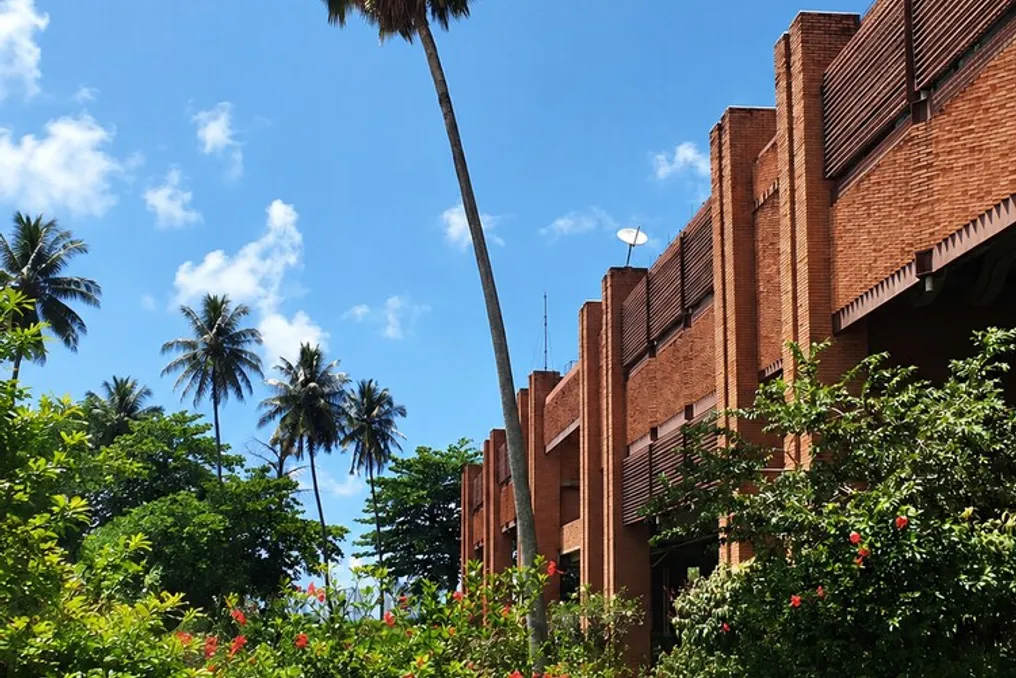
Assis Reis's Architecture in Bahia: The Influence of Climate and Culture on His Work
Read more
ArchDaily Brasil
archdaily.com.br

Assis Reis's Architecture in Bahia: The Influence of Climate and Culture on His Work

October 24th marked the centenary of the birth of Brazilian architect Francisco de Assis Couto Reis (1926–2011). He lived and created the majority of his legacy in the city of Salvador, Bahia state. Assis Reis, as he was often called, is known not only for the buildings he designed but also for his proposals for urban revitalization, the design of the Brazilian Pavilion at the International Exposition in Osaka, Japan (which was never built), and the Model of the reduced city of Salvador, which was registered in 2020.

His extensive and diverse work reflects a specific moment in modern Brazilian expression, when 'second-generation' architects paid special attention to adapting to local climatic, geographical, and cultural conditions.

Born in Aracaju, Sergipe, on October 24, 1926, and raised in Parnaíba, Piauí, Assis Reis moved to Salvador in 1942. In 1957, he received his degree in architecture from the Faculty of Architecture of the Federal University of Bahia (UFBA), and starting in 1968, he began teaching at the same institution, contributing to the formation of modern architectural thinking in Bahia.

His professional career began at the Salvador City Planning Office (EPUCS), which was responsible for the first master plan of the state capital. There, he worked with the architect and urban planner Diogenes Rebusas, becoming his partner after the office closed. Throughout his career, he worked in the fields of architecture, urbanism, and education, collaborating with government agencies such as the Salvador mayor's office, where he developed revitalization projects, as well as with Rio de Janeiro, participating in the Favela-Bairro program.

Significant Works and Conceptual Approaches

Among his most significant works are the regional headquarters of the San Francisco Hydroelectric Company (CHESF) from 1977; residential buildings such as Solar das Mangueiras (1976) and Solar do Itaigara (1977); Casa Santa Izabel (1976); Albert Schweitzer Medical Center (Centro Médico da Graça) from 1967; the Courthouse headquarters from 1998 and its annex from 2002. Overall, his works are characterized by a deep study of the place where they are located—both in terms of culture and lifestyle, and in terms of climatic and topographical conditions, which become important design constraints.

According to architect Pedro Nery, Assis belonged to a generation of architects who in the 1960s and 1970s 'began to link 'Regionalism and Modernism', strengthening local connections expressed in a universal form.'

In the late 1960s, Assis presented the design for the Brazilian Pavilion at the International Exposition in Osaka, Japan. The project consisted of two volumes: a vertical and an outward-projecting horizontal one. On the ground floor, visitors could see 'Brazil of yesterday,' and upon ascending in elevators, they were met with sounds and projections reminiscent of the fast pace of Brazil at that time. On the upper level, visitors awaited 'an absolutely horizontal, completely open space, intended for a general consecration through carnival,' according to Nery. This innovative project won the Hors Concours prize at the national competition organized by the Ministry of Foreign Affairs (Itamaraty).

Assis was also awarded the Golden Necklace of the Institute of Brazilian Architects (IAB) in 2008, an award recognizing his contribution and trajectory in Brazilian architecture.

The Salvador City Model and Legacy

Among Assis Reis's most unique works is the Model of the reduced city of Salvador, created in the 1970s at a scale of 1:2000, covering the entire municipal territory. Due to its size and documentary nature, the model is an important tool for presenting and understanding the structure of the city. The model continues to be updated by the Municipal Administration of Salvador through the Mario Leal Ferreira Foundation (FMLF) and was registered by the municipality in 2020, becoming part of a complex of sites recognized as Salvador's cultural heritage.

The architect's centenary was marked by the transfer of his foundation to the House of Architecture – Portuguese Center for Architecture in Matosinhos, Portugal. The first contact with the institution occurred in 2017, when the CHESF headquarters project was featured in the Infinito Vão exhibition, curated by Guilherme Vizinho and Fernando Serapiao. This was the first initiative from the permanent archive of the House of Architecture, within which more than 150 donors sent original material from 103 projects, which became part of the institution's collection. Since then, other prominent figures in architecture, such as Paulo Mendes da Rocha, Lucio Costa, Eduardo Souto de Moura, and Gonçalo Bern, have also transferred their foundations to the House of Architecture.

In addition to the built works, the documentary complex, consisting of over 3000 items—including drawings, plans, two models, photographs, written documents, publications, and digital archives—allows tracing various stages of Assis Reis's workflow, from preliminary research and pre-designs to executive projects, surveys, plans, sections, facades, and structural details.

With the foundation's arrival at the House of Architecture, an extensive program dedicated to celebrating the architect's legacy throughout the year begins. Planned events include public roundtables for critical discussion of Assis Reis's works. These discussions will take place at the UFBA Faculty of Architecture and will include architects, researchers, friends, and former colleagues from his office, such as Marcia Reis (Assis's daughter and partner), José Carlos Wapaya (his colleague in his later years), Nivaldo Andrade, Paulo Ormindo de Azevedo, Nilton Doreia, Sergio Magalhães, Verena Andreatta, Erika Checcucci, Naiya Albán, and John Taylor (co-designer of the CHESF project). Furthermore, tours of the architect's works will be held as part of the celebrations, information about which will be posted on the UFBA Faculty of Architecture website, and a documentary film and book on Assis's trajectory and creativity will be produced.

By combining geographical conditions and local characteristics with an innovative spatial language, Assis Reis's work is one of the diverse expressions of modernism in Brazil. His ability to transform local conditions into architecture of universal value establishes direct links with contemporary discussions in the discipline. In this sense, the celebration of his centenary represents a fundamental movement to ensure that this vast technical and conceptual repertoire continues to resonate with future generations of architects.
Similar stories

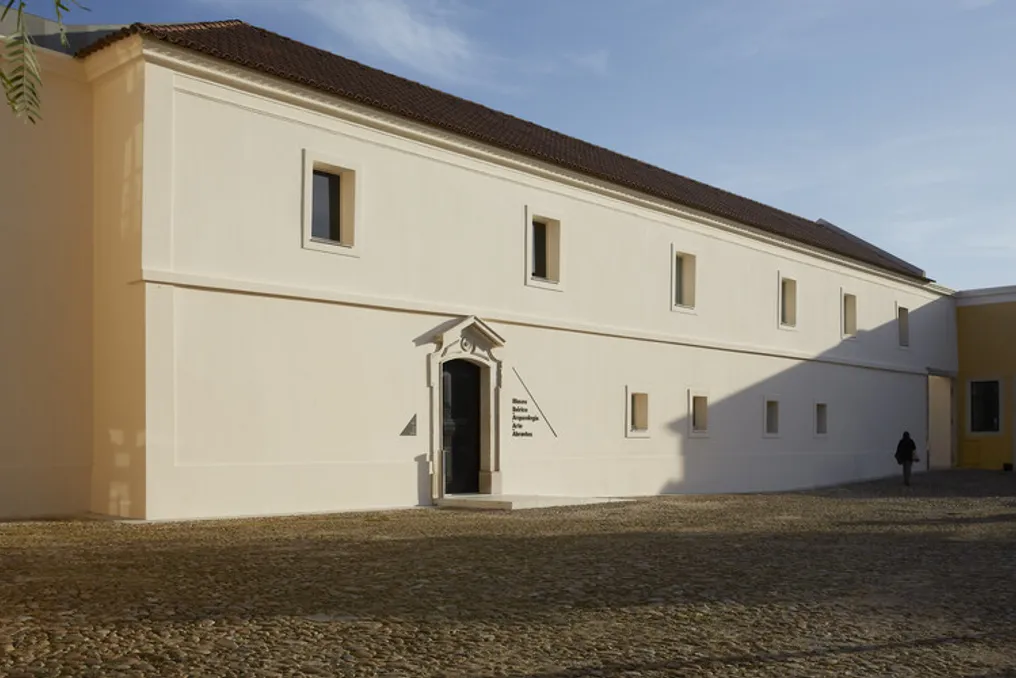
MIAA - Iberian Museum of Archaeology and Art and Carrilho da Graça Architects in Abrantes
Read more
archdaily.com.br

MIAA - Iberian Museum of Archaeology and Art and Carrilho da Graça Architects in Abrantes

The city of Abrantes is a significant point, both materially and historically, within a larger geographical area. This importance stems from its geo-strategic location, resulting from a promontory situated at the geometric center of the territory, delimited by geopolitical conventions and located at the transition between two landscapes of different morphologies.

Abrantes has always functioned as a point of observation and reference, serving as a fortified outpost and an obligatory route, whether in times of peace or conflict. On this fundamental terrain, human presence established its location, intrinsically linked to the surrounding environment.

The Castle, being the initial nucleus of the city, occupied the primary position, dominating the curve of the Tagus River that surrounds the promontory. The castle walls extended to organize civil and religious life, following the valleys and descending towards the river. Near the river, on the alluvial plain, the first religious communities emerged, close to the movement of work and commerce, but vulnerable to seasonal flooding risks from the Tagus.

Due to poor sanitary conditions and the occurrence of plagues, religious orders were forced to leave the plain in search of greater topographical safety, settling on the outskirts of the city. These new installations appeared at the extremes of the urban axes, which were previously centered on the Castle and the two parishes.

The Dominican Convent of São Domingos was established on the Rossio plateau, outside the walls (current Republic Square). This 16th-century building sat on a section of Vauban-style wall, atop a steep slope on the southern end of the promontory where Abrantes is located. After losing its monastic function, the convent was used by military personnel and students, and its church was converted into a public library, while most of the other spaces were ceded to the Polytechnic Institute of Tomar.

Currently, the convent houses the MIAA - Iberian Museum of Archaeology and Art of Abrantes, which occupies the wings not used by the library. The MIAA project is based on the understanding that construction in the territory is part of it, being simultaneously an external object and a record of events and periods that shape the landscape.

Starting from a dialectic aimed at clarifying the built complex, the project considers the programmatic and logistical requirements necessary to create museological conditions in a historical building that required care. The objective was to find a solution that highlighted the heritage value, resuming an organization that referred to the original spatial arrangement.

The convent's spaces, arranged around the original cloister, revealed unexpected architectural quality and flexibility after the removal of cells by previous occupants. This reinforced the need for the restoration, rehabilitation, and infrastructure of the building to be guided by formal sobriety and functional occupation adapted to the structural and spatial characteristics of the complex.

The ground floor of the convent was mainly dedicated to technical services and support for the museum's operation. On the first floor, exhibition spaces are distributed for specific collections and funds deposited at the Abrantes City Council.

The heritage assessment of the building allowed for the recovery, in a practical and surprisingly advantageous way in terms of architectural quality and functional flexibility, of the original concept of the Dominican Convent. Thus, the MIAA subtly assumes a new centrality in the city of Abrantes, located on top of the hill.

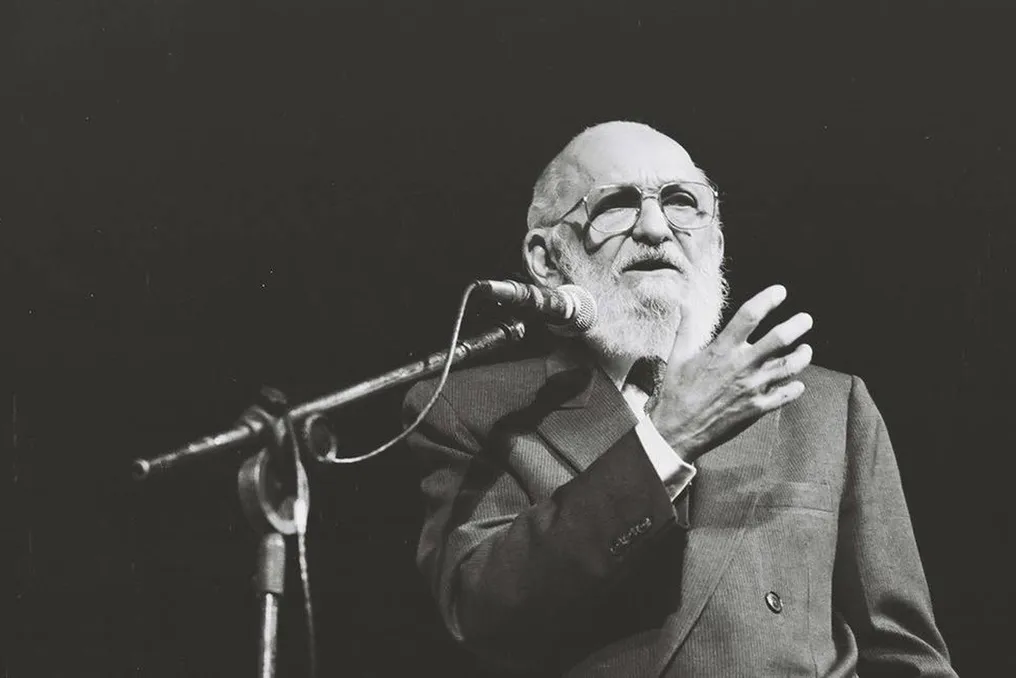
Paulo Freire's experience in Angicos recognized as intangible cultural heritage of Rio Grande do Norte
Read more
g1.globo.com

Paulo Freire's experience in Angicos recognized as intangible cultural heritage of Rio Grande do Norte

The initiative known as "40 Hours of Angicos," coordinated by educator Paulo Freire in 1963 in the city of Angicos, has been officially recognized as Intangible Cultural Heritage of Rio Grande do Norte. This decision was formalized in this Tuesday's (27th) Official Gazette.

This literacy project was implemented in the municipality of Angicos, located in the interior of the state. The recognition covers all aspects related to the experience, including oral accounts, knowledge, pedagogical practices, and the memories of the communities and individuals who participated.

As established by legislation, the purpose of this recognition is twofold: to preserve the collective memory of those involved and to stimulate research, in addition to promoting the dissemination of historical and cultural references linked to the project. Furthermore, it aims to transmit this legacy to future generations and highlight the relevance of Angicos to the trajectory of Brazilian education.

The official text clarifies that such recognition does not annul the administrative procedures for inventory and registration provided for in cultural heritage protection standards. Nor does it impose on the state education network the adoption of a specific pedagogical method or promote changes in school curricula.

The 40 Hours of Angicos

In 1963, Freire introduced an innovative model of popular education in the city of Angicos, located in the West of Rio Grande do Norte, which at the time had approximately 9.5 thousand inhabitants. The educator set an ambitious goal: to teach adults to read and write in just 40 hours. The first class had 380 registered participants, about 300 of whom completed the course, which took place between January 28 and April 2.

The Paulo Freire method focuses on adult literacy through the discussion of their mutual experiences, using words extracted from the reality of the students themselves, which are later decoded to aid in acquiring writing and understanding the world.

Freire structured his literacy method based on people's life experiences. Instead of using standardized teaching materials, such as teaching phrases like "the bull baba" or "grandma saw the grape," he worked with so-called "generating words" that came from the reality of the common citizen.

A practical example shows that a factory worker could learn terms like "brick" or "cement," while a farmer would learn vocabulary such as "sugarcane," "hoe," "earth," and "harvest." The formation of new vocabulary occurred through the phonetic decoding of these words.

The coordination of Paulo Freire's arrival in Rio Grande do Norte began in 1962, under the management of the then governor Aluízio Alves, a native of Angicos, and was facilitated by the Secretary of Education Calazans Fernandes. The intention was to extend the Paulo Freire program throughout the state to reduce illiteracy rates; however, the educator was exiled in 1964 after the military coup, accused of subversion.

Artist Amadeo Carvalho Presents Cape Verde at AKAA Contemporary Art Exhibition in Paris
Read more
rtp.pt

Artist Amadeo Carvalho Presents Cape Verde at AKAA Contemporary Art Exhibition in Paris

Cape Verdean artist Amadeo Carvalho is exhibiting his individual show for the first time in Paris, France, at the international AKAA exhibition. This exhibition focuses on themes of identity, memory, and diaspora experience, bringing together works from his series 'Portraits of Absence.'

The exhibition, titled 'Fragments of Identity — Lusophone Circulations, Sensitive Geographies,' was presented by the artist known as a 'face worker.' He considers this opportunity extremely important for the focused presentation of his work and the search for a new audience, explaining that his pieces are portraits that explore memory, identity, and presence.

The exhibition is curated by Cape Verdean Emily Silva, who founded the curatorial platform Casa Vicência in Paris. The exhibition is distinguished by its use of organic materials and textures on canvas. The artist noted that he uses pigments from the volcano of Fogo island because his ancestors, who hold family memories he does not know, originate from there.

In addition to Fogo island, Carvalho incorporated volcanic materials collected by him from the islands of Santiago and São Vicente into his canvases, thereby linking the archipelago's geology with the creative process, according to a report sent to Lusa. Living in London, UK, Amadeo Carvalho believes that one must be outside an island to see it, emphasizing that art has helped him 'heal many wounds and traumas.'

He added that these pigments help establish a connection between territory, body, and what remains between people, and his work touches upon the experience of emigration. According to him, emigration not only causes longing for loved ones but also heals.

For Amadeo Carvalho, the accumulated experience of staying in art residencies in Africa, America, and Europe nourishes his practice and creative dynamic. He stated that Cape Verdeans are a people born in movement, and as an artist, he too must constantly be in motion.

Despite the inspiration from his Cape Verdean roots, Amadeo Carvalho refuses to accept limiting labels in the international art market. He insists on being called simply an artist, not just an African one, as such labels can confine him within frameworks he dislikes, since art is much broader than that.

The artist also emphasized that his works are created to establish an intimate connection with the public through visual details. He concluded that while the painting is visible from afar, approaching closer allows one to examine the textures and layers that reflect daily struggles, and sometimes one must remove layers to understand another person's layer.

Amadeo Carvalho, originally from São Vicente, was recognized in the 2024 Bantumen Powerlist100. His background includes visits to FNB Art Joburg (South Africa) and an art residency at Pacific Northwest College of Art, in the United States.

Popular