Karnataka designates 2500 acres of land for Mekedatu project on River Kaveri, planning to store 66 TMC of water and generate 400 MW of electricity
Read more
Aaj Tak
www.aajtak.in

Karnataka designates 2500 acres of land for Mekedatu project on River Kaveri, planning to store 66 TMC of water and generate 400 MW of electricity

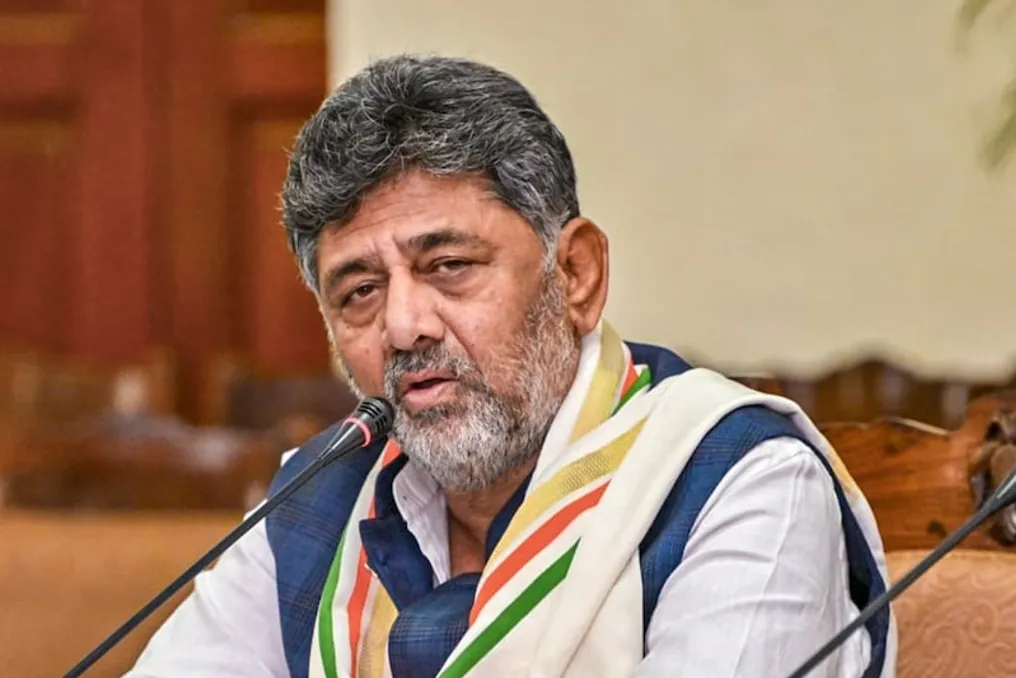
The Government of Karnataka has intensified preparations for the implementation of the proposed Mekedatu balancing reservoir project on the River Kaveri. State Minister DK Shivakumar announced that alternative land measuring 2500 acres, including forest areas, has been identified for this project, and the search for the remaining territory is ongoing.

According to DK Shivakumar, upon completion, the project will enable Karnataka to accumulate 66 TMC of water, which will help regulate water discharge during periods of high demand. This is expected to benefit farmers in Mandya and other regions of the Kaveri basin.

During a press conference in Mandya, Shivakumar stated that the process of securing land parcels for the project is underway. A committee has been formed to oversee this process, chaired by the Deputy Commissioner of Mandya district. He clarified that officials have held meetings with the Forest Department regarding the provision of alternative lands. The decision was made to provide land other than forest areas in exchange for the required plots. Currently, 2500 acres of land have been identified.

DK Shivakumar stated that the government will post complete information about the alternative lands on the forest approval portal, after which the necessary permissions are expected to be obtained.

Mekedatu is a multi-purpose project for Karnataka. It involves the construction of a balancing reservoir on the River Kaveri near Talka in Kankakapura, South Bangalore district. The project aims to ensure both drinking water supply and power generation.

According to officials, the project will help provide 4.75 TMC of drinking water for Bangalore and surrounding areas. Additionally, 400 megawatts of electricity generation is planned. Shivakumar noted that Karnataka is obligated to release 177 TMC of water into the lower reaches of the river. The state constantly receives directives regarding the volume and timing of water releases. The proposed reservoir will help regulate water flow, which will also benefit farmers in Mandya and residents of other Kaveri basin areas.

The Mekedatu project is causing disagreements between Karnataka and Tamil Nadu. Tamil Nadu fears that the project's implementation could affect its water share, leading the state to oppose the initiative. Shivakumar reported that during his tenure, he fought for this project for the people of Mandya and filed a petition in the Supreme Court. According to him, permission to advance the project was granted by the Supreme Court.

He also mentioned that about 500 acres of land will be acquired from farmers for the project, and the acquisition process will commence. The government hopes to make some progress in this regard by the next budget.

Shivakumar refuted allegations that the government is unwilling to provide land for the Indian Automobile Research Association (ARAI) test bench in Mandya. These accusations were made by JD(S) leader and Union Minister HD Kumaraswamy. Shivakumar responded that the state government initially offered 100 acres of land. However, if the Heavy Industries Department requires more land, the government is prepared to provide additional plots. He added that the relevant department can specify the desired plots, and if necessary, the government will proceed with their acquisition.

Similar stories

Supreme Court of Jammu and Kashmir cancels water tax on hydropower projects
Read more
timesofindia.indiatimes.com

Supreme Court of Jammu and Kashmir cancels water tax on hydropower projects

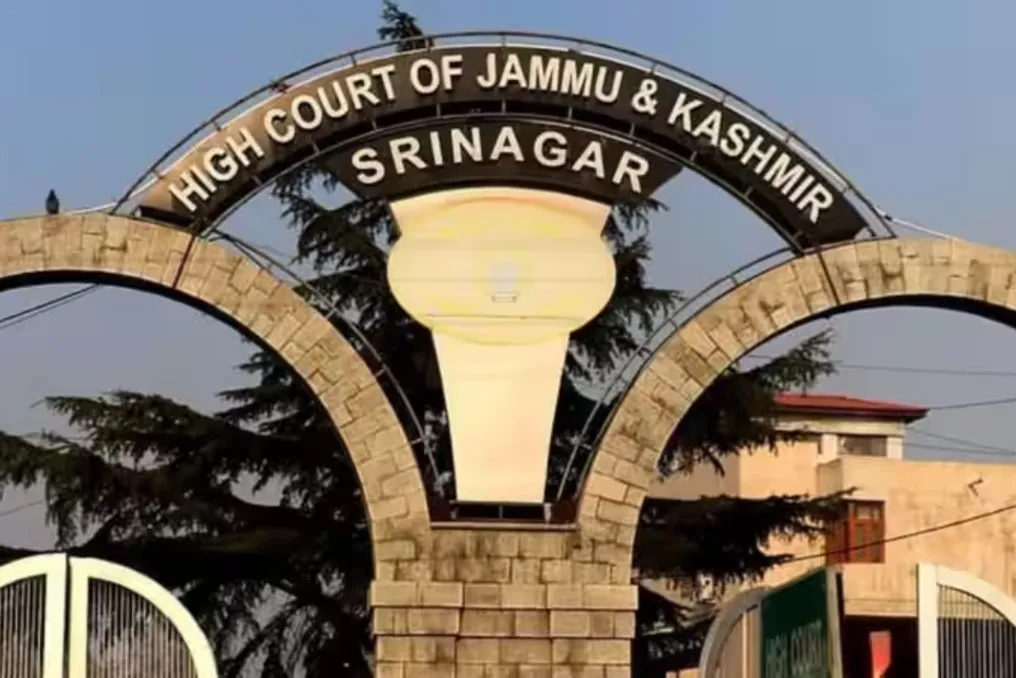
The Supreme Court of Jammu and Kashmir and Ladakh declared the Water Resources Act of 2010 invalid on Thursday. The court ruled that charges for water usage levied on hydropower projects effectively constituted a tax on electricity generation, which exceeded the authority of the former state legislature.

The bench, comprising Sanjay Dhar and Rajnesh Oswal, annulled demands directed at 13 independent power producers and prohibited the Government of Jammu and Kashmir from imposing any tax on power generation under the guise of water usage fees or any other charges.

The producers challenged the law, arguing that the fees set by the Water Resources Regulatory Authority on April 2, 2019, depended on the height at which the water turned the turbines, rather than the volume of water consumed, which essentially amounted to a tax on energy production.

The government, in turn, defended the levy by citing its powers to regulate water use and storage, the National Water Policy, and the need to conserve Jammu and Kashmir's water resources. However, the Court dismissed these arguments, establishing that the legislative act exceeded the competence of the former state at the time of its enactment.

Furthermore, the Court rejected the arguments of the Government of Jammu and Kashmir that subsequent adoption of the law under the Jammu and Kashmir Reorganisation Act of 2019 granted it legitimacy. The Supreme Court noted that a law that was unconstitutional upon its introduction cannot be deemed valid solely due to its subsequent adoption by Parliament.

Can Chennai's solution to the water problem help Hyderabad cope with the water crisis?
Read more
thebetterindia.com

Can Chennai's solution to the water problem help Hyderabad cope with the water crisis?

Hyderabad is facing a severe water shortage: the level of one of its main reservoirs has dropped to 13%, and 6000 water tankers are ordered daily.

A possible solution lies in a simple idea that helped Chennai overcome its own water crisis. In 1995, Professor Sekhar Raghavan noticed an alarming fact: tap water had become saline because the lowering of groundwater levels allowed seawater to seep in.

Despite abundant rainfall, Chennai was losing a lot of water. Instead of waiting for external intervention, it began actively promoting rainwater harvesting. His concept was simple: collect rainwater from roofs, roads, and other surfaces, filter it, and direct it to replenish underground aquifers.

He personally visited homeowners, persuading them to implement this system, although many initially rejected his efforts. In 2003, the state of Tamil Nadu made rainwater harvesting mandatory for buildings. Reports indicate that the groundwater level rose by almost 20 feet, which contributed to improving Chennai's water security.

For about fifteen years, the city benefited from this approach. However, a problem arose: due to insufficient maintenance, clogged filters, and neglect of drainage pits, many systems weakened. When Chennai faced another severe drought in 2019, the city once again found itself dangerously close to exhausting its drinking water.

Today, Chennai is studying solutions such as 'sponge parks' and underground rainwater collection systems to increase resilience to water problems. The main lesson is that rainwater harvesting is not just about installing systems, but also about their constant maintenance, protecting groundwater, and maximizing the use of every drop.

Given the growing strain on water resources in Hyderabad, the question arises: can Chennai's experience offer a way forward? Should Hyderabad make rainwater harvesting a higher priority?

Center approves power transmission project in Andhra Pradesh worth 27,370 crore rupees
Read more
business-standard.com

Center approves power transmission project in Andhra Pradesh worth 27,370 crore rupees

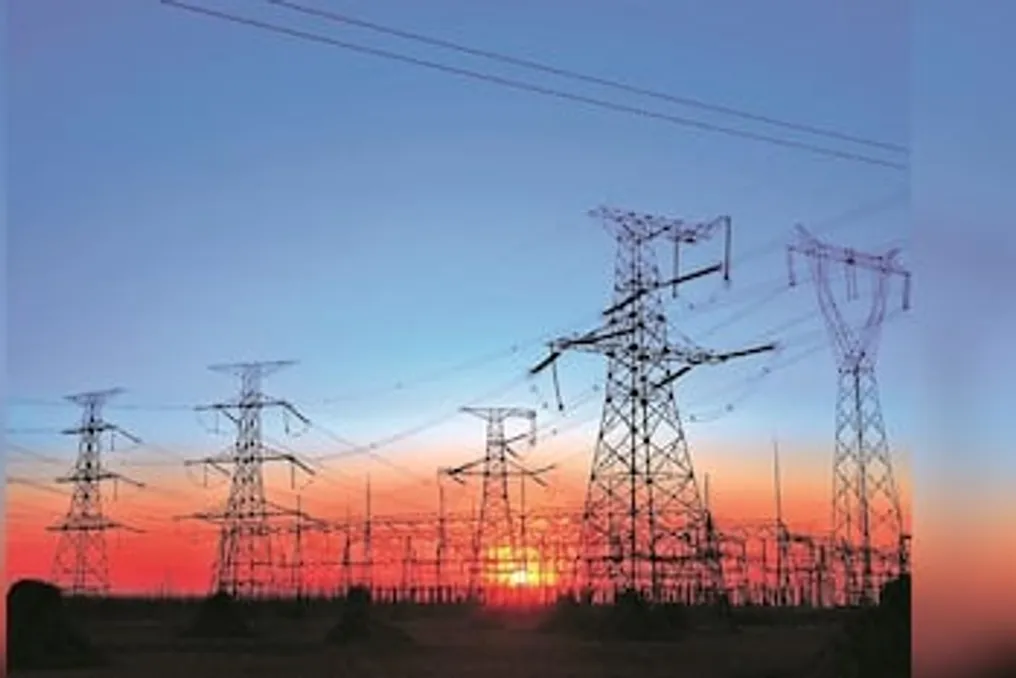
The Central government has approved the expansion of the power transmission network in the state of Andhra Pradesh with an investment of 27,370 crore rupees under the Green Energy Corridor Phase-III (GEC-III) program. According to information received from a source in Business Standard, the first phase of this project is planned to be commissioned during the 2029–2030 financial year.

This decision followed the approval by the Union Cabinet of the GEC-III scheme amounting to 1.86 trillion rupees, which took place on September 30. The objective of this scheme is to ensure the capacity to evacuate up to 135 gigawatts (GW) of renewable energy through state transmission grids by 2032–2033. The total funding includes approximately 1.36 trillion rupees for intra-state transmission (InSTS) and 50,000 crore rupees for Battery Energy Storage Systems (BESS).

The Center will provide financial support of 54,082 crore rupees to compensate for intra-state transmission costs. The project, proposed by APTRANSCO, involves the construction of 7,872 circular kilometers of 400 kV and 220 kV transmission lines, as well as the creation of 9,500 megavolt-ampere (MVA) substation capacity, including five new 400/220 kV substations.

The state's proposal includes new construction infrastructure. Planned facilities include key collection nodes in Mudigubbe and Talupule, each with a capacity of 5 GW, as well as in Porumalle with a capacity of 1 GW. Additionally, the construction of new 400 kV substations in Ramayapatnam and Koppaka is proposed.

Although the national GEC-III scheme was approved by the Cabinet last month, the component concerning Andhra Pradesh was awaiting clearances. A source reported that the current approval may enable the commissioning of the initial phase of the project by 2029–2030.

Renewable energy zones designated for energy evacuation include Roddam-Penkunda, Gorantla, OD Cheruvu-Amadaguru, and Kondikonda in the districts of Anantapur and Sri Sathya Sai, as well as Rajupalem in the Prakasam district.

The source added that the central assistance will reduce intra-state transmission costs and discom costs for power procurement, while also supporting Andhra Pradesh's Clean Energy Policy for 2024. This project is crucial for the state, as the Central Electricity Authority (CEA) estimates predict the peak demand in Andhra Pradesh will grow from 15,600 MW in 2025–2026 to 30,927 MW by 2035–2036. Without new renewable energy capacity and infrastructure for its evacuation, the share of unmet energy will reach 19.4 percent by 2035–2036.

According to NITI Aayog, the potential for mixed renewable energy in Andhra Pradesh is 237 GW, with renewable energy sources accounting for 51 percent (16 GW) of the state's total installed capacity. As of March 2026, 7.5 GW came from solar energy, 4.4 GW from wind, and the remaining 4.07 GW from hydro and biomass.

The state's clean energy policy aims to install 78.5 GW of solar and 35 GW of wind capacity between 2024 and 2029. It also plans to implement 25 GWh of Battery Energy Storage Systems (BESS) and 22 GW of pumped storage hydroelectric power plants. Furthermore, the state is working on creating green hydrogen production capacity of 1.5 million tonnes per annum (MTPA).

Popular