The Automobile Association (AA) has expressed support for the proposal put forward by Finance Minister Enoch Godongwana regarding the phasing out of fuel levies. Concurrently, the AA advocates for a public examination of the fundamental fuel price calculation method and the establishment of a new financial structure for the Road Accident Fund (RAF).
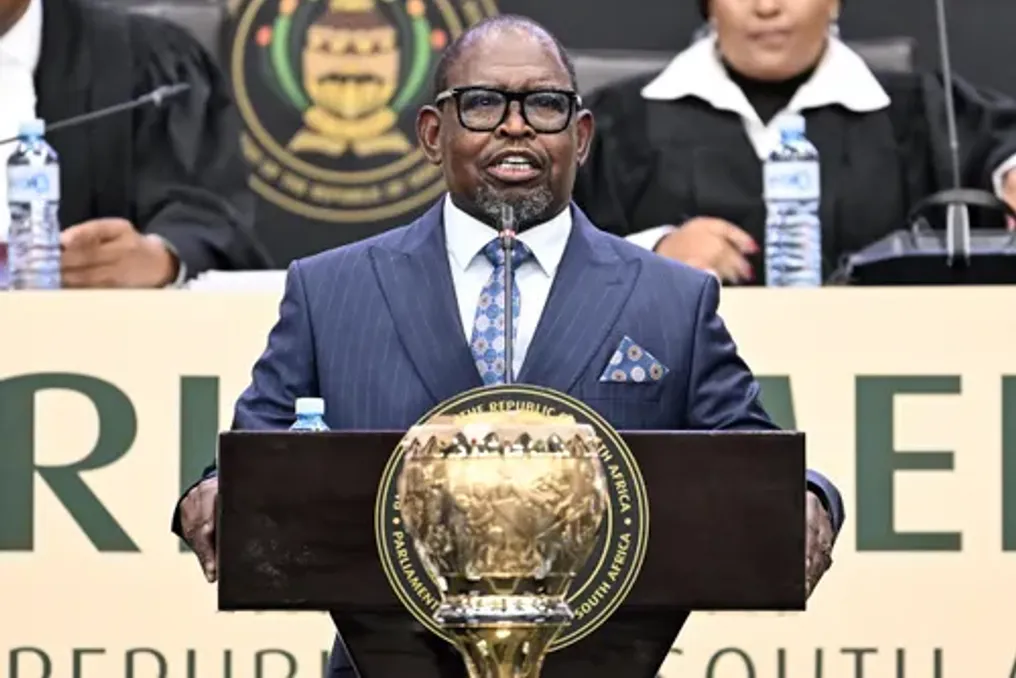
These recommendations come after Godongwana commented during a recent appearance on 702, noting that the standard fuel levy generates roughly R80 billion in income and that the administration must devise a strategy to eliminate it. He also suggested implementing a novel insurance framework for the RAF that would no longer depend on the levy.
Bobby Ramagwede, the CEO of the AA, stated that this was a "long overdue and welcome call." He emphasized that fuel taxes impact all individuals who travel, including taxi commuters, businesses utilizing fleets, and workers traveling to their jobs.
The AA detailed that the total charge per litre of petrol amounts to R6.58, comprising the general fuel levy of R4.29, the RAF levy of R2.25, and two supplementary duties. At the high inland price of R30.25 per litre for 95-octane unleaded petrol in October, these specific charges constituted over a fifth of the pump price. For instance, a driver filling a 50-litre tank incurs approximately R329 in levies, while a company managing 100 petrol vehicles, each refueling weekly, could face annual costs nearing R1.7 million.
The association contended that this tax burden negatively affects both households and businesses, asserting that fuel pricing requires scrutiny beyond short-term governmental measures. This latest proposed relief follows a second series of temporary fuel levy reductions announced within the Medium-Term Budget Policy Statement on October 21.
Effective from November 4, the general fuel levy will see a reduction of R1.50 per litre for petrol and R3 per litre for diesel until December 1. These decreases will subsequently be lowered to R1 per litre for petrol and R1.50 for diesel until January 5, 2027. The government plans to finance this relief by reallocating R10 billion that was previously moved to the Central Energy Fund.
Despite this, the AA cautioned that these temporary cuts offer limited predictability for both consumers and companies, especially since the reductions are scheduled to be scaled back during the December holidays before expiring in January. Furthermore, the AA urged for a public review of the basic fuel price formula, which dictates the largest element of the price paid at gas stations. This formula accounts for the estimated cost of acquiring fuel on global markets and transporting it into South Africa, and it is managed by the Department of Mineral and Petroleum Resources.
Ramagwede insisted that "the government should remove the levies the minister has named, and review the basic fuel price formula in public," adding, "I still think there is room for efficiency at the basic fuel price level. A public review is how we find it."
Godongwana has recognized that eliminating the general fuel levy would create an estimated revenue deficit of R80 billion, prompting discussion about how this gap will be covered. Ramagwede countered that the government's focus should be on how public money is spent and distributed, rather than primarily on collecting revenue. He stated, "I have long held the view that the problem is not revenue collection. It is expense management and budget allocation," concluding that "Our fiscus is porous. That needs to be fixed if we want interventions like this one to succeed."
Moreover, the AA called for a fundamental shift in the RAF funding mechanism, proposing that enhancements in road safety and mandatory third-party motor insurance could offer a more durable substitute for the current levy system. The RAF levy currently covers compensation for individuals injured in traffic accidents and the families of those who perish. While Godongwana noted that removing the levy alone would significantly lower fuel prices, Ramagwede argued that the government must tackle the root causes of road incidents—including poor driver conduct, declining infrastructure, and unsafe vehicles—to lessen the number of claims the fund must process.
He asserted, "We do not need a central fund to cater for road injuries. We need to deal with the root causes: poor road user behaviour, decaying infrastructure and questionable vehicles." He further suggested that compulsory third-party motor insurance, common in many advanced economies, ought to replace the present levy-based funding model for the RAF.
In summary, the AA is urging the government to abolish the general and RAF levies, conduct a public review of the basic fuel price formula, enhance public expenditure and allocation, bolster road upkeep and vehicle safety, and implement compulsory third-party motor insurance. Ramagwede concluded by stating, "Every levy on a litre of fuel is a choice somebody made, and the cost lands on the person who can least carry it. I am not asking the government to be generous. I am asking it to be accurate about who is paying."