Brazil prepares transportation of new Inpe Amazônia 1B satellite
Read more
Olhar Digital
olhardigital.com.br

Brazil prepares transportation of new Inpe Amazônia 1B satellite

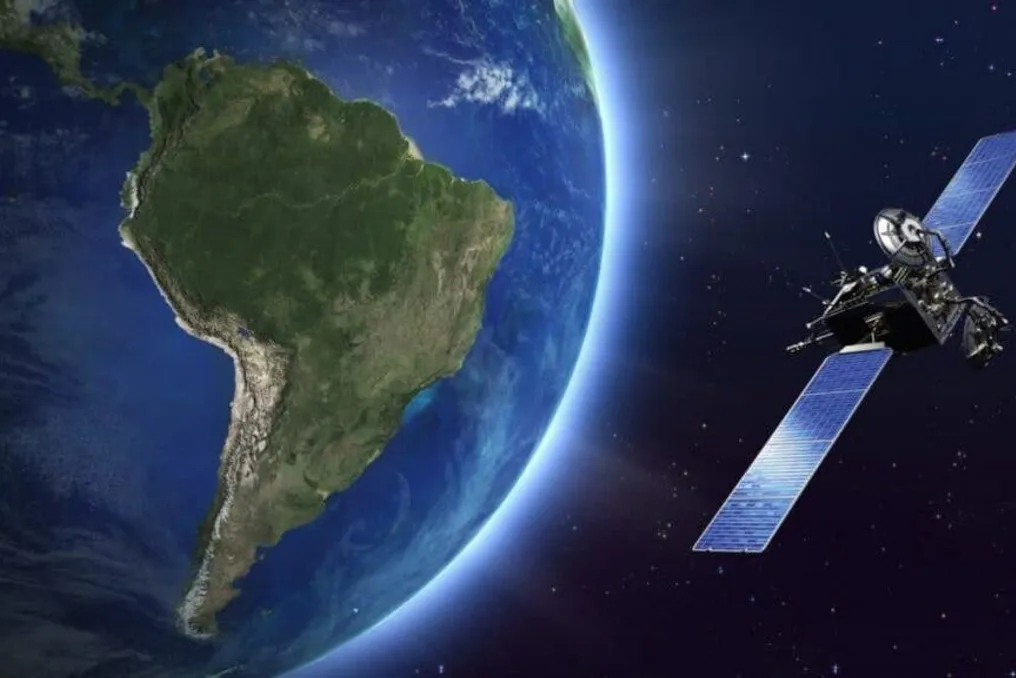
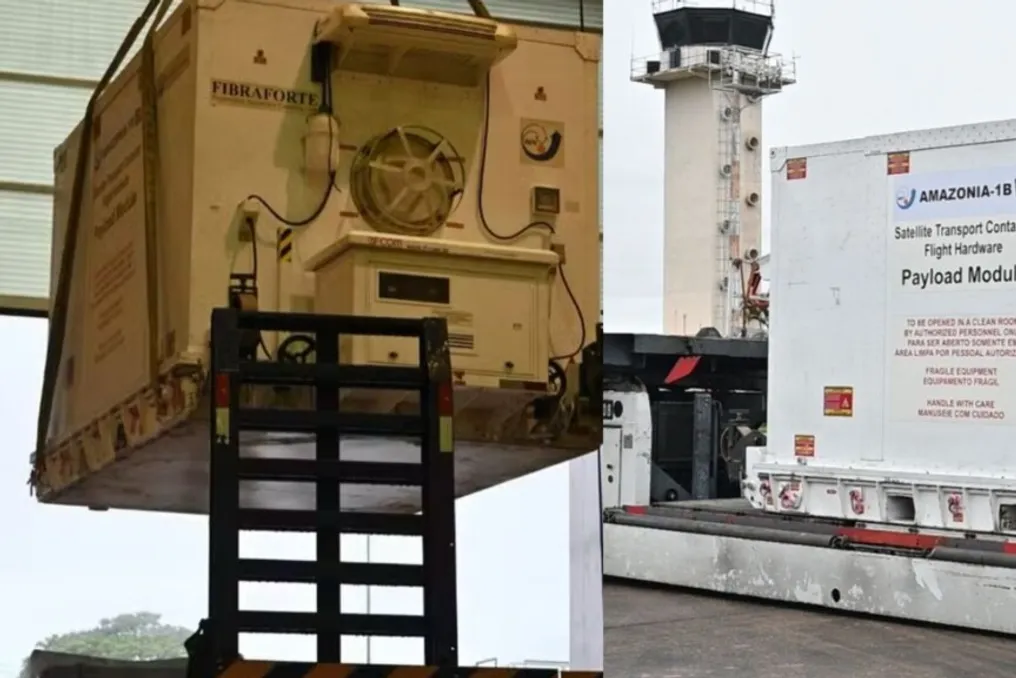
Preparations for the launch of the Amazônia 1B satellite are continuing. Simulations conducted at San José dos Campos Airport (São Paulo state) confirmed that the KC-390 aircraft is capable of transporting the container in which the satellite will be placed.

The next step is to deliver the satellite and equipment for testing into the container. Then, this entire cargo shipment, which is expected to weigh 13 tons, will be sent from the city in São Paulo state to French Guiana, where the launch is scheduled for September 2027.

The Amazônia 1B satellite, developed by the National Institute for Space Research (Inpe), is intended for Earth monitoring. It is the second spacecraft in the Amazônia series created by this institute; the first spacecraft was launched from India in February 2021.

In addition to obtaining Earth images, this new model is equipped with Global Navigation Satellite System (GNSS) Reflectometry technology. This technology uses signals from navigation systems reflected by the Earth's surface to collect environmental information.

The satellite itself weighs approximately 638 kilograms, and the container it will be placed in exceeds seven tons. The KC-390 aircraft was also developed in Brazil by Embraer. According to the company, this aircraft, operated by the Brazilian Air Force (FAB), can carry up to 26 tons of cargo.

This aircraft is used for missions involving troop transport, in-flight refueling, and humanitarian operations. The equipment must be delivered to the launch base in French Guiana in 2027.

Similar stories

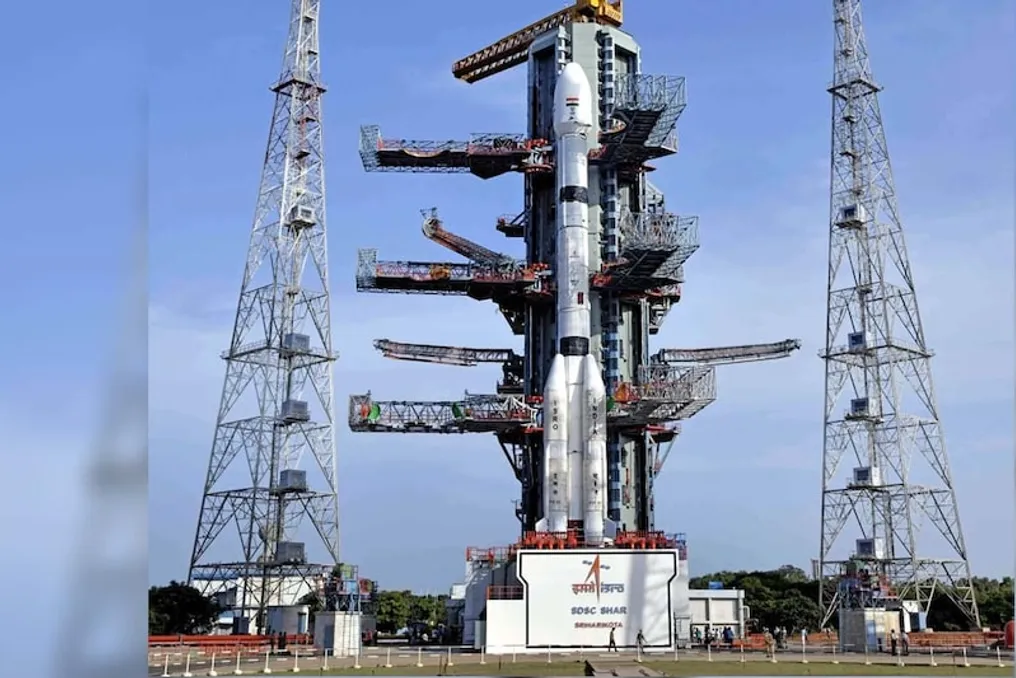
Isro GSLV-F18/NVS-03 Mission Successful: Next-Generation Navigation Satellite Launched into Orbit, Strengthening NavIC Constellation
Read more
timesofindia.indiatimes.com

Isro GSLV-F18/NVS-03 Mission Successful: Next-Generation Navigation Satellite Launched into Orbit, Strengthening NavIC Constellation

India's regional satellite navigation system, NavIC, has received a significant boost following the successful launch of the NVS-03 satellite. This launch was conducted by the Indian Space Research Organisation (Isro) on the night from Friday to Saturday.

The GSLV-F18 rocket, which carried the 2250 kg NVS-03 satellite, took off from the second launch pad of the Satish Dhawan Space Centre (SDSC-SHAR) in Sriharikota at 23:51 on Friday as scheduled. This marked the twentieth flight of the Geosynchronous Satellite Launch Vehicle (GSLV). Approximately 18 minutes after liftoff, the NVS-03 satellite was placed into a Geostationary Transfer Orbit (GTO) with an apogee of 37,023 km and a perigee of 170 km.

NVS-03 is the third satellite in Isro's next-generation navigation system, designed to ensure continuous services within the Indian Regional Navigation Satellite System (IRNSS), known as NavIC. The satellite is equipped with both domestic and acquired atomic clocks. Furthermore, it transmits an L1 frequency signal in addition to the existing L5 and S-band signals.

NavIC is India's independent regional satellite navigation system, intended to provide Positioning, Navigation, and Timing (PNT) services across the country and in a zone extending approximately 1500 km beyond the Indian subcontinent. The addition of the L1 signal, alongside existing signals, is expected to enhance compatibility with other satellite navigation systems and expand NavIC's civil applications.

The NVS-03 mission aligns with Isro's plan to deploy five second-generation navigation satellites—NVS-01 through NVS-05—to augment the existing NavIC constellation and improve the reliability and continuity of navigation services. The launch is crucial because NavIC previously could not provide autonomous positioning services due to a shortage of operational satellites.

Previously, on July 29, Minister of State for Space Affairs Jitendra Singh stated in a written reply to the Lok Sabha that the constellation had only three satellites providing PNT services, whereas a minimum of four is required for basic services. Although the timing service remained operational, the commissioning of NVS-03 could help restore autonomous positioning capability. The Minister noted at the time: 'Since NavIC is used in an environment with multiple constellations for most use cases, users are not vulnerable. The next NavIC satellite, NVS-03, is ready for launch, and two more satellites, NVS-04 and NVS-05, are in advanced stages of development.'

The constellation issue arose after the failure of NVS-02, which was launched on January 29, 2025, but failed to execute orbital insertion maneuvers. The Isro committee found that the electrical signal did not reach the pyrotechnic valve in the satellite's oxidizer line, preventing the ignition of the propulsion system and the achievement of the planned orbit. This failure prompted Isro to implement corrective measures for subsequent missions.

The first satellite of the second generation series, NVS-01, was launched aboard GSLV-F12 on May 29, 2023, and was the first in this series to be equipped with domestic atomic clocks.

ISRO plans to use four launch pads for space launches in India
Read more
www.aajtak.in

ISRO plans to use four launch pads for space launches in India

The Indian Space Research Organisation (ISRO) is developing a large-scale plan to strengthen its space capabilities. The head of ISRO, V. Narayanan, announced that four launch pads will begin operating in the country by 2029.

To implement this plan, a new spaceport covering approximately 2000 acres is being created in the Kolsekarpattinam area of Tamil Nadu, where rockets for launching small satellites will be prepared. This step will allow India to meet the growing demand both domestically and globally for satellite launches.

V. Narayanan presented this information on October 25 at a graduation ceremony at a private university in Chennai. He also noted that ISRO is preparing for the first unmanned test as part of the Gaganyaan mission. Furthermore, joint work with the Japanese space agency will be conducted on the Chandrayaan-5 mission.

A launch pad is a location from which a rocket is sent into space. Increasing the number of such pads can facilitate the launch of more satellites, providing ISRO with additional opportunities for various space missions. According to Narayanan, the new spaceport in Kolsekarpattinam (Tamil Nadu) will have buildings for assembling rockets and satellites, as well as systems for monitoring the rocket's flight and collecting relevant data.

ISRO's plans also include the construction of a third launch pad in Sriharikota (Andhra Pradesh). However, full information regarding the location of all four launch pads and their methods of use has not yet been disclosed.

The head of ISRO emphasized that the organization will not be privatized and will remain a government institution. Nevertheless, the assistance of private companies and startups will be sought to meet the increasing demand for satellite launches. ISRO will provide technical support to these companies and assist in their work, which could potentially stimulate the development of the space business in the country and create thousands of new jobs in this sector.

Gaganyaan represents India's first crewed space mission, aimed at sending Indian astronauts into space. Before sending humans, ISRO will conduct three uncrewed tests. Narayanan reported that the first test is scheduled for the next two months, followed by two more. These tests will focus on verifying the systems related to the condition and safety inside the modules intended for astronauts.

These systems will also be tested under changes in temperature, pressure, and humidity. The emergency rescue system for astronauts will also be studied. According to Narayanan, about 8000 ground experiments have already been conducted for the Gaganyaan mission, and four selected astronauts are undergoing special training.

ISRO plans to collaborate with the Japanese space agency on the Chandrayaan-5 mission. During this mission, a rover weighing about 350 kilograms will be sent to the lunar surface to conduct scientific research in situ for 100 days. Full information regarding the launch date and other preparations for this mission has not yet been provided. The main objective of the mission is to conduct scientific research on the lunar surface.

Overall, ISRO is working to expand its rocket launch capabilities in the coming years, complete preparations for the Gaganyaan mission, and send new missions to the Moon, while simultaneously advancing India's space industry through the private sector.

SpaceSail, Chinese competitor to Starlink, advances preparations for the Brazilian satellite internet market
Read more
olhardigital.com.br

SpaceSail, Chinese competitor to Starlink, advances preparations for the Brazilian satellite internet market

SpaceSail, a Chinese company, has progressed in its preparations to offer satellite internet services in Brazil. The National Telecommunications Agency (Anatel) granted approval for a residential terminal belonging to the company, which aims to compete directly with Starlink.

This equipment promises speeds of up to 400 Mb/s; however, the exact launch date and costs have not yet been announced to the public. Known as Qianfan in China, the company plans to begin operations in the national territory during the fourth quarter of 2026, needing to finalize the organization of device imports and the implementation of ground stations before then.

The technology used by SpaceSail is based on low Earth orbit (LEO) satellites, allowing the user terminal to establish communication with the space network and provide internet access even in regions with limited terrestrial infrastructure.

The terminal, approved by Anatel under code STG-S001-A0, holds certificate no. 01944-26-18192, classifying it as a mobile satellite transceiver suitable for fixed and mobile configurations. Although homologation has occurred, it does not specify what service modalities will be offered to end consumers.

Physically, the antenna has a rectangular shape, measuring 48 cm by 36 cm by 4 cm and weighing 4 kg. It features IP65 protection against dust and moisture, along with an RJ45 port for wired connection and a status indicator light. A 15-meter cable accompanies the device, enabling installation on roofs or outdoor areas, and the antenna supports Wi-Fi 5, accessible via the company's application.

According to the technical manual, the maximum indicated capacities are 400 Mb/s for download and 100 Mb/s for upload, with these values presented as the potential capacity of the equipment, not as a guarantee of future performance.

The equipment manufacturing will be carried out by Shanghai Hanxun Information Technology, a company based in Nanjing, China. SpaceSail obtained permission to operate in Brazil in February 2026. Additionally, in March, Act No. 3.084 included its network in the guidelines for coordination between non-geostationary satellite systems, aiming to manage network coexistence and prevent interference.

Despite the terminal's homologation, the service is not yet available for purchase, as the company needs to complete operational preparations and define coverage, contracting conditions, and prices.

In November 2024, Telebras and the Ministry of Communications signed a memorandum of understanding with SpaceSail. This agreement aims to assess connectivity demands and explore potential collaborative projects focused on digital inclusion, but it does not imply the immediate launch of a residential plan.

The arrival of the Chinese company has the potential to increase satellite internet alternatives in Brazil, benefiting users located in areas with limited access to terrestrial infrastructure. Competition also includes Amazon Leo, which had a router homologated in the country, although its commercial launch is postponed, with Sky responsible for marketing this service.

Price will be a crucial differentiator. While Starlink plans range from R$ 49 to R$ 619 monthly, SpaceSail has not yet disclosed the equipment or monthly fee values, making it impossible to confirm if it will be more economical. The success of the competition will depend on the proposed prices, the coverage area, and the different service packages that SpaceSail will offer in Brazil, compared to the existing options from Starlink for residential and mobile use.
Popular