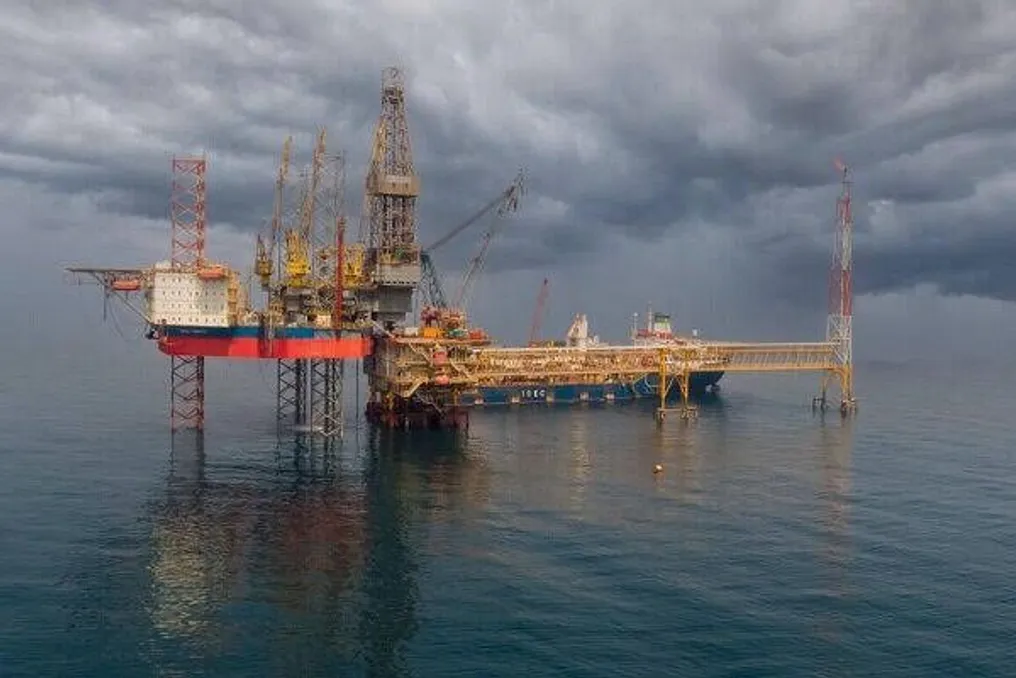
Southern Pars Development, Phase 11, Continues Drilling of Thirteenth Well on Platform B
Read more
Tehran Times
www.tehrantimes.com

Southern Pars Development, Phase 11, Continues Drilling of Thirteenth Well on Platform B

The CEO of Petropars Group announced the continuation of drilling operations for the thirteenth well on Platform B as part of the Southern Pars Development, Phase 11. He noted that after the completion and commissioning of twelve wells in this area, drilling the thirteenth well was included in Petropars' plan beyond contractual obligations, and currently, the drilling of a 16-inch bore is underway.

According to an IRNA report from Petropars, Hamidreza Saghafi, commenting on the continuation of work on the Southern Pars general field development, Phase 11, stated that drilling of the thirteenth well on Platform B has begun with the aim of maintaining production and helping to compensate for the gas deficit in the country.

He added that the first two bores, with diameters of 32 inches and 24 inches, were drilled to depths of 186 and 933 meters, respectively, over a period of 15 days. Currently, the drilling of the 16-inch bore continues at a depth of 1010 meters.

The CEO of Petropars Group, speaking about the completion of work on the twelfth well on this platform, explained that it was drilled to a depth of over 4400 meters at an angle of 65 degrees. The perforation process in the K1, K2, K3, and K4 reservoir layers was carried out in two stages (TCP). Considering the sensitivity of the operation, petrophysical data from neighboring wells were used to increase perforation accuracy.

Saghafi continued that after perforation, more than 190,000 gallons of 32% hydrochloric acid (HCl) along with appropriate additives were pumped into the well across 20 stages. This operation was conducted at the first suitable opportunity based on weather conditions, and a method using a viscous directing agent (VDA) suitable for the temperature and pressure conditions was developed to ensure uniform distribution of the acid across the entire perforated interval, especially in the final sections of the well.
Similar stories

Maritime potassium exploration project developed in Sergipe to meet agribusiness demand
Read more
g1.globo.com

Maritime potassium exploration project developed in Sergipe to meet agribusiness demand

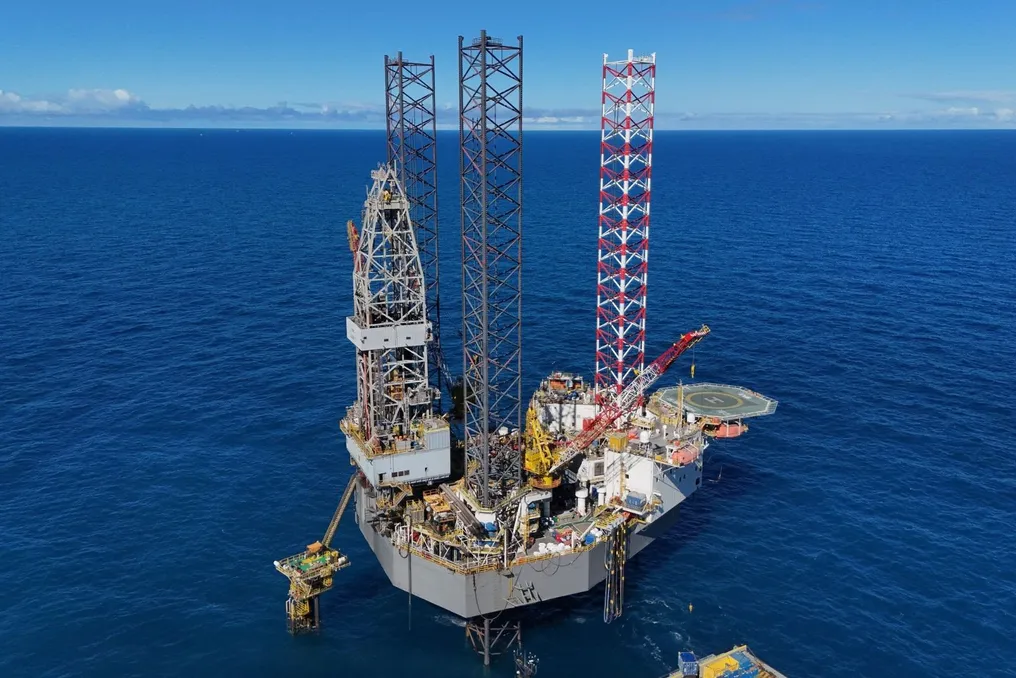
A project focused on the maritime exploration of potassium in the Sergipe-Alagoas Basin has the potential to transform the mining and agribusiness sectors. This undertaking is being conducted by the company South Atlantic Potash (SAP), with support from the Sergipe Development Agency (Desenvolve-SE). The project's focus is on locating deposits of sylvinite, a rock that contains potassium, an essential mineral in fertilizer production.

Based on SAP's historical records, four wells were drilled that reached the Ibura Member, belonging to the Muribeca Formation, confirming the existence of sylvinite. In one of these wells, a layer of sylvinite with a thickness of 27.5 meters was detected, located at a depth of about 2.5 kilometers.

After combining the well data with seismic information, SAP identified nine potential exploration sites in the Baixo Mosqueiro region. However, it is important to note that these areas do not yet have proven mineral reserves.

Currently, the project is in the conceptual technical evaluation stage. Planned next phases include conducting confirmatory drilling campaigns in the marine environment, formally estimating mineral resources, developing economic and engineering feasibility studies, as well as obtaining environmental licensing and structuring the necessary financing.

How offshore mining works

This initiative does not involve large excavations on the ocean floor; it adapts the solution mining technique for the marine environment. The procedure involves drilling wells from marine structures and injecting water into underground layers to dissolve the salts. This generates a brine rich in minerals that subsequently returns to the surface.

This brine is then taken to a land-based facility, where it undergoes evaporation and crystallization processes to separate the salts. The desired final product is KCl, a vital component for the manufacture of agricultural fertilizers. According to Bonzi Yokomizo, CEO of SAP, this technology minimizes environmental damage because it produces no solid waste, eliminates the need for dams, and does not require chemical reagents. The generated sodium chloride will be marketed as a byproduct, and the remaining brine will be subject to rigorous environmental licensing control.

Expected impacts on agribusiness

The project aims to solve one of the main challenges of Brazilian agribusiness: the strong dependence on external sources of potassium for fertilizer production. Although Brazil is the second-largest consumer of this mineral globally, it imports over 96% of the potassium chloride (KCl) it consumes. Global supply is highly concentrated in only three nations—Canada, Russia, and Belarus—which are responsible for 87% of the international market.

According to the state government, the company's initial goal is to produce 2 million tons of potassium annually. This volume would represent approximately 14% of the national need, which is four times greater than current Brazilian production. In addition to generating an estimated annual saving between US$ 600 million and US$ 800 million, local production is expected to increase supply security against potential international crises.

History of potassium in Sergipe

The occurrence of potassium in Sergipe has been documented since 1963, the date when Petrobras discovered accidental deposits in Rosário do Catete. Currently, the municipality has the only operating potassium mine in the country, located in the Taquari-Vassouras Mining Chemical Complex.

Vectra prepares delivery of the third development in Nova Prochet, the Oro building
Read more
g1.globo.com

Vectra prepares delivery of the third development in Nova Prochet, the Oro building

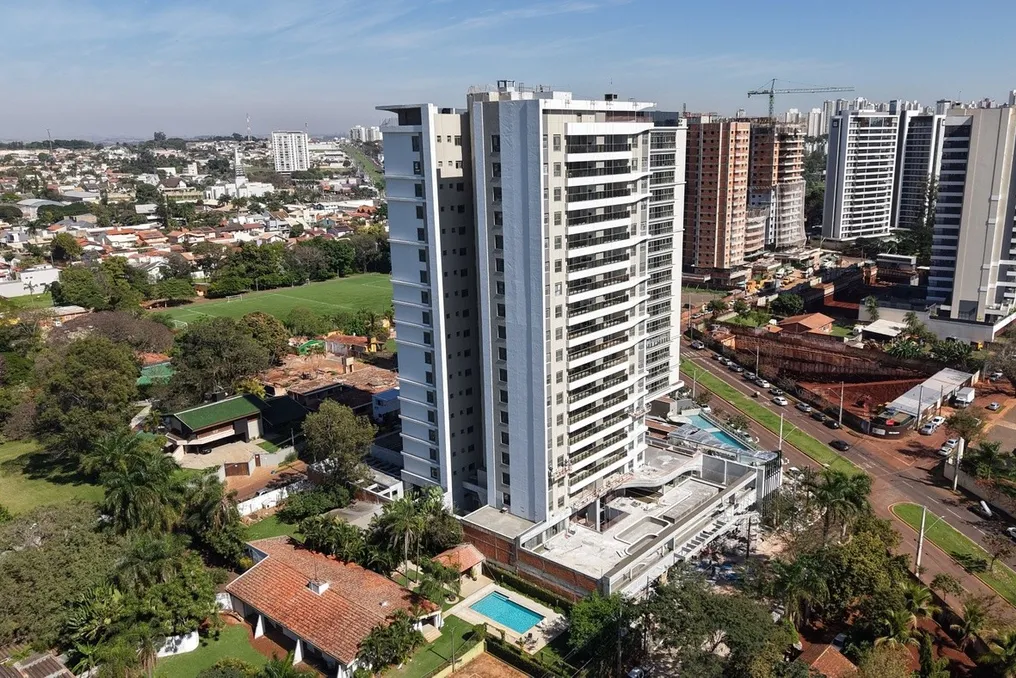
The construction company Vectra is about to deliver its third development in Nova Prochet, which is the Oro building. This new building is located at Rua Camilo Castelo Branco, number 270, at the intersection with Avenida Waldemar Spranger, and is part of the series of smart buildings launched by the company in Londrina.

The Oro project features a modern architectural design and offers sophisticated leisure areas, including a covered clay court and an indoor pool with a spa. The completion of this development reinforces Vectra's pioneering role in the verticalization of Nova Prochet, a residential neighborhood that has become more dynamic and attractive for investments due to the arrival of new constructions, commerce, and services, consolidating itself as one of the most valued regions in Londrina.

Technology and connectivity

Each unit in Oro is 159 square meters, configured with three suites and an extended kitchen. There will be 68 units available, distributed across four apartments per floor, with every two apartments sharing a social elevator to ensure greater privacy for residents. In addition to two parking spaces designated for each family, there are two additional common use spaces equipped with infrastructure for electric vehicle charging.

Following the model of the neighboring Wynn development, Oro was conceived based on the principle of Smart Living. Future residents will have access to a structure prepared for the implementation of intelligent systems in both the apartments and common areas, such as sensors and cameras focused on security and convenience. This ensures that the property can be updated with new technologies throughout its lifespan.

Similar to Wynn, Oro has an expanded automation framework in each apartment, conduits in the ceilings for curtain automation, and preparations for electric car chargers and solar energy in common areas. In practice, this allows residents and the condominium to install desired technologies at any time, without the need for structural renovations.

High-end leisure

An exclusive feature of Oro is the covered clay tennis court. Thiago Zanluchi, Vectra's commercial manager, highlighted that the high-level leisure spaces are a strong point of the development. He stated that the covered clay court will provide tranquility to sports enthusiasts, allowing training even on rainy days, classifying it as a 'unique differentiator among vertical condominiums.'

Oro's leisure complex includes a sauna, equipped gym, outdoor pool, indoor pool with spa, gourmet area with private pool, and game room. In addition to these relaxation and entertainment options, the building will feature planned spaces to support future essential services, such as a small market and a package reception area.

The Pet Place, which is already a trademark in Vectra's projects, will cater to families with pets, offering a dedicated area for pet leisure, exercise, and socialization. Oro also provides coworking space for meetings and work, a shared area equipped with tools for minor repairs, a bicycle rack, and a dedicated vehicle washing area.

The architectural project was developed by the office Architectural Projetos, the interiors of the common areas were signed by Chris Brasil Arquitetura, and the landscaping was handled by IO Paisagismo. To obtain information about the last available units, you can call (43) 3376-4476 or visit the Vectra Decorated Center, located at Avenida Adhemar Pereira de Barros, number 811, Jardim Bela Suíça.

Geography of Iranian Iron Ore: Analysis of Mining and Logistics in Yazd and Kerman Provinces
Read more
www.tehrantimes.com

Geography of Iranian Iron Ore: Analysis of Mining and Logistics in Yazd and Kerman Provinces

The strategic corridor passing through the provinces of Yazd and Kerman forms the basis of Iran's steel industry. This industrial framework relies on vast reserves, including the Gol-Gohar mining center in Kerman, with a volume of 1.2 billion tons. The development of activities in this mineral belt is determined by two competing logistical approaches: integrated clusters located nearby, and distributed value chains across the country.

Central Mining Belt and Key Raw Material Producers

An analysis of Iran's mining geography shows that the central corridor serves as a critical base for domestic raw materials for steel production. Yazd province (the Bafq area, where Chadormalu, Choghart, Chah-Gaz, and Seh-Chahoon are located) and Kerman province (where Gol-Gohar is in Sirjan and Jalalabad is in Zarand) jointly supply the vast majority of raw materials for the national steel industry.

Chadormalu, possessing approximately 320 million tons of recoverable reserves and an estimated operational life of about ten years at current extraction rates, acts as the primary domestic supplier of iron ore concentrate. In contrast, the Gol-Gohar center holds estimated 1.2 billion tons across six anomalies; Anomaly No. 3 contains 600 million tons of geological and 228 million tons of recoverable reserves, functioning as the main source for direct reduction pellets and concentrates.

Presence of Mahan Holding and Integration into the Downstream Chain

Within this corridor, Mahan Industries & Mines Development Holding (Tourism Financial Group) owns a controlling stake of 59.5% in Gol-Gohar Anomaly No. 5, while the state company IMIDRO owns the remaining 40.5%. Producing about 1.3 million tons annually through Mahan Sirjan Processing Co., this holding directs its products into the integrated downstream network: supplying the Baft Steel (Ehya Steel) sponge iron plant in Kerman and providing raw materials to the Bonab Steel complex in East Azerbaijan for finished steel production.

Logistics Models and Supply Chain Sensitivity

While Chadormalu and Gol-Gohar utilize the 'Integrated Cluster Model,' placing concentrators, pelletizing plants, and steel mills near the mining sites to minimize transportation costs and freight tariffs, Mahan Holding employs a 'Distributed Value Chain.' This operational structure links mining in Kerman with production facilities in Bonab, located over 1500 km from the mining site, creating a high dependence on long-distance interprovincial rail networks.

Since Iran's iron ore resources are concentrated in a narrow central corridor, regional differences in mining capacity, water availability, or railway transport tariffs directly affect the final cost of construction steel nationwide.

Popular