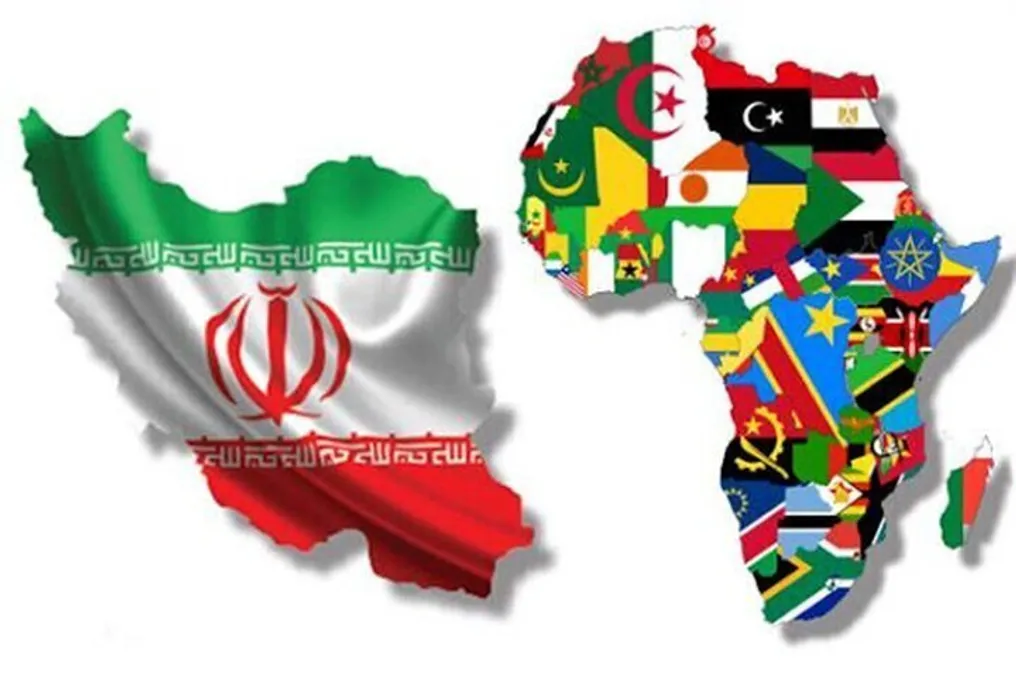
Iranian Agriculture Minister Highlights Potential for Agricultural Cooperation with Africa
Read more
Tehran Times
www.tehrantimes.com

Iranian Agriculture Minister Highlights Potential for Agricultural Cooperation with Africa

The Iranian Minister of Agriculture, Gholamreza Nouri Ghezaljeh, addressed the First National Council on Agricultural Cooperation between Iran and Africa. He emphasized that there are opportunities for joint agricultural interaction with African countries, which must be transformed into tangible, practical, and long-term economic ties.

The event gathered over two hundred economic participants, including ambassadors, economic advisors, honorary consuls, representatives of executive bodies, economic associations, entrepreneurs, and investors. The Minister noted that such broad participation provided a valuable chance to translate the political will to expand relations between Iran and Africa into concrete projects and sustainable economic partnerships.

Nouri Ghezaljeh thanked the Ministry of Foreign Affairs, the Permanent Secretariat of the Iran-Africa Cooperation Summit, and the Ministry of Agriculture for organizing the event. He stated that Iran's approach to international cooperation is based on mutual respect, rejection of unilateral actions, countering aggression and political pressure, and recognizing the right of all nations to peace, development, and sustainable access to food. He stressed that food security requires trust, cooperation, and constructive interaction between states, and this must become the fundamental principle for developing agrarian ties between Iran and African countries.

The Minister delivered a clear message: Iran-Africa agricultural cooperation must move from merely presenting possibilities to defining specific projects; from memorandums of understanding to executive contracts; and from sporadic exchanges to sustainable partnership in production, technology, and trade. He clarified that Iran views Africa not just as a market or a source of necessary goods, but as an important partner for investment, joint production, and creating mutual economic benefit.

Ghezaljeh linked agriculture to food security, knowledge, and economic development. In his view, food security is not only about increasing production volumes but also about ensuring people have constant access to sufficient, healthy, high-quality, and affordable nutrition. He described water, soil, seeds, and resources, production knowledge and technology, storage, transportation, and trade as interconnected links in a single chain, warning that weakening any link could undermine production increase efforts. Furthermore, he pointed out complementary opportunities between Iran and African countries. Iran has strengths in water resource management and irrigation, greenhouse production, agricultural machinery, livestock and poultry breeding, vaccines and veterinary products, fisheries, processing industry, and specialized training. African countries, given their climatic and economic conditions, have significant potential in crop production, tropical products, animal husbandry, fisheries, and market expansion. Combining these capabilities can boost productivity, create jobs, and increase added value on both sides.

The Minister also named eliminating administrative obstacles and strengthening communication between responsible institutions as the fourth priority. He stated that economic actors require clear procedures, reliable logistics, practical payment mechanisms, insurance, and investment coverage, as well as predictable regulation to enter into sustainable cooperation. Regarding tariffs and trade facilitation, he called for exploring possibilities for bilateral agreements and regional mechanisms involving relevant bodies. He also emphasized the need for continuous monitoring: problems in each project must be clearly identified and documented, a responsible structure must be assigned, and progress must be evaluated within set timelines.

Nouri Ghezaljeh stressed that the government should act as a facilitator, while the private sector should be the driving force of economic cooperation. According to him, embassies and economic advisors can effectively help in identifying credible opportunities, presenting reliable partners, clarifying market rules, facilitating communication between businesses, and overseeing the removal of administrative barriers. In contrast, the private sector must play a central role in defining projects and their commercial and operational assessment. Within the Ministry of Agriculture, the International Affairs Department, together with specialized organizations, deputies, and private sector associations, is responsible for the secretariat of six Iran-Africa joint commissions and more than ten joint agricultural committees with African countries. The goal is not to create new and numerous mechanisms, but to effectively utilize existing opportunities, clarify responsibilities, and prevent negotiations from dragging on at the stage of administrative correspondence.

The Minister asked economic participants to present proposals in the form of concrete and actionable plans. He added that each plan must clearly define the subject of cooperation, the proposed partner, the target market, the required capital, legal requirements, schedule, and evaluation indicators. He strongly urged avoiding scattered programs and suggested starting with a few limited, well-thought-out, and implementable projects instead of a long list of aspirations. A clear point of contact, schedule, and follow-up monitoring mechanism should be assigned for each project on both sides so that successful cooperation can be expanded after evaluating initial results.

Nouri Ghezaljeh announced that the Fourth Iran-Africa Cooperation Summit will take place next month, and the FIDC event will be held in Senegal. He expressed hope for active participation of the Iranian private sector and agricultural economic actors in these programs. He stated that the Islamic Republic of Iran strives for cooperation based on trust, respect, and mutual interests. In agriculture, these principles should lead to more sustainable production, more balanced trade, more jobs, knowledge transfer, and more reliable access for people to healthy and adequate food. He emphasized that success should be measured not by the number of meetings or signed documents, but by implemented contracts, result-generating projects, created added value, and benefits that ultimately reach producers and the population. He concluded that the council should be a starting point for practical cooperation—a stage where knowledge turns into production, production enters markets, and friendly relations become long-term economic ties.

Regarding political and defense events, the Minister noted that when Iran was attacked by Israel and the United States, some foreign observers welcomed it, while others expected further escalation. Instead, he said, Iran's resistance, the country's resilience, the people's courage, and the continuity of public services were demonstrated. Addressing the ambassadors, he reported that despite the military conditions, public services in various areas, including food security and essential supplies, continued, and necessary goods were supplied in abundance, so military conditions were not felt in meeting basic needs. He criticized US actions on the international stage, stating that peace has been severely affected by American military intervention, and that the energy and food sectors face serious challenges and crises. According to official statistics in some countries, food prices have risen by up to 23 percent, and the poor and vulnerable groups are suffering the most. He noted that Iran and other countries have suffered from these consequences and expressed hope that the United States will choose a rational path and return to the Islamabad Memorandum to accelerate the end of the war, given the pressure on economies, nutrition, and global food security, especially in poor countries.

Finally, Nouri Ghezaljeh urged participants to actively engage in the specialized panels held parallel to the council, as they can transition cooperation from speeches and negotiations to the operational stage. He expressed hope that with the support of ambassadors, the efforts of economic actors, the assistance of responsible institutions, and the equal participation of African countries, the ground will be prepared for sustainable agricultural cooperation. Expected outcomes include enhanced food security, economic prosperity, development of common opportunities, and strengthening long-term friendship between the Iranian people and African countries.

Similar stories

Despite Potential, Africa Faces Mass Hunger Amid Summit Leaders' Declarations
Read more
iol.co.za

Despite Potential, Africa Faces Mass Hunger Amid Summit Leaders' Declarations

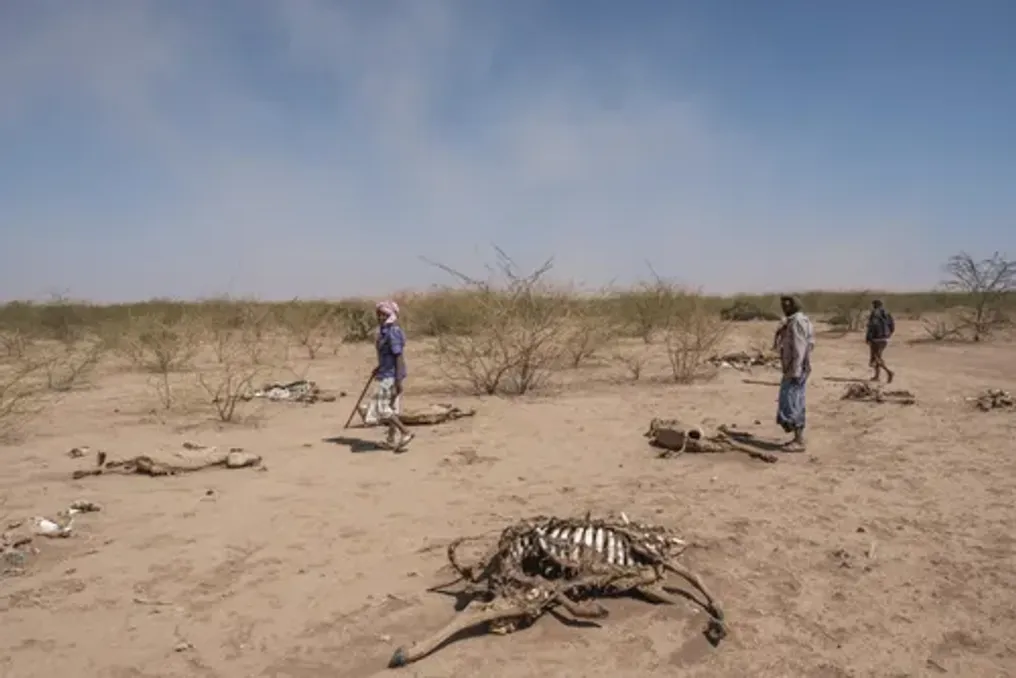
While millions of Africans continue to suffer from hunger, the continent's sovereignty remains meaningless. Africa possesses enormous agricultural potential, yet it has failed to transform it into food security or economic independence. Mass hunger is not an inherent characteristic of the continent or its inevitable fate; rather, it is the result of centuries of exploitation, unequal economic relations, and modern political decisions that ignore the needs of ordinary citizens.

As the African Union marked the 17th anniversary of Africa Day in food and food security in Nairobi this week, the continent was confronted with an unpleasant reality: more people in Africa are suffering from hunger than in any other region of the world.

According to the latest United Nations report on the state of food security in the world, 309 million Africans were hungry in 2025, compared to 292 million in Asia. WHO Director-General Tedros Adhanom Ghebreyesus noted that 'a healthy diet remains inaccessible to one of the three global population categories.' In Africa, this share reaches two out of three. The crisis goes far beyond food production; it is linked to access, distribution, purchasing power, and political priorities.

The food security situation in Africa is exacerbated by ongoing wars and conflicts across various territories of the continent. Agricultural production is severely disrupted in Sudan. Instability and insurgent activity significantly hinder land cultivation in the Democratic Republic of Congo (DRC) and parts of the Sahel.

The serious consequences of this crisis include immediate starvation, long-term malnutrition, disruptions in education, and the slowing of development for an entire generation of African children. South Africa demonstrates that agricultural production alone is insufficient to ensure sustainable food security. Despite South Africa being a major producer and exporter of agricultural products, UNICEF reported in 2024 that 23% of children in South Africa faced severe food poverty.

Furthermore, according to the South African Statistics Agency Household Survey for 2024, about 22% of households in South Africa reported inadequate food access in 2025. Stunting, a form of chronic malnutrition, affected 28.8% of children under five, with the highest rates recorded in the Northern Cape (46.4%) and Western Cape (46.2%).

Food security is viewed as a vital indicator of economic sovereignty and transformation. A country that cannot provide adequate nutrition for its children cannot claim economic independence. While political freedom, territorial integrity, and control over natural resources are valuable, their significance diminishes when ordinary families cannot afford healthy food or when children cannot survive and develop.

Former President of Burkina Faso Thomas Sankara insisted on agricultural self-sufficiency, promoting domestic production and land reform, which allowed him to reduce dependence on imported goods. Four decades later, this principle remains relevant, as Captain Ibrahim Traoré places domestic production and consumption at the center of his political program. The test will be in sustainably increasing agricultural productivity so that ordinary people can afford nutritious food.

When domestic production is ignored or restricted, and regional supply chains remain underdeveloped and underutilized, food security and sovereignty are threatened. The continent does not lack agricultural structures, nor does it have promising policies. The real deficit lies in poor policy prioritization, implementation failures, and weak accountability.

The fifth Biennial Review of the Comprehensive Africa Agriculture Development Programme, conducted by the African Union, recorded a continental average of 5.25 against a target of 9.40. This is not only a serious administrative failure but also a clear indication of the huge gap between agreed commitments and measurable progress. The gap between summit declarations and ensuring food security, access, and availability is a catastrophic political failure.

The long-term commitment to allocate at least 10% of public spending to agriculture dates back to the Maputo Declaration of 2003, yet the continent has failed to consistently or evenly fulfill this promise. Last year, the African Union adopted the Kampala Strategic Action Plan for 2026–2035, aimed at mobilizing $100 billion in investment, increasing agro-food production by 45%, tripling intra-African agricultural trade, and halving post-harvest losses. These goals are commendable, but Kampala will succeed only if there is adequate agricultural financing, sustainable supply chains, competent institutions, transparent monitoring, and the ability to apply measures in case of non-compliance.

Climate change and external shocks make the food problem particularly acute. Unpredictable droughts and floods increasingly destroy farms, especially those without adequate irrigation, insurance, or appropriate technology. Adaptation promises are ineffective if rural communities lack the infrastructure to withstand escalating shocks. Debt pressure and the high cost of seeds, fertilizers, and transportation compound these difficulties.

Regional markets, overall infrastructure, and cross-border trade can reduce dependence on unstable global supply chains. In this regard, the African Continental Free Trade Area is a crucial tool for integration. However, it must be specifically oriented towards benefiting producers and consumers, rather than creating more opportunities for external trade elites.

A crucial element of Pan-African solidarity and sovereignty is the building of productive economies that serve the African people. Historical exploitation and unequal global relations have limited development, but they also constrain modern governments whose budgetary priorities, political decisions, and implementation failures reproduce systemic inequality and vulnerability in the food chain. Affordable food for every citizen is essential for any sovereign state. Malnutrition must become a relic of the past, not a feature of the present or future. Nairobi must be more than just another extravagant event with high declarations. Delegates must identify failures and missed targets and develop a measurable plan of corrective actions with clear deadlines. An empty plate in Africa is not just proof of poverty; it is proof of political failure. Until African agricultural wealth can feed its people, the promise of economic independence will remain unfulfilled.

Russia and Africa Discuss Energy Cooperation for Sustainable Development and Common Prosperity
Read more
iol.co.za

Russia and Africa Discuss Energy Cooperation for Sustainable Development and Common Prosperity

In the coming days, on October 27, Moscow will host the Eighth Summit of the Gas Exporting Countries Forum (GECF). This meeting takes place against the backdrop of profound changes in the global economy, growing demand for energy resources, and ongoing volatility in international energy markets. Under these conditions, the Summit provides an important opportunity to emphasize the role of gas as the clean fuel of the 21st century, strengthen interaction between energy producers and consumers, promote a common understanding of sector challenges, and give a new impetus to technological progress for the long-term interests of peoples.

These priorities were also at the center of Russia's recent activities with African partners. The author visited the African Energy Week, which took place in Cape Town from October 12 to 16. As part of the 'Made in Russia' business mission organized by the Russian Export Center, 11 Russian companies presented innovative solutions for the African market. Their joint exhibition showcased equipment for the oil and gas industry, automation systems, pipeline products, and environmentally friendly infrastructure. The Russia-Africa Investment Forum, held concurrently with this event, served as a valuable platform for discussing specific business opportunities.

The interest shown by African partners reflects practical economic needs. Many countries are seeking experience and technologies capable of increasing the efficiency of existing oil and gas fields, ensuring reliable equipment maintenance, strengthening local industrial potential, and preparing a qualified national workforce. In this context, the approaches proposed by Gazprom Neft for developing mature onshore assets are particularly noteworthy. They illustrate how cooperation can go far beyond simply supplying equipment or providing individual services, creating conditions for sustainable business presence that brings new knowledge, employment opportunities, and a significant share of created value to host countries.

The Russian side views this model as especially relevant for Africa, where developing internal capabilities is critical for strengthening economic self-sufficiency and sustainable growth in key sectors. Russia's goal is not merely to participate in individual projects but to form partnerships that allow its partners to expand their own technological and industrial potential.

It is worth noting that the Russian Energy Week was held in Moscow almost at the same time, from October 14 to 16. Discussions in Cape Town and Moscow reflected a shared understanding of the importance of predictable markets, favorable investment conditions, and broader adoption of advanced technologies. In his welcoming address to participants of the Moscow forum, President Vladimir Putin particularly emphasized international dialogue, the security of logistics routes, and the training of qualified personnel for the energy sector. He also defined the upcoming GECF Summit as a continuation of these discussions.

Collectively, these events underscore the growing need for coordinated approaches to energy development and the functioning of the world economy. In a world where energy security, industrial growth, and technological progress are becoming increasingly interconnected, no country can afford to ignore the importance of stable supplies, reliable infrastructure, and constructive international cooperation.

For Africa, these issues are inseparable from the continent's broader agenda. Immense natural wealth contrasts with persistent power shortages that continue to restrict the operation of enterprises, hospitals, schools, and other vital services. According to data from the World Bank and the International Energy Agency, over half a billion people in Sub-Saharan Africa lack access to electricity, accounting for about 85% of the world's population without electricity access. Meanwhile, population growth, urbanization, and production expansion increase the demand for additional generation capacity.

According to OPEC's forecast published this year, Africa's total energy consumption is projected to increase by approximately two-thirds by 2050 compared to 2025 levels. Meeting this growing demand will require significant investment, long-term planning, and a realistic assessment of the energy resources and technologies available to individual countries.

In light of this, natural gas plays an important role in supporting industrialization and improving living standards. It provides a reliable source of electricity, supplies heat for industrial facilities, and serves as raw material for fertilizer and petrochemical industries. Its contribution to expanding access to cleaner cooking solutions is equally significant. By offering households an alternative to traditional biomass, natural gas can help reduce indoor air pollution and improve public health.

Gas power plants can also complement renewable energy sources, providing the flexibility needed to balance fluctuations in solar and wind power generation. Where natural gas replaces coal, using efficient equipment combined with effective methane leak detection and control can significantly reduce the environmental impact of energy production. However, realizing these benefits requires more than just having gas. Pipelines, receiving terminals, and distribution networks must connect production sites with domestic consumers, industrial centers, and regional markets.

Russia believes that the transition to a cleaner economy must take into account the actual capabilities, economic circumstances, and development priorities of each country. An accelerated cessation of using traditional energy sources before adequate replacement capacity, energy storage systems, and supporting infrastructure are available risks deepening shortages, increasing electricity tariffs, and undermining energy security. Assessments by international industry organizations, including OPEC and GECF, indicate a sustained significant demand for hydrocarbons in the long term, while simultaneously highlighting the risks of insufficient investment in production.

Therefore, climate goals should be pursued through technological progress, energy efficiency improvements, and the gradual development of corresponding infrastructure, while ensuring the availability and affordability of essential energy services. A successful energy transition must be measured not only by environmental indicators but also by the ability to support economic development, strengthen energy security, and improve the quality of life.

Russia possesses significant experience that it is ready to share with its African partners in addressing these challenges. Its own energy sector has demonstrated that reliable supply depends not only on abundant natural resources but also on advanced technologies, modern infrastructure, and the ability to develop solutions in complex geographical and climatic conditions.

The Russian side is prepared to cooperate in geological exploration, development of complex reserves, gas processing, liquefied natural gas supply, as well as the construction and modernization of power plants. Russia also has extensive experience in managing interconnected electrical grids, utilizing hydropower, and expanding power supply to remote settlements.

For Russia, the value of such cooperation lies in the long-term results it yields. Technologies and expertise must help African countries develop their own industries, strengthen their energy security, and create a solid foundation for sustainable economic growth. This means paying special attention to skills development, technology transfer, local production involvement, and training national specialists who can operate, maintain, and further develop the constructed infrastructure.

An example of such a comprehensive approach is the El Dabaa Nuclear Power Plant, currently being built by Rosatom in Egypt. Its four generating units with a total capacity of 4,800 megawatts are intended to make a substantial contribution to the country's energy supply and support its industrial base for decades to come. The project includes not only the construction of the plant but also the supply of nuclear fuel, operational support, and personnel training.

Russia also sees great potential for cooperation with South Africa in the gas sector, grid modernization, improving the efficiency of existing thermal power generation, and applying nuclear technologies. Such cooperation must be guided by South Africa's own development priorities and needs, including imperatives for economic growth, job creation, and ensuring access to affordable utilities.

The most productive partnerships are built on a clear understanding of all parties' interests. Each country has its own economic structure, resource base, and development trajectory. Respecting these differences, combined with a willingness to find practical solutions, lays a solid foundation for long-term cooperation.

Ultimately, energy cooperation is about people. Building a power plant, developing a gas field, or supplying advanced industrial equipment is important, but the benefits of such projects must extend far beyond the infrastructure itself. They must leave behind skilled engineers, stronger local industries, expanded employment opportunities, and better prospects for future generations.

This is why Russia places particular emphasis on education, professional training, joint research, and strengthening ties between universities. Our African partners must have not only access to modern technologies but also the knowledge and capabilities necessary for their independent operation, maintenance, and development. We believe that true partnership is based on mutual respect, shared responsibility, and recognition of each nation's sovereign right to determine its own path of development.

Popular