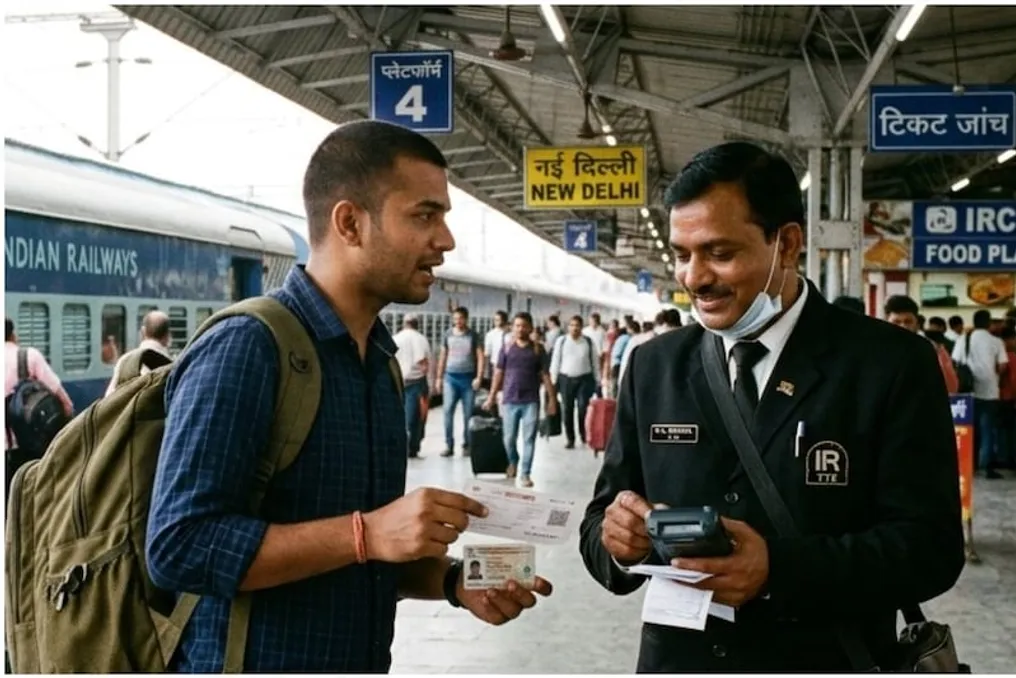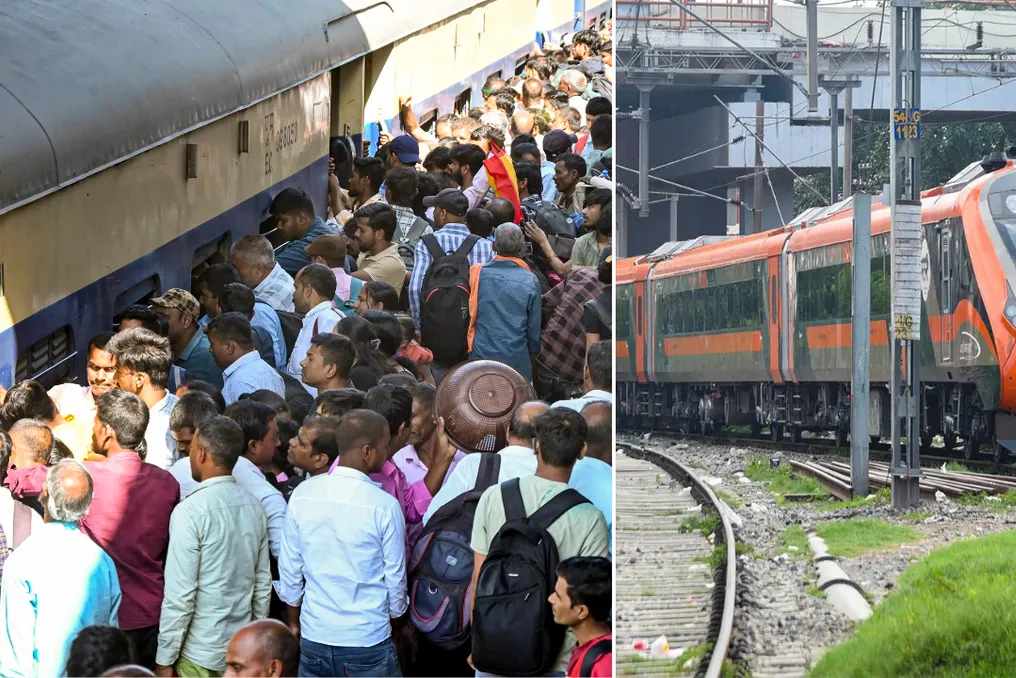
Indian Railways is undergoing significant changes through new trains, reconstructed stations, and modernized infrastructure. However, the question remains as to how quickly the experience of the passengers who rely on this network daily has changed.
For millions of people dependent on rail transport, the true test of modernization goes beyond the new look of a station or the modern design of a train. It lies in fundamental aspects such as platform manageability, toilet cleanliness, drinking water safety, good technical condition of coaches, and punctuality of arrivals.
Despite large investments in modernization, government audits continue to point out gaps in providing basic amenities for passengers, cleanliness in coaches, and overall technical maintenance. This contrast raises a broader question: is Indian Railways building a more modern network without paying sufficient attention to improving daily journeys?
The current task is to ensure that the transformation is felt not only in the visible infrastructure but also in the quality of services provided.
Large-Scale Reconstruction
Among the most noticeable elements of the railway modernization program is the Amrit Bharat station scheme. According to the Ministry of Railways, the development of 1337 stations was planned by December 2025, with work completed at 155 stations by that time. This program includes improvements to station buildings, waiting halls, toilets, seating areas, water supply systems, platforms, footbridges, elevators, escalators, and passenger information systems.
Plans also include improving access to stations, better connecting them with surrounding cities, and integrating various modes of transport. Part of this comprehensive approach includes initiatives such as ensuring accessibility for passengers with disabilities and creating spaces for local products under the 'One Station – One Product' program. The goal is to make stations more useful and accessible, rather than viewing reconstruction solely as a cosmetic measure.
The scale of the program is significant in a network where stations serve very different passenger flows. A large urban terminal must handle large crowds, multiple platforms, and complex transfers. A smaller station, however, requires reliable water supply, sufficient seating, accessible toilets, and a safe way to cross between platforms. A uniform appearance cannot replace amenities suited to the number and needs of each specific station's passengers.
Reconstruction must proceed while maintaining continuous train operations. Railway Minister Ashwini Vaishnaw noted the complexity of carrying out major construction work without stopping busy stations. Work near active tracks, relocation of utilities, obtaining permits, and restrictions imposed to protect passengers and train movement can affect project timelines. This is a reminder that infrastructure transformation takes time. It also raises a separate question: how effectively are existing facilities maintained during construction?
New Trains and New Expectations
The train itself is another important part of the modernization story. The Vande Bharat train has become the most recognizable symbol of a more modern railway experience, offering contemporary coaches, improved passenger amenities, and an emphasis on faster intercity travel.
The demand for these services has been substantial. The Ministry of Railways reported that in 2025–26, Vande Bharat Express trains served nearly 39.8 million passengers, compared to 29.7 million in 2024–25, representing an increase of approximately 34%. According to the ministry, since commissioning, the service has transported over 91 million passengers across approximately one hundred thousand runs, information provided in April 2026.
The appeal of these trains is understandable: modern coaches, comfortable seating, and onboard amenities can make long journeys less tiring. Faster services also help passengers who regularly travel for work, study, business, or family matters. The introduction of sleeper options in January 2026 expanded the trend towards modern night travel trains. In the first three months, the sleeper service carried 1.21 lakh passengers across 119 runs, with registered occupancy exceeding 100%.
A railway spokesperson, speaking to TOI on condition of anonymity, stated that the introduction of new trains is part of broader efforts to improve passenger conditions. He noted: 'New trains, such as Vande Bharat and Amrit Bharat, are being introduced using locomotive-hauled rake technology, offering passengers enhanced amenities. The work done over the last few years is gradually starting to show results.'
These figures indicate passengers' willingness to use new services if they offer an attractive travel option. However, the success of premium services should not be the sole measure of progress in a network that serves passengers with very different budgets and travel needs. For a family traveling in a reserved sleeper coach, the condition of the toilets and the availability of water can be as important as the train's design. For an unregistered passenger, a more pressing issue might be platform access without dangerous crowding. For a person traveling with an elderly relative, functional elevators and clear navigation can be the deciding factor between a manageable and a stressful journey. Therefore, the next phase of modernization must focus on raising the baseline standard across the entire network, not just creating pockets of premium travel.
The Test of Basic Amenities
The Comptroller and Auditor General's (CAG) audit provides a serious assessment of the gap between infrastructure ambitions and daily conveniences. Its Report No. 31 for 2026, presented to Parliament on August 12, examined passenger amenities and sanitation at non-suburban railway stations. Of the 512 stations covered, 458 had deficiencies in one or more basic passenger amenities.
According to the CAG report, deficiencies related to basic facilities such as toilets, washbasins, and drinking water. The audit also found E. coli contamination in water samples taken from coolers in eight locations, raising concerns about the safety of drinking water available to passengers.
These findings are significant because the utility of a facility depends not only on its installation. A cooler may be listed as a station amenity, but it is of little use if the water is unsafe or the equipment is unmaintained. A newly built toilet is not a significant improvement if it is dirty, lacks water, or frequently breaks down. The difference between providing an amenity and ensuring a functioning service is a central element of the passenger experience. Construction can be measured by expenditure, project completion, and the number of facilities created. Maintenance is less dramatic, but it determines whether passengers can actually use these facilities on a given day.
The CAG's findings do not mean that every station operates poorly, nor do they erase the benefits of reconstruction. They point to unevenness across the network. The challenge is to ensure that passengers do not depend on the size, location, or visibility of the station to receive basic services.
Cleanliness Doesn't End at the Platform
The problem extends not only to stations but also to the trains themselves. A separate CAG audit on cleanliness and sanitation in long-distance trains, covering the period from 2018 to 2019 and 2022 to 2023, showed that over 40% of surveyed passengers were dissatisfied with toilet cleanliness, and more than half expressed dissatisfaction with coach cleaning. The survey covered 2,426 passengers on 96 selected trains. The audit identified issues such as dirty restrooms, clogged sinks, flooding, and unclean vestibules. It was also found that 366 passengers, or about 15% of those surveyed, reported a lack of water in toilets or sinks. In 2022–23, over one hundred thousand complaints regarding the lack of water in train toilets and sinks were registered through Rail Madad.
The audit also highlighted shortcomings in the placement of cleaning staff and equipment, as well as gaps in monitoring and ensuring contractual obligations. It was noted that 89% of toilet cleanliness-related complaints were resolved within the stipulated time. This indicates a system capable of responding to complaints, but also the need to eliminate the conditions that generate them initially.
A railway spokesperson stated that bio-toilets have played an important role in sanitation improvement efforts, but maintenance and passenger awareness remain issues. He added: 'Indian Railways has taken extensive measures to improve cleanliness, and bio-toilets have played a vital role in these efforts. However, the key issue is their proper maintenance, which continues to cause problems. Lack of passenger awareness also contributes to sanitation issues.' He continued: 'Although railways are working on raising awareness through advertising and other means, there is still a need for a change in public perception regarding cleanliness.'
A complaint mechanism is necessary. Nevertheless, a passenger should not constantly have to report a clogged toilet or an empty water tank to receive routine services. Onboard cleaning, water replenishment, and regular checks should be part of normal railway operations, not just after a problem arises. Cleanliness is not a secondary comfort issue. It affects dignity, health, and passengers' willingness to trust the service. A train may have modern coaches and advanced safety features, but if the lavatory becomes unusable mid-journey, the experience quickly fails to meet the promise.
Punctuality: Progress, But Not the Whole Picture
Reliability is another test of whether the passenger experience is keeping pace with infrastructure investments. A faster train is only useful if its schedule is reliable, and a modernized station cannot compensate for a journey that is regularly delayed.
The Ministry of Railways reported that punctuality improved from 73.62% in 2023–24 to 77.12% in 2024–25, reaching 77.24% as of February 2026. The Ministry indicated that the network serves about 25,000 trains daily, and reasons for delays include smog, track and route restrictions, maintenance, signaling issues, disturbances, and other unforeseen events.
The improvement is significant, but the latest figure also shows that punctuality is an ongoing process. Railway operations involve a vast network where a failure in one section can affect service in others. To enhance long-term reliability, track maintenance, signaling modernization, and other works may be required, even if they cause short-term inconvenience.
A railway spokesperson noted that the growing demand for passenger trains has put pressure on punctuality, and infrastructure improvements are underway to address this. He stated: 'To solve this problem, railways have started operating dedicated freight corridors or have worked on creating them to provide separate tracks for freight trains. The Delhi-Mumbai Dedicated Freight Corridor is a key example.'
He also added: 'Major stations are undergoing reconstruction and block working to reduce additional stops and train delays. High-traffic sections are being converted to automatic signaling systems.' The spokesperson mentioned that smog and fog also affected train operations by reducing visibility. 'To address this, fog signaling devices have been installed on locomotives. Furthermore, railways are installing the advanced Kavacha system, which not only helps improve punctuality but also plays a vital role in ensuring train safety.'
However, for passengers, the experience is felt immediately. A delayed train can mean a missed connection or a longer wait at the station.