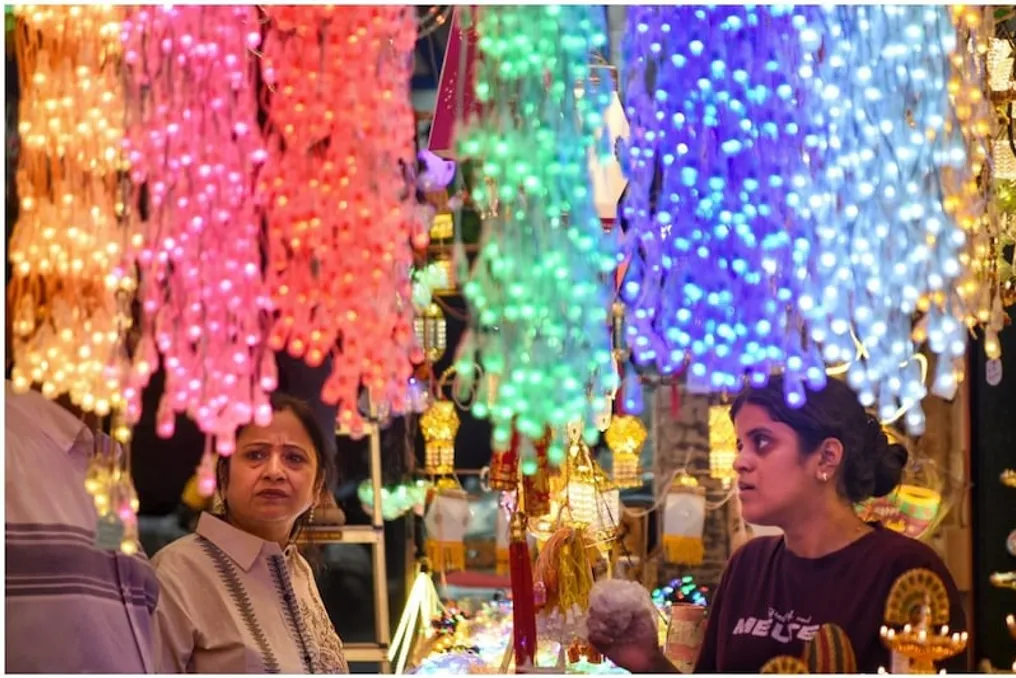
Prices for Decorative Light Garlands for Diwali in Delhi Wholesale Markets
Read more
Aaj Tak
www.aajtak.in

Prices for Decorative Light Garlands for Diwali in Delhi Wholesale Markets

As the festival of Diwali approaches, markets have been decorated with numerous twinkling lights, and shops and homes are beginning to be adorned with lighting fixtures. With Diwali drawing near, the question of choosing and where to buy lighting always arises. If you plan to purchase garlands for your home, we will tell you about their prices at Sadar Bazaar in Delhi and how cheaply they can be found wholesale. At this time, videos from sellers reporting current prices for these luminaries are circulating on social media.

According to traders, many types of lamps and garlands are available for Diwali decoration, with prices varying depending on length, design, and quality. They indicate that the starting price for single-color lamps is 18 rupees for a 10-meter set. Additionally, a 15-meter lamp costs 30 rupees, while a high-quality 'High Glow' 15-meter lamp will cost 36 rupees. 20-meter lamps are also available for 46 rupees, and 30-meter ones for 65 rupees. Sellers also offer a second-quality 15-meter lamp for 65 rupees, a 20-meter one for 80 rupees, and a 30-meter one for 100 rupees.

Regarding multi-colored lamps, the starting price is 28 rupees for 10 meters. The initial price for a 15-meter multi-colored lamp is set at 40 rupees. Traders note that these lamps come in many color options. A 30-meter garland is also available for 70 rupees, and a second-quality 30-meter garland costs 75 rupees. The price for a 40-meter lamp is 120 rupees. Furthermore, a 90-meter yellow garland sells for 230 rupees, and the second-quality option is 250 rupees.

In the opinion of the sellers, their assortment includes many long garlands, including models ranging from 75 to 100 meters. One 90-meter garland can cost 300 rupees. A seller claims to have garlands from 10 to 120 meters, with the cost depending on the number of bulbs and quality.

In the crystal lamp category, there is a 50-meter model priced at 100 rupees. A 40-meter crystal lamp is offered in various quality options for 300 and 400 rupees. The trader reported that among them there are various designs, including patterns resembling diamonds.

Besides lamps, the store has various decorative items. According to the seller, the starting price for lamps featuring Lakshmi and Ganesha is 45 rupees, and various designs are available in the price range of 75 to 140 rupees. Prices for chandeliers start from 60 rupees, followed by chandeliers costing 80, 100, 120, 150, 180, and 250 rupees. The largest and most elaborately decorated chandeliers can reach a price of 450 rupees.

Decorative lanterns and torches are also available, with a starting price of 65 rupees. One lantern costs 100 rupees, and a torch of another design costs 180 rupees. Lamps with a 'crackers and bell' design are also available for 120 rupees, a 'Ghasri' lamp for 130 rupees, and a crystal-design lamp for 250 rupees. The cost of a tactile light fixture ranges from 6 to 8 rupees, while a standard bulb starts from 20 rupees. The store also features other bulbs priced from 40 to 80 rupees, as well as lamps with folding fans.
Similar stories

Candle procession is part of the Natal Luz festival program in Gramado
Read more
viagemeturismo.abril.com.br

Candle procession is part of the Natal Luz festival program in Gramado

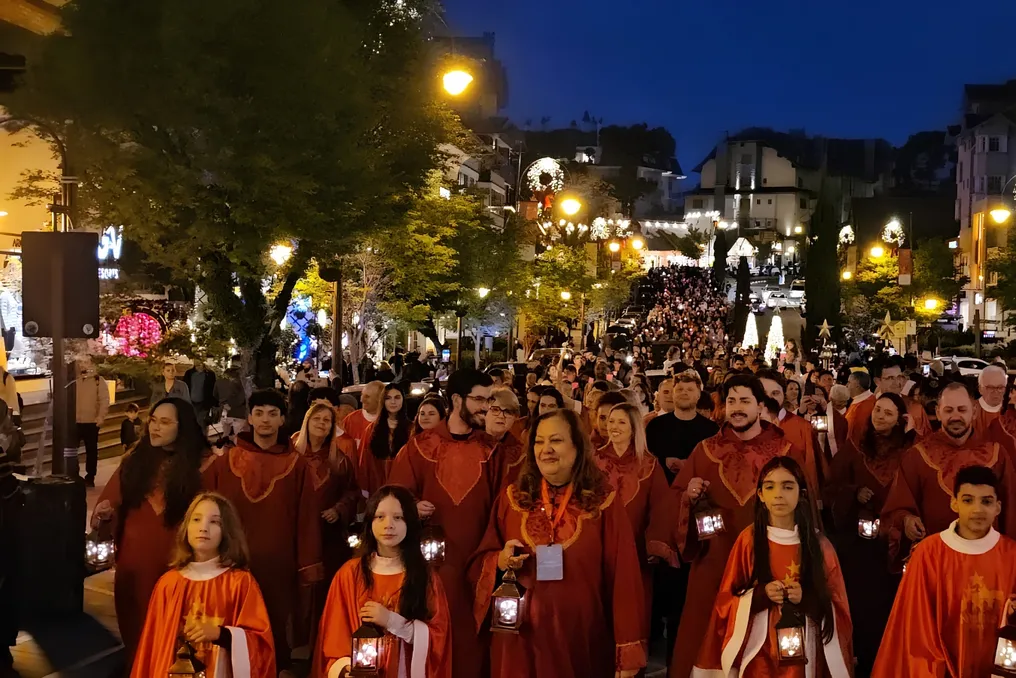
Residents and tourists visited the illuminated 'Caminho das Luzes' parade in Gramado last Tuesday (the 27th). This public procession moved through the city center with lit candles and was accompanied by a religious blessing, thereby reviving the origins of Natal Luz, which was created in 1986.

The participants gathered at Praça das Etnias, where they received candles and heard words from Father Neymar Pires, a parishioner of the São Pedro parish. From there, the group proceeded along Avenida Borges de Medeiros to Rua Coberta.

'Caminho das Luzes' is part of the 41st Natal Luz of Gramado program and takes place every Wednesday at 6:30 PM. This event is free and will continue until January 17, 2027, along with the rest of the festival.

The history of Natal Luz began as a public celebration. Inspired by Christmas festivities from rural Germany, the mayor's office and residents of Gramado organized a special program in 1986 to illuminate the city and celebrate the end of the year.

On December 26 of that year, about 700 singers from 35 Gaucho choirs left Lake Joaquim Rita Bier towards the center, carrying lit candles and Christmas carols. The procession was also accompanied by 20 Noel Fathers.

Upon arrival at Praça Matriz São Pedro, about nine thousand people were waiting for the group. In front of the church, the choirs performed under the direction of the Porto Alegre Sinfonicon Orchestra, conducted by Maestro Eleazar de Carvalho. This concert entered history as one of the landmark moments of the first edition of the event. The format of the illuminated parade was restored at the 40th edition of Natal Luz in 2025, in honor of the festival's 40th anniversary.

The Natal Luz celebration began on October 22 and continues until January 17, 2027. The official opening took place on Avenida Borges de Medeiros, opposite the Palácio dos Festivais, featuring performances by the Christmas Group and the Keeper of the Stories of Gramado.

The ceremony provided an overview of the main shows taking place in the city during the season. The Grand Christmas Parade brings characters and allegories to the streets, while Nativitaten focuses on music and visual effects. Additionally, Brilho do Natal, Natal Luz in Concert, and the Christmas Parade complement the artistic program. The opening also included a symbolic moment when Mayor Nestor Tissot handed over the city key and the Book of Stories of Gramado to Santa Claus, officially marking the start of the celebrations.

Thanks to paid and free attractions, the event covers various points of the municipality over almost three months. The full program can be found on the official website.

Significant discrepancies found in government procurement prices in Madhya Pradesh: from ₹5 for disinfectant to ₹33,500
Read more
www.aajtak.in

Significant discrepancies found in government procurement prices in Madhya Pradesh: from ₹5 for disinfectant to ₹33,500

Financial indicators of government procurement in the urban bodies of Madhya Pradesh have caused widespread resonance. Colossal differences in the cost of goods were recorded: for example, one liter of disinfectant (phenal) was accounted for at a price of only ₹5, while an analogous product cost ₹33,500. Similarly, 60W LED lamps were purchased for ₹306, whereas in the city of Bhopal, the same lamp cost ₹11,800. Furthermore, there was a price difference of two to six lakh rupees observed in the purchase of garbage trucks.

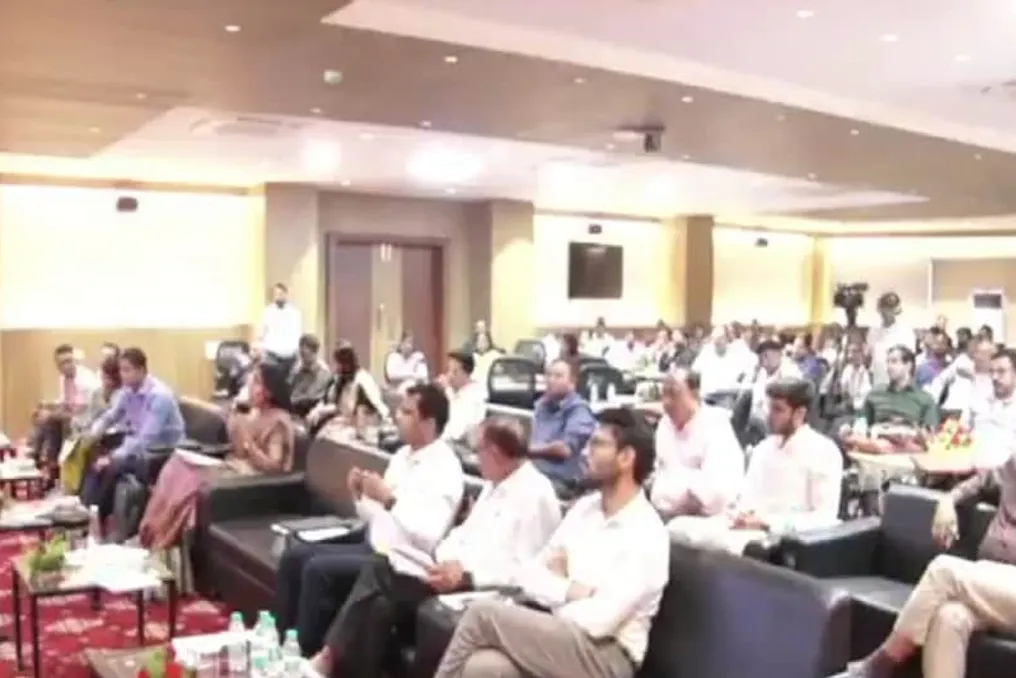
This data raises questions about how thoroughly control and price comparison were conducted when spending public funds. A video recording of an old speech by Additional Minister for Urban Bodies, Sanjay Dubey, went viral on social media, where he warned officials about problems in the urban body procurement process. At a meeting, based on an analysis presented by Additional Director MPSEDC Anshuman Raj, information was provided regarding significant discrepancies in procurement rates. Officials were clearly informed that any anomalous prices and violations in procurement would no longer be ignored.

According to the data presented at the meeting, 374 urban bodies in Madhya Pradesh made purchases worth approximately ₹1,134 crore through the government e-marketplace GeM over the last three years. Analysis of these expenditures showed that by purchasing goods at average market rates, approximately ₹250 crore could have been saved. This figure raises questions about the public procurement procedure, price evaluation, and official accountability. When the same item is purchased at vastly different prices in different bodies, it becomes critically important to ascertain the reason for this discrepancy: whether the quality of the goods, technical specifications, or purchasing conditions differed.

Nevertheless, the calculation of potential savings by purchasing at average rates is not definitive proof of corruption itself. To establish the truth, verification of the specifications, quality, volume, delivery, installation, and payment records of the respective products is necessary. Despite this, the figures obtained undoubtedly call into question the effectiveness of the price comparison system in government procurement.

The example of the purchase of phenolic disinfectant was particularly highlighted in the presentation. According to statistics, in one urban body, the price per liter of the product was ₹5, whereas in another location, the cost for a similar product was recorded at ₹33,500. Such a huge price gap for a product of the same category is shocking. Usually, purchases consider quality, volume, brand, technical standards, and market rates. Therefore, it is necessary to verify whether the goods bought in both places were identical. If their characteristics differed, this should have been clearly reflected in the documentation.

The main question in this case is on what basis the price was set. Was a comparison of various rates conducted before the purchase? Did the relevant officials assess the real cost and utility of the product? Answers to these questions can only be obtained after a thorough examination of the procurement documentation and technical descriptions.

A significant price difference was also evident in the purchase of LED lamps. The presentation showed that a 60-watt LED lamp was purchased for ₹306, while in Bhopal, the same lamp cost ₹11,800. The total cost of this purchase in Bhopal amounted to ₹3.78 lakh. Such a large difference in the price per lamp of the same wattage naturally raises questions about the procurement process. However, wattage alone cannot determine the complete identity of both lamps; their quality, technical standards, additional devices, installation, and other conditions are also important.

But if the product characteristics and purchasing conditions were the same, then such a price difference becomes the subject of a serious investigation. In government procurement, it is not enough just to order goods; it is necessary to ensure that payment is made at a fair rate and that public money is used properly.

Sanjay Dubey also cited the example of the purchase of garbage trucks. According to him, one urban body bought a garbage truck for two lakh rupees, while another body spent six lakh rupees on a similar machine with four garbage bins. Questions regarding the price difference also arose in this example. Were the size, construction, quality, and purpose of both garbage trucks the same? Did the six lakh purchase include additional amenities or other expenses? Only checking these aspects can reveal the true reason for the discrepancy.

Sanjay Dubey also expressed concerns about increasing prices by adding additional items to the procurement and conducting purchases through his acquaintances. This remark raises alarm about the transparency and impartiality of the procurement process. If the price was unjustifiably inflated in any procurement, a check of the documentation and payment records is necessary to determine responsibility.

The presentation also included a report on expenditures for various items over the last three years, including details on the purchase of Garbage Tippers, Street Lights, and disinfectants.

Popular