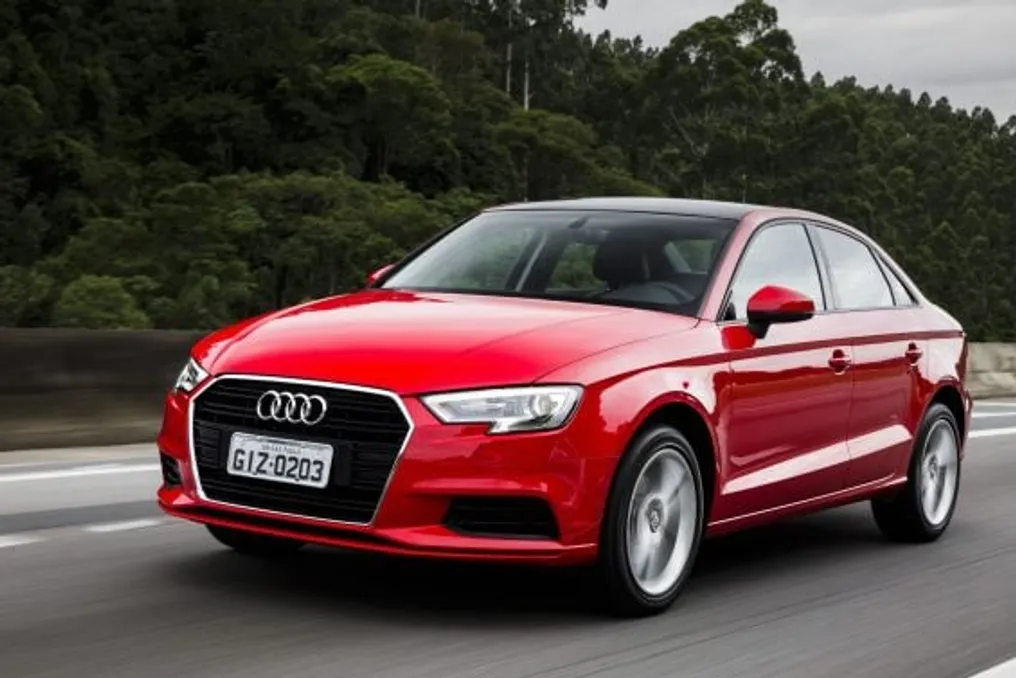
Used Audi A3 Sedan: 10 Facts About the Model Produced in Brazil
Read more
AutoPapo
autopapo.com.br

Used Audi A3 Sedan: 10 Facts About the Model Produced in Brazil

Inovar-Auto, a governmental sectoral program launched in the early 2010s, introduced specific features to the Brazilian market, allowing luxury brands like Audi to begin local vehicle assembly, including the A3 Sedan.

The German manufacturer resumed its activities at the plant shared with Volkswagen in Paraná after an operational period between 1999 and 2006. This time, Audi focused on producing the A3 Sedan. Although the model received adaptations for national manufacturing, it preserved the refined dynamics, robust performance, and luxury characteristic of the German brand.

Model History and Evolution

The third generation of the Audi A3 was responsible for introducing the Sedan version. This model was presented globally at the New York Auto Show in 2013 and arrived in Brazil in January 2014, initially imported from Hungary. Initially, the car used the 1.8 TFSi engine with 180 hp. Later, an entry-level version appeared with a 122 hp gasoline TFSI 1.4 engine, which became flex with the national assembly line in 2015.

The Audi A3 Sedan also offered a more powerful option, the 2.0 with 220 hp, and underwent an aesthetic redesign in 2017. In 2019, a special 25th Anniversary edition was launched, limited to 600 units, celebrating the brand's anniversary in Latin America. This first generation of the sedan ended its production in 2020.

The relaunch of the A3 Sedan marked the reopening of the Audi assembly line in São José dos Pinhais, Paraná, all under the umbrella of Inovar-Auto, which offered tax incentives for local production. Other manufacturers benefited from this program included BMW in Araquari (SC), Mercedes-Benz in Iracemápolis (SP), and Jaguar Land Rover in Itatiaia (RJ).

It is worth noting that the factory used by Audi had been inaugurated in 1998 to produce the Volkswagen Golf IV, and from 1999 to 2005, it manufactured the first generation of the A3 Sportback. At this Paraná unit, besides the A3 Sedan, the Q3 was also produced. The unit's operations were suspended in December 2020 because the manufacturer alleged a lack of definition regarding accumulated IPI credits that were not fully returned.

Currently, the unit operates under the SKD regime for the assembly of the Q3, a process where the vehicle arrives almost complete, and only the joining of the body with the chassis occurs at the plant.

Brazilian Adaptations and Mechanical Changes

Upon receiving the Brazilian passport in 2015, the Audi A3 Sedan underwent several adaptations, some mechanical aspects being simplified to reduce production costs. A notable change occurred in the rear suspension: Audi replaced the independent multi-link system with a torsion beam, a configuration common in mid-size sedans from generalist brands of that era.

Another significant change was in the transmission system. The S tronic automated gearbox, known for its seven-speed dual-clutch system, was replaced by a six-speed Tiptronic automatic gearbox with a torque converter. In compensation, the Audi A3 Sedan gained a considerable increase in power. The 1.4 TFSI engine, which originally delivered 122 hp, was adapted to be flex, received variable exhaust valve control, and began generating 150 hp.

An important difference in the A3 Sedan manufactured in Paraná is the vehicle height. To suit the local asphalt standard, the suspension was raised by 1.5 cm compared to the imported model.

Performance and Finish

Analyzing specifically the 1.4 flex model, despite the transmission changes, the 150 hp from the EA211 family turbocharged direct injection engine provide a satisfactory level of driving pleasure. Accelerations are agile, and the Tiptronic gearbox, although less sophisticated than the S tronic, delivers a 0 to 100 km/h time of 8.8 seconds, according to the manufacturer.

On highways, the Audi A3 Sedan demonstrates good evolution, quickly reaching the permitted 100 km/h. For overtaking, 25.5 kgfm are available between 1,500 and 4,000 rpm, and the turbo acts quickly to overtake other vehicles.

German engineering is evident in the solid construction of the sedan, which maintains firmness in sharp curves and high-speed sections. The steering is described as precise and firm, giving the sensation that the car is firmly planted on the ground. The torsion beam suspension in the Brazilian model has a softer calibration, without compromising the stability or dynamics of the vehicle.

Inside, the A3 Sedan manufactured in Brazil maintains the brand's identity. The dashboard features injected foam with a pleasant touch surface, and the door and column coverings with fabrics also stand out, as does the smooth finish of the glove box. The front seats offer good density and quality material, although they are not extremely enveloping. The analog instrument cluster is considered classic and easy to view, with the steering wheel being the only element that could have a smaller diameter.

The rear space comfortably accommodates two adults and one child. The softer suspension compared to the Hungarian example reflects internal imperfections more, but without being a serious problem. The acoustic insulation is efficient, and the trunk offers 425 liters, a suitable volume for mid-size sedans.

2016 Ambiente Version and Equipment

Considering the 2016 Audi A3 Ambiente 1.4 TFSi, already adapted to the Brazilian market, it includes six airbags, stability control systems, traction and hill start control, reverse sensor, xenon headlights, daytime running lights, and Isofix. Additionally, the sedan has air conditioning, electric window controls, electronic parking brake, rain and dusk sensors, start-stop system, steering wheel with height and depth adjustments, and multimedia center with CD and memory card reader.

However, this transition to the Ambiente model simplified some features. The air conditioning was no longer automatic, the seats changed from leather to fabric upholstery, and the multimedia center does not have Bluetooth. Higher packages, however, included ADAS technologies, such as adaptive cruise control, frontal collision warnings, and lane departure warnings, as well as emergency automatic braking. Other optional extras available were a rearview camera, front parking sensors, semi-automatic parking assistant, leather trim, keyless entry, panoramic roof, native GPS, and DVD player.

When checking average prices for the 2016 Audi A3 Sedan Ambiente on KBB Brazil, it is important to remember that it is a luxury vehicle requiring specialized maintenance, and the trim and body parts tend to be more expensive. It is positive that the 1.4 flex engine is well-known and that the Tiptronic gearbox generally presents fewer problems than the S tronic. It is recommended to check the prices of specific components and the problems reported in discussion forums and on Reclame Aqui.
Similar stories

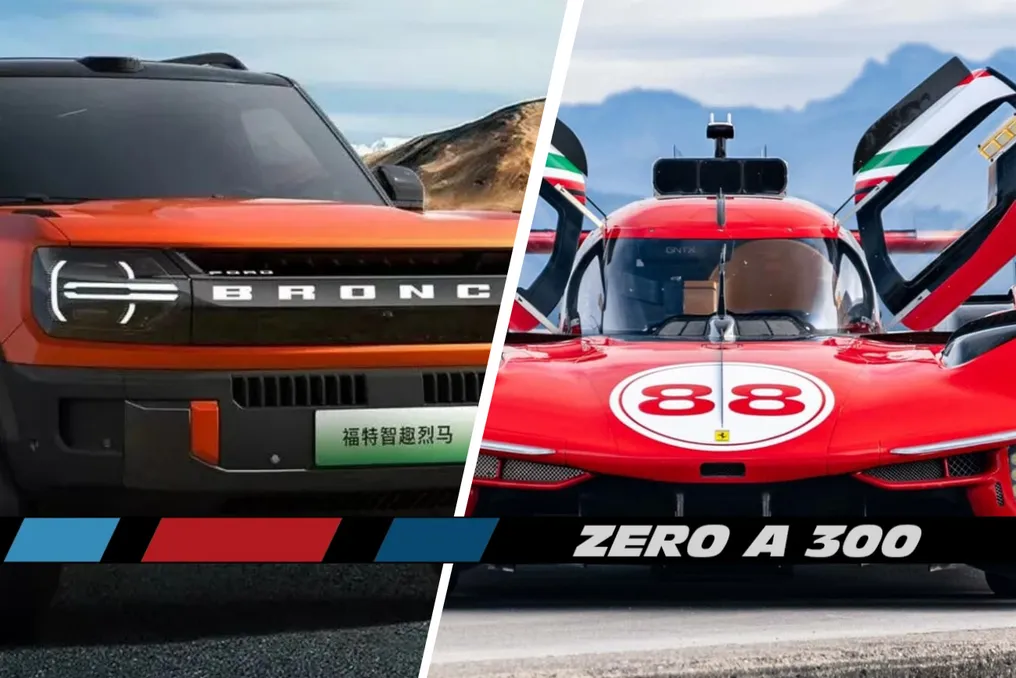
Analysis of the Ford Bronco hybrid launch in Brazil in 2027 and auction of modified Ferrari 499P
Read more
flatout.com.br

Analysis of the Ford Bronco hybrid launch in Brazil in 2027 and auction of modified Ferrari 499P

The Ford Bronco EREV, a Chinese-origin plug-in hybrid SUV, is scheduled to be launched in the Brazilian market in 2027. According to Autos Segredos, the manufacturer had already been evaluating the introduction of the vehicle to the country before making the final decision.

It is important to note that the Bronco EREV has distinct characteristics from the current Bronco models (which use the Ranger pickup chassis) and the Bronco Sport (which shares a base with the Maverick pickup). This new model was developed separately in collaboration with the Chinese company JMC, being designed from the outset to incorporate electrified propulsion systems.

Its mechanical system combines a four-cylinder turbo engine producing 150 hp and 24.5 kgfm, along with two electric motors (one on each axle). The combustion engine functions only as a generator for the 43.7 kWh battery, while traction is provided by the electric motors, which generate 422 hp and 60 kgfm of torque. This configuration allows it to reach 100 km/h in 5.8 seconds, and the combined range can reach 1,220 km under the Chinese CLTC standard.

With dimensions of 5.03 meters in length and a wheelbase close to three meters, the Bronco EREV is larger than the Bronco Sport. Although values have not yet been disclosed, its cost is expected to exceed the R$ 250,000 requested for the smaller model, given its unprecedented hybrid technology in the local market.

Modified Ferrari 499P goes to auction and could exceed R$ 40 million

A notable opportunity has arisen for Le Mans prototype enthusiasts: the auction house Christie will sell a Modified Ferrari 499P at its next event in Geneva, Switzerland. The required value to acquire this vehicle is around R$ 40 million.

The connection to Le Mans is substantial, as the Modified 499P is a variation of the prototype that won Ferrari at the 2023 24 Hours of Le Mans, marking the tenth Italian victory in the race and the first since 1965. In addition to maintaining a very similar look to the racing car, it shares the same mechanical package: a three-liter twin-turbo V6 plus a 272 hp electric motor.

Unlike the Hypercar prototype, which reached 680 hp, this Modificata achieves 706 hp, without being subject to FIA restrictions. It also features a 'push to pass' button that temporarily boosts power to 767 hp. The Christie example is practically new, having only been used in shakedown tests after leaving the factory. Whoever buys it will gain access to Ferrari's Sport Prototipi Clienti program, which offers specialized technical support.

Model Updates and Industry Criticisms

Volkswagen launched the 2027 line of the Polo, with the main change concentrated in the Track version, which now includes standard rear parking sensors. Additionally, the entry-level version received a new optional package for R$ 2,660, which includes touch-activated electric windows on all four doors and electric mirrors that fold down when reversing.

There were no significant aesthetic or mechanical changes in other versions. The Track and Robust variants continue to use the 1.0 naturally aspirated three-cylinder, 12-valve engine, producing 77 hp and 9.6 kgfm of torque with gasoline, or 84 hp and 10.3 kgfm with ethanol, always coupled with a five-speed manual transmission. The Sense and Highline versions use the 1.0 turbo flex TSI engine, which delivers 109 hp with gasoline and 116 hp with ethanol, maintaining 16.8 kgfm of torque, and uses a six-speed automatic transmission.

The prices of all versions have been readjusted, with increases ranging between R$ 300 and R$ 2,000. Specifically, Track and Sense went from R$ 96,690 to R$ 97,990; Polo Robust rose from R$ 112,990 to R$ 114,990; and the Polo Highline increased from R$ 138,690 to R$ 138,990.

Meanwhile, Nissan expressed concern over the growing volume of vehicle production in Brazil originating from imported kits from China. Ricardo Gondo, President of Nissan Brazil, pointed out that a large part of the growth in national production in 2026 comes from CKD and SKD operations, which use partially or fully disassembled vehicles with little local manufacturing.

Gondo detailed that although Brazilian production grew by 8.7% between January and September 2026, this number drops to just 2.5% if vehicles assembled from imported kits are excluded. Anfavea data corroborates this, indicating that about 123,000 of the 173,000 extra units produced compared to 2025 are the result of CKD and SKD assemblies, representing more than 70% of the production increase. The problem lies in the fact that these operations require fewer national components, reducing the activity of the local auto parts industry, since the complete sets are imported.

Despite the criticism, Gondo mentioned that Nissan is studying production via CKD or SKD, depending on industrial policies and government incentives. He assured that the Kicks and Kait models will continue to be manufactured normally at the Resende, Rio de Janeiro unit. In contrast, the Nissan factory in Resende saw its production increase by 29.5% in the same period, reaching 65,640 vehicles, while exports grew by 145%, with a goal of reaching 90,000 units by the end of the year.

Honda Racing Launches Preparation Parts for Street Cars

Honda Racing Corporation (HRC), Honda's competition arm, will begin marketing preparation parts intended for street cars. After announcing plans in 2024 and displaying a prepared Prelude at the Tokyo Auto Salon earlier this year, Honda confirmed that it will present its first line of components at the SEMA Show in November, with sales starting in March 2027, initially in the United States (facilitating import to Brazil).

The HRC Performance Parts catalog will include parts for the Civic Type R, Acura Integra Type S, and the Passport and Pilot SUVs. For the two sports cars, HRC developed 19-inch forged aluminum wheels in collaboration with the Italian company 2elle-engineering, supplier of the wheels for the Acura ARX-06 endurance. Each wheel weighs only 9.4 kg, representing a reduction of approximately 10 kg of unsprung mass compared to the original, in addition to being half an inch wider and having been tested at the Nürburgring.

At SEMA, Honda will also display prototypes of future items, such as adjustable suspensions, camber plates, Brembo brakes with six-piston calipers, and short shifter levers, although these are still in the development phase. All parts will be sold through Honda and Acura dealerships, and through the online store in the US. Prices and the possibility of expanding the HRC Performance Parts line to other markets have not yet been announced.

Toyota Proposes Recognizing Combustion Vehicles as Zero Emission in Europe

Toyota presented a proposal to the European Union aiming for combustion engine cars to be classified as zero-emission vehicles, provided they are exclusively fueled with renewable fuels. This suggestion was made amid discussions to relax the CO2 emission targets set for 2035.

The idea is to create a new homologation category called VEEF (Vehicles running Exclusively on Eligible Fuels). This classification would allow vehicles using only biofuels and renewable synthetic fuels to be categorized as zero emission. However, this does not imply the absence of exhaust emissions; the proposal focuses on considering emissions throughout the entire fuel life cycle, including its production, and not just what is expelled.

For this to happen, the fuels must meet the sustainability criteria defined by European legislation. Toyota is already testing this viability, participating in a pilot project in Spain with BMW, Bosch, and Repsol, using about 20 Toyota, Lexus, BMW, and Mini vehicles fueled with the renewable gasoline Nexa 95, derived from organic waste. These cars are conventional models, without mechanical modifications.

Bosch developed the Digital Fuel Twin system to monitor the exclusive use of renewable fuel, cross-referencing data from vehicles, gas stations, and refueling transactions. Furthermore, Toyota advocates for reducing the European 2035 target from 100% to 90% cut in average CO2 emissions of new cars, proposing that the remaining 10% be compensated by the use of low-carbon steel and renewable fuels. For 2030, the company suggests that meeting the targets be evaluated over a five-year period (2028 to 2032), allowing for annual compensation.

According to Toyota, electric vehicles should represent about 45% of European sales in 2030, a level lower than the more than 55% estimated to meet current targets. For this reason, the company also requests periodic revisions of the targets if infrastructure and demand do not evolve as planned. Currently, the recognition of VEEF vehicles remains a proposal from Toyota, not a rule approved by the European Union.

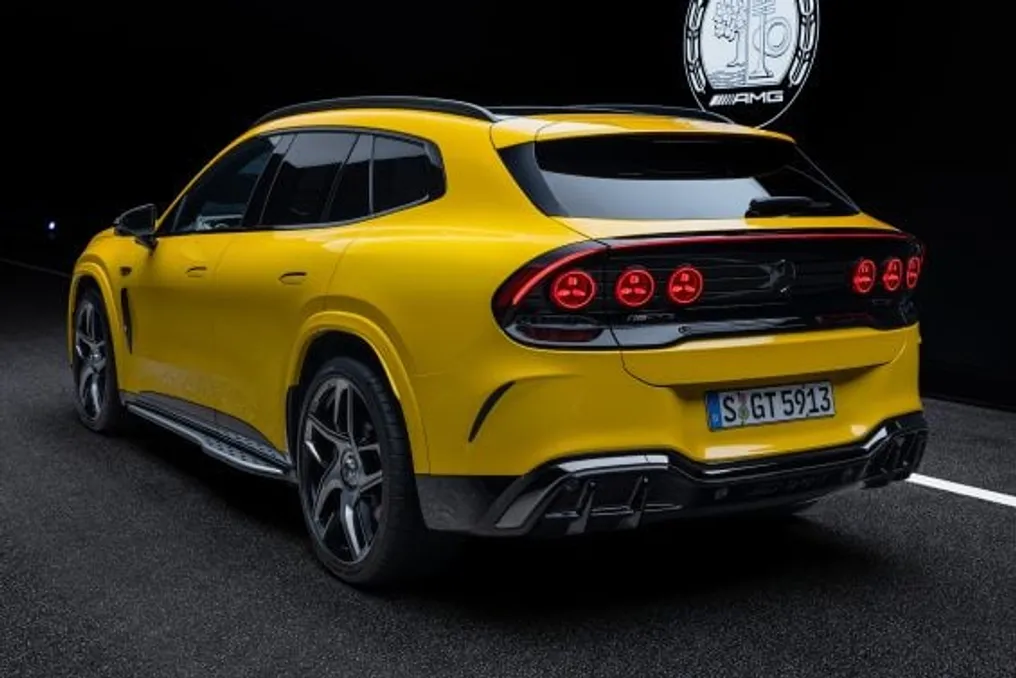
Mercedes-AMG launches 1,169 hp electric GT SUV that mimics V8 sound and surpasses Porsche Cayenne in Brazil
Read more
autopapo.com.br

Mercedes-AMG launches 1,169 hp electric GT SUV that mimics V8 sound and surpasses Porsche Cayenne in Brazil

Mercedes-AMG has introduced its new GT SUV, which is the first sports utility vehicle developed entirely by the automaker's sports division. This electric model achieves a power output of 1,169 hp and has the capability to replicate the characteristic sound of a V8 engine.

This performance exceeds the 1,156 hp recorded in the Porsche Cayenne Turbo Electric, which is available for sale in the Brazilian market for R$ 1.41 million.

The entry-level version, named GT 53, is equipped with two electric motors, generating 544 hp and 81.6 kgfm, and can accelerate from 0 to 100 km/h in just 4.2 seconds. The GT 55 and GT 63 models use three axial flux motors, which are more compact compared to traditional systems.

The GT 55 offers 816 hp and 189.7 kgfm, while the GT 63 delivers 1,169 hp and 203.9 kgfm, reaching 100 km/h in 2.7 seconds and having a top speed of 270 km/h. Additional power can be released for up to 63 seconds by simultaneously activating both steering wheel levers, at which point the seatbelts tighten and occupants feel an impact.

In AMGFORCE Sport+ mode, both the GT 55 and GT 63 reproduce the sound of a V8, and the GT 53 simulates the sound of a six-cylinder engine. According to Mercedes-AMG itself, these sounds are not merely synthetic; they are based on over 100 measurements taken with 16 microphones in vehicles such as the AMG GT R. This feature, which can be deactivated, even replicates gear shifts and causes vibrations in the seats.

The battery, with a capacity of up to 128 kWh, was inspired by Formula 1, using cylindrical cells that are individually immersed in a non-conductive oil. This technology was previously tested in the AMG GT XX concept car, which traveled 40,075 km—the equivalent of a full trip around the Earth—in seven days and thirteen hours on the Nardò track in Italy in 2025.

With the higher capacity battery, ultra-fast charging reaches 710 kW, allowing for the recovery of approximately 450 km of range in ten minutes. The total predicted range is up to 700 km under the European WLTP cycle, a more favorable figure than that established by Inmetro. Internally, the multimedia center integrates three artificial intelligence assistants—ChatGPT, Microsoft Bing, and Google Gemini—in addition to a track application that displays, in augmented reality, the route of a previously recorded lap.

Manufactured in Sindelfingen, the GT 53 has been accepting orders in Germany since Tuesday (20), with an approximate price of R$ 641 thousand (equivalent to 113,050 euros). The GT 55 and GT 63 models are scheduled to be launched between March and June 2027. Mercedes-Benz has not yet confirmed the possibility of marketing this SUV in Brazil.

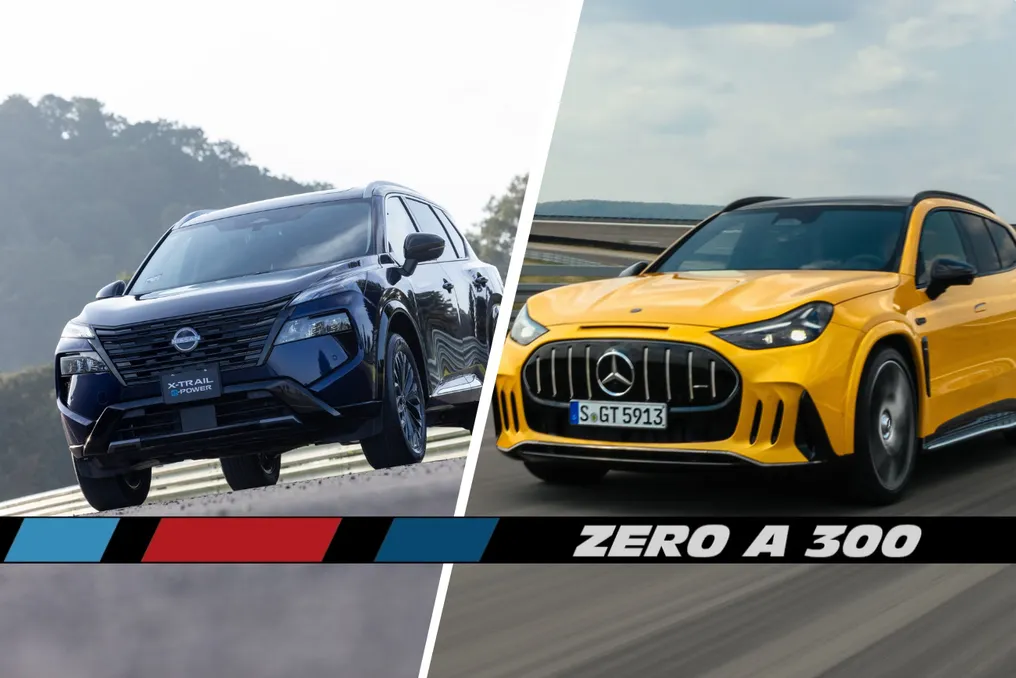
Nissan hybrid X-Trail launch in Brazil and transformation of Mercedes-AMG GT into an SUV
Read more
flatout.com.br

Nissan hybrid X-Trail launch in Brazil and transformation of Mercedes-AMG GT into an SUV

Nissan announced that the new hybrid X-Trail is scheduled to launch in Brazil in the second half of 2027. This utility vehicle aims to occupy a higher position than the Nissan Kicks and serve as a tool for the automaker to compete with growing Chinese competition.

Ricardo Gondo, President of Nissan in Brazil, confirmed that the X-Trail will be marketed with seven-passenger capacity, unlike the rest of Latin America where the model is offered only with five seats. It will arrive in the e-Power and e-4orce versions, configured with a hybrid system and four-wheel drive.

The powertrain consists of a 1.5-liter turbo engine producing 144 hp and 25.5 kgfm of torque, which functions solely as a generator to power two electric motors: one of 204 hp in the front and another of 136 hp in the rear. Together, these components generate a total of 216 hp and 33.7 kgfm of torque. The transmission is direct, with only one gear, and the performance is considered satisfactory, reaching 100 km/h in seven seconds, with a maximum speed limited to 180 km/h.

With dimensions of 4.69 meters in length, 1.84 m in width, and a wheelbase of 2.71 m, the Nissan X-Trail has a size similar to the Toyota RAV4 Hybrid, one of its main competitors. The trunk accommodates 485 liters when the third row is folded down, and with seven occupants, the cargo space is 120 liters.

To compete in this segment, the X-Trail will be equipped with expected features such as three-zone digital air conditioning, a 12.3-inch multimedia center, and a driver assistance package that includes adaptive cruise control, autonomous emergency braking, and lane departure warning.

Although the price has not yet been disclosed, an estimate based on competition suggests the value could range between R$ 300,000 and R$ 350,000. This compares to Chinese models like the Leapmotor C10, which starts around R$ 220,000, and the Toyota RAV4 Hybrid, which exceeds R$ 300,000, with the plug-in hybrid version nearing R$ 400,000.

Mercedes-AMG transforms its 1,169 hp electric GT into an SUV

Mercedes-AMG has transformed its new 1,169 hp electric Mercedes-AMG GT, a sedan featuring three axial flux motors, a large battery, and a weight of 2,460 kg, into an SUV—a decision that, according to the automaker, could generate good revenue.

This is the first large SUV fully developed by AMG. The GT 63 version essentially uses the same architecture as the four-door GT: three axial flux electric motors (two rear and one front) delivering 1,169 hp and 203.9 kgfm. Mercedes states that this model reaches 100 km/h in 2.7 seconds and achieves 270 km/h.

The weight challenge persists, but now on an SUV scale. The GT 63 can be equipped with a 106 kWh battery weighing 2,585 kg, or with the larger 128 kWh package, increasing the weight to 2,695 kg. In the longer-range configuration, it adds 235 kg to the weight of the previous electric GT.

The expanded battery promises a range between 620 and 700 km in the WLTP cycle and supports fast charging up to 710 kW in DC current. Mercedes claims this allows recovering up to 454 km of range in ten minutes or going from 10% to 80% in 12 minutes, depending on charger availability.

To deliver behavior worthy of an AMG despite the weight approaching 2,700 kg, the GT SUV incorporates pneumatic suspension with active hydraulic roll and longitudinal control, rear steering, and independent torque vectoring on both rear motors. Furthermore, it features active aerodynamics, including movable air intakes and an adjustable rear spoiler.

Similar to the four-door model, Mercedes included a mode that emulates the sound of an AMG V8 and simulates gear shifts, now incorporating seat vibrations. This raises questions about whether future electric performance will need to replicate what it replaced so faithfully.

Mercedes admits it underestimated V8 fans

Mercedes-Benz acknowledged that it may have neglected customer preference for the V8 engine when replacing the C63's V8 with a four-cylinder hybrid engine. Mercedes-Benz CEO Ola Källenius admitted that the brand underestimated the appreciation of the so-called 'good old V8 crowd' when implementing this change.

Subsequently, Stefan Weckbach, head of AMG, confirmed that the next CLE 63 will return to using a V8 in 2027, indicating that AMG learned from public reaction and opted to return to what customers appreciate.

This change comes after years of uncertainty on the topic. In 2023, Mercedes sources informed the German press that the idea of returning to the V8 in the C63 and E63 was 'pure nonsense,' and the brand later denied the return of the V8 to the C63.

The situation raised doubts, given that Mercedes planned to convince C63 V8 owners to spend amounts close to R$ 1,000,000 to migrate to a model with a 2.0 four-cylinder engine from the A45 AMG, equipped with technology considered tedious by Formula 1.

Honda Civic hybrid gains Prelude's S+ Shift transmission

Honda will implement the Prelude's S+ Shift transmission system in the hybrid Civic, aiming to make driving more engaging. This feature will only be available for the hatchback version.

In the standard Civic e-CVT system, the car operates mainly with the electric motor at low and medium speeds, while the Atkinson combustion engine serves only to generate electricity via a secondary generator motor. As speed increases, a hydraulic clutch connects the combustion engine directly to the wheels to optimize fuel economy. Because it lacks physical gears, acceleration is constant, which favors consumption but makes the driving experience less dynamic.

S+ Shift resolves this issue by incorporating eight virtual ratios controlled by butterflies behind the steering wheel—previously used only to adjust regenerative braking. By simulating a gear shift, the electronic management causes a momentary decrease in RPM and torque to replicate the impact of a real change. During downshifts, the system mimics the characteristic RPM jump of a downshift, aided by an artificial sound emitted by speakers, synchronizing the audio with the system's behavior.

The software also adapts these simulations in real time, analyzing pedal usage, cornering angle, and track inclination. Currently, this novelty is restricted to European hatchback models. In the Brazilian market, where the Civic is sold only as a sedan (excluding the Type R), Honda has not yet confirmed whether the car will receive the system, a prospect that becomes more remote with the arrival of the Prelude, given Honda's tendency to maintain clear distinctions between models in the country.

Royal Enfield launches its rarest (and most expensive) motorcycle in Brazil

Royal Enfield has consolidated its image as a manufacturer of motorcycles with good performance, sophisticated design, and accessible prices. In a strategic shift, the brand will launch in Brazil a special, limited, and exclusive series priced almost double the average of its motorcycles.

This is the Royal Enfield Classic 650 Hypershift 125th Anniversary Edition, whose name celebrates the 125 years of the original Royal Enfield, the British company that originated the current one, headquartered in India. Mechanically, this limited edition is identical to any Classic 650, equipped with a 47 hp, 5.33 kgfm twin-cylinder engine and a six-speed gearbox.

The exclusivity lies in the design, with the Hypershift finish—a brass base paint covered by a layer that changes color depending on light and viewing angle, varying between gold, red, and green tones. The motorcycle also features specific emblems and hand-painted fillets, in addition to a premium leather-upholstered seat and a black glossy engine. Wheels and exhaust are painted matte black.

Although it is a pleasant motorcycle to ride, this special edition is aimed at collectors. To acquire it, one must register on the brand's website by October 26th, the date of pre-order opening. Only 75 units will be made available in Brazil out of the 650 produced globally, for the price of R$ 49,990.

Popular