
Vande Bharat video: glasses of water remain still at 180 km/h speed
Read more
Aaj Tak
www.aajtak.in

Vande Bharat video: glasses of water remain still at 180 km/h speed

During train journeys, jolts often occur, causing items on the seat to move. However, something special is happening in Vande Bharat: three glasses filled with water remain completely still even when the train is moving at a speed of 180 kilometers per hour. The video demonstrating this scene is currently circulating widely on social media.

The video shows the interior of the train carriage where three glasses of water are placed. Two glasses are located at the bottom, and the third is on top. Next to them is a mobile phone displaying the train's speed on its screen—180 kilometers per hour. Despite this high speed, the glasses do not shift, and the water does not spill.

Minister of Railways V. Somanna shared this video on his social media account. He specified that this video was filmed during tests of the Vande Bharat coach, which was manufactured at a railway factory.

Tests involving glasses of water are not new for Vande Bharat. Previously, a video also went viral showing one glass of water remaining stable at 180 km/h. Unlike the previous instance, the current viral video features three glasses.

It is crucial for the railways to assess the comfort and stability of high-speed travel. During tests, evaluations of vibration, jolts, and carriage behavior are conducted to verify its stability. Many viewers praise the technologies of Indian Railways and the comfort of Vande Bharat journeys after watching this video. Nevertheless, some users offer criticism, noting that although the train can travel at 180 km/h and the glasses do not move, the railway still needs to significantly improve passenger delivery timeliness.
Similar stories

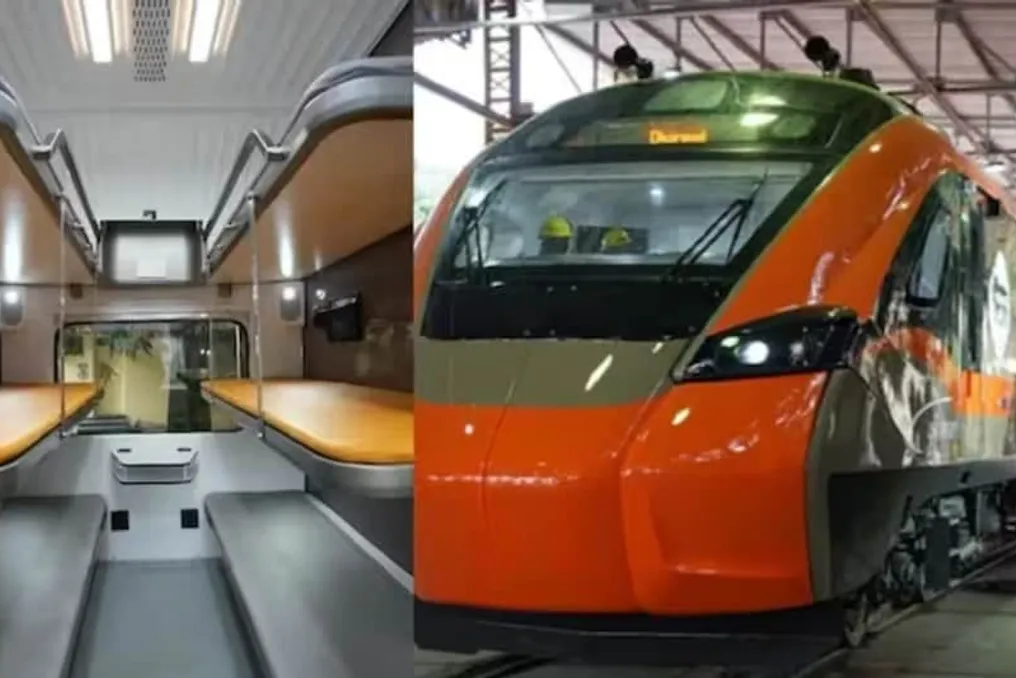
High-speed Vande Bharat Sleeper train starts service between Varanasi and Delhi tomorrow
Read more
www.aajtak.in

High-speed Vande Bharat Sleeper train starts service between Varanasi and Delhi tomorrow

Indian Railways is launching another new Vande Bharat Sleeper train. Its commencement is scheduled for tomorrow, October 31. This route will connect several major cities, running between Varanasi and Delhi.

The train's speed is 160 kilometers per hour, which will allow it to complete the journey faster than other trains. According to Indian Railways information, the trip on the Vande Bharat Sleeper from Baba Vishwanath city to the nation's capital will mark the beginning of a new experience in modern rail travel.

Dr. Shivam Sharma, CPRO of Central Broad Gauge Railway, provided details about the Sleeper Vande Bharat. He stated that the opening of this train will take place on Saturday, October 31, 2026, at Varanasi station as a special train number 02527. This special service will provide passengers from Kashi, Sangam Nagari Prayagraj, the industrial city of Kanpur, historical Aligarh, and Ghaziabad with a new mode of connection to the national capital.

This special train, connecting Kashi and the national capital with modern railway amenities and sleeping experience, will add new significance to the link between these two points. Dr. Sharma specified that the special train number 02527, operating on the Banaras–New Delhi Vande Bharat Sleeper route, will depart from Banaras (BNRS) after noon at 16:15. It will arrive in Prayagraj at 18:00, at Kanpur Central station at 20:05, at Aligarh station at 23:20, depart at 23:22, arrive in Ghaziabad at midnight at 01:10, and reach New Delhi station at 2:00 AM.

The article does not contain detailed information about the train's specifications.

Video of India's longest train: A 4200 km journey takes over 74 hours
Read more
www.aajtak.in

Video of India's longest train: A 4200 km journey takes over 74 hours

In India, railway journeys are often associated with pleasant memories, whether it is a trip to relatives or a family vacation. However, there is a train that covers a distance of about 4000 kilometers and requires more than three days to complete the route.

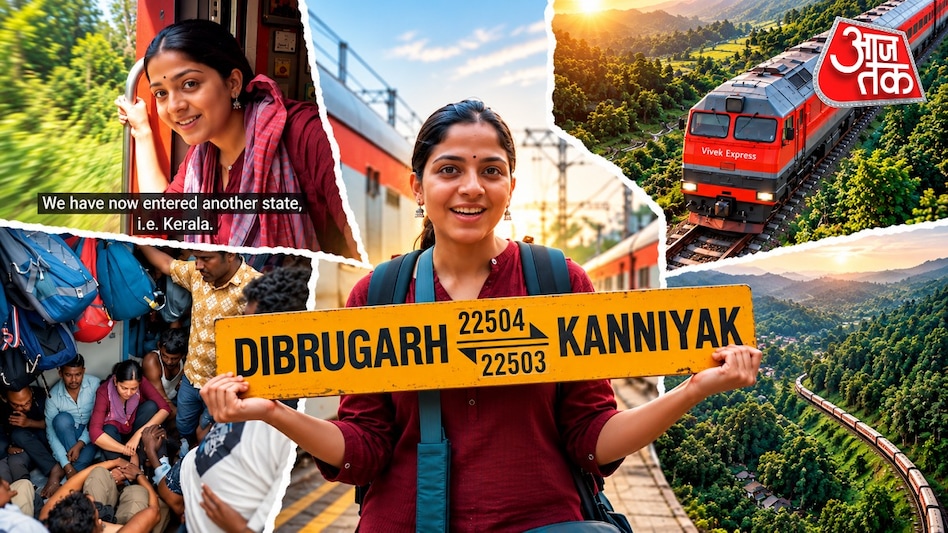
This train is called the Vivek Express. It runs from Dibrugarh in Assam to Kanyakumari in Tamil Nadu, passing through many states, cities, and cultures during its long journey. This trip is especially interesting for those who love long train rides and want to see the diversity of India from the inside.

The Vivek Express route, connecting Dibrugarh and Kanyakumari, is approximately 4200 kilometers long and takes about 74 hours, which is more than three days. Nevertheless, sometimes due to various circumstances, the train may not arrive at the station on schedule. During such a long journey, passengers can observe different sights of India from the window: from vast tea plantations to the hustle and bustle of large urban centers. The change in weather, languages, culinary traditions, and lifestyle makes this trip special.

Content creator Mamta Yadav and her team took a trip from Dibrugarh to Kanyakumari and back to experience this long route. Although the scenic views were the main attraction, the large crowd of passengers in the general compartment created several difficulties. The video shows severe overcrowding in the general compartment, which can cause problems with finding a seat and moving around inside the carriage. Additionally, there were inconveniences related to the cleanliness of the toilets.

The team spent the first two days in the general compartment and the remaining two days in an air-conditioned compartment. In the general compartment, seats are primarily taken by arriving passengers, so finding a comfortable spot on such a long journey can be a serious problem.

The Vivek Express was launched as part of the railway budget announcement in the 2011–2012 period. This train is named in honor of commemorating the 150th anniversary of Swami Vivekananda.

Besides Dibrugarh and Kanyakumari, this train passes through a number of important stations on its extended route, including cities such as Guwahati, Kolkata, Bhubaneswar, and Thiruvananthapuram. The train makes stops at approximately 59 stations along the entire route.

Popular