Experts discuss how long the bond market can sustain artificial intelligence development costs
Read more
Egypt Independent
www.egyptindependent.com

Experts discuss how long the bond market can sustain artificial intelligence development costs

The stock market is showing detachment from large technology companies. For instance, Google experienced its worst day in history, and Intel's shares fell more sharply than during the Nixon administration. A noticeable decline was also recorded by Amazon and Meta this week, leading to a drop in the Nasdaq index, which is only one percentage point away from a correction (a 10% drop from its historical high).

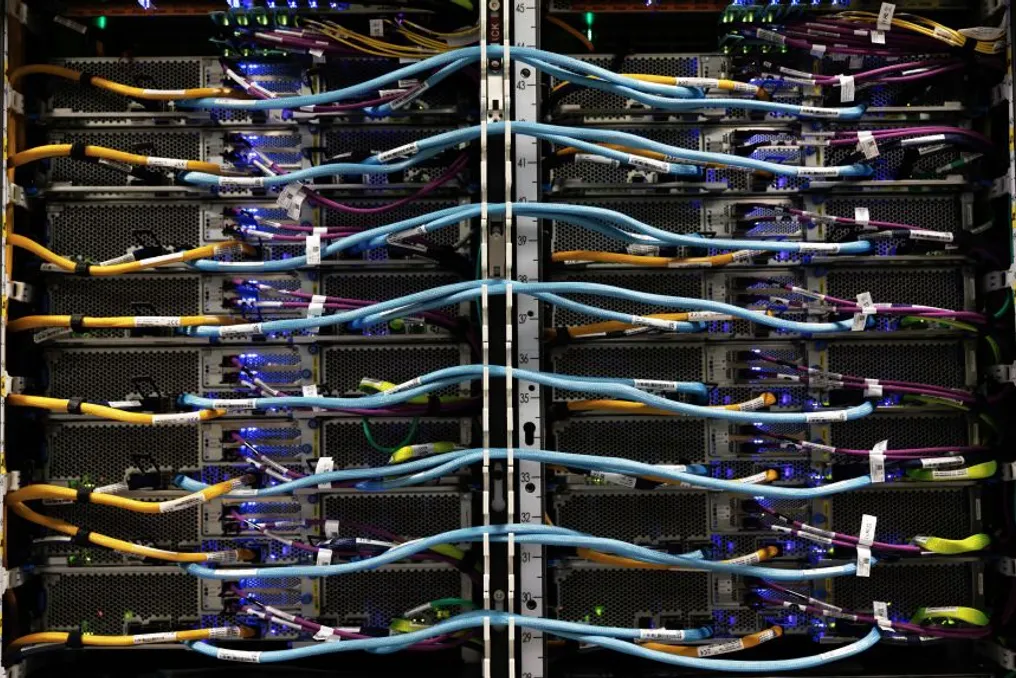
The general reason for this downturn is that creating infrastructure to support artificial intelligence requires extremely high costs, and the current profits of Big Tech giants do not yet justify such colossal expenses. AI companies are increasingly directing more funds to data centers than their own business operations can generate.

However, if the stock market is trying to send a message, the large technology companies are ignoring it. According to JPMorgan data, AI spending reached $1.6 trillion since 2023 and is projected to be $1 trillion annually over the next decade. No changes in these figures were observed this week.

The reason lies in the fact that the market financing these expenditures—the bond market—remains largely passive, while the stock market experiences moderate panic. Lenders are willing to provide debt to large technology companies to pay for technologies that are transforming the global economy.

Thus, the questions the market seems to be asking about AI—whether Big Tech will continue to increase spending (which will certainly happen) and whether AI will pay off in the near future (it seems not)—are misguided. The real question to ask about AI is: how long can the bond market sustain this continuous surge in spending?

This will ultimately determine whether AI becomes a success or a failure.

The Mechanism of AI Calculations

The principle of AI operation is as follows: significant funds are first invested in the necessary infrastructure (servers, chips, data centers, electricity, workforce, and building materials). Then, after launching the data center, AI companies can monetize these investments—approximately three months or within two years, according to Goldman Sachs.

Since profit realization is delayed for such a long period, hyperscalers (large tech players like Google, Amazon, Microsoft, and Meta) have to raise enormous amounts of money in advance and repay it to investors later. 'Enormous' is a very modest description. These four hyperscalers alone account for over a third of all capital expenditures from the S&P 500 over the last 12 months, notes John Higgins, Chief Economic Advisor at Capital Economics.

Therefore, it is expected that one-third of Big Tech's capital expenditures this year will be financed through debt—for example, around $250 billion in bonds from hyperscalers alone, according to Goldman Sachs estimates. This figure is expected to peak next year, reaching about 35 percent of hyperscalers' spending.

However, bond market investors do not have infinite funds, and there is currently intense competition for lending, especially from US Treasury bonds, as the government simultaneously tries to fund social security, healthcare, and an expensive war.

This raises an obvious question: exactly how much money are investors willing to provide to AI companies? Moreover, what can be assumed?

The hypothetical maximum volume of debt the market can absorb is unknown, but Goldman Sachs has calculated the availability of 510 billion in top-tier investment bonds for the largest hyperscalers. This is more than double what they are expected to borrow by the end of the year.

In other words, the largest AI companies still have a significant capacity to raise borrowed funds. The question is not how much, but how long.

The answer depends on two factors: who pays and who receives.

Amanda Linam, Chief Credit Strategist at Goldman Sachs, stated on a recent company podcast: 'We are not concerned about access to capital. We are simply expecting a more nuanced discussion about where and at what price to issue bonds.'

Linam added that private investment funds, venture capital funds, and private equity are ready to take on the main burden of supporting AI development, possessing trillions of additional 'dry powder' funds for financing.

But hyperscalers are not the only market participants. Other companies operate in this space, including non-cloud services. These are highly leveraged firms that rent out computing power to other businesses, and their credit situation is starting to look questionable. Their low-investment-grade bonds offer high yields, which investors are willing to bet on, accepting greater risk for a potentially huge reward.

CoreWeave operates in this market, whose bond yield rose to 15 percent this month amid accumulating losses. Elon Musk stated that the non-cloud services industry, which includes CoreWeave, must undergo a serious cleansing (he called it a 'guppy level death').

Every new technology has winners and losers, and Musk may be right about non-cloud services. It remains to be seen.

Hyperscalers, conversely, appear to be the winners. Revenue from cloud services (a metric Wall Street uses to measure demand for AI) grew by 50 percent in the second quarter. They possess vast contract portfolios and the ability to absorb higher borrowing costs.

These bottlenecks contribute to maintaining high prices, which helped hyperscalers' revenue grow by 19 percent over the last 12 months, according to Higgins. The emergence of agentic AI led to an explosive growth in demand: agent requests consume 15 times more tokens than human-initiated requests, according to OpenRouter.

Higgins noted: 'The prospects for these things do not look overtly bleak, given that AI is gradually being used more widely in the economy.'

The concern is that the cost of borrowing could become insurmountable. And this could change the economy that is currently supporting AI.

Negative sentiment prevalent in the stock market could begin to seep into the bond market, causing bond yields to rise and increasing borrowing costs for AI companies.

Lyman noted that the bond market functions best when the end of the road is visible. Every AI investor believes there is light at the end of the tunnel. We just don't know how long that tunnel is.

Uncertainty about when companies will start generating profits and earning from their massive AI investments could cause the bond market to slow down, she said. Meanwhile, the outlook for the technology itself and the financial health of large companies looks quite strong, noted Stephanie Ariaga, Global Market Strategist at JPMorgan, in a recent investor note.

Warning signs could include a decrease in AI usage by businesses, a reduction in pricing, or a decrease in customer commitments. Such signs have not yet been observed.
Similar stories

Tech Giants' AI Investments Face Hurdles Due to Slowdown in Core Business Growth
Read more
business-standard.com

Tech Giants' AI Investments Face Hurdles Due to Slowdown in Core Business Growth

The core business segments of American tech giants—advertising, consumer, and retail services, which support total AI spending of $750 billion this year—are beginning to show signs of deceleration. In some cases, the technology itself, on which companies are placing large bets, is starting to displace their traditional business models.

Earlier this week, Alphabet Inc., the owner of Google, reported that advertising sales through search and other channels—a segment accounting for about half of total revenue—grew the slowest in the last five quarters. Nevertheless, the company maintained its capital expenditure forecast at up to $205 billion for the current year.

Amazon.com Inc. stated on Thursday that growth in both its main online store and advertising business slowed in the last quarter, but the company confirmed its plan for capital expenditures of approximately $220 billion for this year. Microsoft Corp. and Meta Platforms Inc. also maintained their spending forecasts, presenting results that ultimately failed to meet investor expectations.

Earnings reports and subsequent stock sell-offs reveal growing tension surrounding the transition of major tech companies to new artificial intelligence-based products and associated costs. Companies are taking on unprecedented levels of debt, selling equity, entering into multi-billion dollar data center deals, and assuming trillions in future obligations to build global AI infrastructure. Meanwhile, new products are reducing profitability and diverting attention from some legacy offerings.

Investor patience is wearing thin. Alphabet shares plummeted by a record amount on Thursday, losing nearly $500 billion in market value. Amazon shares fell by 7% during trading, and Meta dropped 10% after publishing last week's earnings, when the company warned investors that its new AI agent application, Muse, requires enormous computational power despite plans to invest more aggressively in AI.

Dan Morgan, Senior Portfolio Manager at Synovus Trust, commented on the situation following Alphabet's report: 'The market is perplexed: how will all this pay off?'

Even Microsoft, which demonstrated strong growth in its cloud business and controlled costs, did not escape negative consequences. Initially, the company's stock rose after news that sales in Azure, its closely watched cloud computing division, increased by 48%, reaching $33.2 billion in the quarter ending in September. However, by the close of trading on Thursday, the stock erased all gains and fell by 0.2%.

Amazon's results were more mixed. The company postponed its annual Prime Day from the third quarter of last year to the second quarter of this year, which accounted for some of the slowdown. But analysts had already adjusted their estimates to account for this, and the results were still below expectations. The e-commerce giant's advertising services division showed an 11% growth, the slowest pace since Amazon first separated this category in 2022. Online store business grew by only 2%, a level not seen in over three years as people resumed pre-pandemic consumption habits and online commerce slowed down.

These results overshadowed the growth of Amazon's cloud computing segment and intensified investor doubts regarding its aggressive AI investments. Cloud computing was also a bright spot for Google: sales in this division more than doubled compared to the previous year, and operating income tripled. The division's CEO, Thomas Kurian, joined the earnings call for the first time, emphasizing the importance of this business for Google's future.

However, investors focused more on the problems arising in Google Search, which remains the company's lifeblood. To stay relevant amid the popularity of chatbots like ChatGPT, Google has integrated more AI into its search engine, including a dedicated tab called AI Mode. But the growing popularity of this feature has negatively impacted the profitability of Google Search. Philip Schindler, Chief Business Development Officer, admitted on Wednesday that the firm is seeing a 'decrease in monetization' of queries using AI Mode, leading to further stock decline. Schindler stated that the company is working to attract more advertising in AI Mode and views the product's trajectory optimistically.

This year, Google is struggling in the AI race against startups Anthropic and OpenAI. Bloomberg Intelligence analyst Mandip Singh believes that if the company can regain its footing in AI model development, it will likely resume delivering the expected investor revenues. Singh noted: 'With all these transitions, sometimes we focus too much on the donor business. Given the margin expansion in the cloud business, I believe the combination of cloud and search, once they reach parity, will return their profitability to previous levels.'

Jean Munster, Managing Partner at Deepwater Asset Management, commented on the decrease in AI Mode monetization at Google, noting that launching new ad formats often occurs with low margins that gradually increase over time. A more complex challenge for the firm is creating agents capable of making purchases on behalf of users and earning a commission from these transactions—a business model many in Silicon Valley consider achievable following the success of Meta's personal assistant Muse. Munster concluded: 'The old way of doing business was using blue links or display ads to influence consumer behavior. The new way is how to influence a bot.'

Google's Financial Results: Cloud Segment Growth Contrasts with Search Revenue Slowdown Due to AI Investments
Read more
techcentral.co.za

Google's Financial Results: Cloud Segment Growth Contrasts with Search Revenue Slowdown Due to AI Investments

Alphabet, Google's parent company, reported disappointing financial results in its core search advertising business, alongside a sharp increase in cash burn rates amid massive investments in artificial intelligence development.

Despite this, Google Cloud revenue more than doubled, indicating that enterprise clients are actively adopting the technology. However, investors, concerned about significant expenditures and the slowing growth of the dominant search engine, reduced the company's stock value by 10% after trading closed on Wednesday.

Dave Wagner, portfolio manager at Aptus Capital Advisors, noted that 'in a market worried that AI will displace the franchise, investors need to see acceleration in search, not deceleration.' He added that 'Cloud supports the history, but until search demonstrates that AI is an additive element, shares are likely to trade lower.'

According to LSEG data, the company reported a negative free cash flow of $9.1 billion, which was below analysts' expectations that projected near break-even. This marks the second consecutive quarter for Alphabet with negative free cash flow. In the previous quarter, aggressive spending on cloud capacity and AI development led to a burn of $5.9 billion, the first negative figure in 22 years for a public company.

Total revenue for the third quarter reached $127.6 billion, falling short of the analyst estimate of $128.2 billion. Although Google Cloud exceeded expectations, this was not enough to offset the $1.4 billion shortfall in the advertising sector; ad revenue reached $82 billion against an expected $83.4 billion. Net income available to Alphabet shareholders dropped by 25% to $26.17 billion, and adjusted earnings per share came in at $2.67, missing Wall Street's target of $3.02.

AI Mode

Chief Business Officer Philipp Schindler explained the stronger-than-expected slowdown in search advertising growth due to the broader use of the AI mode—the search engine's chat interface, which the company is still experimenting with for advertising. He informed analysts during the conference call that Google will begin implementing advertising in the AI mode in international markets.

CFO Anat Ashkenazi informed analysts that Alphabet still plans to significantly increase capital expenditures in 2027—from the current year's forecast of $195 billion to $205 billion. The executives did not provide a figure for next year, but investors expressed concern over such a large jump in spending.

Jeremy Salzburg, Senior Investment Analyst at Check Capital, stated that 'a capital expenditure figure of $300 billion could potentially scare the market, as free cash flow is now finally negative.' Ashkenazi also warned of potential short-term margin pressure due to the use of third-party cloud capacity.

These results reflect enormous expenses in building AI infrastructure, causing investors to worry both about potential overspending and the risk of falling behind competitors due to insufficient investment.

In contrast, competitor Microsoft, which also released its results on Wednesday, saw its shares rise by more than 5%, supported by positive free cash flow that exceeded analyst forecasts.

Alphabet attempted to compensate for the unsatisfactory advertising figures by highlighting its cloud computing division, notably by having Thomas Kurian, CEO of Google Cloud, speak on the earnings call for the first time.

Google Cloud revenue more than doubled to $30.71 billion in the third quarter ending September 30th, beating forecasts. Kurian noted that sales of Google's Tensor Processing Units (TPUs), which compete with Nvidia GPUs, have become a significant contribution to the business. In the previous quarter, Alphabet began recognizing revenue from direct sales of what it calls 'TPU systems,' which include chips and associated hardware and software.

However, Ashkenazi cautioned that increasing TPU inventory will put additional pressure on free cash flow. She reported that Google Cloud's order backlog grew to $561 billion, and Alphabet expects to recognize over 55% of it as revenue within the next 24 months.

Google Cloud, the third-largest cloud service provider globally after Amazon Web Services and Microsoft Azure, has expanded its enterprise commitments through multi-year agreements for cloud technology and AI infrastructure in cybersecurity, retail, and financial services.

It is projected that Alphabet, Microsoft, Amazon, and Meta combined will spend over $700 billion in 2026 to expand their data centers for AI, chips, and high-performance networking. Since cutting-edge chips and data center capacity are scarce, Alphabet's investments in proprietary TPUs alongside third-party GPUs have helped expand its capacity.

Gemini 4 Carbon

Earlier on Wednesday, Google attempted to preempt the earnings release and refute the notion that it is losing the AI race by introducing its new Gemini 4 Carbon model. CEO Sundar Pichai stated during the call that this means the company is once again 'at the forefront.'

Following this, Bernstein analysts asked in their note: 'Has Google rushed the deployment of Gemini 4 models to compensate for softer financial results? And are the models ready for commercial implementation?' - Akesh Sriram and Kenrick Kai.

Major technology companies release financial statements focused on the impact of Artificial Intelligence
Read more
olhardigital.com.br

Major technology companies release financial statements focused on the impact of Artificial Intelligence

Tech giants such as Amazon, Microsoft, and Alphabet, the owner of Google, will present their financial results this Wednesday under intense scrutiny from investors. The market seeks to understand whether the advancements in artificial intelligence (AI) already justify the billions of dollars invested by these corporations.

One of the most important indicators to watch will be the revenue generated by cloud computing. Market uncertainty and fears of an AI bubble have intensified the demand for results that validate the expansion of this sector.

Together, Amazon, Microsoft, and Alphabet have approximately US$ 1.7 trillion (equivalent to R$ 8.93 trillion) in future business commitments and plan to inject up to US$ 600 billion (R$ 3.15 trillion) this year. The large volume of funds directed towards AI infrastructure raises questions about the financing of this expansion and its impact on company cash flow.

The market's reaction to Meta's reports, released last week, illustrated this apprehension. Although Meta reported higher-than-expected revenue growth and an optimistic outlook, its shares plummeted nearly 7% the day after announcing expanded investment plans.

Brian Mulberry, Chief Market Strategist at Zacks Investment Management, commented that 'the appetite solely for capital expenditures is rapidly slowing down.' Projections for the quarter ended in September will help measure the expected performance of the main cloud operations.

Cash generation also deserves detailed analysis. Microsoft is expected to exceed US$ 8 billion (R$ 42 billion) in cash flow, while Alphabet and Amazon are expected to record cash burn in the second and third quarters, respectively.

In Alphabet's AI strategy, Google Cloud and internally developed chips stand out. However, competition for AI models worries investors due to the presence of OpenAI and Anthropic.

The pressure extends to the search segment, traditionally a primary source of Google's revenue. The rise of chatbots and AI agents capable of performing tasks is increasing competition in this market. It is projected that search revenue growth will decrease from 16.8% to 14.7%, although Alphabet's total revenue is expected to grow by 25.2%, reaching US$ 128.18 billion (R$ 672.95 billion).

Andrew Boone, an analyst at Citizens, emphasized that management statements will carry weight similar to the disclosed figures, pointing to advancing competition via AI agents and doubts about the return on infrastructure investments.

Microsoft will present its results with a new reporting structure. The 'Agents and Infra' division will combine cloud, AI, and enterprise software, while 'Devices and Consumer' will focus on Windows, gaming, and advertising. Furthermore, the company will begin reporting Azure's quarterly revenue in absolute terms, meeting a demand from investors who previously received mostly growth rates.

Analysts estimate Azure revenue at US$ 33.06 billion (R$ 173.57 billion). Microsoft's total revenue is expected to reach US$ 90.66 billion (R$ 476 billion), representing a 16.7% increase. In Amazon, a reduction in total revenue growth is expected, dropping from 19.6% to 12.3%.

In summary, the financial statements will demonstrate how cloud growth and cash generation capacity compare to the resources allocated to artificial intelligence, in a period marked by greater investor prudence.

Popular