Iran's historic cities are renowned for their magnificent mosques, Persian gardens, traditional bazaars, and Silk Road heritage. However, beyond well-known locations such as Isfahan, Shiraz, and Yazd, lies another side of the country—a landscape of mountain villages, ancient mud-brick settlements, and rural communities whose traditions offer a different perspective on life in Iran.
These places, scattered across the country's mountains, valleys, and desert outskirts, demonstrate the diversity of Iran's geography, architecture, and cultural heritage. Some can be visited as a day trip from a nearby city, while others require more time and effort to explore. Together, they give travelers an opportunity to look beyond the most famous attractions and get acquainted with the character of rural regions.
Kandovan: Life Inside Volcanic Rock
In northwestern Iran, Kandovan stands out for its unusual architecture. Located near Tabriz, this village is known for its conical rock formations into which generations of residents carved living quarters and other spaces. Kandovan is often compared to Cappadocia in central Turkey and belongs to a small group of settlements where people continue to live in rock-cut dwellings in modern times. Its unique landscape, shaped by volcanic activity and centuries of human adaptation, gives the village a look distinct from most Iranian settlements.
Unlike archaeological cave sites, which are mostly preserved as historical monuments, Kandovan remains a living community. Its houses illustrate how residents adapted traditional building methods to the surrounding geology and climate. Furthermore, this village is one of the most accessible rural destinations for tourists visiting Tabriz, making it a convenient introduction to rural Iran.
Palangan, a Village Climbing the Mountains of Kurdistan
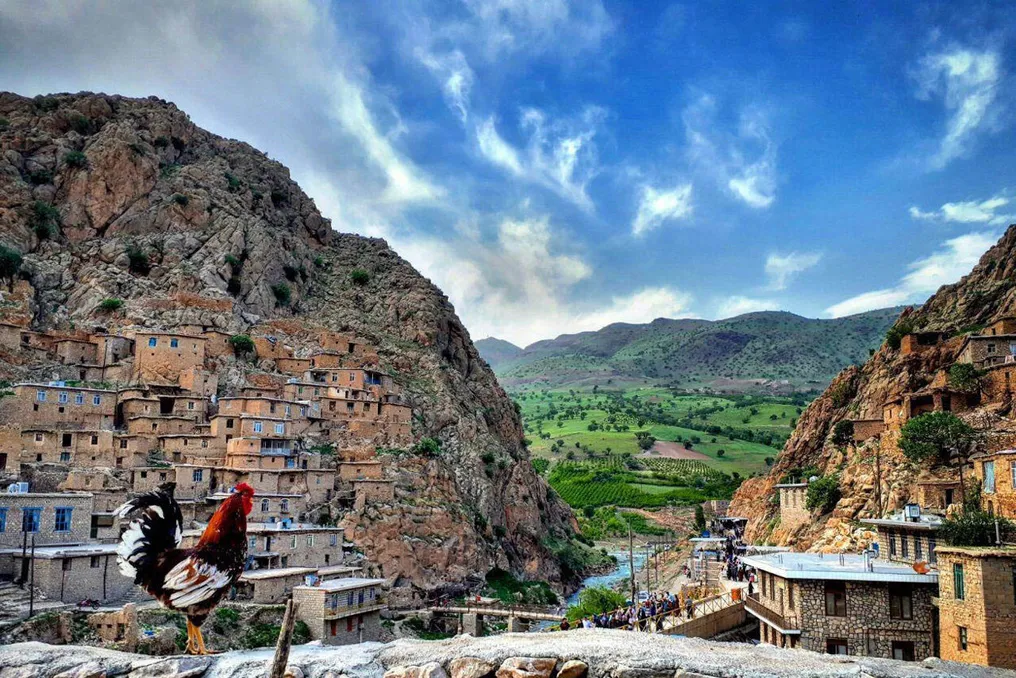
In Kurdistan province, western Iran, Palangan is famous for its terraced architecture and dramatic mountainous setting. Traditional houses rise above one another along the slopes, forming a compact settlement that seems to grow out of the surrounding landscape. This village offers insight into Kurdish rural life, including local culinary traditions and the close connection between communities and their natural environment. Its river, mountain scenery, and stone houses make it a popular spot for visitors from surrounding areas.
Local restaurants serving river fish provide an opportunity to taste regional cuisine, while the surrounding hills serve as a place for walks and exploration. Palangan is among several terraced villages located in the Kurdish mountainous regions of western Iran. Although some rural settlements in this area remain relatively inaccessible, Palangan can be reached from nearby urban centers, including Sanandaj, with possibilities for further travel.
Masuleh: Where Rooftops Become Streets
Further north, in Gilan province, Masuleh presents another striking example of architecture adapted to mountainous terrain. Its traditional houses are built along a steep slope, where the roof of one building often serves as a passage or courtyard for the house situated above it. This arrangement gives the village its characteristic stepped appearance and makes pedestrian movement an integral part of its architectural identity.
Located amidst the misty mountains of northern Iran, Masuleh is known for its humid climate, lush vegetation, and frequent clouds hanging over the settlement. Its popularity among domestic tourists means that the streets can become crowded, especially during peak travel periods. Nevertheless, walking trails leading into the surrounding mountains offer a chance to escape the busiest spots and enjoy the scenery. Within the village, rooftops and narrow paths remain important places for daily encounters, reflecting a strong sense of community. Thus, Masuleh is both a picturesque place and an example of how traditional settlements have evolved in response to steep topography and local living conditions.
Ghazor Khan: Gateway to the Alamut Valley
For travelers interested in history and mountain landscapes, Ghazor Khan in Qazvin province offers a combination of both aspects. This village is best known as the entrance to the UNESCO World Heritage site of Alamut Castle, a fortress associated with the Nizari Ismailis, members of whom were known as Assassins in medieval sources. Perched high above the Alamut Valley, the fortress held a strategic position and became an important center of the Nizari Ismaili state. Its history is closely linked to Hassan-i Sabbah, who established his base there in the late 11th century. The Mongol campaign led by Hulagu Khan resulted in the capture and destruction of the fortress in the 13th century. Although much of the original structure has disappeared, the remaining ruins and the surrounding mountain landscape continue to attract visitors. Besides the historical site, Ghazor Khan is a quiet mountain village surrounded by orchards, including apple, apricot, and cherry trees. In spring, the blooming trees add color to the landscape, and hiking trails offer opportunities to explore the valley. The trip requires more planning than visiting villages near major cities, but the combination of history, scenery, and rural life makes it a worthwhile destination.
Abyaneh: A Living Link to Iran's Past
Located near Kashan, at the foot of Mount Karkas, Abyaneh is among Iran's most famous historical villages. Its red earthen buildings, wooden balconies, narrow alleys, and traditional clothing give it a distinctive look. The settlement is often associated with pre-Islamic Iran, although its long history spans many periods. The architecture reflects the use of local materials, particularly red soil, which gives the buildings their characteristic color. Abyaneh is also notable for preserving elements of the local language and cultural traditions. Some elderly residents speak a distinct local dialect, and traditional dress remains an important part of the village's cultural identity. Men traditionally wore dark coats and loose trousers, while women's clothing is known for its colorful patterns and white headscarves. These customs provide a visible link to regional traditions that have survived amid broader changes in Iranian society. However, Abyaneh's popularity has created challenges. Visitors can fill its narrow streets, especially during peak tourist seasons, and the village can sometimes feel more like an open historical exhibit than a typical rural community.
Nain: Desert Heritage Off the Main Tourist Routes
Between Yazd and Tehran, Nain offers a quieter glimpse into Iran's desert heritage. Although technically a small town rather than a village, it merits attention due to its historic architecture and relatively modest place on many tourist itineraries. The town is known for its historic Jameh Mosque, old bazaar, traditional cisterns, and the ruins of Narenj Castle. These structures together reflect the architectural and engineering traditions that helped communities survive in Iran's arid central regions. Traditional cisterns, known as ab-anbar, were designed to store water for use during dry periods. Along with other water management structures, they demonstrate the importance of adapting settlement models and architecture to scarce water resources. Parts of Nain's historic fabric have deteriorated, and some old buildings are in poor condition. Nevertheless, the town's less commercialized atmosphere can offer a different experience compared to more visited heritage sites. The contrast between historic quarters and newer districts also shows how traditional settlements have evolved as residents adapt to modern life.
Haranak: Traces of an Ancient Silk Road Settlement
Northeast of Yazd, Haranak is known for its abandoned mud-brick settlement and atmospheric ruins. The village developed along historical travel routes and is connected to a network of settlements supporting movement through central Iran. Its old buildings, narrow alleys, and earthen walls form a dense architectural landscape. Some structures are believed to date back many centuries, although the history of individual buildings varies. Walking through the abandoned quarter provides insight into how communities once organized their homes and passages in a desert environment. From elevated points, visitors can see the settlement against the backdrop of surrounding mountains and open land. The ruins are also vulnerable. Weathering, erosion, and uncontrolled visitor access can accelerate the decay of fragile earthen structures. Responsible exploration of this area means avoiding unstable buildings, staying on designated paths where possible, and respecting any closed zones. Haranak can be combined with visits to Meybod and the Zoroastrian pilgrimage site Chak-Chak, making it a possible addition to a broader route from Yazd.
Meybod: Desert Architecture and Ingenious Design
Meybod, another historic settlement near Yazd, offers a broader view of the architectural traditions of Iran's central desert. Although it is a town, not a village, its historic buildings make it a worthwhile stop for travelers interested in the region's cultural heritage. One of the main attractions is Narenj Castle, a large earthen fortress whose origins date back to antiquity. The town also preserves traditional cisterns and a historic pigeon tower. Pigeon towers were built to shelter birds and collect their droppings, which were used as agricultural fertilizer. Their construction reflects the ingenuity of communities that relied on local materials and devised practical solutions to meet daily needs. The pigeon tower in Meybod is one of the notable surviving examples of this building tradition in Iran. Together, the castle, cisterns, and pigeon tower illustrate how desert architecture served practical purposes while becoming part of the region's distinctive cultural landscape.
Why Iran’s Rural Destinations Matter
Exploring Iran's villages and small historic settlements offers more than just a change of scenery. These places reveal how people have adapted to various environmental conditions—from volcanic formations in the northwest to the steep mountains of Kurdistan and the arid landscapes of the central plateau. Their architecture reflects local responses to climate, geology, and available resources. Their languages, clothing, food, and customs also demonstrate the country's regional and ethnic diversity. For travelers whose itineraries focus on Iran's famous cities, adding even one or two rural destinations can broaden their understanding of the country.