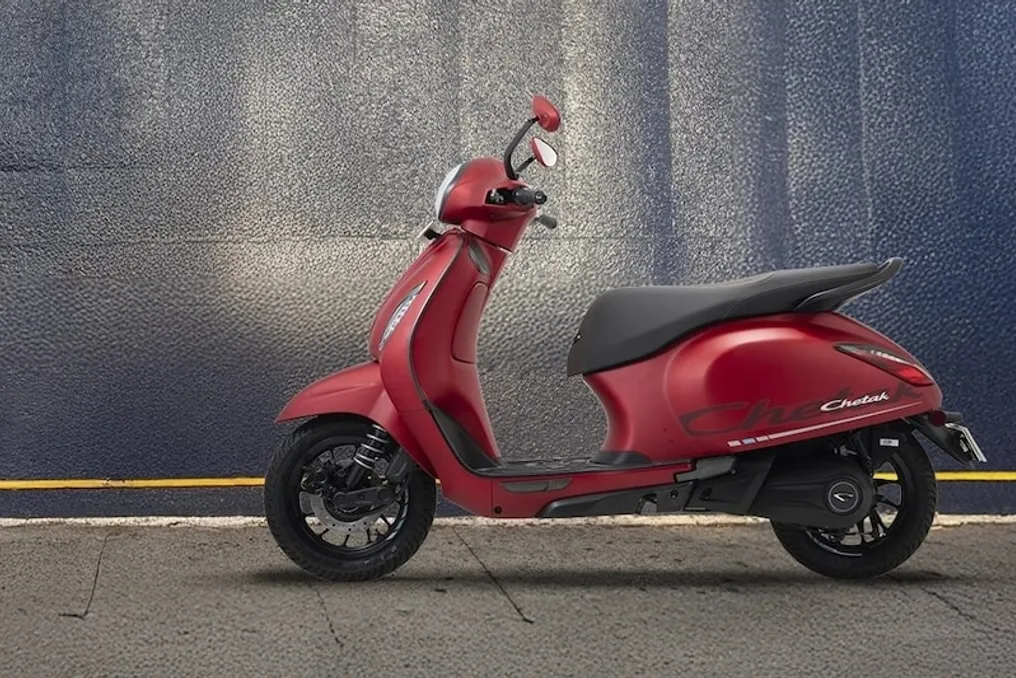
Amazon sales of two-wheeled vehicles increased sixfold during the sale
Read more
Aaj Tak
www.aajtak.in

Amazon sales of two-wheeled vehicles increased sixfold during the sale

Online shopping popularity is growing significantly in the Indian market. Previously, consumers purchased household goods, then phones, and now they have started buying two-wheeled vehicles online. According to a recent report from Amazon India, people in India are actively purchasing two-wheeled transport online, although the company did not disclose exact figures.

According to Amazon, after the start of the Great Indian Festival 2026 sale, the growth in the two-wheeled transport category on the platform was six times higher than the average for normal days. This means that if the platform sold one two-wheeled vehicle on a normal day, this figure reached six during the sale.

The company noted that demand increased for both electric scooters and traditional motorcycles for daily commuting, and buyers also began purchasing premium motorcycles online. In the company's opinion, the share of small towns in online purchases is growing rapidly; over 60 percent of the total volume of two-wheeled transport sales on the platform comes from cities that are not metropolises.

Among the brands popular with buyers on Amazon, Chetak and Ampere stand out in the electric segment. As for traditional Indian manufacturers, Hero MotoCorp and Bajaj Auto models are most in demand. Additionally, international brands such as Triumph and KTM attract attention in the premium motorcycle segment, indicating that users are interested not only in affordable models but also in expensive transport.

The trend of online purchase of two-wheeled transport is not limited to large cities. Over 60% of sales come from non-metropolitan areas, including cities such as Surat, Kota, Bhubaneswar, Prayagraj, Nellore, Warangal, Amritsar, Ludhiana, Belagavi, Kanpur, and Bilwara.

Good growth was also observed in the electric vehicle segment. According to Amazon, during the Great Indian Festival sale, the demand for electric vehicles increased eightfold compared to average figures. Consumers in the automotive market have moved from buying only bikes and scooters to purchasing other items such as helmets, dashcams, riding gear, car air fresheners, car vacuum cleaners, as well as spare parts and car care products.

The company also reported that its auto store saw a 2.2 times increase compared to average days, indicating that consumers are purchasing not only the vehicles themselves but also accessories for their maintenance and care online.
Similar stories

Despite declining incomes, Gen Z youth in small towns continues to spend actively
Read more
www.aajtak.in

Despite declining incomes, Gen Z youth in small towns continues to spend actively

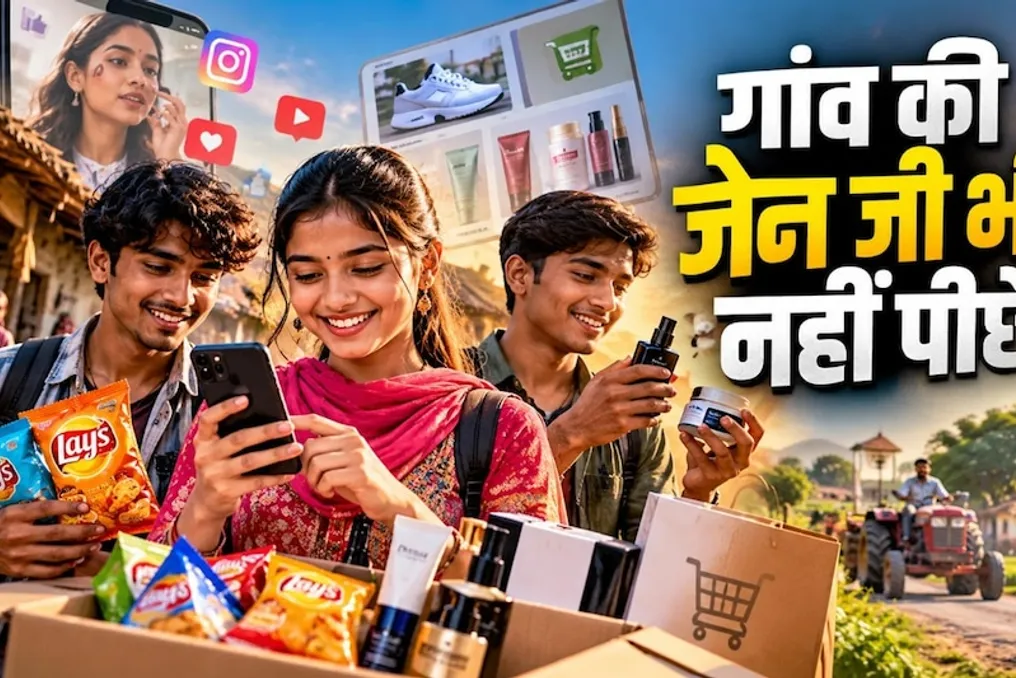
While families in villages are trying to balance income and expenses, the pace of wage growth has slowed down. However, this slowdown has not significantly affected Generation Z. Young people are changing their purchasing habits, continuing to add desired items to their cart even amid growing financial difficulties. Now, in addition to essential goods, Gen Z is purchasing snacks, skincare products, and health supplements.

These changes in purchasing trends among Gen Z and residents of small towns were identified in the recent Rural Barometer 2026 report. According to this report, in June 2026, about 14% of rural residents reported that their family's monthly income increased over the last six months, compared to 29% in 2025. This indicates a slowdown in income growth rates in small towns and suggests that people have become more cautious with money, paying close attention to every small and large expense.

Nevertheless, young residents of rural areas aged 18 to 29 make purchases in an average of 19.1 different product categories monthly, compared to 17 categories in February 2025. This points to the inclusion of new items in Gen Z's consumer portfolio.

The report shows a 27% increase in spending on packaged snacks and instant food among rural Gen Z, as well as a 36% increase in purchases of health and self-care products. Purchases related to personal hygiene also rose by 9%. Abhishek Singh, Senior Vice President and Head of Rural, Social, and Health Media Solutions at WPP Media India, noted that demand for items such as ready-made snacks, packaged food, facial foams, and hand soap is growing among youth and women. He also emphasized that financial pressure has impacted Generation Z.

Social media also influences the purchasing behavior of youth in villages. According to the report, 40.9% of Gen Z follow online influencers, and 60.4% of young people use at least one AI-related feature. One in four young people uses content creators' and online video advice from applications like ChatGPT and Gemini to find new products. Nevertheless, this does not mean that young people are spending money thoughtlessly.

Overall, despite economic pressures in rural areas, Gen Z preferences are changing. Now, purchases are important not only based on needs but also on personal preferences and self-care.

E-commerce platform promotes Amazon art and crafts to the national market
Read more
g1.globo.com

E-commerce platform promotes Amazon art and crafts to the national market

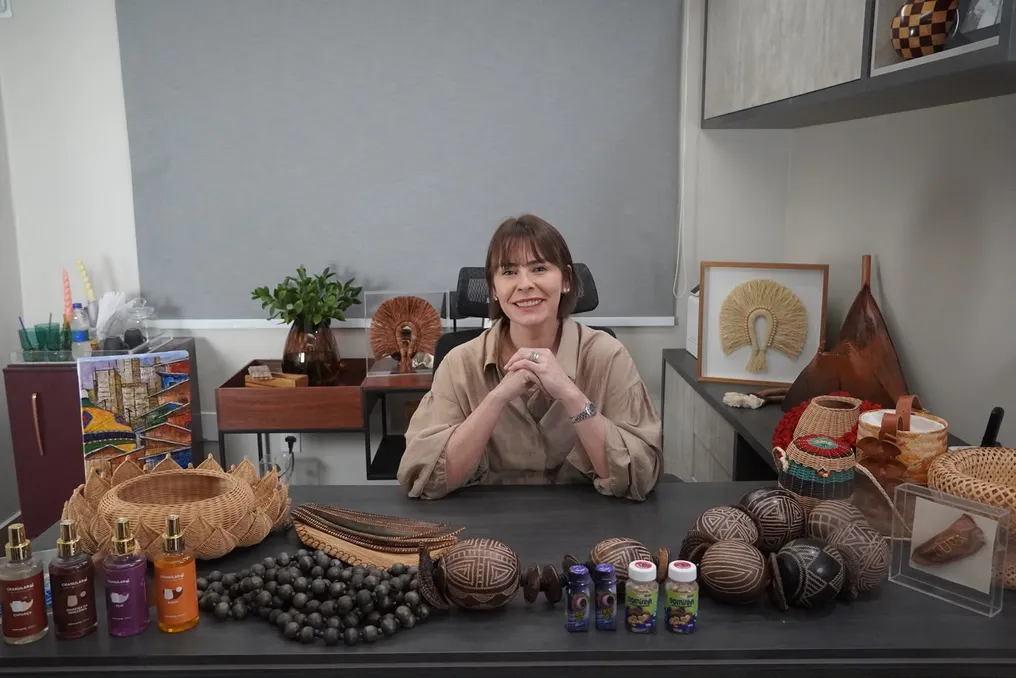
Made in Amazon was created with the purpose of being more than just an online store; it functions as a link between producers and residents of the forest and an audience that would otherwise have difficulty accessing these works outside the region. Thus, the platform aims to give visibility to artists and communities from the Amazon in Brazil and on the world stage.

For an item originating from the Amazon bioeconomy to become a commercial asset, it is necessary to go beyond good presentation. According to Pamela Mota Oliveira, the platform's founder, the process begins with rigorous selection. She explains that they seek a keen eye, a curation that combines contemporary elements with traditional craftsmanship, recognizing that the consumer, whether tourist or not, has high expectations for quality, and that pieces with Amazonian identity add differentiated value.

The manager emphasizes that the challenge is to demonstrate that modern style and craftsmanship are not mutually exclusive. The goal is to reinforce that the products, even if handmade, can be applied in multiple ways—whether to decorate a space, create jewelry, put together an outfit, or even a recipe—presenting them as modern and timeless.

Rita Prossi, a partner biojewelry designer, exemplifies this proposal by transforming Amazonian fibers and seeds into original pieces that now reach markets outside the state. Rita shares that her childhood took place in Itacoatiara, in the Eva Paraná, experiencing a riverside life with strong contact with nature. She states she has been a poet since early on, and poetry guided her to become a jewelry and fashion designer. Her start was in crafts in São Paulo, but upon returning to Manaus, she established a jewelry store in Academia Cagim, where she conceived the first symbols of her riverside childhood, such as the canoe, paddle, sieve, fan, bow and arrow, sapé, and turtle.

While researching a durable fiber capable of replacing chains, Rita discovered arumã, a fiber used by indigenous peoples, and began working intensively with it. She highlights that what unites her first creations are the Amazonian fibers and seeds, keeping the connection to her childhood alive.

Another artist integrated into the Made in Amazon group is Katula Garcia, a textile art specialist, who uses manual techniques to produce original pieces inspired by Amazonian culture. For Katula, witnessing her work transcend the borders of Amazonas encapsulates the meaning of this collaboration. She describes the experience as extremely rewarding, feeling fulfillment and recognition when seeing her works reach people from various places through Made in Amazon. Katula emphasizes that each piece carries a fragment of her history, creativity, and artisanal dedication, and that the support of people from other states motivates her to further expand textile art.

India's online commerce market to exceed $90 billion in 2026, surpassing mobile phones in the food segment
Read more
yourstory.com

India's online commerce market to exceed $90 billion in 2026, surpassing mobile phones in the food segment

According to a report by Redseer Strategy Consultants, India's online commerce market is projected to reach over $90 billion in 2026, demonstrating an annual growth rate of 22–24%. This growth rate is the fastest in the last five years and is driven by daily consumption categories such as food, rather than mobile phones.

The analysis showed that the Gross Merchandise Value (GMV) of e-commerce increased by approximately 25% year-on-year, reaching about $38 billion in the first half of 2026. This marked the strongest performance for the first half in four years.

Despite the acceleration in online retail, mobile device sales remained flat, showing zero growth in the first half. It is projected that the growth for the entire year will be only 2–3% due to sharp price increases curbing sales volume.

Consequently, the food segment is poised to overtake mobile phones, becoming the second-largest category in Indian e-commerce, trailing only fashion.

Kushal Bhatnagar, a partner at Redseer, noted that the fastest online commerce growth in India this year is observed where demand remains most stable.

The report also highlighted that in 2026, Food, Beauty and Personal Care (BPC), as well as Home Goods and Furniture will account for about 40% of the total online commerce GMV and roughly three-fifths of the annual GMV increase.

Only the food segment is predicted to contribute nearly a third of the GMV increase, growing by 50–53% over the full year. This will allow it to increase its market share from 16% in 2025 to 19% in 2026. Mobile devices, which accounted for about 19% of total sales last year, are expected to see their share drop to approximately 16%.

It is forecasted that BPC will grow by 36–39%, and the Home Goods and Furniture segment will increase by 31–34% in 2026.

In contrast, electronics showed a recovery of 22% in the first half of 2026 after falling by 5% in the same period of 2025. Redseer attributes this surge to several factors: increased demand that was 'pre-loaded' due to the reduction of the Goods and Services Tax (GST) on major home appliances from 28% to 18% in September 2025; significant discounts on air conditioners due to changes in Bureau of Energy Efficiency star ratings; a shortage of liquefied gas, which caused an increase in induction cooktop sales by 200–300%; and early purchases of laptops ahead of anticipated component price hikes.

Popular