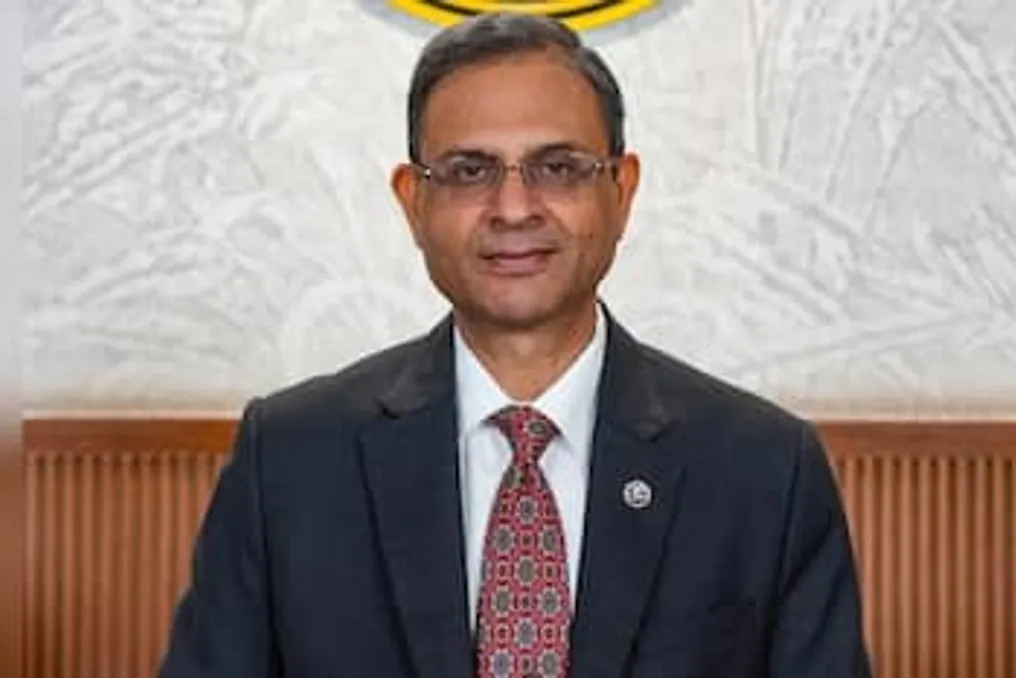
SEBI Chairman announces regulator's monitoring of developments in Tata Group
Read more
YourStory [india, en]
yourstory.com

SEBI Chairman announces regulator's monitoring of developments in Tata Group

SEBI Chairman Tuhin Kanta Pandey stated on Saturday that the market regulator is monitoring the development of corporate governance issues at the level of the Tata Group holding company. He emphasized that the group companies listed on the stock exchange, as well as their promoters, are subject to SEBI's disclosure and compliance norms.

These comments came amid disagreements regarding management issues within Tata Sons, the group's holding company. These issues include the reappointment of N Chandrasekaran as chairman and the possibility of listing the company's shares on the stock exchange.

Pandey told reporters during the launch of the Bharat Chamber Investor Forum that there are certain problems at the holding company level because it is not a publicly traded company. However, he clarified that all other publicly registered companies comply with LODR norms (Listing Obligations and Disclosure Requirements).

When asked whether SEBI is tracking events in the Tata Group, he answered affirmatively, noting the need for constant monitoring of all ongoing events. Pandey did not mention any specific corporate governance violations or regulatory actions against the group.

According to the annual report for the fiscal year 2025, Tata Group has 26 publicly registered companies, with a total market capitalization of $328 billion as of March 31, 2025. An analysis conducted by the management consulting firm InGovern showed that seven of these companies collectively own approximately 11.92% in Tata Sons. These firms also hold over 1.77 million share or folio accounts.

The seven mentioned companies include Tata Steel, Tata Motors Passenger Vehicles, Tata Chemicals, Tata Power, Indian Hotels, Tata Consumer Products, and Tata Investment Corporation. They are part of a broader portfolio of 26 public entities of the group and represent only those firms identified in the analysis as having a stake in Tata Sons. It should be noted that Tata Trusts owns about 66% in Tata Sons, and Shapoorji Pallonji Group owns approximately 18.4%.

Similar stories

Discussion of Noel Tata's possible departure from the boards of six Tata Group companies
Read more
www.aajtak.in

Discussion of Noel Tata's possible departure from the boards of six Tata Group companies

Significant changes are expected within the Tata Group in the near future. Noel Tata, Chairman of Tata Trusts, will turn 70 on November 12th. Speculation has arisen that upon reaching this age, he may step down from the boards of six major group companies, including Trent, Titan, and Tata Steel. Nevertheless, he will retain his position as a nominee director of Tata Trusts on the board of Tata Sons.

This process occurs against the backdrop of a dispute between Noel Tata and N. Chandrasekaran, Chairman of Tata Sons, regarding the extension of the latter's third term. Noel Tata's exit from the boards of six companies aligns with the group's policy for non-executive director departures. However, details regarding changes in other directorial positions remain undecided.

There are rumors that Noel Tata serves as a non-executive chairman on the boards of four companies, and also holds the position of vice-chairman in two others. These companies include:

  • Trent: Non-Executive Chairman
  • Voltas: Non-Executive Chairman
  • Tata International: Non-Executive Chairman
  • Tata Investment Corporation: Non-Executive Chairman
  • Tata Steel: Non-Executive Vice-Chairman
  • Titan Company: Non-Executive Vice-Chairman

Despite stepping down from these companies, Noel Tata will remain associated with Trent Hypermarket, a joint venture between Trent and the British company Tesco, which manages retail chains such as Star Bazaar and Star Daily. His role on the board of Tata Sons will be maintained.

Information about Noel Tata's potential departure surfaced amid disagreements between Tata Trusts and Tata Sons over the reappointment of N. Chandrasekaran. The Tata Sons board approved granting Chandrasekaran another five-year term on September 17th. The proposed new term is set to begin on February 21, 2027, and run until February 2032. According to reports, Noel Tata opposed this decision, while the second nominee director of Tata Trusts, Venugopal Srinivasan, supported it.

Following this, Tata Trusts questioned the legality of the proposal. The argument was that according to the Articles of Association of Tata Sons, a majority vote from directors appointed on behalf of the Trusts was required for support. Trusts raised the question of whether this condition had been met.

On October 26th, Noel Tata sent a letter to the secretary of Tata Sons, Supraksha Mohapatra, reiterating his objections. He requested the minutes of the September 17th meeting, voting records, and audiovisual recordings. He also raised questions regarding the reappointment process of Chandrasekaran. It was reported that Noel sought to ascertain whether the necessary selection committee had been formed according to company rules and if all requisite permissions had been obtained. This issue relates to corporate governance, specifically the process of company management and decision-making.

Tata Sons is the holding company of the Tata Group, and Tata Trusts collectively holds about 66% stake in it. As Chairman of Tata Trusts, Noel Tata is also a nominee director of the Trusts on the Tata Sons board. Consequently, his departure from the six companies and his retention of his role at Tata Sons are two separate events. His exit from the six companies will necessitate changes to assume the chairmanship roles at Trent, Voltas, Tata International, and Tata Investment Corporation. Furthermore, the succession for the vice-chairmanship positions at Tata Steel and Titan must be addressed. However, a complete succession plan for these roles has not yet been presented.

N. Chandrasekaran became Chairman of Tata Sons in 2017. After the approval of his new term, he can hold this position until February 2032. However, he will turn 65 on June 2, 2028. According to the group's internal policy, the standard retirement age for executive directors is typically 65. Exceptions may be required under existing rules to retain the position thereafter. This is an internal group system, and there is no legal prohibition on holding the office after age 65.

During Chandrasekaran's tenure leading the Tata Group, significant investments have been made in aviation, semiconductors, electronics, batteries, and digital business. The push for his term extension is linked to the need for leadership stability amidst the development and expansion of these sectors. Additionally, there are disagreements concerning the potential listing of Tata Sons. Tata Trusts opposes the inclusion of the company in the stock market. On the other hand, regulatory aspects are also important due to the Reserve Bank of India's (RBI) classification of Tata Sons as a non-banking financial institution of the highest level.
RBI Governor Sanjay Malhotra states that top-tier NBFCs must be listed on stock exchanges
Read more
business-standard.com

RBI Governor Sanjay Malhotra states that top-tier NBFCs must be listed on stock exchanges

Reserve Bank of India (RBI) Governor Sanjay Malhotra announced on Friday that companies classified as Central Investment Companies (CIC) which access public funds, directly or indirectly, are required to register with the central bank. Furthermore, top-tier Non-Banking Financial Companies (NBFCs) must be included in the stock exchange listings.

These statements came amid discussions regarding whether a public offering is required for Tata Sons, the holding company of India's largest conglomerate, the Tata Group.

Malhotra noted at the NDTV World summit in New Delhi: 'We do not answer questions concerning any specific regulated entity.' However, he added that NBFCs and CICs, such as Tata Sons, are required to register with the RBI due to systemic risks. This is because they are at the top of group companies where they can raise funds by using the balance sheets of these companies for repayment.

When separately asked about the rules governing top-tier NBFCs, Malhotra clarified: 'As long as it is an NBFC within our definition, it is a CIC, it has access to funds, directly or indirectly, it is obligated to be registered, and if it is at the top tier, then it is obligated to be listed.' He also emphasized that registration is only not required if the CIC does not have direct or indirect access to public funds.

The central bank classified Tata Sons as a top-tier NBFC in 2022, granting the company three years until 2025 to go public. Instead, the company repaid its outstanding debts and requested the cancellation of its CIC registration. Nevertheless, last month, the RBI rejected this request and demanded that Tata Sons comply with the requirements applicable to top-tier NBFCs.

For its part, Tata Trusts, which controls Tata Sons, proposed merging Tata Electronics Systems Solutions (TESS) and Tata Consulting Engineers (TCE) into a holding company. The goal of this proposal is to avoid an Initial Public Offering by restructuring Tata Sons in a way that, according to the Trusts, would cause it to cease meeting the criteria for an NBFC or CIC. This plan requires approval from the Tata Sons board of directors and consent from the RBI.

Turning to monetary policy, Malhotra stated that the RBI generally does not use interest rates to solve financial stability issues, relying instead on macroprudential measures. However, he did not rule out the possibility of applying monetary policy in certain situations, noting that the decision remains with the Monetary Policy Committee (MPC). He added that the effectiveness of such intervention would depend on the circumstances and would be reviewed by the MPC.

In its latest meeting this month, the MPC raised the key repo rate by 25 basis points to 5.50 percent and changed its stance from neutral to 'calibrated tightening.' The Governor also acknowledged growing cybersecurity risks to the financial system, as banks report data breaches in the dark web. Separately, he expressed concern over the impact of Artificial Intelligence (AI) on financial stability, stating: 'These risks are real. They cannot be ignored, so I will not downplay these risks.'

Malhotra highlighted two main areas of concern: data security and cyberattacks capable of disrupting or disabling systems. He noted that the RBI has a robust regulatory and supervisory system to address both issues, but the rapid pace of software development means vulnerabilities may continue to emerge.

Popular