
Iran proposes creating a joint park of peace and friendship with Armenia to protect biodiversity
Read more
Tehran Times
www.tehrantimes.com

Iran proposes creating a joint park of peace and friendship with Armenia to protect biodiversity

Iran has put forward a proposal to establish a joint Park of Peace and Friendship with Armenia. The goal of this initiative is to strengthen cross-border cooperation in the field of biodiversity conservation and wildlife protection in the Caucasus region.

According to IRNA, Hamid Zohrabee, Deputy Head of Iran's Department of Environment (DOE), met with his Armenian counterpart Aram Meymaryan during the 17th Conference of the Parties (COP17), which took place in Armenia from October 19 to 30.

The proposed cross-border park aims to promote joint efforts to conserve biodiversity in northwestern Iran and the Caucasus region, as well as ensure the protection of vital corridors for wild animals, including routes used by the Persian leopard.

During the meetings, officials also discussed ways to expand environmental interaction and address common issues, particularly concerning the protection of the Aras River.

Meymaryan welcomed the proposal and highly praised the active participation of the Iranian delegation in COP17.

Both representatives agreed to form a working group to monitor the implementation of agreements reached after the summit.

COP17 was held in two stages: first, technical discussions took place, followed by the ministerial segment. The leaders' summit was held on October 16, during which President Masoud Pezeshkian spoke. This marked the first time that the President of the Islamic Republic of Iran attended the Convention on Biological Diversity Conference of the Parties.

Speaking at the summit, Pezeshkian called for 'peace diplomacy' to protect biodiversity, condemning the destructive impact of aggressive wars on the environment as ecocide. He strongly urged the international community to develop effective, transparent, and implementable mechanisms for preserving natural heritage during military operations.

Shina Ansari, Head of the Department of Environment, also addressed the meeting participants, stating that environmental diplomacy can become a tool of peace diplomacy, and the link between biodiversity, peace, and security must be viewed as a bilateral process.

Ansari emphasized that the connection between biodiversity and peace is not merely an ethical or political issue, but a fundamental problem in the field of environmental management, international law, and human security.

According to the Convention on Biological Diversity, she noted that the main causes of biodiversity loss are generally considered to be land-use change, habitat destruction, pollution, unsustainable exploitation of natural resources, and climate change.

The Iranian delegation met with Vivek Menon, Chairman of the IUCN SSC Species Survival Commission. They discussed methods to enhance cooperation in developing programs for the management and conservation of endangered species.

Discussions focused, in particular, on conservation and restoration programs for the Asiatic cheetah, the great bustard, and the Persian onager in their natural habitats, as well as the reintroduction of the Persian gazelle to its native areas.

The parties also discussed increasing technical and scientific cooperation and providing funding under sanctions.

Menon expressed hope that continued interaction between IUCN staff and Iranian experts would ensure the survival of endangered species such as the Asiatic cheetah in Iran.

This year, Iran officially joined the Coalition Actions for Endangered Species Recovery (CARES), which aims to strengthen international cooperation for the conservation and restoration of the country's wildlife.

CARES was presented at COP17 in Yerevan on October 16. The initiative was launched by Colombia and Armenia together with 17 founding states: Armenia, Belize, Brazil, Canada, China, Colombia, Costa Rica, Ecuador, Fiji, Indonesia, Madagascar, Mexico, Panama, Papua New Guinea, Peru, the United Kingdom, and Vanuatu. Iran became a member of the coalition as the 18th country.

The coalition is supported by the Reverse the Red Action partnership as its secretariat. The membership document was signed by Zohrabee on October 26.

Speaking at the event, Zohrabee stressed the need for fair distribution of resources and technologies to save endangered species.

Iran's name will be listed on the coalition's website as a country that has developed action plans for the conservation of 40 wild animal species to benefit from technical, scientific, and financial support from CARES.
Similar stories

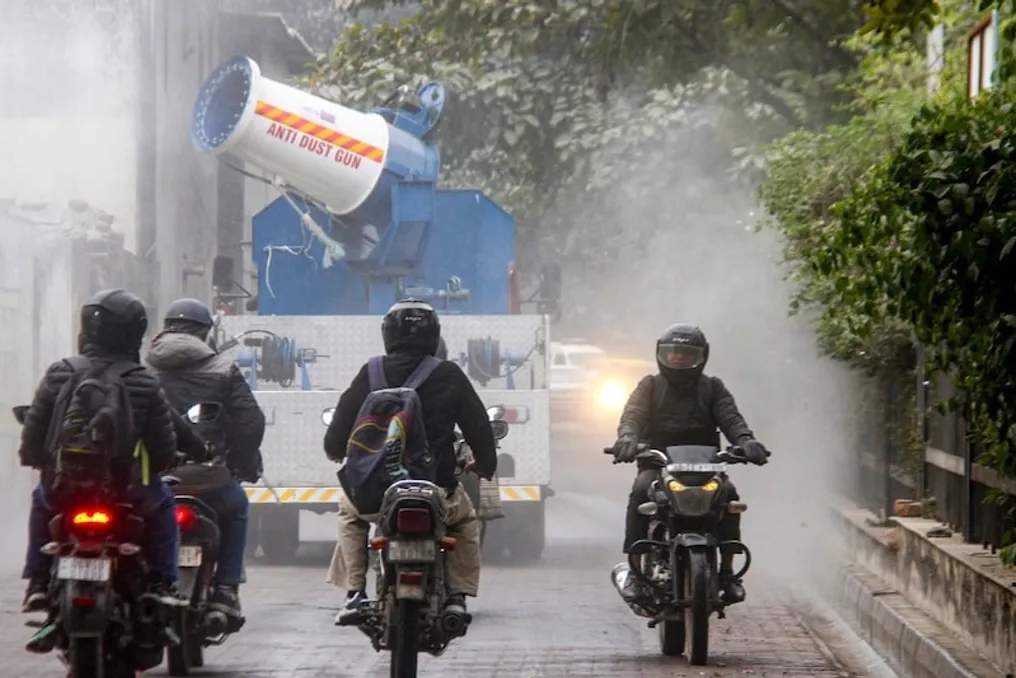
Restrictions on Air Pollution Introduced in Delhi from November 1st: Ban on External Vehicles, Partial Shift to Remote Work, and Doubling of Parking Fees
Read more
www.aajtak.in

Restrictions on Air Pollution Introduced in Delhi from November 1st: Ban on External Vehicles, Partial Shift to Remote Work, and Doubling of Parking Fees

A series of strict measures will come into effect in Delhi starting November 1st to combat winter air pollution. These restrictions are valid from November 1st to February 28th and include a ban on entry for older vehicles registered outside Delhi, a suspension of most external construction work, doubling of parking costs, and a requirement for government and private offices to operate under a partial remote work schedule.

Vehicles registered outside Delhi that meet BS-IV emission standards or older will not be allowed to travel in the city from November 1st to January 31st. Exceptions to this rule include CNG and electric vehicles, as well as ambulances, fire services, and police vehicles, and other approved modes of transport.

Construction work related to dust generation and external civil projects will be suspended from November 1st to January 31st. However, certain public projects may be granted exceptions if established conditions are met. Internal finishing, plumbing, and electrical work is permitted provided it complies with dust prevention standards. A complete ban on construction and demolition will be enforced from December 10th to January 20th, except for works that have received special permits.

From November 1st until February 28th, the cost of parking in authorized locations across Delhi will be doubled, although parking at the Delhi Metro is exempt from this increase. In government and private offices, only 50 percent of employees must be in the office from November 1st to January 31st, with the rest working from home. Emergency and essential services retain the right to exemption according to established rules.

Operating hours for institutions will be adjusted: MCD will function from 8:30 AM to 5:00 PM, and Delhi government offices from 10:00 AM to 6:30 PM, to reduce traffic load. Responsibility for implementing these rules rests with several departments, including the Transport Department, Delhi Traffic Police, DPCC, and local authorities.

The control system will be ensured by ANPR cameras installed at borders and other key points that record violators. Vehicles violating the rules will be issued electronic fines, and the traffic police may take action to confiscate vehicles. Special teams will conduct on-site inspections. Upon discovering illegal activity at construction sites, directives for immediate cessation of work will be issued, fines for environmental damage will be imposed, and, if necessary, measures to close the site will be taken. An Integrated Command and Control Centre (ICCC) with artificial intelligence functionality will monitor video feeds, fines, and actions taken, while special teams will respond promptly to complaints.

Minister Rekha Gupta appealed to residents, vehicle owners, construction companies, and entrepreneurs to comply with the new regulations. She recommended not bringing prohibited vehicles into the city, halting external construction, using public transport and carpooling, and avoiding open burning of garbage or dry leaves. Citizens are encouraged to report violations to the relevant authorities.

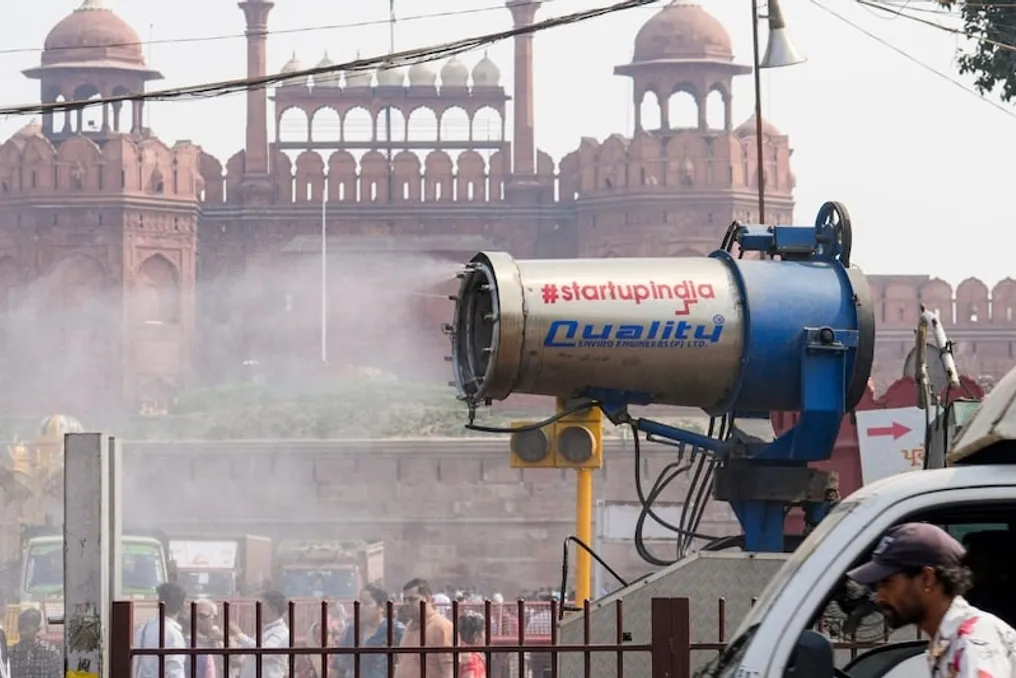
Average Air Quality Index (AQI) in Delhi reached 166 in October, the best figure in eight years
Read more
www.aajtak.in

Average Air Quality Index (AQI) in Delhi reached 166 in October, the best figure in eight years

According to the Ministry of Environment, the average Air Quality Index (AQI) in Delhi in October 2026 was 166, which is the lowest figure in the last eight years. This indicates a significant improvement in air quality in the city.

Compared to last year, when the indicator was 223, there is a positive trend. Furthermore, the average AQI for the period from January to October decreased, and the number of days with poor air quality has reduced. At the same time, the level of PM2.5 has decreased, but the level of PM10 has increased.

The average AQI in October 2026 (166) is lower than in 2024 (234), 2023 (219), 2022 (210), 2021 (173), 2019 (234), and 2018 (269). In October 2020, the average AQI was 265, making the current October the cleanest compared to these data.

Regarding the period from January 1 to October 31, the average AQI in Delhi was 167, while in the same period in 2025 it was 170. This figure is lower than in 2024 (184), 2023 (172), 2022 (187), 2021 (179), 2019 (192), and 2018 (201). The best period was 2020, when the average was 156.

In the period from January to October 2026, there were 220 days when the daily average AQI remained below 200, which is classified as good or moderate. This exceeds the figures for 2025 (200), 2024 (201), and 2023 (206). In 2020, this number was 224.

Days with poor or very poor air quality (average AQI above 200) this year amounted to 84 days, compared to 104 days in 2025, 104 days in 2024, and 98 days in 2023.

Pollutant levels have also changed: the average PM2.5 level from January 1 to October 29 was 69 micrograms per cubic meter, which is lower than 72 micrograms in 2025. However, the average PM10 level reached 171 micrograms per cubic meter, which is higher than 166 micrograms last year.

AQI is a measure of air quality; the lower this indicator, the cleaner the air is considered. The Commission for Air Quality Management (CAQM) stated that it is working with stakeholders on measures to prevent, control, and reduce pollution in Delhi-NCR. The Commission emphasized that efforts to improve air quality will be intensified.

Oxford University research reveals that long journeys alter the biological clock of birds, causing an effect similar to human jet lag
Read more
olhardigital.com.br

Oxford University research reveals that long journeys alter the biological clock of birds, causing an effect similar to human jet lag

A study conducted by Oxford University, and recently published in the journal Science, demonstrated that birds suffer from a phenomenon analogous to the jet lag experienced by humans.

According to the research, when these birds travel large expanses of the Atlantic Ocean at high speed, their biological clock becomes misaligned with the local solar time. To be able to orient themselves using the sun as a reference, birds require an accurate internal clock, which must be adjusted daily to sunrise to correctly interpret the star's position throughout the day.

When traveling east or west, crossing lines of longitude—which correspond to time zones—the animal's internal time becomes out of sync with the solar time of its arrival point, potentially suffering a delay of up to one hour.

This discovery was made through the analysis of twenty years of GPS tracking data collected from 1,045 individuals of the Little Pied Bat (Puffinus puffinus), a species that nests on islands in the United Kingdom and Ireland. The team of biologists monitored 3,688 foraging journeys, during which the birds frequently travel up to a thousand kilometers west before returning to their nesting sites.

The researchers observed that upon returning eastward, where the sun rises earlier, the birds exhibited a systematic clockwise deviation compared to the predicted route. This dependence on the sun-based navigation system was so prominent that the animals maintained these deviations even when flying parallel to the coastline, where there would be visible geographical landmarks to guide them.

In the examined adults, the practical impact of this deviation was relatively small; an average deviation of seven degrees resulted in an increase of approximately five kilometers over a thousand-kilometer journey. However, scientists warn that this effect can be extremely serious for young birds during their first migration, as uncorrected navigational errors can cause them to deviate from their final destination by hundreds of kilometers.

Patrick Lewin, the study's principal investigator, stated in a release that the findings indicate that the animals experience the same internal clock mismatch that occurs during human jet lag. He added that the next focus of investigation will be to understand how this affects them, questioning whether they exhibit critical behaviors at inappropriate times, if they have physiological side effects similar to humans, and if this misalignment is as detrimental to health as jet lag is for us.

Tim Guilford, co-author of the article, emphasized that the ability to accurately measure the natural movements of animals allows for the revelation of deep cognitive and behavioral mechanisms that were previously considered difficult to study in the natural environment. Scientists believe that understanding how these birds manage long-distance travel may assist medicine in developing treatments to mitigate the negative effects of jet lag on human health.

Popular