
Nicole Thomas from Bellville South researches astrophysics, studying black holes and galaxy evolution
Read more
IOL
iol.co.za

Nicole Thomas from Bellville South researches astrophysics, studying black holes and galaxy evolution

Having grown up in Bellville South, Dr. Nicole Thomas has always shown a deep interest in the principles of how the world functions. Today, this astrophysicist, born in Cape Flats, dedicates her research to supermassive black holes and galaxy evolution, attempting to answer questions about the Universe that have fascinated scientists for generations.

Thomas's journey began at Kasselsvlei High School, after which she studied physics at the University of the Western Cape (UWC). She then earned a PhD in astrophysics, building a career that took her from local classrooms to the international scientific community.

Her story is an example of curiosity, determination, and the opportunities provided by education, serving as inspiration for young people who may not see themselves in fields like astrophysics.

Thomas explained that her interest in science stemmed from a desire to understand how things work, especially when the answers were not obvious. She noted: 'I have always been drawn to the world; I wanted to know how and why everything works—the more complex and mysterious, the better.'

During a time when there was no internet access at home, television documentaries helped her, introducing her to astronomy and space. She recalls: 'We didn't have internet at home back then, but I remember my father always watching documentaries on Discovery Channel and National Geographic, and that's where I first heard about the concept of astronomy, and how that fascination spread beyond our world and into space.'

This early curiosity eventually transformed into a drive to study the physical foundations of the most complex phenomena in the Universe.

After studying physics at UWC, Thomas continued her studies under the National Programme in Astrophysics and Space Sciences at the University of Cape Town, before returning to UWC for further postgraduate research. Ultimately, she received her PhD in astrophysics from UWC, specializing in supermassive black holes and their influence on galaxy evolution.

Her field of study investigates how black holes grow, how they release enormous amounts of energy, and how their activity can affect the galaxies in which they exist. Understanding these processes helps scientists study how galaxies develop and change over time.

Thomas's academic path demonstrates how scientific education in Cape Town can lead to internationally significant research.

Thomas stated that she never viewed her environment as an obstacle to her ambitions. She emphasized: 'I never saw my environment as a limitation because for me it was just ordinary life. So why should I look at it differently?'

Although pursuing astrophysics might have surprised some people, she reported that her parents, friends, and school supported her interest in science. One stereotype she encountered was the idea that girls are incapable of doing mathematics. However, she stated that her gender, race, or origin should not determine her achievements.

She said: 'I was raised not to make excuses.' Thomas also acknowledged the role that opportunities and personal circumstances played in her life's journey. Despite not being able to enroll in the university she was initially accepted into for astronomy, she still managed to obtain higher education.

Her career opened new prospects but also required sacrifices, including time spent away from home and the need to balance personal priorities with the demands of scientific research.

Thomas is convinced that young people interested in astronomy and other scientific disciplines today have more opportunities than ever before to explore their interests. She noted: 'Today we have so much knowledge at our fingertips, whether on social media, Google, or through AI. All of this can be a powerful tool for exploring specific interests.'

She also pointed out the opportunities in Cape Town for youth to interact with scientists and professionals in science, technology, engineering, and mathematics (STEM). Thomas added: 'Cape Town is a fantastic place to connect with many astrophysicists, space scientists, or other STEM specialists. Although some events have a small fee, such as the Planetarium and Iziko Museum, various free events take place throughout the year.'

Thomas concluded that many scientific institutions collaborate with schools by conducting science popularization programs, and universities organize open days and other events that can introduce students to a scientific career. Her advice emphasizes the value of asking questions, exploring interests, and utilizing educational opportunities, whether online, in school, or through local scientific institutions.

From the classrooms of Kasselsvlei High School to researching the most complex objects in the Universe, Thomas's path shows how an early fascination with the world can evolve into a career dedicated to exploring what lies beyond the known.
Similar stories

Scientists recreate images of the early Universe when stars and black holes dispersed cosmic fog
Read more
g1.globo.com

Scientists recreate images of the early Universe when stars and black holes dispersed cosmic fog

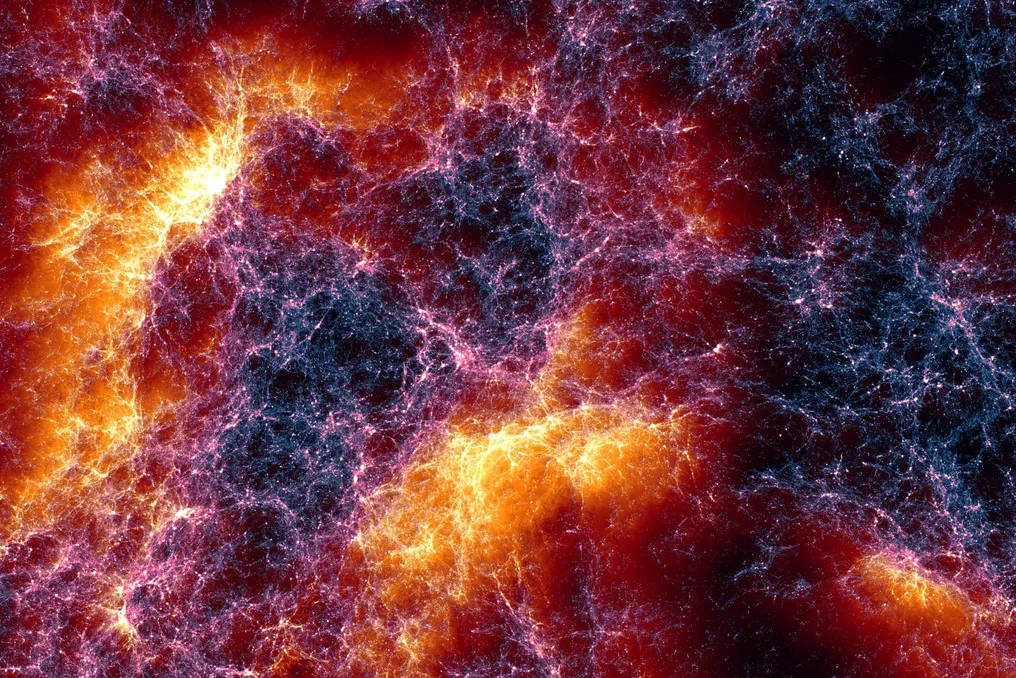
Astrophysicists were able to reconstruct images of how the Universe emerged from a state of darkness. Light bubbles began to appear around the first galaxies, which grew, merged, and gradually dispersed the cold gaseous fog enveloping the primitive cosmos.

These images, presented by an international group of researchers on Sunday (the 25th), were obtained using Lumina—a simulation run on a supercomputer. The scientists input conditions of the Universe immediately after the Big Bang, measured by satellites, and allowed the laws of physics to operate. The computer then 'played back' the evolution of this Universe over the first two billion years.

The results of the work were published on Tuesday (the 26th) in the scientific journal Monthly Notices of the Royal Astronomical Society. The data obtained generally correspond to what telescopes have already observed during this period. However, there is a significant shortcoming: the simulated Universe contains fewer giant galaxies than those discovered by the James Webb Space Telescope.

According to the authors, this indicates that the galaxies of the young Universe evolved faster than current theories allow to explain. The modeled section of the Universe is about 1.6 billion light-years across one side, allowing researchers to trace how different regions evolved differently. For this, the computer tracked the movement of hundreds of billions of gas and dark matter particles. Dark matter is invisible, but its gravity serves as the framework determining where galaxies form.

The calculation was performed on Frontier, one of the world's most powerful supercomputers located in the United States.

How the Universe stopped being dark

Immediately after the Big Bang, the Universe was very hot. As it expanded, it cooled and filled with gas made of hydrogen and helium—the simplest elements. This gas acted like a haze, blocking higher-energy light, such as ultraviolet, which could not travel far. This stage is known as the era of cosmic darkness.

The fog began to dissipate when the first stars appeared, approximately 100 million years after the Big Bang. Their light was strong enough to 'break up' the surrounding gas atoms. The disrupted gas allowed light to pass through, and the Universe became more transparent. The images show that this did not happen simultaneously or uniformly. Areas with a high concentration of galaxies lit up first, similar to areas illuminated earlier in a city. Large voids between them remained dark for much longer.

In the simulation, the last pockets of fog disappeared only about 1 billion years after the Big Bang. This later completion is consistent with measurements made by astronomers previously. The model also confirms that stars performed the main work. Black holes contributed less to this initial stage.

However, helium required a second round. Its atoms are harder to break up, requiring light much more powerful than that from ordinary stars. This light came from quasars—giant black holes that intensely radiate while consuming gas. Since quasars are rare and very powerful, the bubbles they created were significantly larger and more distributed. This second stage started later than the first and was almost complete only by two billion years.

Lumina is the first simulation of this level of detail to demonstrate both the stellar and black hole-related stages. Previous models stopped earlier. Each of these phases also heated the gas. The simulation also shows that even before reaching starlight, X-rays emitted from galaxies were already heating the fog. This detail is useful for radio telescopes trying to capture the extremely faint signal of gas from that era, which has not yet been detected.

What the simulation does not yet explain

Comparison with the James Webb Space Telescope raises more questions for Lumina. Since 2022, the telescope has been discovering galaxies in the young Universe that are larger and brighter than theories predicted. The simulation reproduces small and medium-sized galaxies well. But regarding the largest ones, whose mass exceeds the Sun by hundreds of billions of times, it lags behind. The earlier in the Universe's history, the greater the discrepancy.

The authors propose several possible explanations. Perhaps these galaxies formed stars faster than previously thought, or produced more massive stars. It is also possible that the rules used by scientists to describe the Universe need adjustment. Or, more simply, that the Webb measurements have a larger margin of error than assumed.

The full Lumina data will be available to other scientists in 2028. The group is already preparing new studies to compare the simulation with telescope observations. The value of Lumina lies both in what it confirms and what it gets wrong. Where the simulation matches telescope data, it confirms that known physics adequately explains the infancy of the Universe. Where it falls short, it points to the exact place where this physics still requires revision.

Curiosity Cube™ Program Inspires Future Scientists in Eastern Cape Through Hands-on Science Learning
Read more
iol.co.za

Curiosity Cube™ Program Inspires Future Scientists in Eastern Cape Through Hands-on Science Learning

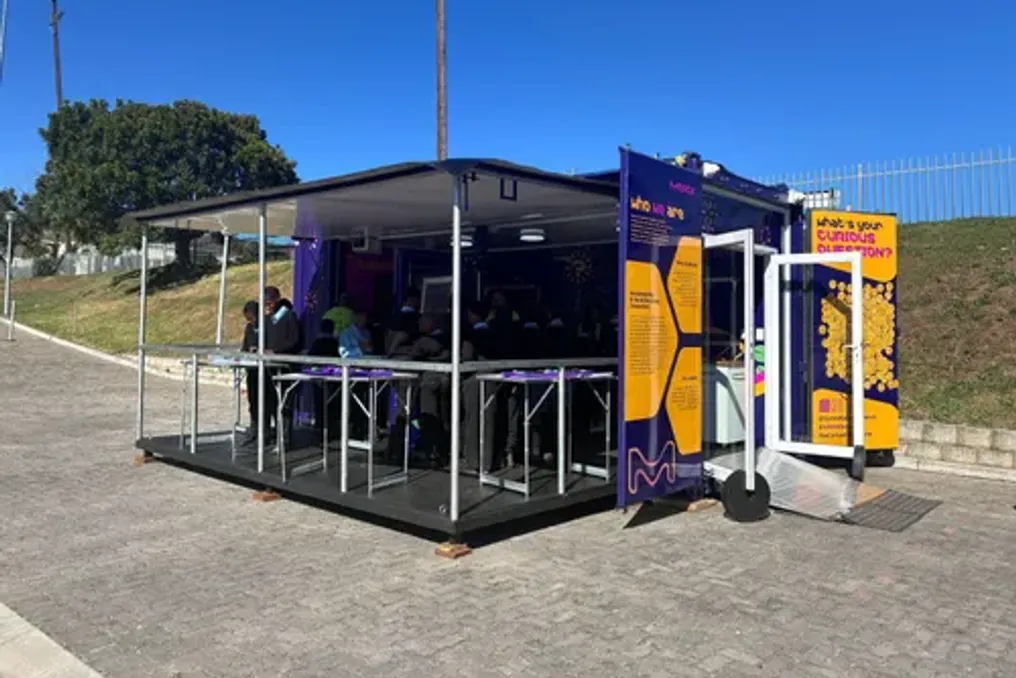
In August and September 2478 students from eighteen schools participated in the program, becoming 'scientists for a day.' They worked alongside staff from Merck and partner volunteers from Rhodes University, as well as from the Nelson Mandela Science and Technology Centre in Cariega.

This event was part of the international Curiosity Cube™ tour by the science and technology company, which aims to transform curiosity into scientific careers. The mobile science laboratory Curiosity Cube™ is conducting its second consecutive year in South Africa, and the Eastern Cape is just one of 126 planned stops this year.

Students from various schools in the Eastern Cape underwent three interactive experiments to learn the basics of synthetic biology. This involved using educational gadgets such as Cubelets and magnetic puzzles, allowing them to explore the relationship between enzyme shape and biological processes, the influence of genetic code on traits and behavior, and how gene activation and deactivation enables scientists to create solutions for real-world problems.

All experiments were conducted by Merck staff and volunteers from Rhodes University (Makhanda) and the Nelson Mandela Science and Technology Centre (Cariega), enabling students to interact with scientists working in their own communities and sharing opportunities in STEM.

Jennifer Mohale, Curiosity Cube™ Coordinator at Merck, noted that the experiments demonstrated to the students how concepts of synthetic biology manifest in the real world. She added that these lessons can help shape the future of students by introducing engineering principles and potential careers in life sciences in growing sectors such as medicine or healthcare.

The Curiosity Cube™ initiative aims to awaken interest in STEM careers and remove educational barriers. According to a Merck survey, nearly half (48%) of schoolchildren aged 8 to 13 find it difficult to see themselves as scientists, even if they engage in STEM-related activities daily.

The World Economic Forum indicates that an additional 23 million STEM graduates will be required by 2030 to fill vacancies in these developing fields. To meet this demand, early intervention is necessary: students, especially those aged 8 to 13, need significant experience and relatable role models to envision a future in STEM.

By providing access to STEM education in an engaging and memorable format during a critical period of student life and education, Curiosity Cube™ helps them make this connection, thereby contributing to the development of a strong future workforce in science and technology.

One sixth-grade student shared their impressions after visiting Curiosity Cube™: 'Curiosity Cube™ was a lot of fun, and I learned so much from the scientists. I want to be a natural science teacher when I grow up because you learn so many new things that make you smart, and you can share what you've learned.'

Only in 2025 have 2069 Merck staff volunteers and university partners helped teach 56,035 students worldwide the basics of artificial intelligence using Curiosity Cube™. Previous Curiosity Cube™ tours have also covered topics such as sustainable development, contamination, and the human microbiome.

Curiosity Cube™ is part of Merck's global volunteering program, SPARK™, which celebrates its 10th anniversary this year, and continues the company's Curiosity Labs™ program, where staff conduct practical experiments with students in classrooms.

To date, Merck employees have contributed over 196,800 hours through SPARK™, conducting more than 6,500 events in 48 countries and engaging over 613,400 students.

Besides South Africa, Curiosity Cube™ has visited Botswana, Eswatini, and has newly expanded into Zambia, Lesotho, and Namibia.

In its fifth annual European tour, Curiosity Cube™ will stop in Austria, Belgium, Czech Republic, France, Germany, Ireland, Italy, Netherlands, Spain, Switzerland, and the United Kingdom, and will also visit new locations in Poland, Serbia, and Slovakia.

The lab will also tour the USA and Canada, holding 133 events in cities such as Austin, Boston, Cleveland, Durham, Houston, Kansas City, Milwaukee, New York, San Diego, San Jose, St. Louis, and Toronto.

Since its founding in 2017, over 286,000 visitors from 20 countries in North America, Europe, and South Africa have visited Curiosity Cube™.

Adela Madari, Curiosity Cube™ Coordinator at Merck, stated: 'You can see the confidence of the students growing with each station. They discover that they belong here, and that their ideas matter. Learning science is just the beginning.'

To learn more about upcoming tour stops, visit TheCuriosityCube.com or follow the journey on Instagram using the hashtag @curiositycube_merck. Merck's Life Science business operates through MilliporeSigma in the United States and Canada.

Popular