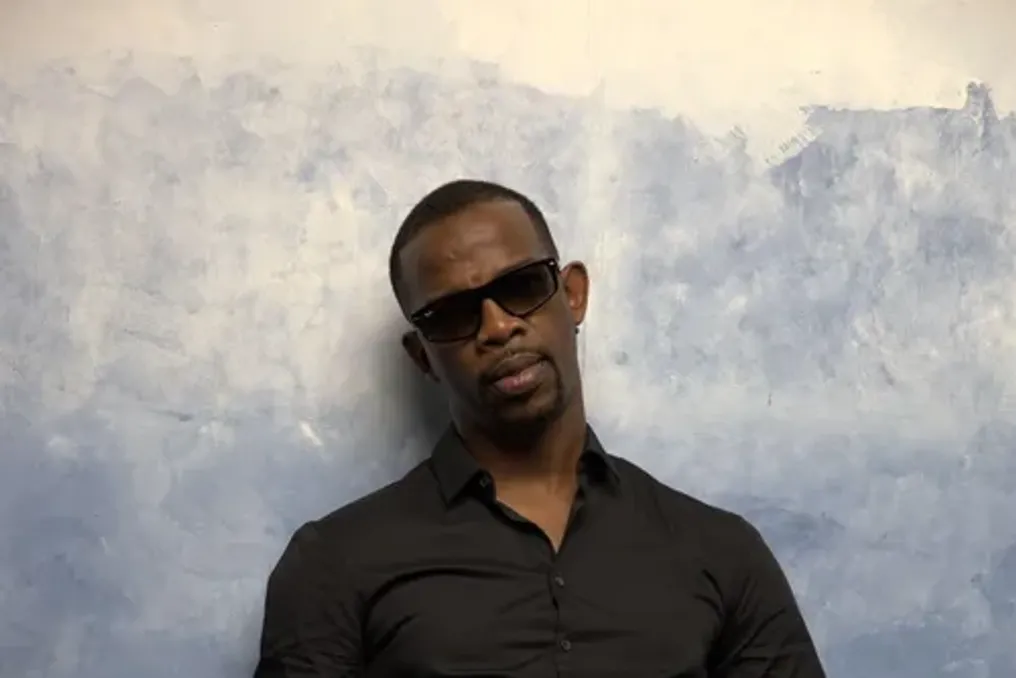
Zakes Bantwini expresses a desire for African companies to gain greater control over the business behind the global success of African music. This award-winning producer, Grammy recipient, and international figure is focused on goals larger than simply releasing a new hit.
For Bantwini, the discussion has shifted towards issues of ownership, building sustainable businesses, and ensuring that African music not only spreads globally but also benefits from the infrastructure and commercial opportunities its worldwide success brings.
This philosophy has taken him from South African dance floors to Harvard Business School, where he began approaching the future of his company, Mayonie Productions, and its place in the international music industry more strategically. In a recent interview, Bantwini openly discussed his aspirations, the gaps in the South African music business, and why creating successful artists is only part of building a long-term industry.
Bantwini's decision to enroll in the 'Business in Entertainment, Media, and Sports' program at Harvard Business School was not just about adding an impressive qualification to his resume. It was a drive to be in circles where he could network and learn how to scale his business internationally.
He describes his decision-making approach as probability-based, weighing possibilities that can bring him closer to his goals. He explains: 'For me, I think in terms of probabilities, and I also make decisions and do everything I do based on probabilities.'
His reasoning was simple: if he wanted to build a global company, he needed to be among people who understood the principles of global business. He notes: 'Most global companies, where are they? They are in America. What is the most prestigious university known for producing amazing people who lead in business? It's Harvard. So the probability that I, with my thinking about something global, will likely meet like-minded people at Harvard.'
This experience also gave him what he felt was previously lacking: a practical roadmap. Before Harvard, according to him, Mayonie Productions had ambitions to go beyond South Africa, but these aspirations were not backed by a clear strategy. He says: 'Before Harvard, Mayonie was never ADE (Amsterdam Dance Event). Our idea of going global was a dream, but there was no map. Now there is a map.'
His ambitions are significant. When asked which international company he would like to create, Bantwini named Roc Nation, the entertainment company founded by Jay-Z. He stated: 'If I were a company in America, what company would I be? I would want to be Roc Nation. That is the company I want to build.'
One of Bantwini's biggest concerns regarding the international success of African music is whether the continent itself benefits from the business opportunities accompanying its growing influence. Genres like Amapiano, Afro House, and other African styles have found listeners far beyond the continent, and South African artists are increasingly performing at international festivals and venues.
However, Bantwini believes there is a crucial difference between exporting music and owning the businesses that make those international opportunities possible. He recalls a performance in Portugal where the South African presence was evident backstage. He says: 'When I performed in Portugal, you feel South Africa. Backstage it's isiZulu, Sesotho. You are in South Africa.'
But there was a contradiction. Despite the talent of South African performers, the company responsible for bringing them there was based in the UK. He emphasizes: 'You ask: since we project this from South Africa, is it a South African entity that brought us here? No. The company that brought us there was a British company. None of the South Africans owned any stake.'
For Bantwini, this is where the industry needs to start asking tough questions. Artists can tour the world, sell tickets, and introduce their music to new audiences, but without owning the businesses and structures behind those opportunities, long-term financial benefits may continue to flow elsewhere. He warns: 'No one can guarantee that the South African family will always benefit from this.' He continues: 'On the day we die, when you are not on stage, no one will be getting paid. The money will always go to the UK because there is no South African who owns it.'
Bantwini believes that one of the most serious problems facing the South African entertainment industry is the lack of investment in the people working behind the scenes. While there is no shortage of emerging singers, producers, and performers, he argues that the same energy should be directed toward developing managers, lawyers, PR specialists, and talent representatives.
He observes: 'Everyone wants to be an artist. There is no one who says, 'I want to be a manager like Scooter Braun, or I want to be like this guy who represents LeBron James'.' He adds: 'We don't have the right managers, the right lawyers, the right public relations specialists. We don't.'
He hopes to solve this problem through a partnership with Wits Business School, which is developing a program focused on representing executive talent. It is important to note that this initiative is not intended for training performers, but for those who will manage their careers and negotiate commercial interests.
'The program we are doing with Wits, which they are currently developing, is not for talents. It doesn't look at talents at all. It wants to create people who represent talents,' he explains. This is a different approach to talent development, recognizing that a successful music industry needs not only people capable of creating and performing music but also people who understand contracts, intellectual property, business development, and the value of owning creative assets.
Bantwini's views on ownership also extend to the relationship between record labels and artists. Through Mayonie Productions, he works on licensing agreements that give artists a more favorable share of the business. Nevertheless, he acknowledges that offering what he considers the best terms does not necessarily mean artists will receive these arrangements positively.
He says: 'We offer, probably plus what I would call a standard percentage doubled plus, actually what should usually be paid to the artist.' He continues: 'We provide licensing deals, the best licensing deal for the artist. But still, artists will feel like they are being robbed. It's a perception problem. Nothing can be done.'
His comments touch upon a long-standing tension in the music industry, where relationships between artists and labels have often been shaped by mistrust and questions about who benefits financially from a successful release. For Bantwini, changing the business structure is one thing, but changing how artists perceive it is an entirely different task.
Although his focus is increasingly on business, Bantwini's analytical approach has always been part of his music creation process. He does not rely solely on inspiration when making recordings. He studies trends, analyzes what works, and uses this information to make creative decisions.
This mindset played a role in the creation of his international hit 'Osama'. Recalling his time at Sony, Bantwini recounts studying the production tools used by successful producers and noticed that a significant number of popular tracks were created using Fruity Loops. He remembers: 'At that time, 70% - 80% of the year's best songs were made through Fruity Loops.'
His conclusion was that if so many successful tracks were created using this software, he should incorporate it into his own process. He says: 'So, I thought: 'Okay, I need to make my next album on Fruity Loops because that means a 70 percent chance that I will make a song.' And what do you think? 'Osama' was made on Fruity Loops.'
This is a clear example of how Bantwini approaches both his creative and business ambitions: identifying opportunities, studying what works, and making calculated decisions. This desire for control dates back to his youth when he gave up professional football for music. He recalls: 'The day I stopped putting my dream's fate in other people's hands, I started living.'
Despite all his international ambitions, business plans, and career milestones, Bantwini's definition of success is surprisingly personal. He reports that his accountants even suggested moving to Europe to save the business on airfare, given his demanding international schedule. But this is a calculation he is unwilling to make. He says: 'My accountants spend a lot of money on flights. They say: 'If you just live in Europe, here is how much we will save.' I would save money, but I would lose my family.'
At this stage of life, the possibility of returning home to his wife and children means more to him than any other international success. 'For me, my success is simply not worrying and being home. Success for me is walking into my house and seeing my wife and children.'
He clearly distinguishes between a successful career and a fulfilling life. 'If I come back to spend all this money alone, that is not success for me. It is a bright moment. It is a bright moment, not success.'
Perhaps this is the most telling part of the conversation. For a man whose career has taken him around the world, the ultimate reward is not necessarily recognition in another country, but the freedom to return to the people dearest to him.
Bringing Music Home This Summer
While his international ambitions continue to take shape, Bantwini is also preparing for a busy summer season in South Africa. On October 23, Mayonie Productions held a showcase at Het West-Indisch Huis during the Amsterdam Dance Event (ADE), presenting the company's growing ambitions to an international audience. Fans can also see his European touring experience in the documentary Golden Hour, an eight-minute film presented by Corona Studios. The film, which follows Bantwini on the road, is available on YouTube.
He will bring the Mayonie Productions experience back to Johannesburg at the Mayonie Open Air Festival, taking place on Sunday, November 29, at Constitution Hill. Tickets start from R250 via Howler. He is also participating in the Corona Sunsets Summer Tour with scheduled dates:
November 21: Menlyn Park Lawns, Pretoria.
December 12: Dimawe, Manyana, near Gaborone.
December 19: Manor House, Ballito.
For Bantwini, performances are part of a career that continues to move between music, business, and international opportunities. But his ultimate goal is becoming clearer. He wants African music to sound around the world, yes, but he also wants Africans to own a larger part of the mechanisms that make this success possible. And perhaps this is the next measure of his legacy: not just the recordings he leaves behind, but the industry he helps build.