Astronomical images resembling horror movie scenes presented for Halloween
Read more
Olhar Digital
olhardigital.com.br

Astronomical images resembling horror movie scenes presented for Halloween

This Saturday (the 31st) is Halloween—a holiday characteristic of Anglo-Saxon countries, especially the USA, Canada, Ireland, and Great Britain. While celebrations on Earth inspire themed decorations, recordings show dark images of the Universe collected over decades, demonstrating that cosmic reality can often be more frightening than fiction.

In honor of this date, impressive pictures have been gathered, ranging from a monstrous zombie hand sculpted by the winds of a dying star to a skull-shaped asteroid that passed near Earth. These images offer a visual journey through ghostly nebulae and cosmic structures worthy of a true night of horrors.

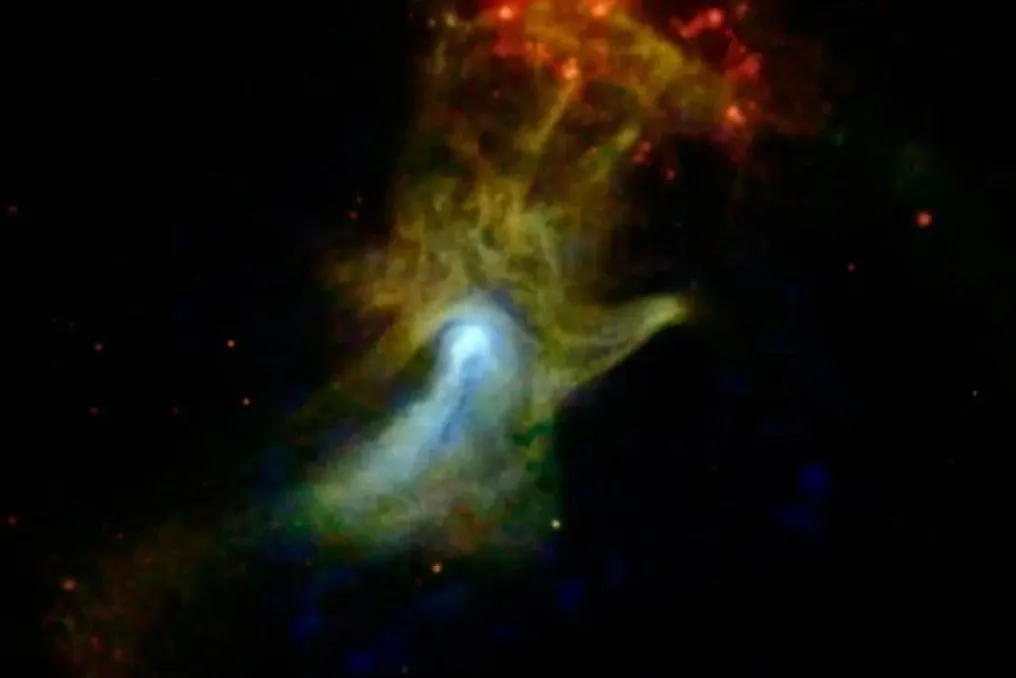
The area shown in an X-ray image, called the 'Hand of God,' looks too terrifying to bear that name; it more closely resembles a monstrous zombie hand ready to grab prey in space. However, it is actually a pulsating stellar wind nebula formed by dense remnants of a supernova. A supernova is a transient astronomical event occurring at the final stages of massive star evolution or when a white dwarf begins uncontrolled nuclear fusion, signifying the death of a star.

What about this horrifying face that seems to be screaming during a painful and fiery death? This is a scene very suitable for Halloween. Despite its frightening appearance, this scene does not include a real skull. It is an X-ray image of a galaxy cluster known as the Perseus Cluster, taken by NASA's Chandra Observatory.

This image, obtained by the Kitt Peak National Observatory in Arizona, USA, could look like a scene from a horror film where evil spirits try to escape the crucible of darkness. Nevertheless, it actually shows an interstellar cloud of gas and dust called SH2-136, located approximately 1200 light-years from Earth in the constellation Cepheus.

In this ominous picture, taken by NASA's Wide-field Infrared Survey Explorer (WISE), a green witch gazes into space. In reality, it is the IC 2118 nebula, which received the nickname 'Witch' due to its appearance. Fomalhaut is the brightest star in the constellation Pisces Australis. Located approximately 25 light-years from Earth, it is about 440 million years old, during which a dust belt has accumulated around it.

In this image, the Fomalhaut star system bears a strange resemblance to the terrifying Eye of Sauron from J.R.R. Tolkien's 'Lord of the Rings.' Tolkien described the eye as 'adorned with watchful and deliberate fire, and the black slit of its pupil opened into a pit, a window into nothingness.'

Eight years ago, a human skull-shaped asteroid passed near Earth. At its closest approach, the celestial body was about 480 thousand kilometers from the planet, or 1.3 times farther than the average distance between the Earth and the Moon, posing no threat to our planet. Approximately three weeks before reaching this distance, the asteroid was discovered by astronomers from the Pan-STARRS observatory in Hawaii and was officially designated '2015 TB145.' On October 30, 2015, the 400-meter wide object was photographed by the Arecibo Observatory in Puerto Rico, and to everyone's surprise, it looked like a skull face, earning the nickname 'Halloween Asteroid.'

Similar stories

Brazilian wins scientific award; record greenhouse gas levels and fireball forecast for Halloween
Read more
olhardigital.com.br

Brazilian wins scientific award; record greenhouse gas levels and fireball forecast for Halloween

The week featured several scientific and news highlights. Politically, Luiz Inácio Lula da Silva was re-elected as President of Brazil, and Olhar Digital analyzed his government plan focused on science and technology.

On another front, the United States Department of Defense granted SpaceX access to confidential data tracking orbital objects. This agreement, signed between Elon Musk's company and the US Space Force, allowed a private entity enhanced access to the US Space Command's High Precision Catalog, which monitors bodies in orbit, sparking discussions about national security and the company's role in commercial space traffic.

In the field of scientific communication, biomedical engineer Daniel Dahis was honored with the Eric and Wendy Schmidt Awards for Excellence in Science Communication. He is the first Brazilian to receive this award, granted by the National Academies of Sciences, Engineering, and Medicine of the United States (NASEM), with the announcement made on Monday (26).

This award aims to value professionals who make science accessible to the public. In the 2026 edition, 24 individuals were honored across eight distinct categories, encompassing researchers, journalists, and content creators. Each category has a main winner, who receives US$ 40 thousand (approximately R$ 216 thousand), in addition to two recognized recipients each receiving US$ 20 thousand (about R$ 108 thousand).

Dahis received the award in the 'Research Scientist: Early Career' category, designated for scientists in the early stages of their careers. His recognition highlights the science outreach work he conducts on social media, where he has over 750 thousand followers, sharing videos on topics such as vaccines, diseases, treatments, and recent discoveries.

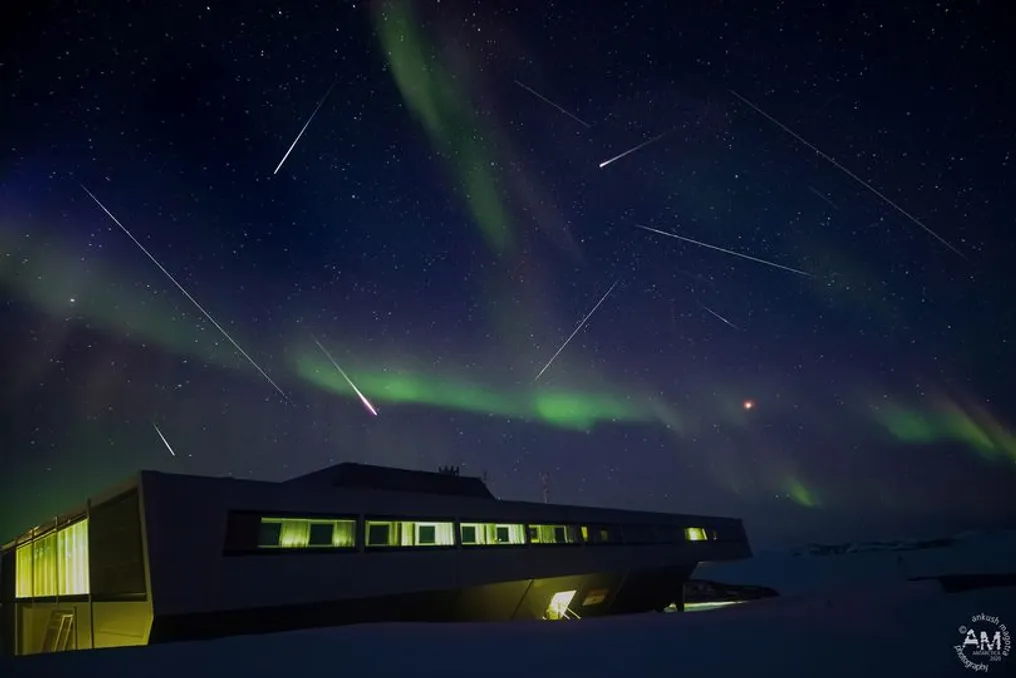
Regarding astronomical phenomena, intensely bright fireballs can be observed during Halloween. This event is linked to the Taurids, an annual meteor shower that attracts astronomers due to its visual spectacle and the potential presence of larger fragments.

The Taurids are segmented into two streams: the Southern Taurids and the Northern Taurids. The first occurs between September and November in the Southern Hemisphere, characterized by continuous activity and a low hourly rate of meteors. Its peak is predicted for Thursday (5), although observation depends on weather conditions, darkness, and the apparent position of the meteors. The second stream takes place between October and December, peaking in November, also showing a low hourly frequency but potentially surprising with very luminous fireballs.

The distinguishing feature of this shower is the fireballs, which are exceptionally bright meteors capable of surpassing the brightness of Venus and remaining visible longer than other light trails. Coinciding with the Halloween period, on October 31st, these flashes are known as Halloween fireballs.

Additionally, a report from the World Meteorological Organization (WMO), released on Tuesday (27), indicated that the concentration of greenhouse gases in the atmosphere reached record levels in 2025. This accumulation of gases intensifies heat retention on the planet, contributing to global warming.

Carbon dioxide (CO2) reached 426.8 parts per million, while methane and nitrous oxide also registered historical highs. The WMO projects that CO2 concentration will continue to rise throughout 2026.

Taurids meteor shower may present fireballs during Halloween
Read more
olhardigital.com.br

Taurids meteor shower may present fireballs during Halloween

It is possible that the skies will display spectacular 'fireballs' during Halloween, a phenomenon linked to the meteor shower known as the Taurids. This event attracts the interest of astronomers due to both its visual spectacle and the potential presence of larger fragments.

The Taurids are subdivided into two streams: the Southern Taurids and the Northern Taurids. The first occurs between September and November in the southern hemisphere, characterized by prolonged activity and a low frequency of meteors per hour. Its peak is predicted for Thursday (5th), although observation depends on weather conditions, darkness, and the apparent position of the meteors. The second stream takes place between October and December, with its peak in November, and also generates few meteors per hour, but can surprise with very luminous fireballs.

The main characteristic of this shower is the fireballs, which are exceptionally bright meteors capable of surpassing the brightness of Venus and remaining visible longer than other luminous trails. Coinciding with the period near Halloween, on October 31st, these flashes are also called Halloween fireballs.

When small pieces of space rock, called meteoroids, enter the Earth's atmosphere at extremely high speeds, even tiny fragments heat the air and generate an intense flash, which astronomers classify as a meteor (commonly known as 'shooting stars').

These events are purely luminous, not physical bodies. Marcelo Zurita, president of the Paraíba Astronomy Association (APA), member of the Brazilian Astronomical Society (SAB), technical director of the Brazilian Meteor Observation Network (Bramon), and columnist for Olhar Digital, clarifies that 'a meteor is not solid, it is not liquid or gaseous, it is just light.'

According to the American Meteor Society (AMS), a meteor is classified as a 'fireball' when its brightness is equal to or greater than that of Venus (magnitude -4). If the brightness is even more intense, accompanied by an explosion and a possible audible sound, it is called a 'bolide.'

The origin of this phenomenon dates back to comet 2P/Encke, which is the second periodic comet discovered in the history of astronomy, after the famous 1P/Halley. As it travels through the Solar System, Encke deposits dust and rocky fragments along its trajectory. When the Earth crosses this area, some of this material enters the atmosphere, resulting in meteors.

These luminous trails arise from the heating of the surrounding gas by space particles entering the Earth's atmosphere at high speed. Larger fragments have the potential to create particularly intense flashes. The term Taurids derives from the constellation Taurus, indicating the apparent direction from which the meteors seem to emanate, a point known as the radiant.

The debris stream associated with Encke also crosses the Earth's region in June, during the day, receiving the name Beta Taurids. Although direct observation of meteors during this daytime period is unfeasible, the study of this stream helps researchers better understand the dispersion of fragments and the potential risks associated with larger objects.

A study published in the scientific journal Acta Astronautica examined the possibility that the Taurids debris stream contains clusters of considerably large objects. Scientists analyzed the hypothesis of resonant swarms, which are concentrations of fragments formed under the gravitational influence of Jupiter. Such a distribution could increase the amount of objects the Earth encounters in certain parts of its orbit.

The models evaluated suggest that the planet may pass through potentially denser zones of this stream in the years 2032 and 2036. If such agglomerations truly exist, the probability of encountering larger objects could increase during these intervals. However, this does not imply a prediction of collision or any type of catastrophe; the hypothesis still requires investigation so that the risk can be calculated with greater accuracy.

Most of the objects that cause meteors are too small to withstand atmospheric disintegration. However, larger bodies can explode before hitting the ground, releasing a large amount of energy. Historical examples include the Chelyabinsk event in Russia in 2013, where an atmospheric explosion caused injuries and damage, mainly from glass shards, and the Tunguska event in 1908, which devastated a vast forest area in Siberia.

To validate the swarm theory, the team integrated recent observations with theoretical models of fragment distribution. Among the indirect evidence considered by researchers are the exceptionally bright fireballs and records of impacts on the Moon. Future monitoring will be crucial to elucidate the composition of these clusters and determine if there are objects that require special attention.

Even if the existence of fragment concentrations is confirmed, the chance of a direct impact remains low. Planetary defense tools, such as NASA's NEO Surveyor infrared space telescope, will aid in locating and characterizing asteroids and other Near-Earth Objects. Early detection is vital as it allows for trajectory calculation and the evaluation of potential protective measures, if necessary.

The study also warns against exaggerated information circulating on the internet about supposed cosmic threats. Mark Boslough, a researcher at the University of New Mexico and planetary defense specialist who led the work, emphasizes the need to assess risks based on scientific data. He stresses that the existence of a research hypothesis does not mean that a dangerous event is inevitable, nor does it support predictions of global disasters.

For those who wish to observe the Taurids, the ideal is to select a location far from urban light sources, with an open sky and little cloudiness. Although it is not one of the most intense showers of the year, its meteors can be impressive in brightness. The best viewing windows generally occur between 1 am and 3 am, when the radiant of the Southern Taurids is highest in the sky. Applications such as Stellarium, Star Walk, and SkySafari help in identifying constellations and directing observation. Telescopes or binoculars are not necessary; simply contemplating a wide area of the sky is enough to follow the luminous trails, requiring only patience, adaptation to darkness levels, and the luck of seeing a fireball during the night.

Popular