Carl Bushby, a British traveler, is completing his 28-year walk home, which is scheduled for Monday. However, as he approaches the finish line, he expresses doubts about his readiness to end this extraordinary adventure.
As he pushed a cart with camping gear along a busy country road in northern England, about 50 kilometers from home, Bushby looked uncertain about the future, worrying about the prospect of living in his mother's basement and facing an identity crisis.
He stated: 'My goal and reason for life are about to end. It will be difficult... to try and reintegrate into a society I don't even know.' Bushby, who was under 30 when he started the journey, set off into the unknown on November 1, 1998, heading towards the edge of South America.
During this time, he walked 50,000 kilometers across four continents, crossed ice in the Bering Strait, and, by his modest description, swam in the Caspian Sea and the English Channel.
He crossed about 30 countries, encountering almost every conceivable weather condition and type of terrain to return to his starting point after nearly half his life.
Swamp jungles, scorching deserts, and icy tundras slowed the journey, but the main obstacle was numerous bureaucratic complications, which turned the originally planned 12-year walk into an epic adventure named 'The Goliath Expedition.'
Bushby spent almost three times as long returning to his mother, Angela, in Halle, as Ulysses, the hero of the 'Odyssey,' returning to his wife Penelope in Ithaca. Bushby joked: 'Ulysses was a connoisseur. But, in the end, I'll give him a discount: I never met any giant cyclops.'
Nevertheless, the real world presented him with many dangers: he encountered a tense situation with a polar bear, crossed waters teeming with crocodiles to avoid a conflict zone with rebels in Colombia, was attacked by a crowd in Peru, and was rescued by helicopter from an iceberg drifting in the sea.
The idea for the trip arose in the mid-1990s after a postcard sent by his father, Keith. The former military man, Keith, recalled a discussion among special forces members about the possibility of walking from London to New York across the Bering land bridge, which some scientists believed early humans might have used for migration from Asia to America during a lower sea level era.
Bushby plotted a line on the map, crossing Europe and Asia to North America, and instead of going to New York, decided to continue to the southernmost tip of Chile. He recalled: 'And that was it. Once this idea settled in my head, there was no turning back.'
In history, explorers have undertaken round-the-world journeys by ship, plane, hot air balloon, bicycle, and even on foot. However, most who chose the walking route used other modes of transport to cross oceans.
Bushby established two strict rules for his adventure: he could not use any form of transport to move forward and had to return home solely on foot. He started with $500 and soon encountered hurricane-force winds in the Patagonian steppe.
In 2001, he avoided crossing the dangerous Darién Gap—a tropical forest, jungle, and mountain range without roads separating South and Central America where armed clashes were taking place. Nevertheless, after crossing the restricted border zone, he was detained in Panama for 18 days.
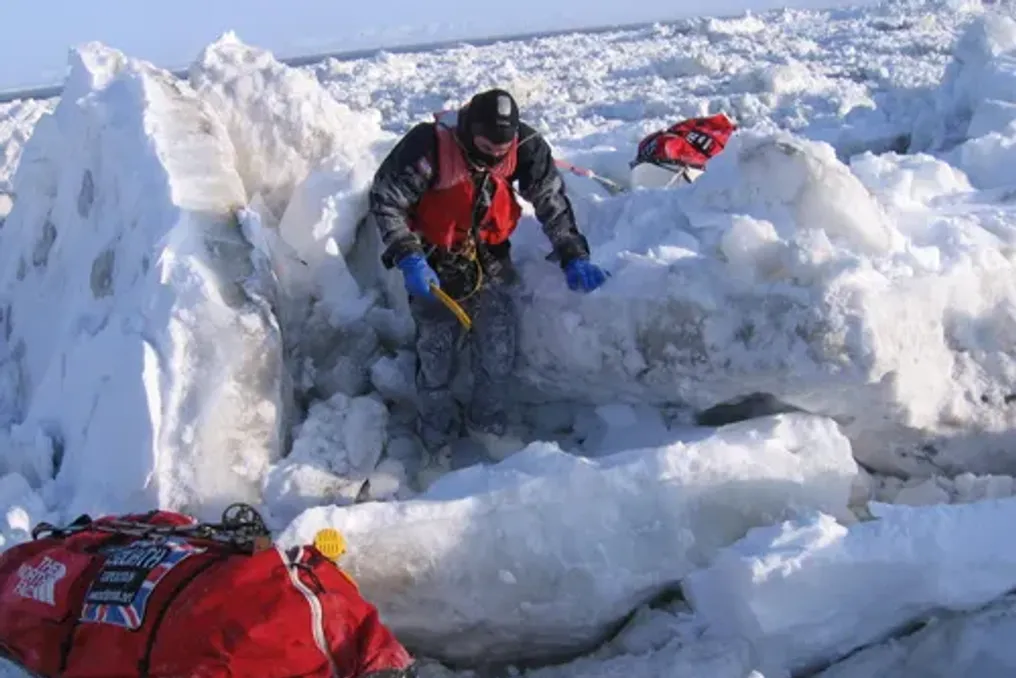
In 2006, while crossing the Bering Strait over a distance of about 90 kilometers, accompanied by American adventurer Dimitri Kieffer, they were airlifted out of the water after both found themselves in a near-death situation in icy water and nearly lost all supplies.
After successfully completing this rare crossing, they were detained and faced deportation due to illegal entry into Russia. Bushby spent almost 10 years crossing Russia due to visa issues and weather conditions that only allowed travel for a few months a year.
In 2012, after Russian authorities denied him a visa, he began a protest march between Los Angeles and the Russian embassy in Washington, which ultimately allowed him to obtain the necessary documents.
Every time a new obstacle arose, he returned to the United States or Mexico, where the cost of living was significantly lower, and waited for a new opportunity to resume the trek where he had stopped.
In China, he was pursued by the police, experienced a long delay due to the pandemic, and was eventually forced to swim across the Caspian Sea for 31 days after geopolitical problems prevented passage through Russia and Iran.
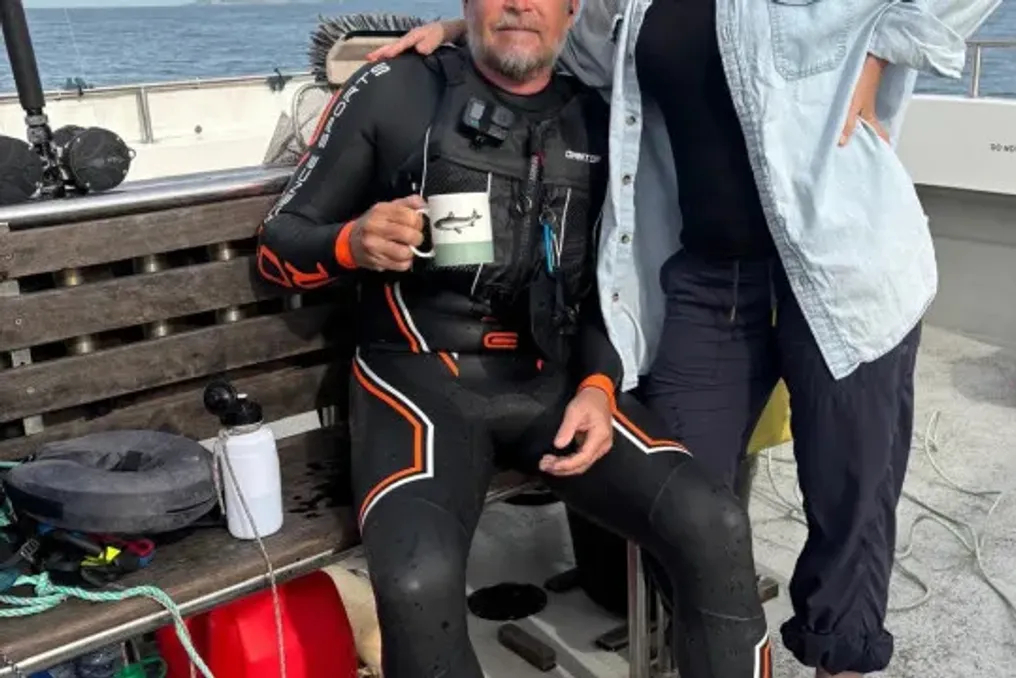
Not being a good swimmer, he used a life jacket and a wetsuit, moving slowly on his back, using a technique he called 'swimming with swimming'—a combination of swimming and buoyancy.
Europe also presented its difficulties, particularly the 90-day stay limit, which forced him to organize the trip in three-month periods.
Romantic relationships also influenced the route. Bushby maintained a seven-year relationship with a Colombian woman and a three-year relationship with a Japanese woman. Both breakups were painful, resulting from what seemed inevitable given a lifestyle marked by constant movement.
The long absence had consequences for his family. Bushby has a son from his first marriage to a woman from Belfast, which ended in divorce. The son grew up practically without his father's presence and is now about 35 years old. His father met him on Dover beach while crossing the English Channel, but Bushby hadn't seen his mother in ten years, which heightened anxiety about returning home.
Throughout the journey, he received support from various sponsors who joined and left the project as it was extended and his financial situation worsened, especially during the 2008 financial crisis.
For the last 16 years, he has mainly depended on producer Beau Willimon, creator of the series 'House of Cards,' and music producer Jordan Tappis, who are financing the documentary about the journey directed by Werner Herzog.
However, it was the generosity of countless strangers that helped him endure and continue moving, particularly those who had very little to offer. They housed him in tents made of car parts; he recovered from a severe intestinal infection thanks to the care of a Peruvian doctor's family and received countless meals consisting only of rice and water from people who expected nothing in return.
He emphasized: 'I was accepted by the poorest of the poor. I met 99.9999% of the best in humanity. The reaction was the same in all cultures and in all countries.'
After so many years of traveling, long periods of solitude make the final stretch surreal as news spreads of him traversing green fields leading to his native county of Yorkshire.
On Wednesday, near the settlement of Market Rasen, trucks driving at high speed signaled, drivers waved to him, and a group of motorcyclists stopped to take pictures with him.
With every kilometer covered, the goal gets closer. When he started the journey, he resembled Kurt Cobain and even inspired an internet conspiracy theory suggesting that the late Nirvana vocalist was still alive and undertaking a world tour under a different identity.
Today he looks older, with some extra weight around his stomach and a gray beard. Nevertheless, his bright blue eyes, light hair, and tanned skin make him look younger.
Although he does not know what awaits him upon arrival, there is one thing he is sure of: he will not miss the thousands of steps he takes every day. He stated: 'I don't do it because I love walking. It's just a means to get somewhere.'
_