A new study published in Science revealed that crows demonstrate a remarkable decision-making ability, capable of deciding between two visual options in an average time of just 235 milliseconds. This period is less than a quarter of a second, which represents approximately half the reaction time observed in humans and other primates in comparable situations, while maintaining a high level of accuracy.
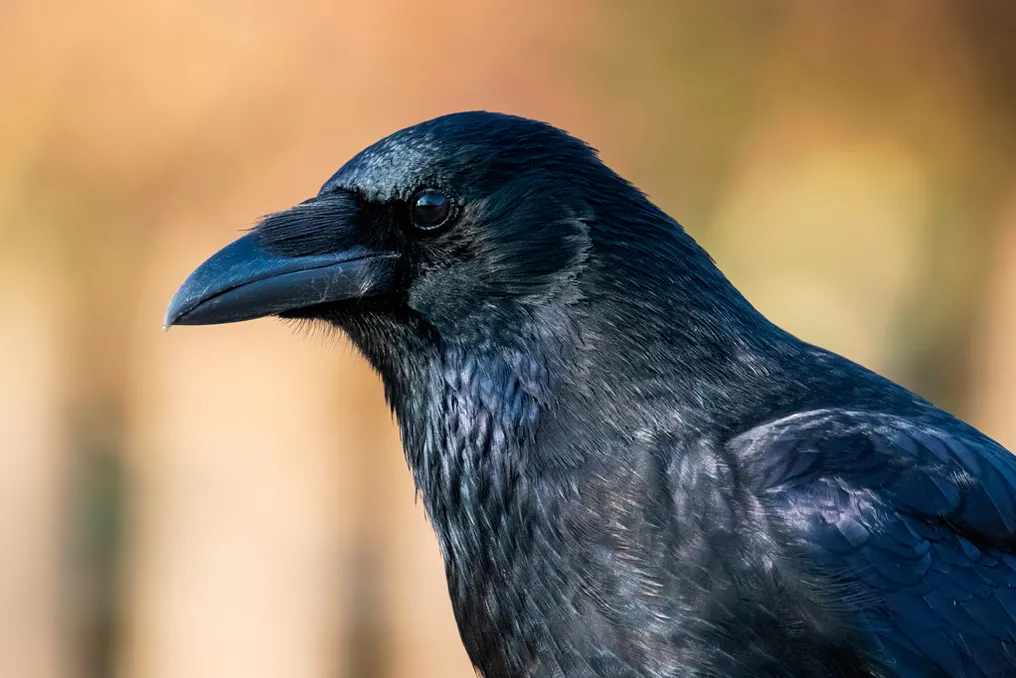
The research, released on October 22, points to significant similarities in how the brains of birds and primates manage the decision-making process. To investigate the underlying brain mechanisms, scientists from the University of Tübingen, Germany, evaluated the performance of two black ravens, belonging to the species Corvus corone, in a specific visual test.
The experiment involved displaying a swarm of white dots on a touch-sensitive screen against a dark background. These dots moved in different directions—some to the right, others to the left, and others randomly. The animal was asked to identify which side concentrated the largest number of dots by pecking at markers positioned to the left and right of the electronic device.
The difficulty of the challenge varied according to the concentration of dots on a single side. When the majority of the dots clustered in one corner, the crows achieved an accuracy rate close to 100%. Even when only a small fraction moved together, they were correct half the time, surpassing the performance expected by mere chance.
Throughout the various test rounds, the crows demonstrated agility in reaction time without compromising precision. Although the work did not directly analyze other species, the comparison with previous studies conducted on humans and monkeys suggested that crows decide twice as fast.
To understand the internal functioning of this process, scientists monitored the activity of 248 neurons located in the nidopallium caudolaterale region, a brain area in birds analogous to the prefrontal cortex of mammals, which is crucial for high-level cognition and decision-making.
In birds, the visual stimulus takes about 70 milliseconds to activate the brain neurons. After this initial activation, signals begin to be emitted in multiple directions. The intensity of this activity progressively increases, culminating in a peak after approximately another 170 milliseconds, at which point the crow makes its choice, such as pecking one side of the screen.
This region's functionality shows important similarities with the prefrontal cortex. Researchers infer that the sophisticated type of processing associated with the mammalian neocortex—the most recent part of brain evolution—may occur without the need for this specific structure.
According to the scientists, evolutionary pressures were sufficient for birds to develop this accelerated mode of reasoning. Andreas Nieder, a co-author of the study, told LiveScience that 'flight imposes enormous demands on visual processing and sensorimotor coordination.' He added that birds need to navigate in three dimensions, avoid obstacles, and react promptly to moving objects, and that foraging and prey capture can also require quick and accurate decisions, factors that may have favored rapid information processing.
However, the results obtained are considered preliminary. The study sample is small, having tested only two birds, and the researchers have not yet clarified the exact reason why crows can make decisions so much faster compared to primates. New studies will be necessary to answer this question.