Researchers have developed an approach to distinguish between wood species based on their chemical composition, which is intended to strengthen efforts to combat the illegal trade of timber. Brazil is the country with the highest biodiversity on the planet, ranking first among 17 mega-diverse countries and housing 15–20% of global biological diversity, a significant portion of which is found in trees and wood.
Wood is a unique material that exists only on Earth. Among Brazilian trees are rare species, such as Paubrasilia echinata, which is critically endangered after centuries of exploitation. Valuable species such as mahogany (Swietenia macrophylla) and Aniba rosaeodora have also been intensively exploited; in the studied areas, 90–95% of adult individuals were found removed from mahogany, and the reserves of Aniba rosaeodora were depleted due to essential oil extraction.
When such a tree is lost, not only the wood but also a combination of evolutionary history, genetic information, and chemical diversity that has been forming over millions of years is lost. However, a problem arises when checking cargo on the road: how to determine the type of tree if the truck only carries logs or planks without leaves, flowers, or fruits, and different species can look similar?
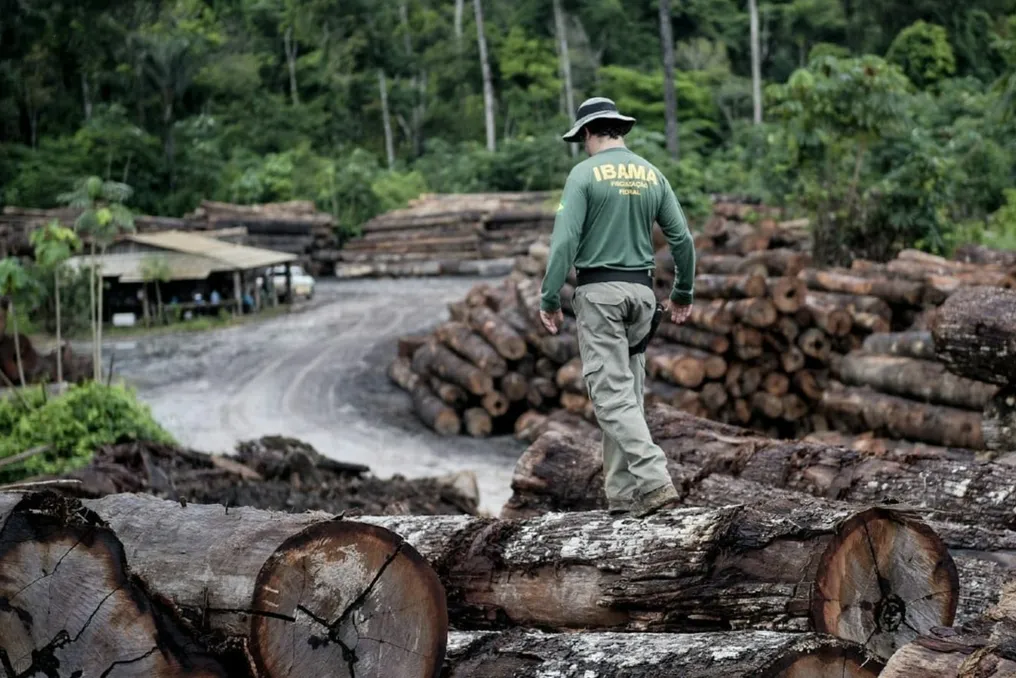
This complexity creates significant opportunities for fraud. In recent operations in Brazil, agents have discovered discrepancies between declared species or volumes and the actual transported wood, as well as falsification or absence of environmental documentation. For example, in August 2025, the Federal Highway Police confiscated 2043 m³ of wood, noting discrepancies in type and volume.
Despite the existence of control systems such as the Timber Origin Document (DOF) and the National System for Controlling the Origin of Forest Products (Sinaflor), verifying the material itself remains necessary. An incident in October 2026 in Maranhão showed that inconsistencies were found between documents and the actual volume in a batch of about 100 m³, including endangered wood.
Faced with this challenge, a team from the Laboratory of Organic Analysis of the Brazilian National Institute of Metrology (Inmetro) and partners, including the Brazilian Forest Service, developed a method for identifying wood species by its chemical composition. The study was published in March 2026 in the journal ACS Omega. The idea is that, much like a fingerprint, different tree species have characteristic sets of chemicals that create a kind of 'chemical fingerprint' of the wood.
Mass spectrometry, a technique widely used in pharmaceuticals, the food industry, and petroleum analysis, is used to read this fingerprint. The study analyzed wood from mahogany, cedar, andiroba, and jatoba. Mahogany (Swietenia macrophylla) and cedar of the genus Cedrela are controlled under the Convention on International Trade in Endangered Species of Wild Fauna and Flora (CITES). The analysis was conducted on 60 core samples from various Amazon regions obtained from scientific collections.
The model achieved an accuracy of about 95% in cross-validation and 100% accuracy in a blind test on 12 samples. However, this is currently only a conceptual proof; the next step is to expand the library of reference samples. The developed tool, although not portable, is significantly smaller and simpler to operate than high-precision mass spectrometry platforms, costing only about 20% of the price of more common equipment.
This method allows for analysis with minimal sample preparation, automated classification, and in one minute per sample, without the need for strictly controlled laboratory conditions. The importance of this approach is underscored by the fact that illegal timber trade involves the entire chain—from logging to sale. The Ministry of Justice indicates that illegal timber harvesting often overlaps with other criminal activities in the Amazon.
Although overall deforestation rates in Legal Amazonia decreased to 5731 km² in 2025, and Deter alerts fell by 36% in the 2025–2026 cycle, this does not eliminate the need for increased oversight. Science does not protect the forest by itself, but it provides scientific evidence, making public policy more resilient. The development of such methods in Brazil is also viewed as a matter of national sovereignty.