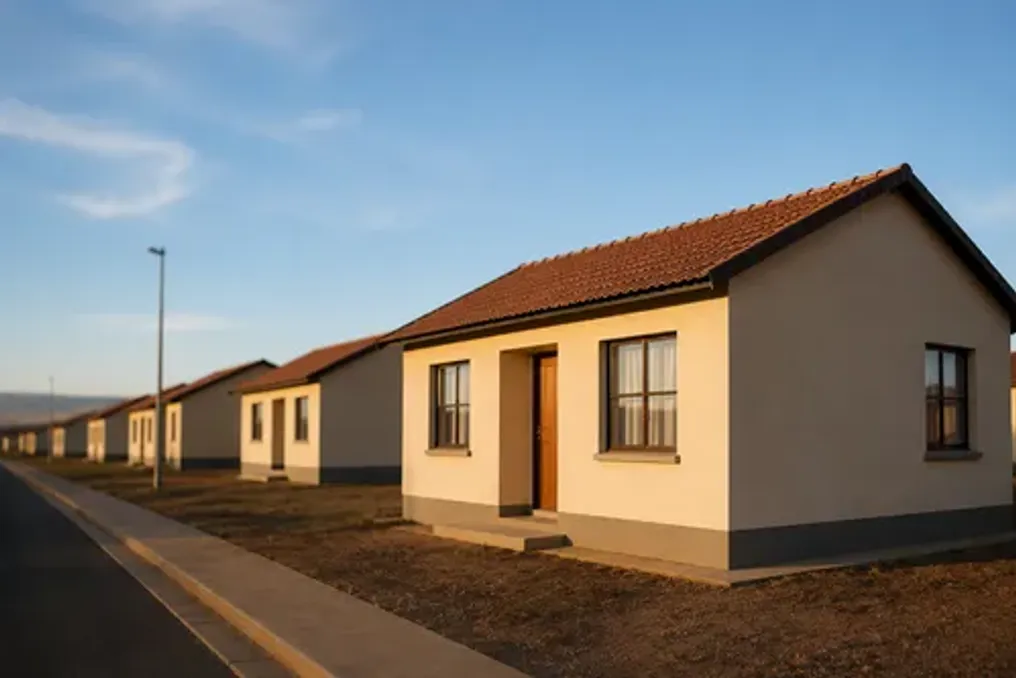
Rosinah Nketu, a 61-year-old woman from Gauteng, has expressed loss of hope in receiving government-subsidized housing after waiting for nearly three decades. Her situation illustrates the frustration of long-term applicants in Gauteng, where over 1.1 million people are registered as claimants for state housing. Furthermore, a civil organization claims that more than 800 applicants have died while waiting.
Nketu, who applied for a home in 1997, lives in a shack in the yard with her eldest child and grandchildren. The Gauteng Department of Human Settlements confirmed that she has never received a state housing subsidy but could not provide a timeline for when she will receive a home.
The civil organization Umfakati Varona Wetu, which represents the interests of long-term applicants, has held protests outside housing offices demanding explanations. Leaders of this organization claim they were denied entry to government institutions.
Nketu shared her condition, saying: 'I suffered for 30 years waiting for a home. I have lost hope because I do not expect to get a home while I am still alive.' She also stated that she worked as a cleaner for many years and lives in a backyard shack with her family, having no private life.
She recounted spending years traveling to housing offices in Diepkloof, Sauer Street, and Fox Street, paying for transport, only to return without answers. During her last visit on Monday, she reported that a consultant advised her to wait for a phone call. When she asked how long she would have to wait, the official allegedly replied that she might die without getting a home.
Nketu added: 'I went to the offices for years to get information, and I am not being helped at all. The staff there is very rude.'
The leader of Umfakati Varona Wetu, Thabang Moloi, stated that the organization has gathered evidence of elderly people who applied for RDP homes as far back as 1996 but are still waiting. He noted that he knows one of the oldest applicants, Mr. Mkhawu, who is now 96 years old and has yet to receive a state home.
Moloi questioned why people waiting for almost three decades remain homeless, while younger applicants and those who applied recently allegedly received housing in Florhof, Lufereng, Jabulani, and Godrand. He stated that 'more than 800 people have died while waiting for homes. Their children are on the streets.'
Moloi reported that members of the organization marched to housing offices and spent nights there seeking assistance. He also alleged that officials posted photos of the organization's leaders and ordered security guards not to let them inside.
In April, over 300 people, including elderly applicants and relatives of deceased residents, camped near Johannesburg housing offices, demanding homes they claimed to have applied for in 1996. Residents of Soweto, Alexandra, Tembis, and Orange Farm reported that repeated visits to housing offices did not result in allocations or clear answers.
The Gauteng Department of Human Settlements confirmed that Nketu registered her need for housing on July 29, 1997, residing in Soweto. The department emphasized that the applicant 'has never utilized state housing subsidies.'
The department explained that housing needs are recorded in the National Housing Needs Register, a digital system used in the departmental offices of five Gauteng regions and municipal housing offices. A total of 1,135,790 people are registered as claiming state housing in Gauteng. This figure includes 446,103 applicants in Johannesburg and 183,047 in Soweto.
The housing subsidy system, which checks applicants' eligibility based on income and availability, has recorded 299,909 approved applicants across Gauteng, including 95,676 in Johannesburg and 38,734 in Soweto. The department stated that it is working with the Johannesburg City Council to prioritize elderly applicants and people with disabilities registered between 1996 and 2000. However, it could not specify when Nketu will be provided with housing.
The department indicated that 'GDHS is unable to set distribution timelines.' As factors affecting the implementation of housing projects, it cited limited resources, policy requirements, land availability, and access to water and electricity. It was announced that Nketu will be contacted when a housing project closer to her area becomes available.
Parliament has also raised questions regarding the housing construction backlog and issues with housing allocation systems. On June 10, the Parliamentary Portfolio Committee on Human Settlements expressed concern over unreliable beneficiary records and discrepancies between housing databases, warning that these issues affect planning and implementation. The committee reported approximately four million registered applicants nationwide compared to 523,483 approved applications. Committee Chairperson Knox Seabi called for enhanced applicant verification and improved coordination between housing systems to ensure fair distribution.