The film 'Rise: The Siya Kolisi story,' directed by Tebogo Malope, presents the powerful story of South Africa's first black rugby captain.
A cinematic work worthy of its place
Upon first viewing the documentary 'Rise,' the author admitted that he initially had doubts about the quality of local documentary production. He feared the film might resemble a music video by the group Die Antwoord, but the story does not offer a gentle introduction; instead, it honestly reflects the lives of many young people and men in South Africa.
The documentary begins with archival rugby footage shown on television, immediately placing Siya Kolisi's story within the context of South Africa's long and complex rugby history. Discussing with Bheki Dalla, a board member of African Film DAO, the analysis explored how the film's technical mastery enhances its emotional impact.
The film does not merely list Kolisi's hardships; it makes the viewer feel them. The audience experiences the weight of childhood poverty, the deep sorrow of losing his grandmother, who was the pillar of his world, as well as the heavy, silent burden of a teenager balancing between a privileged high school and a difficult life in a township.
For a long time, low budgets and limited resources set a low standard, forcing the local audience to accept works that represented only a fraction of what was possible. The film 'Rise' shatters this standard, proving that South African filmmakers are capable of conveying destructive, raw intimacy while offering a confident, first-class cinematic experience that garners international respect.
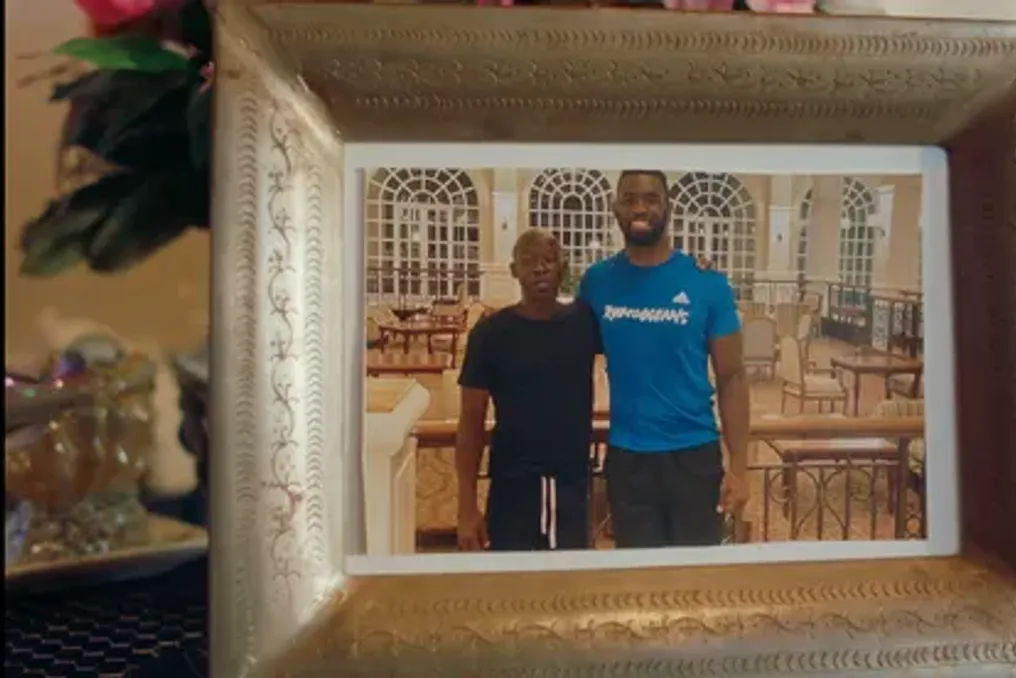
During an interview, the author noted one visual moment that surprised him and became an emotional anchor for the film: a shot with the inscription 'the only known footage of Kolisi at home,' accompanied by a recognizable royal symbol. There is very limited visual material from his early life. Viewers know what kind of man Kolisi became, but this candid statement on screen prompts viewers to reflect on the boy he once was. This single fragment is a symbolic representation of the distance between the boy in the image and the man holding the World Cup.
The film addresses the theme of Kolisi's father's absence, his imprisonment, and alcoholism. Dalla emphasized that these are authentic African stories, and the documentary perfectly balances these difficulties with the development of a deep sense of duty in Kolisi. Dalla also mentioned that the film sets a benchmark for broader local film and production companies, demonstrating this standard through Siya's survival in South Africa.
Dalla explained: 'We must ensure that the end audience does not receive a low-quality product.' Warning against a lack of strict quality control, Dalla stated that 'the South African film industry remains uncompetitive globally, serving merely as a service provider for international productions rather than telling our own stories with the ambition they deserve.'
In the township of Zweide, Gqeberha, sixteen-year-old Fakama gave birth to Siyamtandu 'Bear' Kolisi on June 16, 1991. On Youth Day in 1991, the Zweide community welcomed the Son of the Nation with hope.