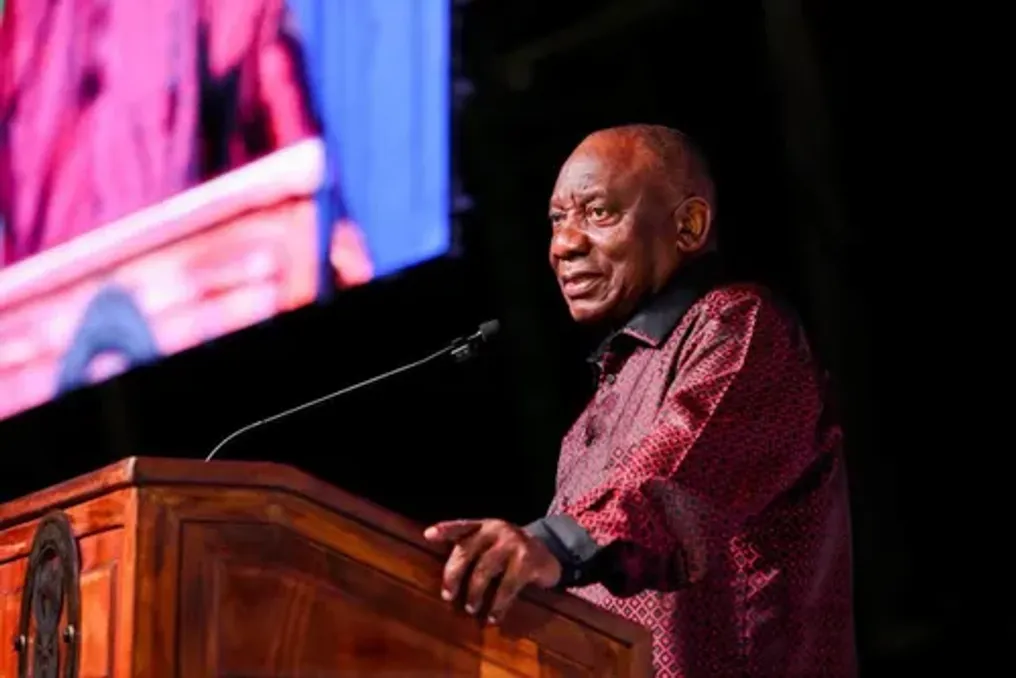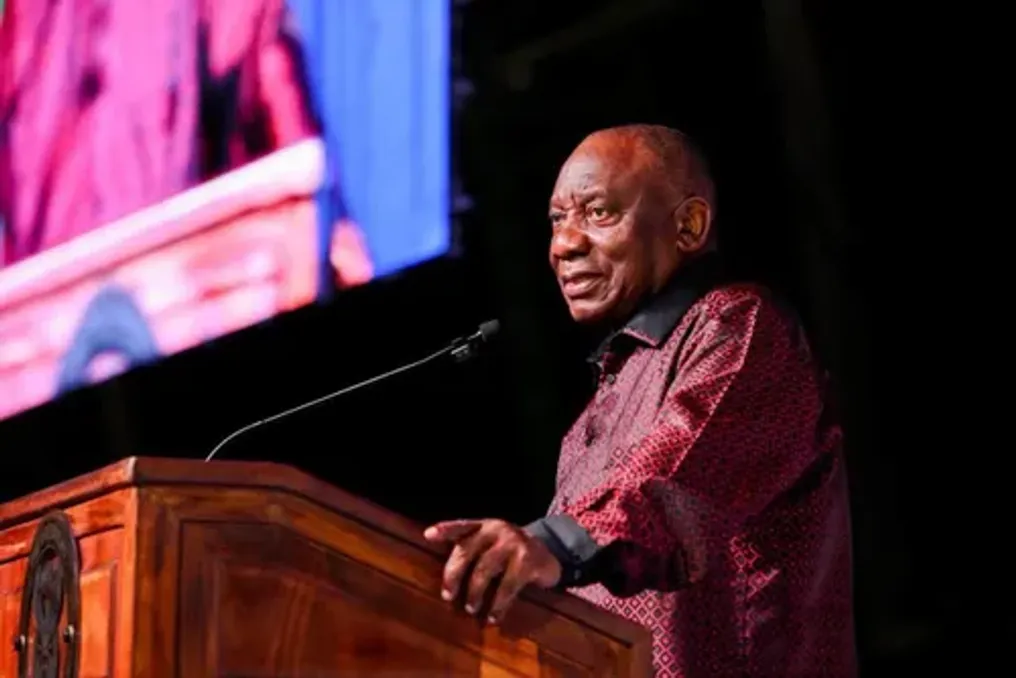
President Cyril Ramaphosa stated his intention to eliminate unnecessary bureaucracy and optimize government procedures in response to business calls for the urgent removal of obstacles to job creation and investment attraction.
Speaking at the 170th annual gala dinner of the Durban Chamber of Commerce and Industrial Association at Suncoast on Wednesday evening, Ramaphosa acknowledged that unreliable municipal services, crime, high electricity costs, and logistical inefficiency hinder economic growth and deter investment.
The event was attended by KwaZulu-Natal Premier Mhlangano Ntuli, Minister of Economic Development, Tourism and Environmental Affairs Reverend Musa Zondi, Etwatwini Municipality Mayor Cyril Haba, members of parliament, and other officials.
Chamber of Commerce President Palisa Fili highlighted the challenges faced by local industries, including cheap imports, counterfeit goods, and illegal items entering Durban through the port. She appealed to Ramaphosa to intervene in the regulation of struggling sectors, insisting on the need to review these rules to protect businesses affected by cheap imports.
Fili stated: 'This really needs to be reviewed so that we can guarantee the protection of struggling industries that are suffering from cheap imports.' She added that 'we also need to be very strong and aggressive regarding counterfeit and illegal products because of the destruction they cause to our economy.'
Ramaphosa reported that the government is identifying areas where the time taken to obtain permits and licenses can be reduced, as well as eliminating superfluous administrative steps. He acknowledged that businesses and households continue to face serious difficulties, particularly due to the instability of municipal services.
The President noted that such problems cannot be solved by good intentions alone; they require competent leadership, sound governance, and continuous action. He emphasized that reliable municipal services are the foundation of economic development, and government institutions must be accountable, efficient, and responsive to citizens and businesses.
Ramaphosa clarified that the government is responsible for ensuring infrastructure, services, institutions, and political stability, while businesses are obliged to invest, innovate, and create jobs.
Palisa Fili also called for reforms to assist small, medium, and micro-enterprises (SMEs) in overcoming barriers to growth and job creation. She pointed out that these companies face unreliable power supply and infrastructure, bureaucracy, limited access to finance, and labour market issues.
'We need reforms for SMEs, Mr. President, so that our SMEs can create the much-needed jobs,' said Fili. She gave an example, noting that SMEs provide employment for about 80% of the population in developing markets like Brazil and China, compared to approximately 60% in South Africa.
The President warned that economic prosperity and investment depend on social stability, cautioning that business cannot thrive amid violence, intimidation, anarchy, or fear. He referenced the July 2021 unrest as a reminder of the cost of instability.
Premier Ntuli noted that he took office facing the task of restoring trust after the unrest. He stressed the importance of considering the views of business leaders, as their concerns indicate the need for safe and responsive governance, not just rhetoric. Ntuli added that the business community cooperated with the government during subsequent outbreaks of violence, helping to maintain the city's momentum and protect livelihoods.
Ntuli made a public declaration before the President of the Republic, the chamber, and the people of KwaZulu-Natal: 'Durban will never burn under my leadership, never again while I hold this office. We will protect every factory, every shop, every port, and every livelihood in this city, because burning Durban means burning the bread of millions. Ngeke kwenzeke, this will not happen.'