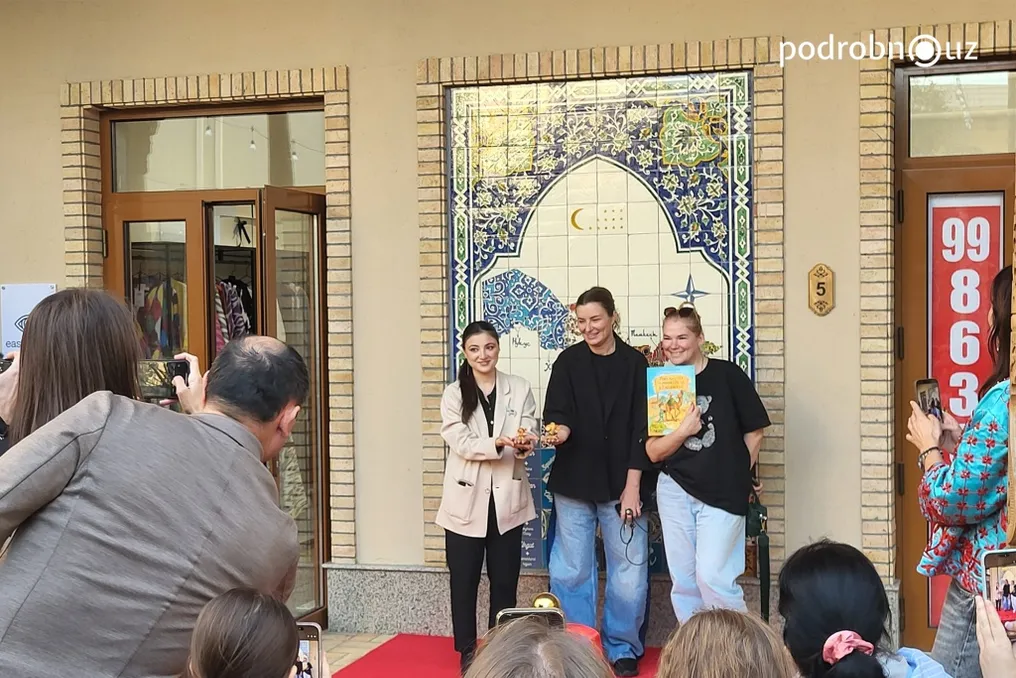
The mural titled 'Uzbekistan and the Symbols of the Silk Road and Pottery Schools' was unveiled in the city of Tashkent. This work combines various ornaments from different regions of the country, as well as images related to the history of national ceramics.
The painting was placed opposite the Center for Islamic Civilization. The author of this piece is master Diyor Nazirov, who gathered artistic motifs and ornaments characteristic of many local pottery schools in the mural.
The opening ceremony included a lecture-tour led by art historian Takhmina Mahmudova. She explained that in Uzbek applied arts, ornaments are not merely decorative but also carry deep meaning. For instance, pitchers and amphorae symbolize fertility, prosperity, and water as a vital resource, while the pomegranate is often associated with abundance, although in some interpretations it may signify temptation or trial. Almond is also a common element in national ornamentation.
The mural includes not only historical and artistic elements; it depicts characters from the story of the mouse Nedo and Etya Opy, taken from the works of Kristina Kretova and Zilola Khamidova.
Discussion on the preservation of regional pottery schools
A separate topic of the meeting concerned the history of regional pottery schools. Participants discussed how this craft managed to survive in places such as Shahrisabz, Gizhduvan, Rishtan, and Fergana, despite changes in lifestyle and production processes. One reason was the remote location of these centers relative to large urban settlements. During the era of industrialization, factory production increased competition for local artisans' products, but in less developed and remote settlements, traditional production proved less vulnerable to this pressure.
Historical factors, such as the region's position at the crossroads of the Great Silk Road, the settled lifestyle of the population, and the military campaigns of Amir Timur, also influenced the development of pottery schools. Diyor Nazirov managed to bring together symbols and ornaments belonging to different eras and local characteristics in his mural, thus turning the wall into a kind of visual chronicle of Uzbek ceramics.
It is worth noting that a mural dedicated to space was previously installed in Tashkent. According to information from the Uzcosmos agency, this painting reflects humanity's interest in the Universe and everything beyond Earth.