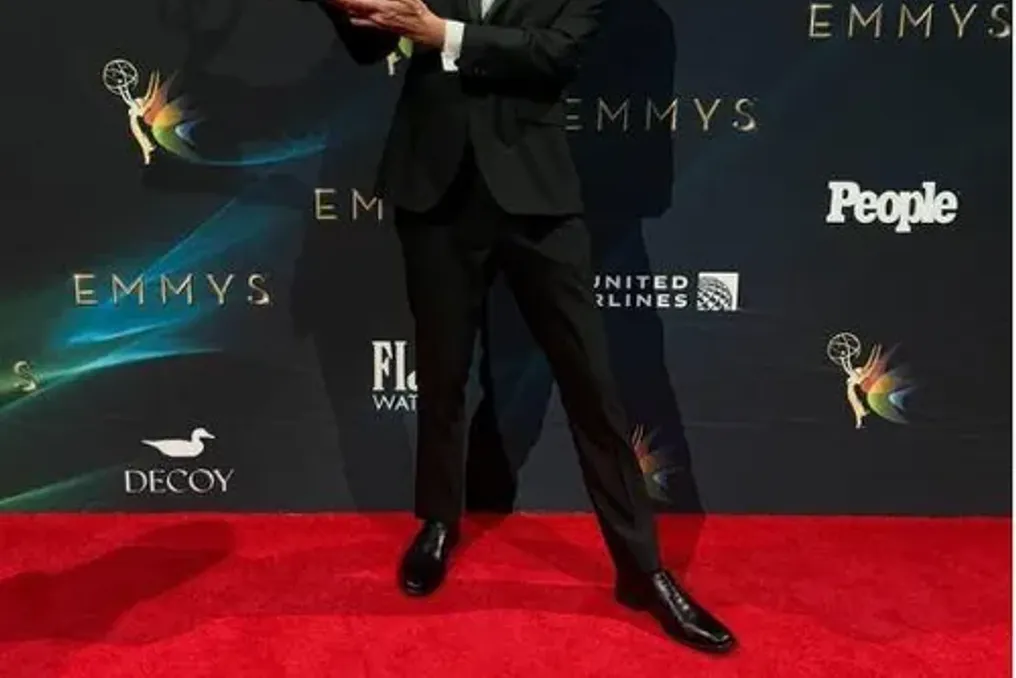
Rick Trevik, a creator from South Africa, has won an Emmy award, which motivates him to promote the development of virtual reality. At the 78th Emmy Awards ceremony in the creative arts, he was honored for Best New Media Program for his production 'Uncanny Alley: A New Day.'
This immersive theater project was created in collaboration with the Ferryman Collective from Los Angeles and the Virtual Worlds Company studio from Cape Town. Trevik, who grew up in Kokstad, KwaZulu-Natal province, and now resides in Kommetjie, Western Cape, believes that the recognition helped strengthen his resolve to expand 'Uncanny Alley' and provide more people access to the technologies and creative tools underlying immersive storytelling.
He stated that the award inspired him to continue working on 'Uncanny Alley' and to raise awareness about such laboratories and help more people gain access to these tools and technologies.
The production 'Uncanny Alley: A New Day' is performed live within the social virtual reality platform VRChat and immerses viewers in a cyberpunk universe. Participants play the roles of fugitives escaping from Adaptive Learning Industries—a corporation aiming to erase its citizens' memories.
Under the direction of two professional actors performing 15 characters in real time, audiences must avoid capture, evade arrest, and ultimately make a decision: leave 'Uncanny Alley' or stay and fight for their home. Trevik emphasizes that the power of virtual reality is difficult to explain until one experiences it firsthand.
He is convinced that the industry needs to move beyond a narrow target audience and become more accessible, noting that although the industry remains relatively niche, Hollywood is increasingly paying attention to new forms of storytelling. Winning the Emmy has been significant not only for 'Uncanny Alley' but for the entire new media sector.
Trevik noted the particular significance of receiving this recognition as a South African on the international stage. He mentioned the difficulties faced in South Africa, especially regarding technology, access, and data, and expressed hope that his story could inspire thousands of people in the country to follow their calling.
Trevik is primarily an artist. As a child, he drew cartoon characters and comics, but due to lack of access to technology while living on a farm in Kokstad, he only started using a computer after finishing school. His interests evolved from animation to mobile game design, 3D printing, and then to virtual reality. This progression allowed him to bring to life the characters and worlds he envisioned.
He never expected that his interest in technology and games would lead him to such a high stage as the Emmy stage. Trevik recalled times when creating mobile games was considered madness, unlike the current situation where the popularity of phone games is evident.
He recounted how 'Uncanny Alley' originated during quarantine, utilizing his experience in gaming and virtual reality to create a digital space where his characters could live and where people could interact during a period of inability to communicate physically. This experiment soon showed possibilities extending beyond simply creating a virtual meeting place.
A turning point was when global film festivals began accepting immersive content as a separate category. Trevik realized he was not alone in thinking that this could be the future of entertainment. His journey to 'Uncanny Alley' also led him to the Raindance festival, where he met the theater group Ferryman Collective from Los Angeles. This group experimented with transferring live theater into virtual reality, which eventually led to the development of a new version of 'Uncanny Alley' capable of accommodating live actors and interactive mechanics, including costume changes and performer interaction with the audience within the virtual environment.
For Trevik, the appeal of virtual reality lies in its ability to make viewers feel physically present in the story. He explains that the technology creates a direct link between the participant and the virtual world, making the experience surprisingly human, as the user's hands become an extension of their real body.
Trevik continues to conduct experiments and introduce more people to the rapidly evolving world of immersive storytelling.