Rooibos Seeds to Go to Space as Part of Innovative Scientific Experiment
Read more
IOL
iol.co.za

Rooibos Seeds to Go to Space as Part of Innovative Scientific Experiment

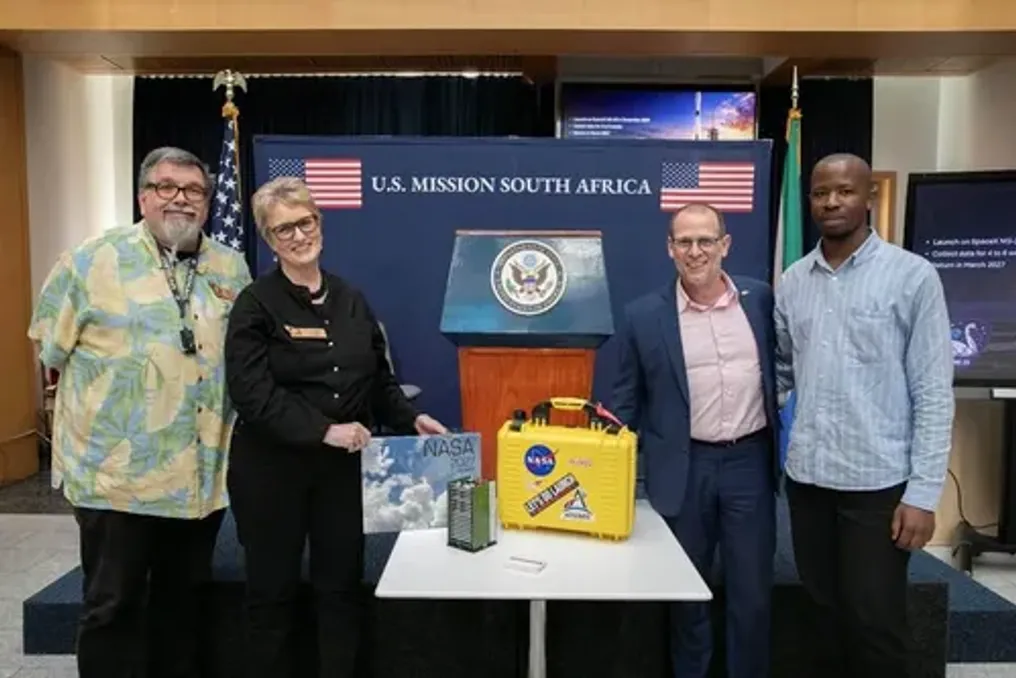
The Rooibos in Space project has advanced after Allison Arias, the US Consul General in Cape Town, held a farewell meeting for South African school and university scientific experiments heading to the United States. The rooibos seeds will travel with these experiments aboard the same spacecraft to the International Space Station (ISS).

A total of 17,346 rooibos seeds, weighing about 74.2 grams, will be delivered to Voyager Technologies in Texas, where the experiment will be prepared for space flight. The seeds are divided into three groups: untreated, scarified, and scarified with protective agricultural coating.

Inside a specialized Nanolab, the rooibos experiment is designed to expose the seeds to microgravity and cosmic radiation before they return to Earth for further analysis. The Nanolab is a compact standardized research module intended to host experiments for space flights and the ISS. These connectable modules allow researchers to conduct experiments in space without needing large, custom-built equipment.

The Rooibos Nanolab is scheduled to fly to the ISS aboard the commercial transport spacecraft Cygnus NG-25. The mission is now expected to launch between December 2026 and January 2027. This revised date is due to changes in the Voyager/NASA flight schedule, including broader adjustments regarding crew and supplies, which led to the postponement of the flight originally planned for October for the rooibos experiment.

Douie de Villiers, Director of the South African Rooibos Council (SARC), noted: 'This is an important milestone for rooibos and for South Africans who have followed this project from the beginning.' He added that 'the scientific goal is to study what happens to rooibos seeds when exposed to conditions outside of Earth, opening up new opportunities to study this uniquely South African plant.'

The seeds are expected to remain in space for four to six weeks before returning to Earth. There, researchers will work with schools in the Cederberg region—the natural habitat of rooibos—and with Parkland College to plant the space-faring seeds alongside control seeds. Over eighteen months, students and researchers will track, measure, and analyze differences in germination, growth patterns, and plant development as they mature.

Student participation is a central element of the project, as it allows young people to contribute to current scientific research while developing practical skills in science, technology, engineering, and mathematics (STEM). The broader Rooibos in Space initiative includes engaging schools, promoting STEM education, and a national mission badge contest that invited youth aged 12 to 18 to design a unique badge for the mission.

For rooibos seed technician Kirill Ngkwala, preparing the experiment provided a rare opportunity to combine traditional knowledge of rooibos seeds with space science. Ngkwala shared: 'Working with the seeds, from preparation to Nanolab assembly, has been an incredible experience.' He continued: 'We prepared the seeds under various conditions so that when they return, we can compare their performance with seeds that remained on Earth. It is exciting to think that something as uniquely South African as rooibos is now part of a space experiment.'

The Rooibos in Space initiative was conceived by SARC and developed in collaboration with MaxIQ Space. This mission will be the first time that seeds of a local South African plant are sent into space for this type of research, creating a unique opportunity to study how rooibos—a plant uniquely adapted to the Cederberg region—responds to extreme space conditions.
Similar stories

Robots and Artificial Intelligence are transforming the future of space exploration
Read more
olhardigital.com.br

Robots and Artificial Intelligence are transforming the future of space exploration

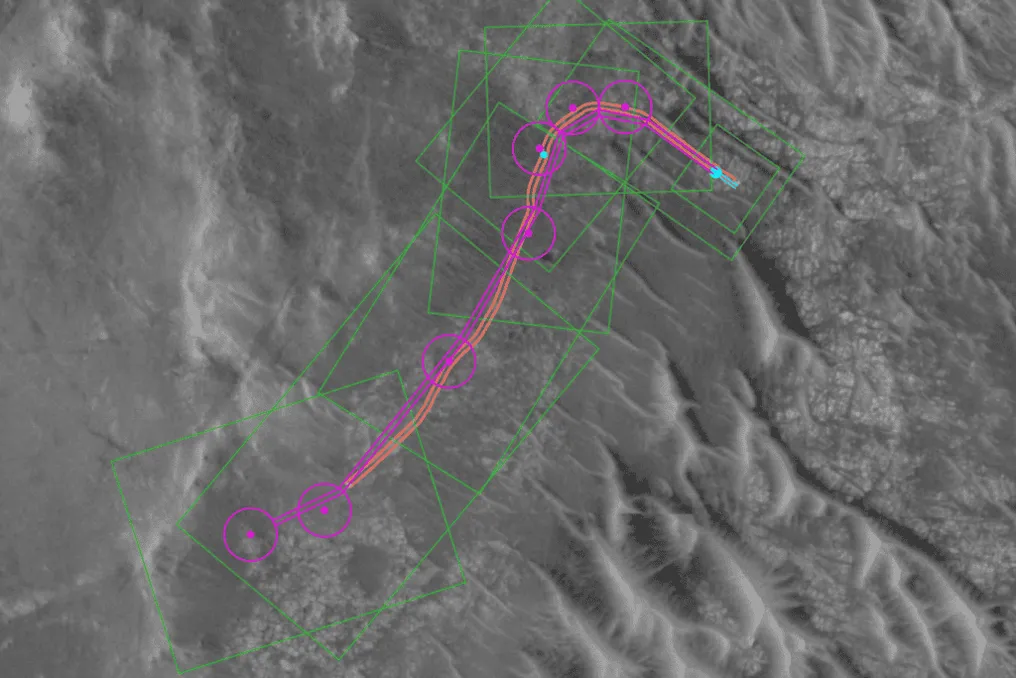
Robots and Artificial Intelligence (AI) are beginning a transformation in the future of space exploration. Last December, a NASA rover named Perseverance demonstrated the ability to traverse part of the Martian surface following routes determined by AI.

This event signals a future where machines can investigate other planets with a greater degree of independence. Previously, the determination of the vehicle's paths depended exclusively on the work of specialists located on Earth. With the implementation of the new technology, AI began analyzing terrain data and images to identify potential obstacles and suggest safe routes.

This technological evolution arises as a response to a central challenge of space missions: great distance. Due to the time it takes for signals to travel between Earth and Mars, real-time control of vehicles becomes unfeasible. Thus, the greater the autonomy of the robots, the less dependence there is on waiting for new orders.

Another relevant initiative in this context is the Distributed, Autonomous, and Cooperative Robotic Exploration (CADRE) project, also from NASA. This project envisions the use of small robots that operate in a coordinated manner on the Moon, exchanging information and exploring the environment jointly. This raises questions about how distinct machines can collaborate in a scenario as unstable as space.

The advances also prompt debates about the limits of this autonomy. It is essential to know how to ensure that a system can make safe decisions in the face of unforeseen events, what the role of human specialists should be when robots take over the choice of their own paths, and to what extent AI can change the way we explore the Solar System.

These topics will be discussed on the Olhar Espacial program this Friday (23). The program will feature Roberto 'Pena' Spinelli, a physicist from the University of São Paulo (USP) and specialized in Machine Learning from Stanford University, USA. He is an AI researcher and columnist for Olhar Digital News, and he will participate in a discussion about the impact of artificial intelligence and robotics on space exploration.

The program is presented by Marcelo Zurita, who is president of the Paraíba Astronomy Association – APA, a member of the SAB – Brazilian Astronomical Society, technical director of the Brazilian Meteor Observation Network (Bramon), and national coordinator of Asteroid Day Brazil. It is broadcast live every Friday at 9 PM (Brasília time) through the official channels of the outlet on YouTube, Facebook, Instagram, X (formerly Twitter), LinkedIn, and TikTok. However, exceptionally on this occasion, the start will be moved up to 8:20 PM.

Japanese Agency JAXA to Launch MMX Mission to Collect Samples from Mars' Moon Phobos in 2026
Read more
www.aajtak.in

Japanese Agency JAXA to Launch MMX Mission to Collect Samples from Mars' Moon Phobos in 2026

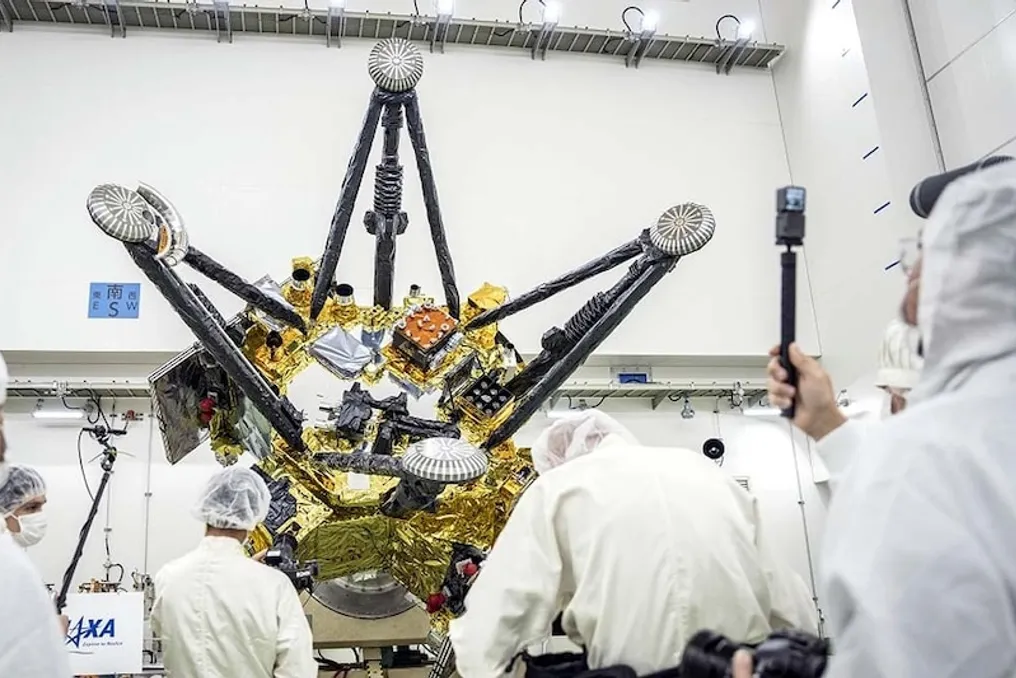
The Japanese space agency JAXA is preparing its first mission in the world to collect samples from Mars' moon Phobos. The robotic spacecraft, named Mars Multi-Mission X (MMX), is scheduled to launch on October 20, 2026, at 4:41 AM Japan time from the Tanegashima Space Center using the H3 rocket.

A preliminary briefing conference was held on October 18 before the launch. This mission is intended to collect at least 10 grams of material from Phobos and study both of Mars' moons. The collected samples will be delivered to Earth in 2031. Phobos and Deimos are two small satellites of Mars, and scientists have long discussed their origin.

One theory suggests that these asteroids were captured by Mars' gravity. Another hypothesis proposes that the moons formed from debris ejected by Mars following a major collision. The MMX mission aims to find answers to these questions. Phobos' soil may contain traces of water and organic matter, which could help understand the genesis of life in the Solar System.

The mission will not be limited to sample collection. It will also map the surface of Phobos, study its structure, and fly past Deimos. This will provide a more complete picture of the evolution of the Martian system. According to JAXA, these samples could also be useful for future crewed missions to Mars, as Phobos is considered a potential base.

The spacecraft will reach the vicinity of Mars in about a year. After entering Mars' orbit in August 2027, it will be in a quasi-satellite orbit around Phobos. After a detailed surface study, it will perform one or two landings. Special systems have been installed for sample collection. It will be accompanied by the IDEFIX rover from the French-German team, which will move across the surface and assist in selecting safe landing sites.

After collecting samples, the spacecraft will head back to Earth to deliver them in 2031. This mission is based on the success of JAXA's Hayabusa2 mission, which successfully delivered samples from an asteroid. However, MMX is significantly more complex as it will have to operate in Mars' gravitational field.

NASA, the European Space Agency (ESA), the French agency CNES, and Germany's DLR are participating in this project. Many instruments and rovers are developments from these countries, which is an example of global partnership. Nevertheless, there are serious difficulties. Phobos' gravity is very weak, which complicates landing and takeoff. Power management and communication during the long journey also present a complex challenge.

For Japan, this mission is ambitious. The reliance on the H3 rocket and the use of a precise launch window are critically important. If successful, Japan will take a leading position in the study of the Martian system and achieve new heights in space exploration. The results of MMX will not only expand scientific knowledge but also pave the way for future human missions. Analysis of Phobos' soil will show the presence of resources and open a new chapter in understanding the origin of the Solar System and the probability of life.

Popular