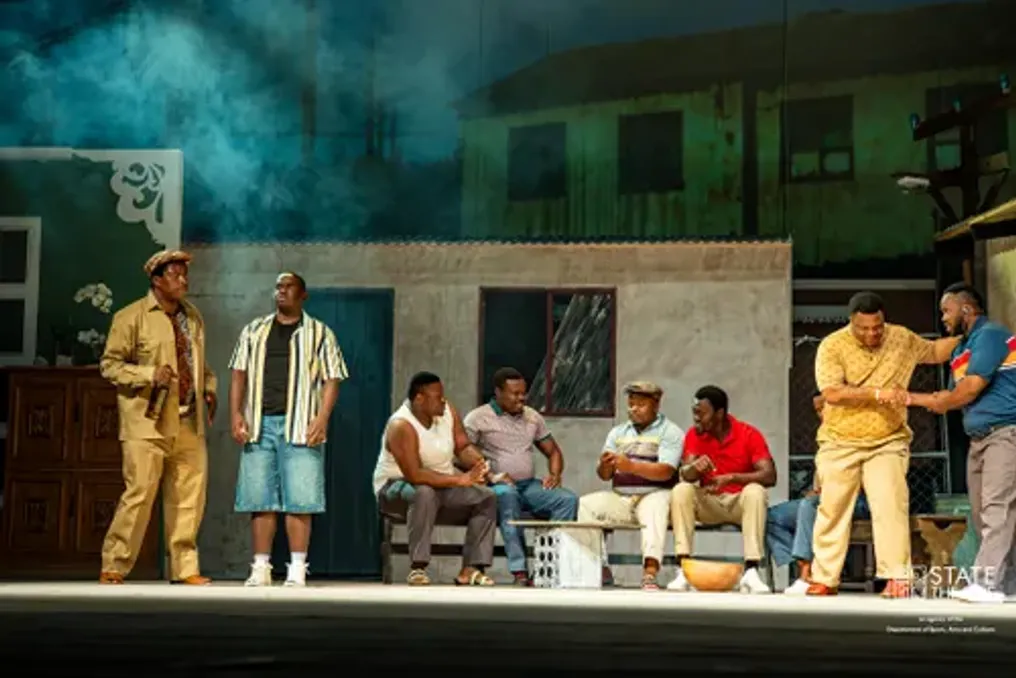
Some theatrical productions aim to entertain, while others strive to evoke deeply personal feelings. The play 'Ingoma-busuku' (Night Song) belongs to the latter category, having premiered on October 21, 2026, at the South African State Theatre Drama Theatre.
This richly developed musical journey explores themes of identity, memory, and the unique heritage of the isicathamiya style. Audiences were greeted by the delicate harmonies of the isicathamiya singers, creating an atmosphere that was both intimate and energetic, with the evening marked by applause and cheers celebrating the richness of South African musical storytelling.
The directorial work of Themba Mhize and Aubrey Sekhabe focuses on the story of Jabulani, brilliantly portrayed by Mthobisi Hanile. He depicts a young man searching for a father he never knew. His journey takes him through the world of labor migration, dormitory life, and the musical traditions that shaped his father's character.
Hanile demonstrated impressive acting, particularly through his outstanding vocal control and ability to move between the contrasting musical worlds of opera and isicathamiya. Scenes with Mrs. Smith, played by Rostislava Pashkevich-Ngobeni, are among the most captivating moments of the production.
Their musical exchanges question the historical hierarchy between European classical music and indigenous African traditions, demonstrating the potential for artistic dialogue. Sikelelwa Zuma brings warmth and conviction to the character of Nomasonto, Jabulani's mother, especially when she defends the dignity of African music. Meanwhile, Uncle Muzi, played by Sabelo Segoto, provides humorous comic relief using his drunken wit and tendency to reveal family secrets, eliciting laughter without losing the dramatic essence of the character.
The visual language of the performance is also highly compelling. Sheldon Marema's impressive set design places suburban domestic spaces alongside the world of dormitory life, serving as a vivid reflection of South Africa's social disparities. Pretty Masemola's thoughtful lighting design, complemented by expressive projections, beautifully conveys the shifting moods and settings.
One of the evening's main pleasures was the musical arrangements, the live instrumental accompaniment, and the meticulously coordinated isicathamiya movements. The singers display exceptional vocal discipline, and Oscar Butelezi's choreography conveys the soft yet complex physical vocabulary of this genre.
However, it is noted that the educational intentions of the production sometimes overshadow its dramatic impetus. Some explanations of the history and musical techniques of isicathamiya could have been more organically woven into the action.
The narrative reaches its greatest strength when the music and the performers' bodies convey what words cannot express. Despite this, it does not diminish the cultural significance of the production. Returning to the experiences of migrant workers, domestic workers, and dormitory communities, 'Night Song' reminds audiences that isicathamiya is more than just a musical genre; it is a living archive of South African history.
Perhaps the greatest achievement of the production is its ability to make the audience feel the history rather than just learn about it. The laughter, spontaneous applause, and cheers at the premiere reflected a wonderful connection between the stage and the audience. Jabulani begins his journey in search of a father but discovers something much greater: a musical legacy connecting him to generations past.
Although 'Ingoma-busuku' has dramatic shortcomings, its exceptional harmonies, impressive scenography, and sincere performances make it a valuable theatrical experience. Long after the last note fades, one truth remains: sometimes the voices we search for our whole lives have been within us all along.
'Ingoma-busuku' (Night Song) runs at the South African State Theatre Drama Theatre in Pretoria until November 1, 2026.