
African Music Awards Recognize Contribution of Specialists Supporting Artist Careers
Read more
IOL
iol.co.za

African Music Awards Recognize Contribution of Specialists Supporting Artist Careers

Success in the music industry depends not only on performers standing before a microphone. There are several other factors that influence musicians' career growth: managers sign contracts, public relations specialists increase visibility, publishers protect songwriters' rights, and booking agents help artists find new audiences. However, much of this work often goes unnoticed by the public.

The Music Business Awards Africa (MBAA) initiative aims to change this situation by recognizing the professionals and companies that contribute to the development of artists and the functioning of the music industry.

The awards ceremony is scheduled for Saturday, November 21st, at Mercedes-Benz Sandton. Public voting will be open until November 15th.

These awards were founded by Gift Mdlalose and focus on the part of the industry that rarely receives the same public recognition as the artists themselves, despite their key role in building successful careers and creating commercial opportunities.

Mdlalose noted: 'For years I have watched the music industry celebrate what the audience sees on stage, while many people responsible for building these careers remain largely invisible.' He added that managers, A&R specialists, publishers, lawyers, PR professionals, booking agents, educators, and music companies are vital elements of the ecosystem, and MBAA was created to provide this side of the industry with its own authoritative platform for recognition.

According to available information, Mdlalose is a qualified specialist in music technology and an audio engineer, educated at CAC/City & Guilds London Institute. He is also the founder of Music Business Academy Southern Africa, which trains aspiring music professionals in practical industry skills through structured education.

Furthermore, he founded Music Business Network (MBN)—a platform for the South African industry through which he built business partnerships. His experience includes artist management and label development, helping artists and contributing to the creation and structuring of independent record companies.

In 2025, Mdlalose was recognized in Egypt as one of 40 young African entrepreneurs under 40 for his contribution to industry development and entrepreneurship. The following year, he published his business book in partnership with the University of Johannesburg School of Business.

The awards cover individual achievements, companies, and special recognition categories, reflecting the diverse roles involved in the functioning of the music business. Individual nominations include 'Best Artist Manager of the Year,' 'Best A&R Manager of the Year,' and 'Best Commercial Songwriter of the Year,' as well as the 'Industry Champion Award' and 'Young Legend Award.'

Corporate categories cover independent record labels, artist management firms, music publishers, music law practices, live music events, booking agencies, PR and marketing, music education, and music business conferences. Platforms that amplify music, which help artists reach wider audiences and access opportunities, will also be recognized.

Nominees include Katlego Malatji for the 'Industry Champion Award' and Singai Darangwa for the 'Young Legend Award.' Zee Nkosumalo, along with other South African artists, has nominations in the categories of 'Best Digital Artist Presence,' 'People's Choice Artist of the Year,' and 'Artist Commercial Enterprise Award.' Punchline Projects is nominated for 'Best PR and Marketing Agency in Music' and 'Best Artist Management Company.'

The range of categories is intended to highlight the career paths available to people who wish to work in music without becoming performers. Artist development, rights management, marketing, legal services, and live entertainment require specialized skills, business knowledge, and networks that help creative work reach listeners. By recognizing these roles, MBAA seeks to elevate their prestige and encourage more people to consider a career in the music business, as well as including the companies and specialists supporting artists in a broader dialogue about the structures needed to create a sustainable industry.
Similar stories

Film 'Rise: The Siya Kolisi story' raises the standards of South African cinema
Read more
iol.co.za

Film 'Rise: The Siya Kolisi story' raises the standards of South African cinema

The film 'Rise: The Siya Kolisi story,' directed by Tebogo Malope, presents the powerful story of South Africa's first black rugby captain.

A cinematic work worthy of its place

Upon first viewing the documentary 'Rise,' the author admitted that he initially had doubts about the quality of local documentary production. He feared the film might resemble a music video by the group Die Antwoord, but the story does not offer a gentle introduction; instead, it honestly reflects the lives of many young people and men in South Africa.

The documentary begins with archival rugby footage shown on television, immediately placing Siya Kolisi's story within the context of South Africa's long and complex rugby history. Discussing with Bheki Dalla, a board member of African Film DAO, the analysis explored how the film's technical mastery enhances its emotional impact.

The film does not merely list Kolisi's hardships; it makes the viewer feel them. The audience experiences the weight of childhood poverty, the deep sorrow of losing his grandmother, who was the pillar of his world, as well as the heavy, silent burden of a teenager balancing between a privileged high school and a difficult life in a township.

For a long time, low budgets and limited resources set a low standard, forcing the local audience to accept works that represented only a fraction of what was possible. The film 'Rise' shatters this standard, proving that South African filmmakers are capable of conveying destructive, raw intimacy while offering a confident, first-class cinematic experience that garners international respect.

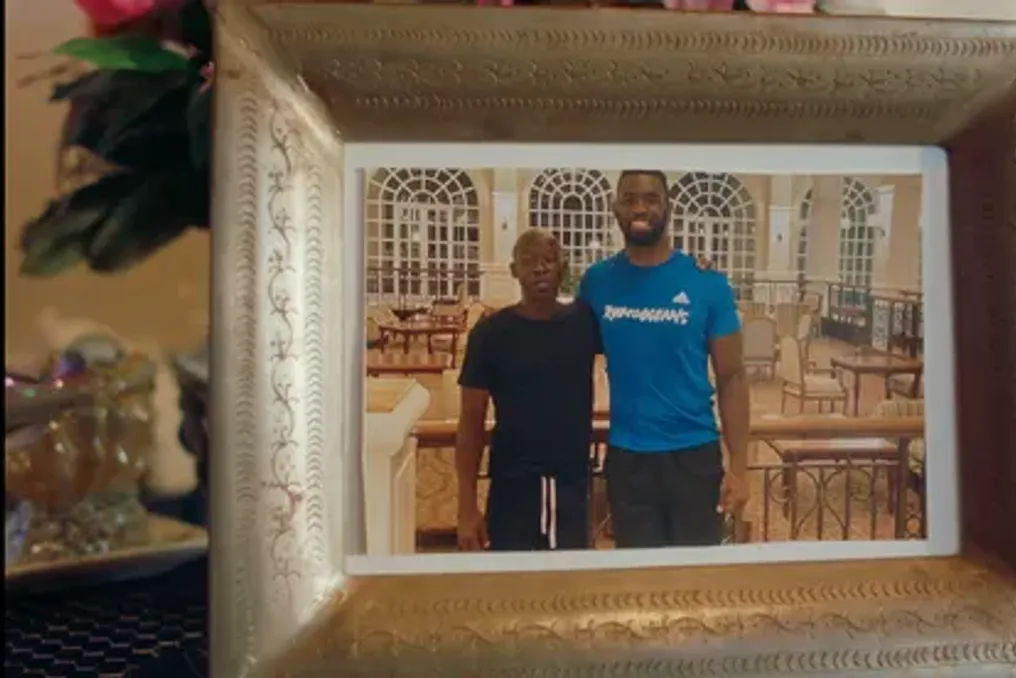
During an interview, the author noted one visual moment that surprised him and became an emotional anchor for the film: a shot with the inscription 'the only known footage of Kolisi at home,' accompanied by a recognizable royal symbol. There is very limited visual material from his early life. Viewers know what kind of man Kolisi became, but this candid statement on screen prompts viewers to reflect on the boy he once was. This single fragment is a symbolic representation of the distance between the boy in the image and the man holding the World Cup.

The film addresses the theme of Kolisi's father's absence, his imprisonment, and alcoholism. Dalla emphasized that these are authentic African stories, and the documentary perfectly balances these difficulties with the development of a deep sense of duty in Kolisi. Dalla also mentioned that the film sets a benchmark for broader local film and production companies, demonstrating this standard through Siya's survival in South Africa.

Dalla explained: 'We must ensure that the end audience does not receive a low-quality product.' Warning against a lack of strict quality control, Dalla stated that 'the South African film industry remains uncompetitive globally, serving merely as a service provider for international productions rather than telling our own stories with the ambition they deserve.'

In the township of Zweide, Gqeberha, sixteen-year-old Fakama gave birth to Siyamtandu 'Bear' Kolisi on June 16, 1991. On Youth Day in 1991, the Zweide community welcomed the Son of the Nation with hope.

Director Sanjay Gupta Dies at Age 57; His Films Were Known for Unique Style
Read more
www.aajtak.in

Director Sanjay Gupta Dies at Age 57; His Films Were Known for Unique Style

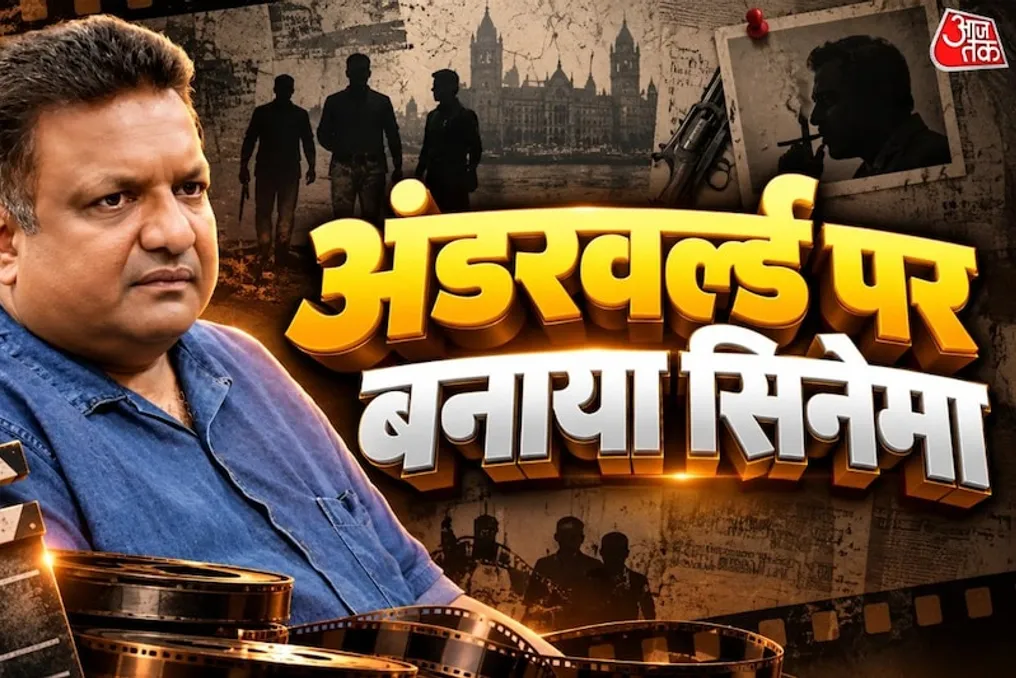
Director and filmmaker Sanjay Gupta, who created high-quality thrillers and underworld stories for Bollywood, passed away at the age of 57. The cause of his death was cited as a fall in the bathroom, but further information regarding his passing is still awaited.

Sanjay Gupta was one of the cinematographers whose works attracted attention due to their storylines, as well as his known candid remarks. Throughout his career, he directed films such as 'Kaante', 'Shootout at Wadala', and 'Kaabil', which represented a powerful combination of action and thriller.

Sanjay Gupta began his career in 1994 with the film 'Aatish' alongside Sanjay Dutt. After this, he created numerous films inspired by or based on other works. Most of his works focused on stories from the criminal world of Mumbai. For instance, the plots of 'Shootout at Wadala' (2013) and 'Shootout at Lokhandwala' (2007) were dedicated to the underbelly of Mumbai. He directed 'Shootout at Wadala' himself, while serving as producer for 'Shootout at Lokhandwala'. Additionally, he directed the film 'Mumbai Saga'.

When discussing the most important actor in Sanjay Gupta's career, it was Sanjay Dutt. He starred in most of his films with him and achieved great success. Today, Sanjay Dutt is known for his roles in the films 'Musafir' and 'Kaante'. Artists such as Sunil Shetty, Anil Kapoor, John Abraham, and Rohit Roy also regularly appeared in his films.

Sanjay Gupta's latest hit was the film 'Kaabil', released in 2017, where he collaborated for the first time with Hrithik Roshan and Yami Gautam. In this drama, Hrithik played the role of a blind man seeking revenge for his wife's death. The film was produced by Rakesh Roshan and was released during a period of competition with Shah Rukh Khan's film 'Raees'.

If we talk about an iconic film in Sanjay Gupta's career, it is 'Kaante' from 2002. It was a multi-starrer action-thriller that drew inspiration from Quentin Tarantino's 'Reservoir Dogs' and the Hong Kong film 'City on Fire'. Interestingly, Tarantino himself was very impressed by 'Kaante' and included it in his list of favorite movies. 'Kaante' featured stars such as Sanjay Dutt, Amitabh Bachchan, Sunil Shetty, Mahesh Manjrekar, Lucky Ali, and Kumar Gaurav. During the shooting of this film, the actors had to face significant difficulties, which the director mentioned in his interviews.

In addition to creating quality films, Sanjay Gupta was known for his sharp and candid comments. He repeatedly made statements that later became subjects of controversy. On the Cyrus Brochi podcast, he made shocking revelations about Indian cinema heroes, describing how one actor travels across the set with six vans for beauty treatments and numerous entourages. He explained the reason for each such van, after which questions arose regarding some new actors.

Tanzanian singer Malaika Gray releases debut single 'My Fever' featuring Marioo
Read more
iol.co.za

Tanzanian singer Malaika Gray releases debut single 'My Fever' featuring Marioo

Tanzanian singer and songwriter Malaika Gray introduces herself to the music scene through collaboration with one of the country's most renowned musicians, Marioo. The artist has released her debut single, 'My Fever,' a love song featuring the award-winning Bongo Flava artist. This release marks the beginning of her musical journey, which is rooted in her Tanzanian heritage and upbringing in South Africa.

Although the track is her first official publication, Gray had dreamed of pursuing music for many years. When making her debut, she wanted to do it on her own terms, surrounded by the people and sounds that shaped her personality.

The song 'My Fever' was written and recorded in Tanzania. Its development took place in Dar es Salaam with producer Abbah Process, after which Marioo joined Gray in the material writing process. Speaking about sources of inspiration, Gray noted that the song is less about narrating a specific romance and more about conveying a certain feeling.

She explained that it is a love song that arose more from a sensation than from a story. 'It's that moment when summer arrives and a person appears at the same time, and you can't completely separate those two moments. Everything becomes a little warmer than it should be,' she shared.

Gray aimed for the recording to reflect the warm and relaxed atmosphere of Dar es Salaam, allowing the city's influence to show in the sound. 'I didn't try to create something that sounded like anywhere else. I wanted it to sound like Dar—warm, unhurried, with a touch of the ocean,' she clarified.

The song also showcases her multicultural musical influences, as she switches between English and Kiswahili—two languages she naturally uses in her compositions.

Marioo's presence on her debut release is a significant step for Gray, who admits she has been a fan of the musician for many years. However, she emphasized that what struck her most was Marioo's involvement in the song.

'There was a time at the beginning when I had to stop being a fan and start working,' she said. Instead of just recording a guest verse, Marioo became part of the creative process, helping to shape the melody and lyrics. Gray noted: 'He didn't just come to record a verse and leave. He wrote it with me; he asked me what I really meant; he changed the melody until it was better.'

She highly valued his willingness to collaborate with an emerging artist who hadn't publicly released music yet. 'He approached me before I had anything to show—no songs, no name, nothing to look at. He listened to the song and said, 'Let's do this.' I take that very seriously.'

For Gray, the visual aspect of 'My Fever' was as important as the music itself. The music video, directed by Joma, was shot over two days across Dar es Salaam, capturing the city on its streets, markets, salons, and in everyday transport.

Visual elements include the Indian Ocean, local minibusses (daladalas), and the golden afternoon light, offering viewers a glimpse into the environment that helped shape the song. 'I never thought of a song without a video. Such a track is not just a feeling; it's a place, and a place cannot be heard. It must be seen,' stated Gray.

Gray also consciously sought to have the visuals authentically represent the city, avoiding reliance on familiar or stereotypical African imagery. 'No sets, no imported crew. We went out into the city and filmed it as it is,' she explained. For the singer, Dar es Salaam is not just a filming location. 'The city is not a background in this video. It is the second subject.'

While Bongo Flava and Afrobeats are central elements of her musical identity, Gray asserts that her sound is also influenced by R&B music she listened to as a child in Johannesburg. She describes her style as a blend of Afrobeats and Bongo Flava, interwoven with R&B elements in her vocals and songwriting.

'R&B is what I grew up on in Johannesburg. It's in my voice, whether I plan it or not. Bongo Flava is Tanzania; it's the sound I know in my body, not in my head,' she said. The ability to switch between English and Kiswahili is another defining characteristic of her music, allowing her to draw inspiration from both sides of her background.

While 'My Fever' introduces listeners to her, Gray is already planning future collaborations, especially with South African artists. Since she grew up in Johannesburg, she considers working with local musicians a natural continuation of her musical path. 'South Africa is my home too. I grew up in Johannesburg. Collaborating here isn't an ambition I'm striving for from afar; it's what I expect to do and want to do soon.'

Currently, 'My Fever' gives listeners a first look at what the emerging singer has to offer, combining her Tanzanian roots, Johannesburg influence, and collaboration with an artist she has long admired.

Popular