
Indian Railways launches door-to-door parcel delivery service
Read more
Aaj Tak
www.aajtak.in

Indian Railways launches door-to-door parcel delivery service

Users can now send parcels via train without visiting post offices at stations. Indian Railways plans to launch a door-to-door parcel delivery service in eight major cities.

This new service is called 'Ghar Se Ghar Tak'. It allows customers to place orders for receiving and sending parcels directly from their homes. The pilot launch of this service was successful, and the railway now intends to implement it as a regular service in eight cities across the country.

This initiative is expected to benefit ordinary citizens, as well as small entrepreneurs and online sellers.

Initially, the service will be available in cities such as Delhi, Mumbai, Kolkata, Chennai, Ahmedabad, Hyderabad, Bangalore, and Pune. Customers can book the sending and receiving of parcels from home through the Rail Parcel App or the railway's website. South Central Railway shared information about this service on social media on May 6, 2026. According to the railway, this measure aims not only at parcel delivery but also at supporting business and strengthening connections between people.

The railway collaborates with logistics companies within this service. The railway is responsible for transporting parcels from one city to another, while logistics partners handle picking up the parcel from the customer's home and delivering it to the specified address. Customers can order a parcel up to 15 days before the train departure, and they also have the option to book one day before the scheduled train departure. Logistics partners must hand over the parcels to railway staff no later than one hour before the train departs.

Through the Rail Parcel App, customers can not only book a parcel but also make online payments and track its location. Each booking will be accompanied by a 10-digit Progressive Reference Number (PRR). This number will allow customers to find out the status of their parcel. Additionally, the app will provide digital GST invoices and real-time tracking updates. Payment options include UPI, credit cards, debit cards, and internet banking. Verification using a One-Time Password (OTP) will be required to ensure parcel delivery.

The railway has established cancellation and refund rules for this service. If a customer cancels a freight booking before the parcel is picked up, they will receive a full refund for the freight charge minus an administrative fee of ₹10. However, refunds for home pickup and delivery services will be processed according to the policy of the respective logistics partner, not the railway's rules.

This new railway initiative could significantly benefit those who regularly send parcels between cities. Small entrepreneurs, online sellers, and private customers will be able to send parcels without leaving home. They will no longer have to visit railway stations to drop off or pick up parcels. The railway's goal is to make its parcel sending services more convenient and accessible. Nevertheless, for now, the service will only be available in eight cities, and the exact start date has not yet been announced.
Similar stories

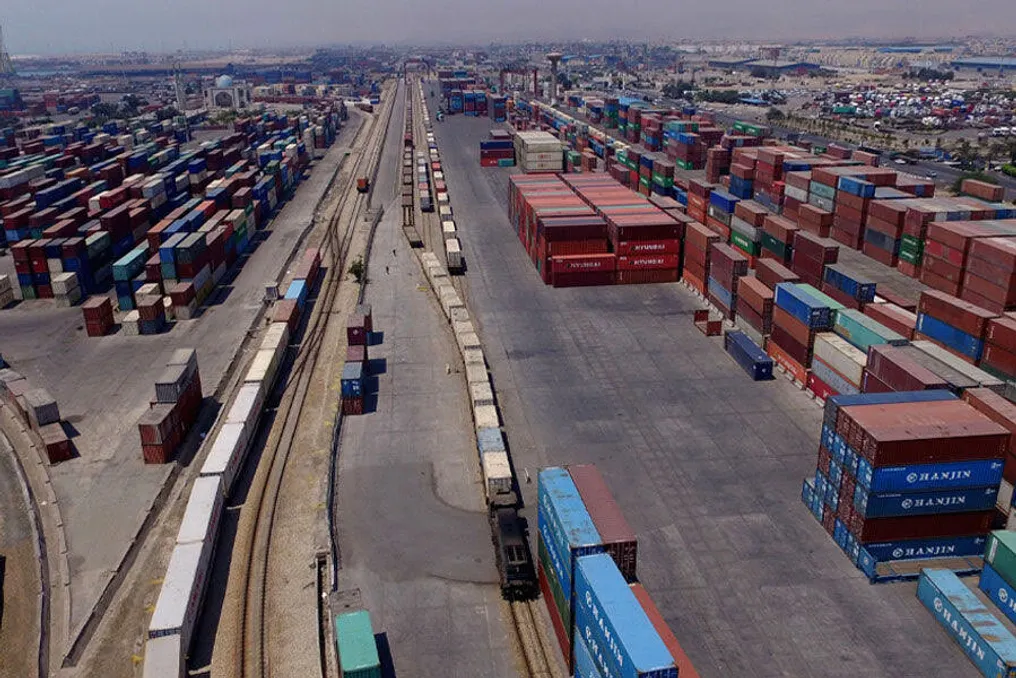
Railway Priorities: Developing Freight Transport, Fleet Productivity, and Service Quality
Read more
www.tehrantimes.com

Railway Priorities: Developing Freight Transport, Fleet Productivity, and Service Quality

The head of the Railways outlined several key areas of the company's work, including the development of international rail transport, increasing cargo export volumes, accelerating wagon turnover, improving safety levels, and enhancing passenger service quality.

According to an IRNA report, during the meeting of the Supreme Committee on Railway Transport, Count Jabbar Ali Zakeri emphasized the need to improve passenger service, especially on routes leading to the holy city of Mashhad. He noted that ensuring the necessary rolling stock fleet and increasing readiness to provide satisfactory services to pilgrims and passengers are among the priorities of the Railways.

Zakeri also deemed it critically important to supply wagons for cargo owners, eliminate obstacles for international and export freight transport, and reduce wagon downtime to increase efficiency in the freight sector. He focused on the optimal utilization of locomotive capacity and the formation of heavy freight trains on lines with sufficient capacity and suitable technical conditions.

The Deputy Minister of Roads and Urban Development stated that ensuring infrastructure and guaranteeing safe train movement are of paramount importance. He called for strengthening cooperation between railway police and security guards, increasing patrols along the tracks, and combating the theft of railway equipment.

During another segment of the meeting, Zakeri presented diplomas to two Railways athletes who brought honor to the organization on the world stage: Kaveh Riahi, an employee of the General Directorate of Security and a first-place winner at world weightlifting competitions, and Davud Hadavand, who works at the Tehran Railway General Directorate and took third place at world wrestling competitions.

He stressed that supporting athletes, developing public and professional sports, and expanding sports programs contribute to increasing the vitality of the organization, and insisted on continuing support for the participation of Railways athletes in national and international tournaments.

Furthermore, Mirhasan Musavi, Deputy General Director of the Railways, citing positive passenger feedback on trains, noted the importance of increasing fleet readiness and conducting major locomotive overhauls specifically to improve service quality on busy routes. He named increasing the share of rail transport in passenger transport as one of the company's priorities, and listed the benefits of developing this sector as reduced fuel consumption, increased travel safety, decreased road accidents, and reduced air pollution, as well as improved service quality.

Later, leaders of the North 2, West, Yazd, and Hormozgan Railways, as well as the director of Havar Sharg, presented reports on plans to increase fleet productivity, determine regional capacities, attract new cargo, and strengthen the share of rail transport in freight transportation.

Vande Bharat Sleeper high-speed train to operate on Mumbai-Bengaluru route soon
Read more
www.aajtak.in

Vande Bharat Sleeper high-speed train to operate on Mumbai-Bengaluru route soon

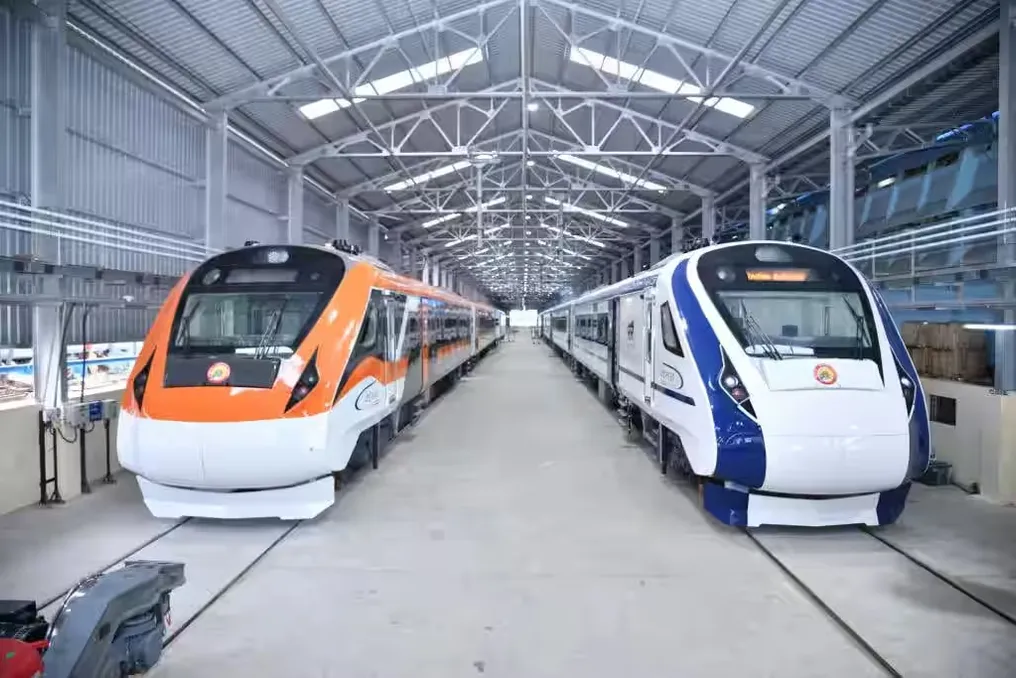
Soon, the Vande Bharat Sleeper high-speed train service will begin operating on the route between two major cities in the country, one of which is the financial capital and the other is an IT hub. This concerns the Mumbai-Bengaluru route. Currently, the journey between these cities on regular trains takes about 24 hours, but soon this trip will be reduced to 15–16 hours.

According to information received from sources associated with the railways, the launch of this train is planned for November 1st. This route will be the first service of Vande Bharat Sleeper departing from Mumbai. However, final confirmation of the route, fares, and schedule awaits an official announcement from the railways.

According to the proposed plan, the Vande Bharat Sleeper will run from Chhatrapati Shivaji Maharaj Terminus (CSMT) in Mumbai to Sar M. Visvesvaraya Terminal (SMVT) in Bengaluru. There is a possibility that the train will pass through the Guntakal route. Possible stops include Kalyan, Solapur, Pune, Anantapur, Guntakal, Raichur, Kalaburga, and Bengaluru. Currently, this is only a preliminary route, and its final confirmation is possible only after the railways announce the final stops and official path.

The Mumbai-Bengaluru Vande Bharat Sleeper service may operate six days a week. The travel is planned so that passengers start their journey at night from Mumbai and arrive in Bengaluru by noon the next day. According to the proposed schedule, the train will depart from Mumbai CSMT station at 20:10 and arrive at Bengaluru SMVT station at 11:55 the next day. The return journey is planned so that the train departs from Bengaluru SMVT at 19:50 and arrives at Mumbai CSMT station at 11:55 the following day.

Preliminary estimates for ticket prices on the Vande Bharat Sleeper Mumbai-Bengaluru are presented for various air conditioning categories. According to these estimates, the cost in AC 3-Tier with meals may be around 2300 rupees, in AC 2-Tier—around 3000 rupees, and in AC First Class—around 3600 rupees. These prices are approximate, and exact information on fares and additional charges will only become clear after the official announcement by the railways.

The proposed train composition will consist of 16 coaches and can accommodate 823 passengers. Eleven coaches in the AC 3-Tier class will have a certain number of seats. 188 seats will be located in 4 coaches of the AC 2-Tier class. Additionally, there will be one coach of the AC First Class, designed for 24 passengers. This train is designed for overnight journeys.

The Vande Bharat Sleeper cockpit will be equipped with comfortable and soft seats, wood-paneled panels, eye-friendly LED lighting, and carpeted flooring. The cabin design aims to provide passengers with maximum comfort during a long journey. Additional amenities include new ladders for accessing upper berths, storage spaces for mobile phones and books, reading lamps, USB charging ports, and dining tables. The First AC coach will have a hot shower facility.

The train is planned to be equipped with vacuum toilets and contactless sensors, which are intended to improve cleanliness and simplify use for passengers. A modern dining hall will be available on board for meals. The proposed menu may include popular dishes from Maharashtra and South India, such as Misal Pav, Thalipet, Bisi Bele Bath, and Mysore Pak. There is also information about negotiations with hotel chefs, cloud kitchens, and catering partners to maintain high food quality.

The Vande Bharat Sleeper is designed to travel at speeds of up to 180 kilometers per hour, but it will operate at a speed of up to 160 kilometers per hour. The actual speed of the train will depend on the condition of the tracks, safety standards, and railway permits. The train will be equipped with the domestic automatic safety system Kavach, which reduces the risk of accidents under certain conditions. In addition, the train has fire safety and emergency communication systems. Each coach is equipped with video surveillance cameras, fireproof doors, and the ability to contact the train manager or driver in case of an emergency. Thanks to semi-permanent couplers, the train will have virtually no jolts, and the coaches will be securely connected to each other. The regenerative braking technology, which uses energy generated during braking to produce electricity, will also be implemented in this train, helping to save energy.

Popular