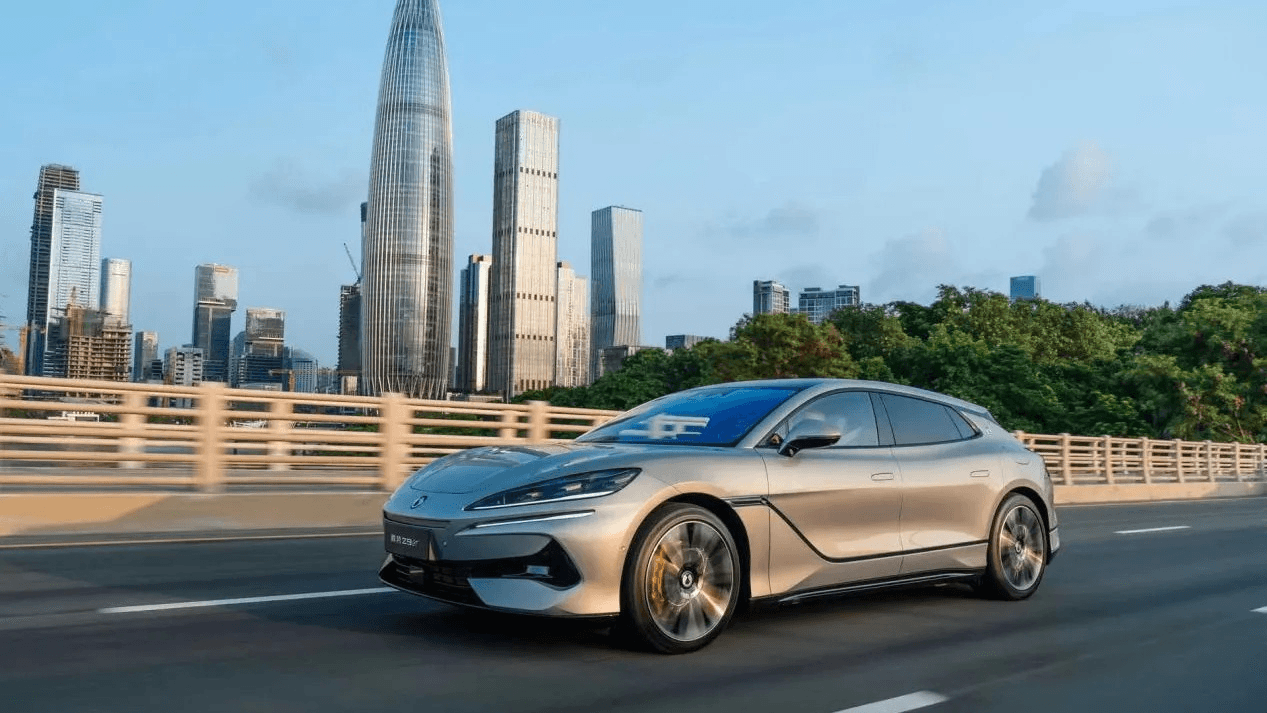
Horizon Robotics plans to supply chips and driving assistance system for BYD's God's Eye B package
Read more
Pandaily
pandaily.com

Horizon Robotics plans to supply chips and driving assistance system for BYD's God's Eye B package

According to the Chinese publication Lanjing Auto, which cited sources familiar with the situation, chips from Horizon Robotics and its HSD driver assistance system have been included in BYD's higher-tier God's Eye B package. The first samples are expected to be available on the market in November. Neither company has officially confirmed this agreement, and the volume of supplies, model plans, and distribution between Horizon's solutions and BYD's proprietary developments remain uncertain.

BYD introduced its God's Eye line of driver assistance systems in February 2025, dividing it into three levels. Version A, DiPilot 600, is intended for the Yangwang brand. Version B, DiPilot 300, is primarily used in Denza and BYD vehicles. Version C, DiPilot 100, covers BYD's main models. Previously, Horizon debuted in Version C with its Journey 6M chip, rated at 128 TOPS, while BYD developed the software for this version itself.

It is reported that the deal for Version B is different. Horizon will supply both the high-performance chip and the HSD software. This chip is described as a rather unusual component with high computing power. Currently, vehicles with God's Eye B typically use a single NVIDIA Orin-X chip rated at 254 TOPS, and this stock, along with BYD's own chips, is presumed to remain.

Earlier reports suggested that Denza, Han, and Ocean series models could be candidates for using these technologies. The HSD system is a single-stage integrated urban driving assistance system from Horizon, built on the Journey 6P, which the company rates at 560 TOPS. At the time of publication, HSD was designated for over 20 models across 10 automotive brands in both China and abroad.

That same evening, founder and CEO Yi Kai used the Weibo platform to respond to questions about Horizon's chips with thousands of TOPS, and also commented on industry methods of advertising computing power. He noted that NVIDIA automotive chips indicate twice their dense computing power, so 127 dense TOPS Orin-X turns into 254, and that most chip manufacturers follow this approach. He added that some now advertise six or seven times greater dense power under the name equivalent power.

Yi stated that going forward, Horizon will specify two figures. The first, called NV compute, represents the dense power multiplied by two. The second is the equivalent power, which he jokingly called 'bragging power'. Based on this, Journey 6P has 560 TOPS NV compute and 1,960 TOPS equivalent power. Dense computing power refers to peak performance without sparsity, whereas sparsity metrics double the stated number by skipping zero value calculations.
Similar stories

Amap's Tutu robot dog begins patrolling the Alibaba campus in Xisi to record data in work orders
Read more
pandaily.com

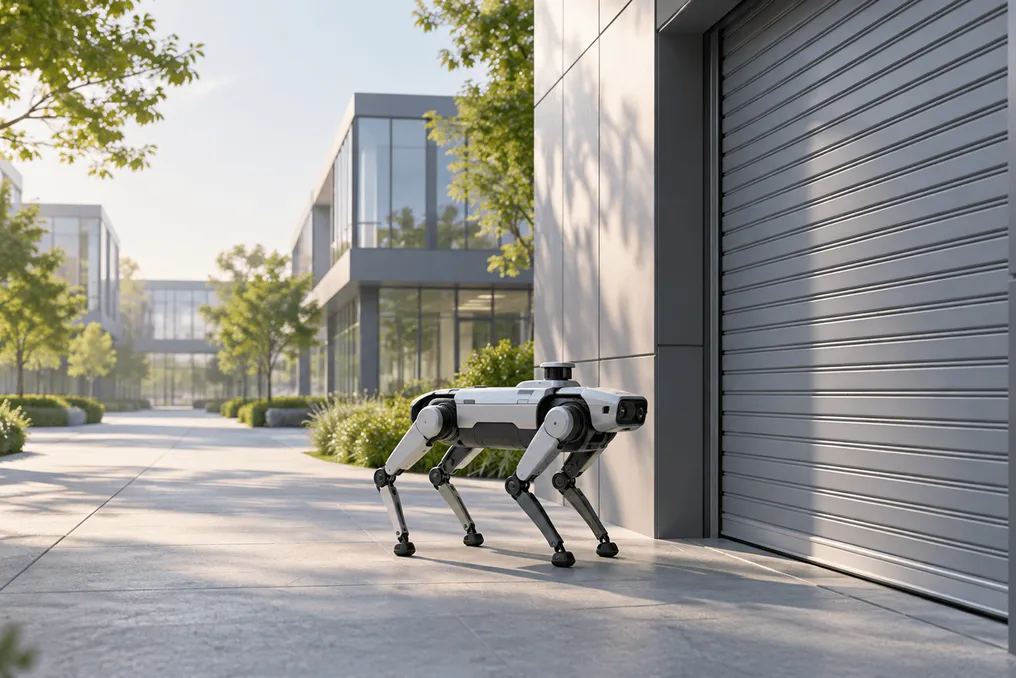
Amap's Tutu robot dog begins patrolling the Alibaba campus in Xisi to record data in work orders

Amap, the mapping and navigation platform for Alibaba, has deployed its quadruped robot, Tutu, to conduct regular inspections on the premises of the Alibaba campus in Xisi, located in Hangzhou. During the Qincheng Conference 2026, Amap presented a case study and a joint solution for a smart campus with the Alibaba Group's General Affairs Department and the Qincheng Zhihui Campus Services division, according to a report by the Chinese robotics publication Robot Qianzhan published on Tencent News.

It is important to note that Amap does not develop its own hardware for robots or manage campus operations. Instead, the company provides intelligent spatial solutions and task execution capabilities: it utilizes a robotic body for mobility and integrates it with campus task and operations management systems.

In recent months, Tutu has been tested in areas such as assisting visually impaired people, conducting tours, purchase assistance, inspections, and last-mile delivery. The software underpinning the robot's operation is Amap's ABot system, which is structured in three levels.

The basic data layer, including ABot-World and ABot-Earth, provides the world model and spatial data base for understanding the environment and simulation. The modeling layer includes the basic navigation model ABot-N1 and the manipulation model ABot-M0.5. The agent layer, consisting of ABot-AgentOS and ABot-ER, is responsible for task planning, execution, and memory, and also tracks object states and spatial relationships.

The movement system uses a dual-speed approach: the cloud performs high-level planning based on task data and maps, while the robot itself generates its route on the device using live camera data. This allows it to adapt to narrow corridors, crowds, and temporary obstacles instead of stopping.

Novelty of the System in the Xisi Campus

The novelty in the Xisi campus is the work order loop. This joint solution transforms the service catalog, inspection targets, inspection frequency, and acceptance standards into executable tasks that are then linked to maps, access permissions, campus objects, and work orders. For example, for a fire door, the robot must reach the correct location, adjust the viewing angle so that the photo meets inspection requirements, and send the captured evidence for review and action by staff.

Complex cases are reviewed and tagged by humans, after which the information is returned for model evaluation and testing. Additional tasks, such as checking a temporary construction site, can be inserted, and the robot resumes its normal route.

Roles are distributed among four parties: the Alibaba General Affairs team sets the actual tasks and standards; Qincheng Zhihui handles service maintenance and acceptance; Amap is responsible for navigation and multi-stage execution; and campus specialists make the final decisions. The initial use case is security patrolling, with plans for light delivery, guest tours, and fire safety support.

An open question remains regarding the possibility of reusing this architecture in other campuses while maintaining the standards for each task and lines of responsibility.

Lenovo unveiled preliminary version of AI Host P7 with Houmo M50 and CIX P1 chips and launched early access program
Read more
pandaily.com

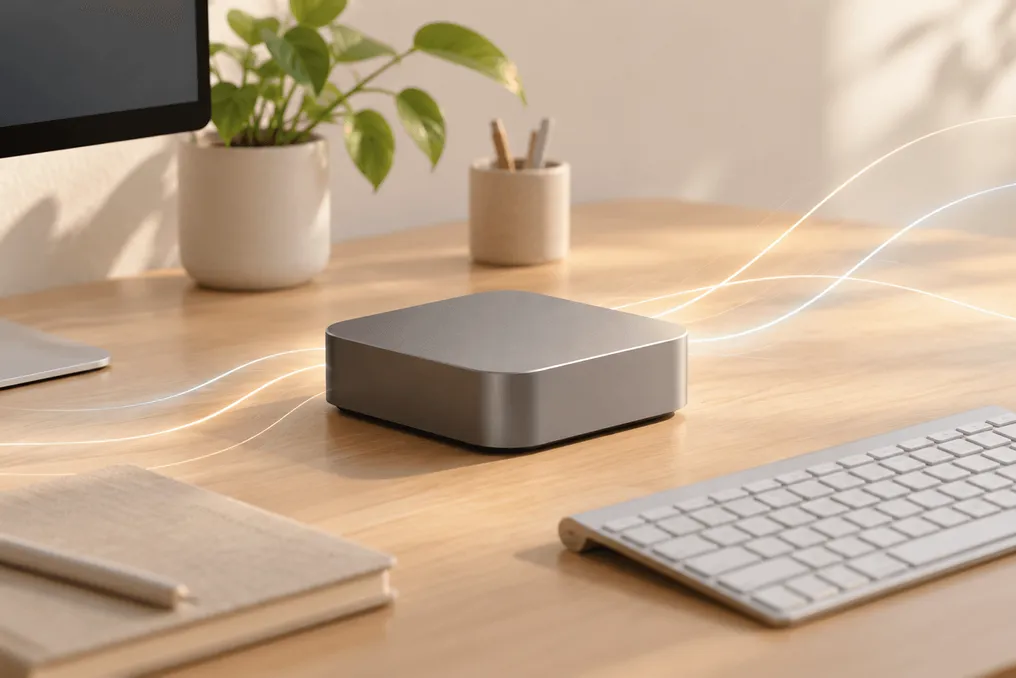
Lenovo unveiled preliminary version of AI Host P7 with Houmo M50 and CIX P1 chips and launched early access program

Lenovo demonstrated the preliminary model of its AI Host P7 device at the CSDN's 2026 1024 Programmers' Day and AI Builders Conference on October 24. Additionally, an early access program was launched, inviting initial users to test the device in real coding and office tasks before its general release. Previously, the concept of this portable AI host was presented by Lenovo in May, and this preliminary version includes more detailed technical specifications and software features.

The device weighs about 300 grams and is built on two domestic chips. The first is the in-memory computing inference chip Houmo AI M50, which, according to Houmo, provides 160 TOPS performance while consuming 10 watts. The second chip is the agent SoC from CIX Technology P1, manufactured using a 6nm process and equipped with a 12-core Armv9.2 processor and a 30 TOPS NPU, enabling 45 TOPS in heterogeneous computing.

According to CIX, the P1 chip is responsible for system management, task execution, and planning, and it can interact with external accelerators to run a 122-billion parameter model with a 128K context at a speed of 50 tokens per second. Lenovo claims that the preliminary P7 version is capable of locally processing models with up to 125 billion parameters and a 256K context.

The device comes with a local model library that includes Qwen3.8-Flash-Next, Qwen3.8-27B, and Qwen3.6-35B-A3B, as well as models for speech recognition, speech synthesis, document processing, and image design. Lenovo reports that its internal AI computing architecture, which uses mixed INT4 and INT8 quantization, achieves an average of 98.3% of the baseline BF16 with full precision across four benchmarks. It should be noted that these figures are company data and have not undergone independent testing.

Lenovo positions the P7 as a personal token hub. The token manager function allows users to direct coding tools and agent applications to local models via an API address, thereby saving routine model calls on the device instead of using paid cloud quotas. The task execution mode operates around the clock, and progress can be tracked from phones, tablets, and PCs. The built-in Tianxi AI has an Auto mode that distributes requests between local and cloud models depending on their complexity.

Sun Ke, Head of AI Hosts, emphasized that true productivity should not start with counting token costs. Lenovo has not yet disclosed the price or release date, only stating that the P7 will be available soon.

ACE Robotics releases ACE-Brain-0.6 model with 9 billion parameters for visual grounding of spatial data
Read more
pandaily.com

ACE Robotics releases ACE-Brain-0.6 model with 9 billion parameters for visual grounding of spatial data

ACE Robotics has introduced ACE-Brain-0.6—a foundational model with approximately nine billion parameters that specializes in visual grounding. This model is designed to map language instructions to precise areas, object parts, and interaction zones in real-world environments.

It is reported that the model is based on Qwen3.5-9B. During development, the vision encoder was frozen, and the language model was fine-tuned on about one million verified samples of spatial supervision. This data covers approximately 940,000 images and 2.7 million question-answer pairs.

Comparison Results with Competitors

According to data published by ACE Robotics itself, ACE-Brain-0.6 outperformed OpenAI's GPT-6 Astra in six out of eight grounding tests. Specific results include: Where2Place (76.55 vs 71.10), PixMo-Count (89.41 vs 88.10), RoboSpatial (74.82 vs 69.55), RoboAfford (88.51 vs 84.94), ShareRobot (49.70 vs 46.60), and the team's proprietary RobotGrounding set (94.13 vs 91.10).

Overall, the model achieved an average score of 74.53 across seven public benchmarks, compared to 73.68 for Astra. The RobotGrounding set comprises 2,591 questions across 14 task types, including small object detection, counting multiple instances, determining the absence of a requested target, and matching targets across different camera views.

The company also provided comparisons with Google Gemini 4 Argon and Anthropic Claude Opus 5.5, viewing them as benchmarks for spatial perception rather than a geopolitical competition. In controlled scaling tests, where the architecture and training recipe remained unchanged, increasing the training set from 260,000 to approximately one million samples boosted the average score across seven benchmarks from 69.3 to 74.5, demonstrating an almost logarithmic curve. Doubling the data volume led to an approximate 2.4 point increase in the average score, whereas simply adding more samples of the same type improved performance by less than one point. The main performance gain was achieved through new scenes, spatial relationships, and supervision formats.

The data processing pipeline integrates over 30 open robot datasets with first-person private data. Tools such as Grounding DINO and SAM 3 are then used to convert capture and motion state signals into verifiable spatial labels. ACE Robotics asserts that answers are generated only when complete visual information is available, such as requiring full instance masks before answering counting questions.

On public GitHub repositories named DAXIAORobotics, ACE-Brain-0 and ACE-Brain-0.5 are still listed; however, at the time of publication, the weights for ACE-Brain-0.6 were not made publicly available. ACE Robotics, co-founded by Shaogan Wang of SenseTime, previously presented ACE-Brain-0.5 as a unified perception-planning-action-evaluation loop. Version 0.6 focuses exclusively on grounding as the link between high-level reasoning and reliable physical execution.

Popular