Tencent Cloud Unveils Comprehensive Data and Training Stack for Robotics and Autonomous Systems with TCLake XPhysis
Read more
Pandaily
pandaily.com

Tencent Cloud Unveils Comprehensive Data and Training Stack for Robotics and Autonomous Systems with TCLake XPhysis

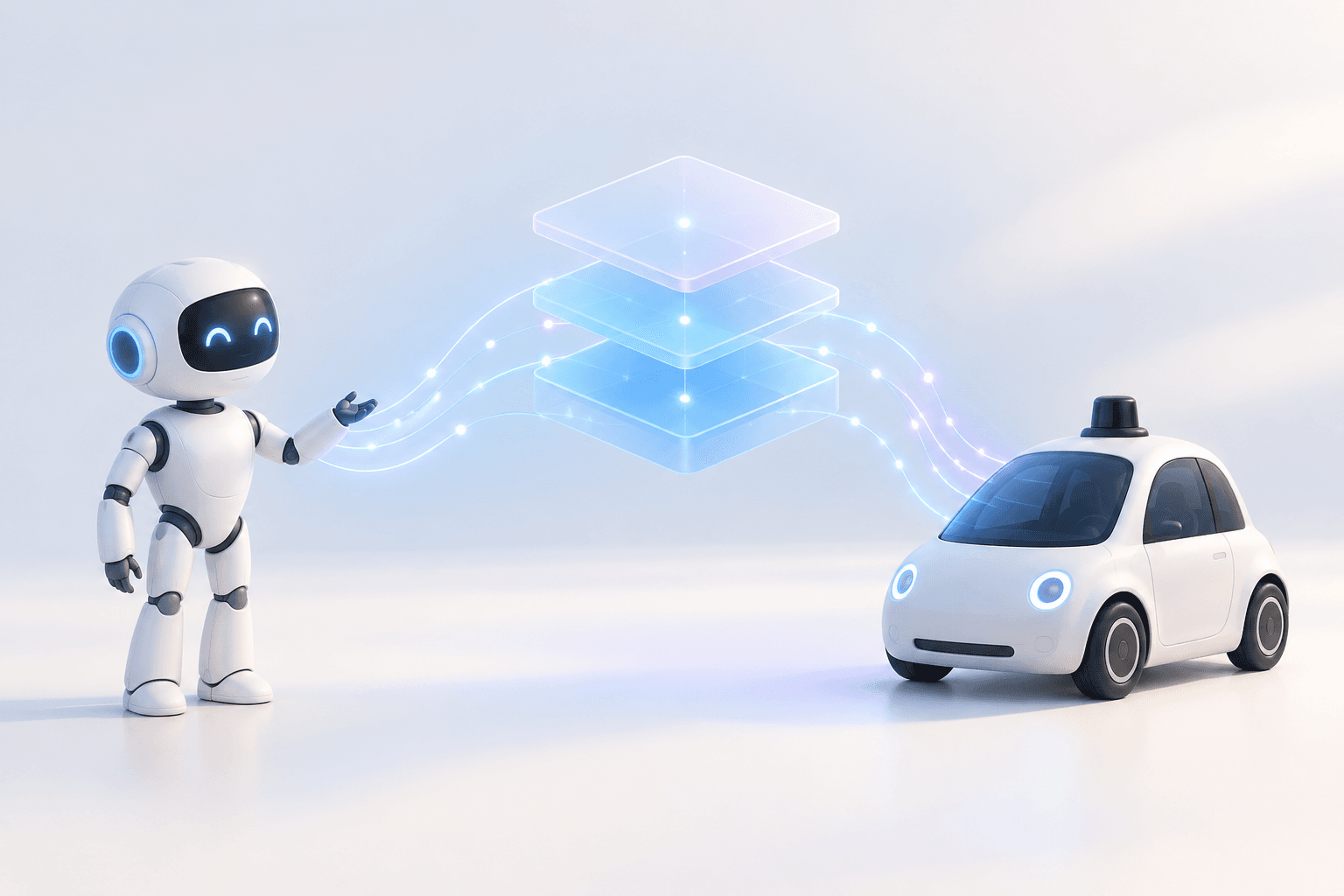
At the Tencent Global Digital Ecosystem Summit held on October 30th, Tencent Cloud introduced an integrated solution for multimodal data processing, model training, and inference, designed for physical artificial intelligence applications such as autonomous driving and embodied intelligence. Furthermore, the company announced the release of TCLake XPhysis—a platform covering the entire lifecycle of physical AI development.

Autonomous vehicle systems and robots generate massive amounts of video and sensor data that are improved through iterative training and simulation. Tencent Cloud notes that previously these tasks were often distributed across multiple tools, leading to duplicated data preparation and the creation of hard-to-reuse resources. The company's new solution utilizes the DataBuddy workflows and the AI DLC data lake compute service to unify data management, development orchestration, and model tasks on a single platform, linking data processing, training, inference, and simulation validation.

Within this stack, Xpark and Meson components handle multimodal data cleaning, quality checking, labeling, and sample preparation. TCRay provides distributed training and inference, while TCLake centrally manages data and AI assets. Issues identified during validation can be fed back into data preparation for the next training cycle.

Tencent Cloud asserts that this approach has reduced data preparation time from fifteen days to two, increased GPU utilization by nearly 200 percent, and lowered the average daily cost per GPU by 35 percent. Among the users mentioned in the article is Zhuoyu Technology. In the life sciences sector, the BioMap platform uses Tencent Cloud's EMR DIaaS and TCRay to process and train multi-omics data within its virtual cell work.

TCLake itself is the result of a year of engineering work with dozens of clients in intelligent driving and embodied AI, and XPhysis will evolve based on it. Vice President Huang Shifei noted that as agents become new users of data platforms, the way companies use data and their computational loads are changing. Platforms must accurately understand the business, perform tasks under control, and efficiently process multimodal data, training, and inference.

The company also provided updates on DataBuddy, its dashboard for data agents. The educational company Jiuxuewang transitioned from a pilot project to industrial operation in just three weeks, and adding a semantic layer increased the accuracy of question answering in one test from 83.5 percent to over 95.9 percent. A private deployment option is now available for financial and government clients.

Similar stories

CloudSEK Launches Incubation Program for Cybersecurity Startups
Read more
yourstory.com

CloudSEK Launches Incubation Program for Cybersecurity Startups

CloudSEK, a company specializing in cybersecurity and AI-based threat intelligence and based in Bengaluru, has announced the launch of an incubation program called CloudSEK Launchpad. This program is designed for 12 weeks and is intended for early-stage startups in the field of cybersecurity.

The first cohort of the program will include ten companies, each of which can receive up to $5,000 in credits for using AI models. Applications are open until November 20, 2026.

According to an official statement, the program's focus is on product development and its commercial implementation, rather than solely on mentorship. Selected founders will receive weekly guidance from CloudSEK management on areas such as research, product development, enterprise sales, and fundraising. Additionally, they will gain access to CloudSEK's threat intelligence resources and researchers. The company will also introduce the founders to potential clients and channel partners in India, the Gulf Cooperation Council region, and the United States.

The program concludes with a demo day, during which founders present their projects to investors and potential customers.

Startups at the pre-seed and seed stages, as well as founders at the idea stage, can apply, provided they have a strong team and a clearly defined security problem. Areas of interest include AI system and agent security, native AI security operations, threat intelligence, fraud and identity prevention, and software supply chain security.

Rahul Sasi, founder and CEO of CloudSEK, noted: 'When we started CloudSEK, I wanted someone to show us the shortcuts—which clients to call first, what mistakes take years, and who to trust. Artificial intelligence has significantly simplified the creation of complex technology, but building a successful cybersecurity company still requires access to real threat intelligence, trusted clients, and the right industry network. With Launchpad, we want to share what we have learned and help promising founders reach their first ten paying customers.'

In addition to the Launchpad program, CloudSEK introduced KeyVigil—a secure gateway that allows applications and autonomous AI agents to access advanced AI models through a single entry point. It centrally manages primary API keys, masks sensitive data before it reaches the model, and detects and blocks prompt injection and hacking attempts. The system also logs interactions with models and allows organizations to set spending limits for teams, applications, and agents. KeyVigil is available to enterprise clients, and Launchpad participants will gain access to it through their credits.

Durban Robotics Champion Teen Launches Free Coding Lab for Children
Read more
iol.co.za

Durban Robotics Champion Teen Launches Free Coding Lab for Children

At the young age of 14, Sinead Samputh demonstrates that technology and community engagement can go hand in hand. As a 9th-grade student at Reddam House Umhlanga, Sinead has merged the fields of robotics and grassroots education, directing her award-winning technical talent toward supporting the next generation of young innovators.

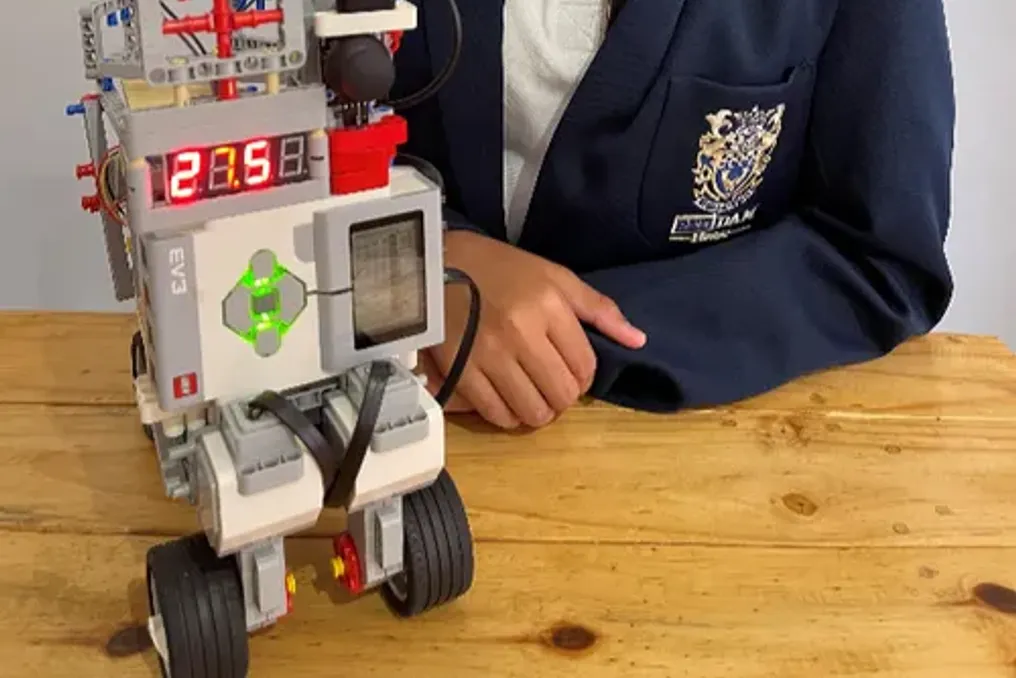
Her interest in technology arose early, and she has completed over 200 hours of programming training while continuously refining her skills in robotics. Sinead founded BAYMIN LABS—a youth-led, free coding initiative designed for children aged nine to thirteen.

Working with The Seed Fund, a non-profit organization that supports families in the informal settlement of Malakka Road in Durban, she introduces children to the basics of coding. This project emerged after Sinead won first place in her age group at the global inter-school robotics competition Inspired Builds by Inspired Education Group, using a BAYMIN robot that assisted in basic medical screening.

Sinead stated: 'The solution can change a moment. The ability to solve can change a life. I truly wanted not just to solve other people's problems, but to give young people the opportunity and skills to create their own solutions.'

Building on her previous success, Sinead won in her age category at the global Inspired robotics competition with the BAYMIN AIR prototype. This prototype, inspired by influenza, uses sensors and LED indicators to monitor air quality and display environmental risk levels in places such as schools and hospitals.

After developing a six-week coding curriculum, she raised 13,650 rand from corporate donors to purchase three Samsung tablets and protective cases. Through her volunteer work at The Seed Fund's homework club, she collaborated with the organization, teaching local children the visual programming language Scratch, which is used to create animations, stories, and interactive projects.

She initially started working with nine students in the 3rd and 4th grades, many of whom had no prior knowledge of coding. She is now teaching older children, helping them gain confidence in experimentation, making mistakes, and finding their own solutions. Sinead plans to continue moving younger children into advanced classes and eventually into high school, which will be located within the same community, with The Seed Fund.

She noted that 'this will continue in higher grades, and I think they will have a greater impact because, obviously, when they get older, they will have more opportunities.'

Sinead runs BAYMIN LABS on Saturdays and hopes to expand the program to other underserved communities, ultimately creating BAYMIN Academy—a paid coding course that will help fund the free community initiative. She emphasized: 'I don't want to win if winning means leaving others behind. The greatest journey is where we rise, learn, and change the world together.'

In the future, Sinead aims to combine medicine and coding to become a neurosurgeon and biomedical engineer. Her mother, Joanna Samputh, expressed immense pride in Sinead's achievements and plans, noting that what began as a simple requirement for school community service has turned into a deep passion for teaching coding to children. Joanna Samputh said: 'It was amazing to see how she moved from the initial plan to the point where she made the decision herself.'

Shelly Perringe, head of Reddam House Umhlanga College, also expressed pride in Sinead, noting that she utilizes every opportunity to support the less fortunate and always seeks ways for her passion for robotics and coding to serve a higher purpose.

OpenAI expands cloud presence and makes models available on Google Cloud
Read more
olhardigital.com.br

OpenAI expands cloud presence and makes models available on Google Cloud

OpenAI is extending its presence in the cloud sector by integrating its artificial intelligence (AI) models into the Google Cloud infrastructure, which increases the availability of its technologies for developers and corporations.

This new agreement establishes that the GPT-6 Astra, GPT-6.1 Sol, and GPT-6 Luna models will be available in the Google Cloud Model Garden catalog. This move marks another advancement by the creator of ChatGPT beyond the existing collaboration with Microsoft.

As announced this Wednesday (21), these models are being offered in preview phase to a specific group of enterprise clients. Furthermore, the integration will enable developers to use Google Cloud APIs and link local workflows, such as Codex CLI and Desktop, to the Gemini platform to perform inferences.

This partnership strengthens OpenAI's position among the largest cloud infrastructure providers. Previously, the company had signaled plans to place its models on Amazon Web Services (AWS) after the expiration of Microsoft's exclusivity period over its intellectual property.

Google Cloud will incorporate three OpenAI models into its Model Garden, a catalog that aggregates proprietary, third-party, and open-source offerings. The intention is to give companies the freedom to select the most appropriate technology for each need, considering metrics such as cost, performance, and response speed.

The released models are listed in the announcement. According to Google Cloud, the strategy aims to allow companies to switch between different models according to the requirement of each application, avoiding dependence on a single solution for all tasks. The catalog, which already contains over 200 models, will now offer access to the three main closed-source large language models on a single enterprise AI platform.

The collaboration also includes the commercial listing of OpenAI models on the Google Cloud Marketplace. This means that consumption will be unified in a single Google Cloud invoice, allowing expenses to be allocated to pre-existing cloud commitments or the platform's Flexible Savings Plans. The purpose is to simplify acquisition and allow companies to distribute their workloads across various models without the need for multiple contracts with different vendors.

Thomas Kurian, CEO of Google Cloud, stated in a release that the company's goal is to provide a wide range of models so that customers can choose the best option for each activity, prioritizing quality and cost reduction. Greg Brockman, president and co-founder of OpenAI, emphasized the relevance of this partnership in making the company's more advanced models and Codex accessible in the environments where customers already develop their applications.

The announcement also detailed the security and governance safeguards applicable to running OpenAI models on Google Cloud infrastructure. The company guarantees that customer data, including prompts, contexts, and results, will remain within the designated data perimeter and will not be used to train foundational models. Zero Data Retention (ZDR) options are scheduled to be implemented in the future.

OpenAI models will run on dedicated Google Cloud infrastructure. Additionally, future availability of confidential computing resources is anticipated. Traffic will be managed by isolated and protected gateways, while authenticated identity mechanisms, audit logs, and network security controls will allow administrators to monitor interactions with the models and AI agents. These guarantees constitute the conditions established by Google Cloud for the enterprise use of third-party models on its infrastructure.

Although the models are already available in preview version for selected enterprise clients, other integrations are planned. In the coming weeks, OpenAI models are expected to be integrated into Google Antigravity, Google's programming tool, and Gemini for Enterprise, expanding the scope of work for developers and organizations.

OpenAI and Google already had a prior business relationship; last year, the creator of ChatGPT used Google Cloud infrastructure to operate ChatGPT and its API. This expansion of the partnership occurs at a time of growth in Google's cloud business. In the second quarter, the annualized revenue growth of the segment reached approximately 82%, compared to 63% in the first quarter. Meanwhile, AWS registered 37% growth, and Microsoft showed a 42% expansion in the same period. The growing demand for custom chips and AI models boosted Google Cloud.

Founded in 2015, OpenAI emerged partly as an alternative to the concentration of AI research in companies like Google. In 2017, researchers from the organization published an academic paper on the Transformer architecture, fundamental to the advancement of the technology. Subsequently, OpenAI popularized generative AI with the launch of ChatGPT. Currently, the company is seeking investment with a valuation of US$ 1.4 trillion (approximately R$ 7.56 trillion) and plans to conduct an Initial Public Offering (IPO).

With the arrival of the models on Google Cloud, OpenAI diversifies its technological distribution channels, reaching corporate clients through the three major cloud infrastructure platforms.

Popular