Space exploration is undergoing a major transformation, driven by advancements in robotics and artificial intelligence (AI). Recent missions demonstrate that vehicles sent to other planets are becoming more capable of navigating unexplored terrain and conducting scientific research with less need for human intervention.
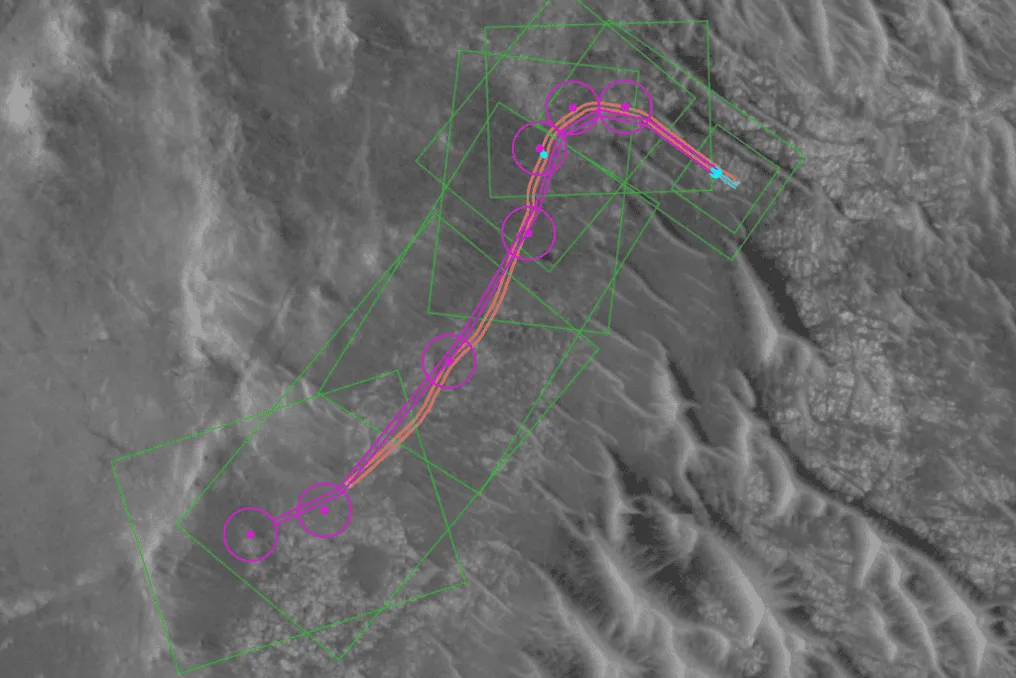
This autonomy is crucial on Mars, given that the great distance from Earth makes real-time remote control unfeasible. Due to the time it takes for radio signals to travel between the two celestial bodies, engineers must create intelligent systems that allow robots to analyze the environment, estimate risks, and make decisions independently during operations.
This question was discussed on the 'Olhar Espacial' program last Friday (23). The program hosted physicist Roberto 'Pena' Spinelli, who graduated from the University of São Paulo (USP), specializes in Machine Learning from Stanford University in the United States, and works as an AI researcher and columnist for Olhar Digital News.
Pena clarified that one way to develop this independence is by training systems in simulated environments, where they can face various situations before being launched into space. A technique used in this process is reinforcement learning, which allows AI to improve its choices based on successes and failures. He stated: 'AI is trained, not programmed, and in the training you try to put several scenarios. So, we have a type of AI training called reinforcement learning, whose idea is to put it in a simulator. Then, you would simulate a space mission.'
In this training method, the system receives rewards for making correct decisions and adjusts its tactics when the results do not meet expectations. Repetition allows the algorithm to learn how to react to different obstacles and conditions, preparing the robot for mission challenges.
Despite the ability to simulate many scenarios, there is a limit to what can be predicted in the laboratory. Real operating conditions may differ from those digitally reproduced, and not all unforeseen events can be anticipated by engineers. For this reason, the performance of the systems also needs to be evaluated in space missions.
Pena emphasized that even with advanced simulations, it is essential to monitor how the equipment and its AI systems behave outside controlled environments. Practical experience is vital because tests conducted on Earth do not guarantee that everything will work as planned. He commented: 'That's why I think we should send it as soon as possible so we can start seeing how these robots behave on a space mission. I don't guarantee it; NASA is very good, but you can't guarantee it.'
Another way to increase the effectiveness of space missions is the use of 'robot swarms.' Instead of centralizing all tasks in a single device, this methodology divides the work among multiple machines that operate in a coordinated manner. The concept is similar to the collective behavior of ants and bees, where distinct individuals collaborate toward a common goal.
In hostile environments, such as the surface of other planets, this strategy also aids in maintaining operations despite setbacks. Pena explained that if one robot is damaged by radiation or has trouble fulfilling its function, the group can reorganize activities and seek alternatives to continue the mission.
The autonomy of machines will not only serve to explore unknown terrain. In the planning of future human bases on the Moon and Mars, robots can assist in identifying, collecting, and processing resources present on site, such as water and construction materials. Utilizing these resources would decrease the amount of supplies that need to be brought from Earth, facilitating astronauts' prolonged stays.
However, these activities will also require robust systems capable of operating under difficult conditions and responding appropriately when something deviates from the plan. Thus, the development of AI for space depends not only on increasing its capabilities but also on evaluating its limits and testing its reaction to various circumstances.
For Pena, technological advances should not extinguish human interest in exploration. Even if robots take on complex and dangerous tasks, curiosity will remain a driving force behind journeys beyond Earth. AI can enhance what humanity can achieve in space, but it will not eliminate the human desire to personally explore new worlds and discover what is still unknown.
He concluded: 'Humans won't suffice on their own, and if AI is controlled, the friend of humanity, it will be able to satisfy human beings. I think there will even be space tourism.'
Therefore, the trend points to increasingly autonomous robots taking on a larger share of the work required to investigate other worlds and prepare future manned expeditions. However, this progress will depend not only on the ability to create intelligent machines but also on understanding their limitations and verifying in practice whether they are ready to face the real conditions of space.