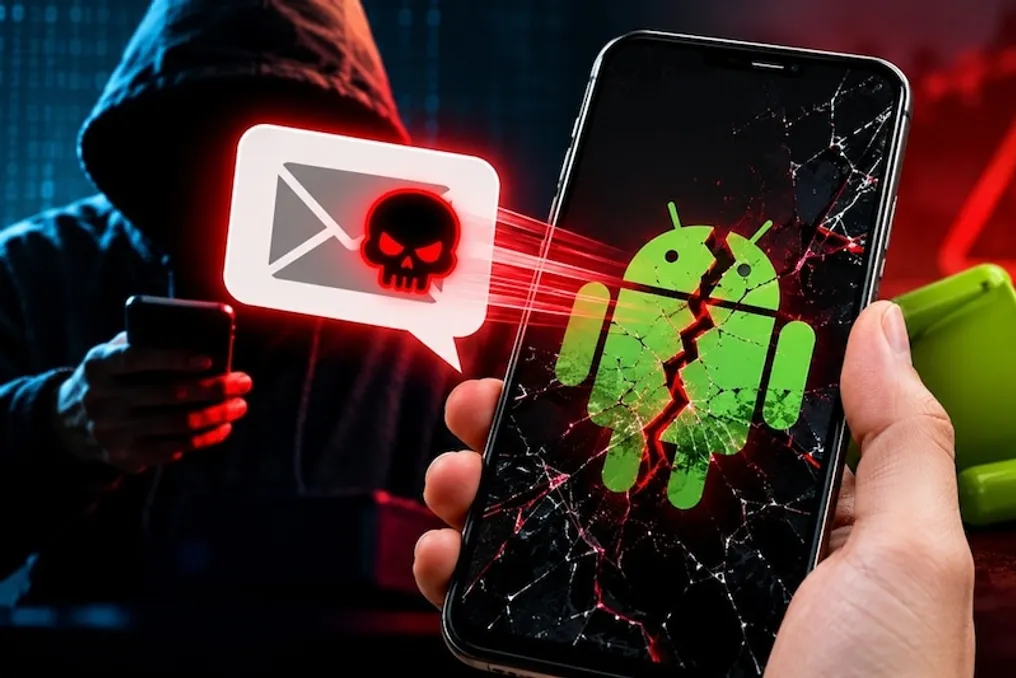
SMS Of Death vulnerability discovered, capable of disabling Android smartphones
Read more
Aaj Tak
www.aajtak.in

SMS Of Death vulnerability discovered, capable of disabling Android smartphones

A dangerous security vulnerability has been identified in the world of smartphones, putting millions of mobile device users at risk. This new vulnerability, named SMS Of Death, leads to the complete failure of Android-based smartphones.

The unusual problem was initially discovered by security researcher Mark Blazsik, who subsequently named it SMS Of Death. According to the researcher, activating this attack requires a special SMS message that causes a crash in the Android system, after which the smartphone stops functioning.

The smartphone's call management system completely fails, which can lead to the inability to make any calls, including emergency calls. The researcher warns that about twenty such dangerous messages can turn any Android smartphone into a useless object.

Thanks to SMS Of Death, the smartphone can enter a bootloop state, where the Android operating system continuously tries to process the SMS but cannot start normally.

Another serious issue with SMS of Death is that it is extremely difficult to detect. Since the message does not appear in incoming SMS, the system instantly freezes when attempting to process it, and users receive no notifications.

Even resetting to factory settings does not solve the problem. If the message was sent from a specific number, the telecommunications operator will continue to attempt delivery, and the phone will fail again every time it is turned on.

However, according to media reports citing the researcher, it may be possible to fix this problem by connecting the phone to a computer where these messages can be viewed and deleted, although this method may seem complicated to many users.

Mark Blazsik reported that he first notified Google about this vulnerability on May 5th. He noted that Google repeatedly refused to treat his report as a security issue. Later, the researcher learned that Google had been working on fixing this problem for some time.
Similar stories

Essential settings on Android phones to ensure greater durability and performance
Read more
g1.globo.com

Essential settings on Android phones to ensure greater durability and performance

When purchasing an intermediate Android smartphone in 2026, it is essential to pay attention to various technical details in the device's specifications. The focus should go beyond camera megapixels or just the price, seeking a well-balanced device that offers good performance, adequate storage space, and longevity.

RAM Memory: minimum 8 GB

The fluidity of the device is directly affected by the RAM memory. For the year 2026, a minimum of 8 GB of RAM is recommended so that using browsers, social networks, messaging apps, and multitasking occurs without constant freezing. Models equipped with 12 GB or more of RAM are more common and represent an advantage for users who game or wish to maintain a high level of performance for longer.

Storage: minimum 256 GB

Internal storage has become crucial due to the growing memory consumption by Android, applications, and personal data. With 256 GB, the user has more capacity to store videos, photos, documents, and games without the constant need to delete content. This capacity is considered more appropriate for those planning to use the device for several years.

Battery: at least 5,000 mAh

The battery remains one of the most important components for most consumers. In intermediate smartphones, 5,000 mAh is the safe benchmark to support more than one day of use without access to a power outlet. It is advisable to check if the battery uses silicon-carbon technology, as this allows manufacturers to incorporate larger charge capacities into thinner devices. Currently, models are available in stores with capacities exceeding 6,000 mAh, reaching up to 10,001 mAh.

Screen: 120 Hz is the standard

Screen quality directly impacts the user experience. Panels that use AMOLED or similar technology generally provide more vibrant colors, better contrast, and deeper blacks. Furthermore, a 120 Hz refresh rate ensures smoother browsing, faster animations, and fluid scrolling.

Updated Android

The Android support period and the availability of security updates have become decisive criteria when buying phones. Security updates and new versions of Android are vital to keep the device protected and compatible with the latest software. The ideal is to opt for models that offer support for at least five years. Some brands, such as Samsung, already provide six years of updates on certain intermediates, while others, like Motorola, show variations between two and seven years, depending on the specific model. It is recommended to consult the manufacturer's website for this information.

NFC: a differential for payments

NFC is a relevant feature to check before buying, as it is the technology used for contactless payments, but not all budget phones include this feature. The prices of intermediate Android models analyzed in the last week of October ranged between R$ 2,100 and R$ 7,000. Examples presented included the Jovi V70 (8 GB / 256 GB, 7,000 mAh, screen up to 120 Hz), Moto Edge 70 Pro (12 GB / 256 GB, 6,500 mAh, screen up to 144 Hz), Oppo Reno 16 (8 GB / 256 GB or 512 GB, 6,000 mAh, screen up to 120 Hz), Realme 16 (8 GB or 12 GB / 256 GB or 512 GB, 6,550 mAh, screen up to 120 Hz), and Samsung Galaxy A57 (8 GB / 128 GB or 256 GB, 5,000 mAh, screen up to 120 Hz).

Bug in One UI 9 could render Galaxy S26 Ultra practically unusable
Read more
tecnoblog.net

Bug in One UI 9 could render Galaxy S26 Ultra practically unusable

Samsung has confirmed the existence of a bug in One UI 9 that could potentially make some Galaxy S26 Ultra devices practically unusable. This defect prevents the completion of the initial device setup and may deny the user access to the home screen.

A company representative discovered this issue after receiving reports from users in the Samsung Members digital community. Currently, complaints specifically regarding the setup screen are predominantly coming from South Korea.

The failure may manifest after a Galaxy S26 Ultra running One UI 9 is restored to factory settings. During the setup process, the phone attempts to load a page related to the Samsung Account but displays a content unavailability error. Since this stage is part of the initial process, the user may get stuck in the settings without reaching the main Android screen.

According to Samsung's statement, the problem occurs when the system uses an unstable version of WebView under certain network conditions. The company has suggested several temporary solutions. One option is to change the connection type during setup, switching between Wi-Fi and mobile data. Another method is to log into the Samsung account via another device, accept the relevant terms of use, and then attempt to complete the Galaxy S26 Ultra setup again.

If these measures do not help, users are advised to contact the manufacturer's support service. An exact release date for the final fix has not yet been established. One UI 9 began rolling out to the Brazilian Galaxy S26 lineup at the end of September. However, no reports of the same setup-blocking error have been registered locally. Nevertheless, one consumer reported complaints about other stability issues, such as freezing, black screens, and slowdowns.

Until a fix is released, users are advised to avoid factory resetting their Galaxy S26 Ultra with One UI 9 unless absolutely necessary.

Popular