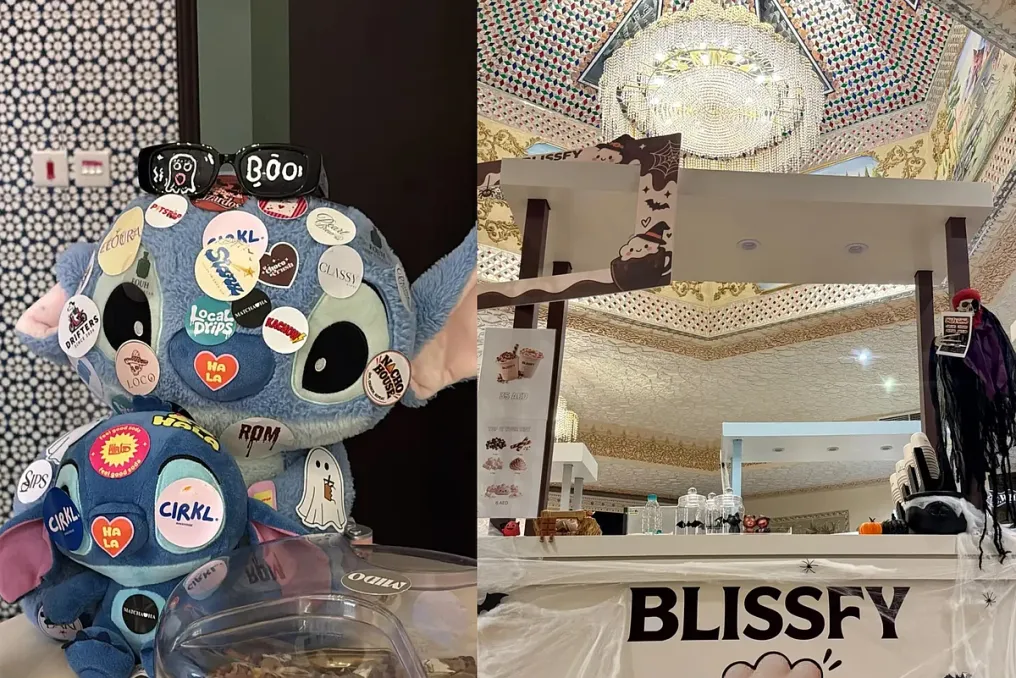
Palace in Ras Al Khaimah Becomes Venue for Local Businesses During Themed Event
Read more
Khaleej Times
www.khaleejtimes.com

Palace in Ras Al Khaimah Becomes Venue for Local Businesses During Themed Event

For many years, the Al Qasimi Palace in Ras Al Khaimah was known for mystical legends and ghost stories. However, over three days in October, this iconic landmark took on a new function, welcoming visitors who wished to tour its interiors, purchase goods from local entrepreneurs, and enjoy a Halloween-themed pop-up event.

The local name for this building is the 'Ghost Palace.' From October 16th to 18th, the Qasr Al Jin pop-up took place, bringing together small businesses, cafes, and guests in an atmosphere distinct from traditional markets and trade fairs.

For Jana Belal, a native of Ras Al Khaimah, this event provided an opportunity to finally visit a landmark she had heard about since childhood. Belal told Khaleej Times that 'growing up in Ras Al Khaimah, no matter where we went past the palace or even talked about it in school, it was always associated with ghosts and scary stories.'

Having heard these tales throughout her youth, visiting the palace with a friend brought back memories of the legends surrounding the building. She noted: 'We knew about it our whole lives, and for a long time it wasn't open to the public. So, being able to go there felt really cool to us.'

Beyond its mysterious reputation, Belal emphasized that the event was valuable because it gathered small businesses and gave guests a chance to support local entrepreneurs. With her own experience running a small business, she tries to buy from independent sellers whenever she visits similar fairs. She stated: 'I always want to support small local businesses. It was very nice that they were all in one place, supporting each other.'

Belal, who considers Halloween one of her favorite annual events, particularly noted how vendors integrated the theme into their stalls through decorations and themed merchandise. Another highlight for her was the presence of animals, which she called 'lovers,' noting their appearance near the stalls and other activities.

She also toured the upper floor of the palace, where rooms displayed art, furniture, and decorative items reflecting various cultural influences. Belal shared that 'each room had its own theme, and you could see that a lot of thought was put into every detail, from the beds and paintings to the small ornaments.'

While the unusual location attracted visitors, the event also provided emerging entrepreneurs with an opportunity to showcase their products to a wide audience. For Fatima Al Bloushi, owner of Blissfy, deciding to participate was largely driven by the venue itself and the curiosity it might generate. She said: 'What prompted us to participate was that the pop-up concept was different from regular events. There was a sense of mystery and something unusual that could spark people's curiosity.'

She hoped the palace's reputation would attract visitors who had never explored the building before, giving her newly launched business a chance to reach potential customers. This event marked Blissfy's first participation in a pop-up format since its official launch, a significant milestone for the company. 'Honestly, the experience was tiring, but at the same time pleasant and worth the effort.'

Despite the demands of participating in the three-day event, Al Bloushi reported that the large number of visitors led to encouraging sales and positive customer interaction. She added: 'Attendance was huge, and the crowds were the biggest indicator of the event's success. Fortunately, sales were good, and the reaction to our products was positive.'

She also highlighted that the palace's architecture and unique atmosphere made the experience particularly memorable.

Mariam Eissa Al Bloushi, owner of Mido, was also an entrepreneur participating in the pop-up for the first time. Like Fatima, she saw the unusual location as an opportunity to introduce her business to customers who might not otherwise find it. She stated: 'We wanted to try something new and present our Mido project to a wider audience.'

Although the stories associated with the palace initially piqued her curiosity, Mariam noted that the atmosphere was far from frightening. She said: 'The stories associated with the palace added to the atmosphere and heightened our curiosity, but the place wasn't scary. On the contrary, the atmosphere made the experience more enjoyable.'

For Mido, the event was also a chance to interact directly with visitors, present their products, and better understand customer tastes and interests. Mariam noted that the combination of the palace's unusual setting and visitor curiosity created an experience different from typical pop-ups. She concluded: 'The most striking thing was the unusual atmosphere, which was both eerie and pleasant, as well as the visitors' curiosity about the place and the offered products.'

Since both companies appeared at the pop-up for the first time, the event served as an opportunity for direct sales to visitors, relationship building with clients, and gaining experience that could support future participation in similar events.
Similar stories

Review of Current Exhibitions in Tehran Art Galleries
Read more
www.tehrantimes.com

Review of Current Exhibitions in Tehran Art Galleries

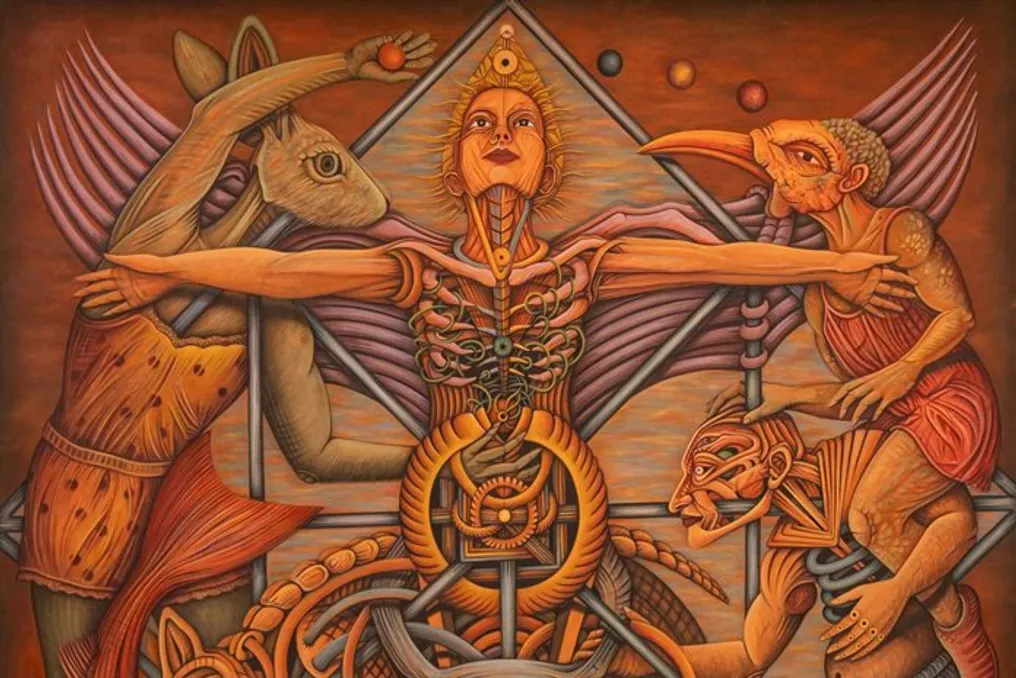
A number of exhibitions featuring works by various artists are currently taking place in Tehran's art galleries. For instance, Ech Gallery is hosting an exhibition of paintings by Sahar Farah titled 'Habnameh,' which runs until October 30th. This gallery is located at 10 Mirza Taraj, opposite Dowlat Street, on Shariati Avenue.

Iranshahr Gallery features an exhibition of paintings by Mani Mehrzad called 'After the Snow,' available until October 27th. The gallery is located at 69 Sepand Street, near Karim Khan Avenue.

Melina Bahrami is exhibiting her latest works at Bostan Gallery. Her exhibition, 'Absence,' concludes on October 27th and is held at Number 71, 22nd Alley, Larestan Street, near Motahari Avenue.

Afrand Gallery currently hosts an exhibition of paintings by Negar Nasiri titled 'Unrelated,' running until October 30th. The gallery is located at 48 Jalal Hosseini Street, Jahan Ara Street, near Jalal Ale Ahmad Highway.

Paintings by Khabihe Lowri are displayed at an exhibition in Asr Gallery. The exhibition, titled 'Memory of Imagination,' will run until October 26th and is located at 18 Delavis Street, near North Mirzaie Shirazi Street.

Jaleh Gallery currently showcases paintings by Bahar Akhvakan titled 'Growth,' which will last until October 23rd. The gallery is located at Number 3, Noshar Alley, Iranshahr Street, Karim Khan Avenue.

Dena Gallery also has an exhibition of paintings by Vahika Hartuniian, visible until October 30th. The gallery is located at 4 Soussan Alley, near Karani Street.

Saless Gallery is hosting an exhibition of works by Ahmad Mokaddasi, which ends on October 27th. This gallery is located at 148 Karim Khan Street.

Shirin Gallery presents the latest collection of paintings by Mostafa Akbari. The exhibition runs until October 27th and is located at Number 5, 13th Street, Karim Khan Street.

Pouya Kosari is exhibiting his new collection of paintings at Inja Gallery. His exhibition, titled 'Oblivion,' will run until October 30th and is located at 4 Pedram Alley, Neofl Le Chateau Street.

Photographs reveal the history of the UAE in the early 1900s and the development of Al Maryah Island in Abu Dhabi
Read more
www.khaleejtimes.com

Photographs reveal the history of the UAE in the early 1900s and the development of Al Maryah Island in Abu Dhabi

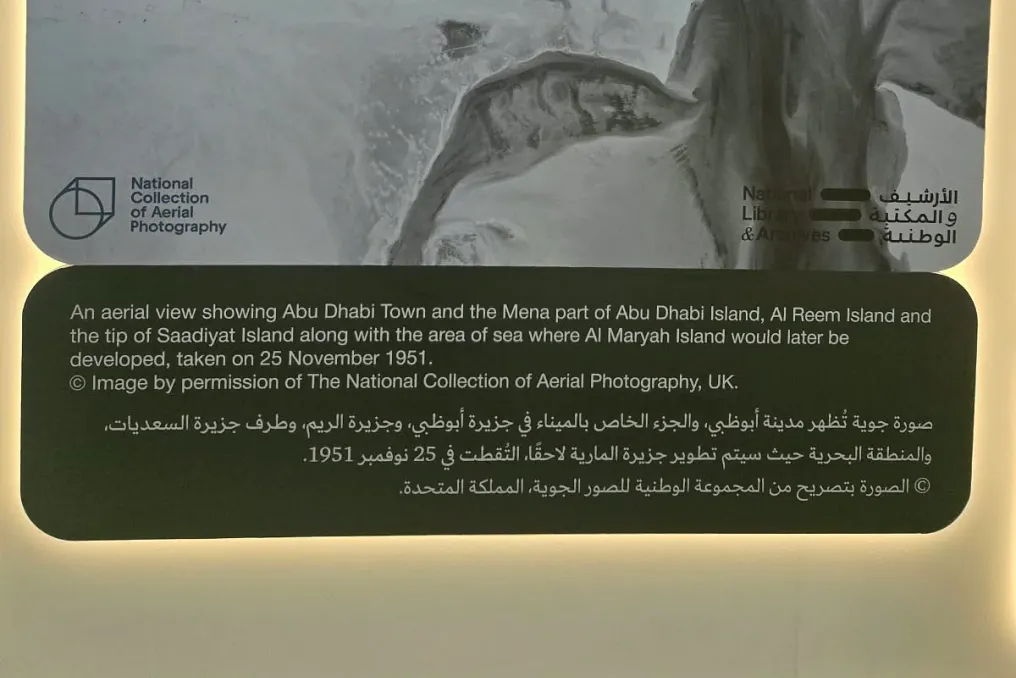
Before Al Maryah Island transformed into a financial hub composed of skyscrapers, luxury hotels, and global company headquarters, it was merely a stretch of coastline. Today, the transformation of this area can be recreated using an aerial photograph consisting of 44 images, which is held in the UAE National Library and Archives. This remarkable collage captures Abu Dhabi at a time when much of the city that defines its current silhouette did not yet exist.

Upon close inspection, the landscape may appear almost unrecognizable. The photos show Kasr Al Hosn, the old city of Abu Dhabi, coastal sections, open land, and water, but Al Maryah is absent in the form it exists today as a business and residential center. Mina Port has not yet taken its final shape, and Saadiyat remains largely undeveloped. Many islands, roads, towers, and landmarks familiar to modern residents have yet to appear.

According to Justin Kodrai, Senior Expert at the National Library and Archives, this is why aerial photography is so significant. The aerial image does not just demonstrate what Abu Dhabi looked like; it can show how the city was forming.

These 44 photographs were stitched together to create an extensive panorama of Abu Dhabi from 1968, providing a rare bird's-eye view of a city that was at the beginning of transformations that changed its geography. The National Library and Archives itself is located on reclaimed land, serving as another reminder of the complexity of imagining the physical boundaries of the old city from a modern perspective.

At that time, even some infrastructure elements that would later connect Abu Dhabi to the wider emirate were just beginning to emerge. The first full bridge in Maktah had not yet become a familiar entrance, and the first Abu Dhabi International Airport had not yet opened.

There are also ground-level photographs. Afraa Butti Al Kubaisi, Content Accessibility Specialist at the National Library and Archives, conducts tours through images that allow one to perceive the transformations not so much as a urban planning exercise, but as human history.

One series is dedicated to the late founder of the UAE, Sheikh Zayed bin Sultan Al Nahyan, and his travels in the 1950s to Rome, Paris, and New York, long before Abu Dhabi became an international business center. In one photo, Sheikh Zayed is pictured by the Eiffel Tower, and in another, in Central Park in New York with his brother who required medical attention. A Palestinian man named Mohammed Badran overheard a conversation in Arabic, approached the group, and offered assistance.

This encounter subsequently became part of the archive: the National Library and Archives acquired Mohammed Badran's collection, which brought with it a group of photographs documenting a completely different Abu Dhabi and a completely different era of international travel. For Al Kubaisi, these pictures help place the transformation of Abu Dhabi in a human context.

The archive contains images of daily life alongside major infrastructural projects that changed the emirate: early oil and LNG facilities, Yas Island, the Umm Al Nar refinery, the first Abu Dhabi hospital, and experimental agricultural projects. One photo shows an experimental farm on Saadiyat, developed in collaboration with the University of Arizona to test the possibility of growing vegetables in Abu Dhabi's sandy conditions. Another captured a mobile bank operating from a Land Rover, providing banking services to oil industry workers.

There are also photographs of hospitality venues, including Bait Al Shamal and a guesthouse in Al Ain, as well as a 1904 picture showing Zayed bin Khalifa, Sheikh Zayed's grandfather, sitting in a majlis. These details are sometimes unexpectedly mundane, and that is what makes them valuable.

The city can be remembered by its towers and roads, but it can also be remembered by the places where people met, the ways they earned a living, the places they shopped, and the appearance of the coastline before it was filled and built up.

An exhibition held at the Four Seasons Hotel Abu Dhabi presents part of these materials in a setting that is itself part of history. The hotel, opened in 2016, celebrates its 10th anniversary with the Perspective, Crafted program, which includes an exhibition from the National Library and Archives tracing the transformation of Al Maryah through archival and contemporary images. Visitors enter through a large floral installation of thousands of purple and lilac flowers before seeing the historical photographs.

This juxtaposition is intentional: the modern hotel lobby is situated above a landscape that itself has undergone changes in living memory. However, the archive also demonstrates that the transformation of Abu Dhabi was never limited only to Al Maryah.

As Al Kubaisi moves through the exhibition, the images build a chronology of the city transitioning from low-rise houses and reed structures to roads, ports, industrial sites, and ultimately, to a much more complex urban landscape. For example, a photo of an early souk demonstrates the transition from informal street vending to a commercially purpose-built space.

Aerial photographs provide the corresponding overhead view. A later shot shows the Saadiyat experimental farm, the developing Corniche, and the emerging Mina Port, with Al Maryah already visible in the landscape. The next generation of photos demonstrates further progress: the port, changing coastline, and landmarks that have themselves become historical references.

Kodrai notes that the archive does not have a definitive answer as to which building appeared first on Al Maryah. But there is something perhaps more telling: evidence of the gradual emergence of the island within a much broader process of urban expansion. This distinction matters because today's Al Maryah might seem inevitable when viewed from the ground. It is not.

Currently, the island is associated with financial services, offices, luxury retail, hotels, and restaurants, as well as a dense waterfront silhouette. But the archival photographs show the land before these functions existed, and more broadly—the city before many of its defining elements were built.

Kodrai links the acceleration of Abu Dhabi's development to the period after Sheikh Zayed became the ruler of the emirate in 1966, describing a sharp change in the pace and ambition of development. He suggests that this story is one of successive generations building upon the achievements of previous ones. However, preserving this history comes with its own challenges.

The National Library and Archives are working on digitizing aerial materials stored in British collections, including photos obtained from the RAF, US Navy, and private surveying companies such as Hunting Surveys. About 50,000 aerial photographs have been digitized, and another 100,000 are in the process of being processed. The broader archive contains millions of photographs and documents, as well as extensive film footage and government records. For Kodrai, this work is urgent because the landscape itself is constantly disappearing under the next version of the city. An aerial photograph can preserve not only the shape of a road or coastline but also details invisible from ground level. When a high-quality image is magnified, the city suddenly comes alive again: people, vehicles, buildings, and small details appear. These images can then be compared with ground-level photographs, allowing researchers to move between the physical landscape and the life lived within it.

Popular