Bihar Museum in Patna Gains Global Recognition, Enters List of World's Best Museums
Read more
Aaj Tak
www.aajtak.in

Bihar Museum in Patna Gains Global Recognition, Enters List of World's Best Museums

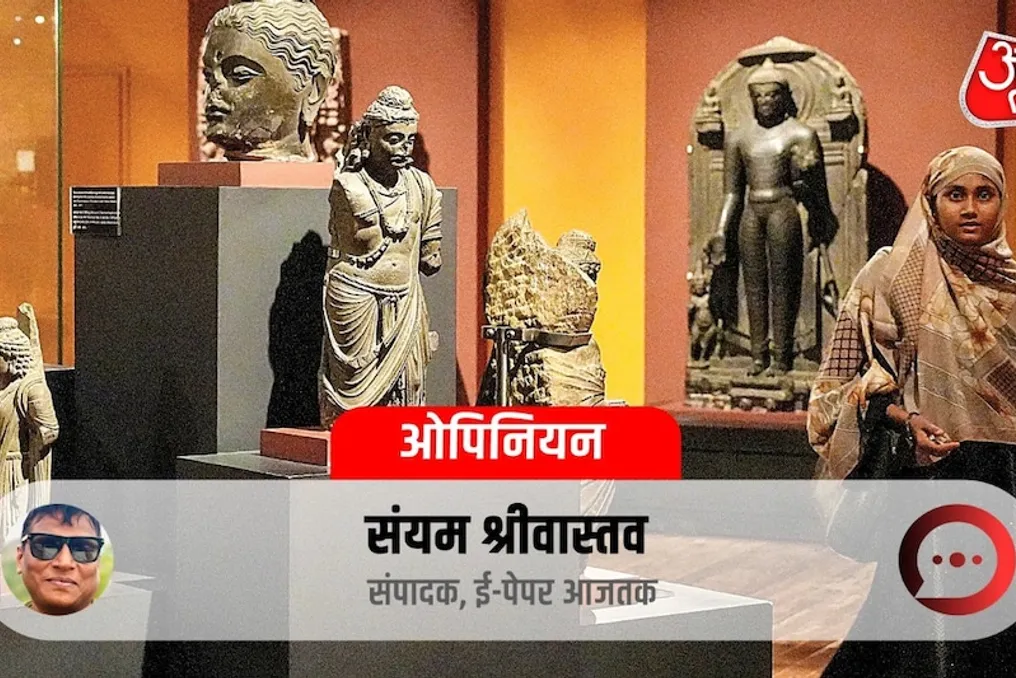
Bihar, often associated with poverty, migration, unemployment, crime, and backwardness, has now secured a place among prestigious global cultural institutions thanks to the museum located in the state capital, Patna. The Bihar Museum ranked ninth in the 'Top 100 Museums in the World' list for 2026. This is the highest position for Asia and the only spot in India's top 100.

The presence of the Bihar Museum's name alongside world-renowned institutions such as the Louvre in Paris and the Metropolitan Museum of Art in New York instills pride in every Indian. This achievement is significant because it elevates Bihar's identity beyond traditional political and economic discussions, placing it on the global stage of history, art, and culture.

Bihar's identity has always been linked to its glorious past: the lands of the Magadha empire, the Mauryan and Gupta periods, educational centers like Nalanda and Vikramashila, as well as the traditions of Buddhism and Jainism, which have contributed immensely to world culture. However, paradoxically, in the modern era, Bihar has struggled to effectively present its historical and cultural heritage to the world. At times, discussions about Bihar became synonymous with the 'jungle government' and political instability.

The task of changing the state's image was not just about improving road infrastructure, electricity supply, and law and order; it also required reasserting Bihar's historical distinctiveness and cultural confidence. In this context, the concept of the Bihar Museum must be considered. Former Chief Minister Nitish Kumar included this project in his ambitious plans, beginning concrete work on its formation around 2013, although the initial idea predated that.

The goal of the project was not merely to gather old statues and artifacts in one building but to create a modern museum capable of presenting Bihar's history on a global level. The involvement of Japanese architect Fumihiko Maki and Indian colleagues lent the project an international architectural perspective. Part of the museum was opened to the public in 2015, and the main exhibition halls were grandly inaugurated in 2017. Thus, transforming a political decision into an institutional reality required years of planning, administrative effort, and expert knowledge.

Nitish Kumar often receives credit for efforts to change Bihar's image. Although his tenure faced debate and criticism regarding law and order, roads, education, and basic amenities, a project like the Bihar Museum is viewed as an example of his cultural vision and administrative priority. Evaluating the government's achievements is not limited to momentary statements. There are projects whose significance endures even after a change in power. The museum is precisely such a public institution. Its creation is decided by one government, but future generations benefit from it.

The importance of this achievement is amplified by the fact that many major universities, technical institutions, research centers, and hospitals in India strive for international recognition. Concerns are often voiced about the limited presence of Indian institutions in global rankings. At a time when the state of Bihar's museum enters the top ten globally, it demonstrates that international recognition is not a privilege reserved only for megacities or wealthy states. With proper planning, professional management, a quality collection, and effective presentation, world-class institutions can be created even in smaller towns.

The success of the Bihar Museum is not just the success of a building. The historical heritage housed within introduces visitors to the long journey of Bihar's civilization. Ancient sculptures, archaeological finds, manuscripts, coins, and folk art tell the story of a society that played a vital role in shaping Indian history and culture. A historical artifact such as Yakshi Didarganj is a hallmark of this museum. Dedicated children's halls and modern exhibitions make it useful not only for researchers but also for the general public and the new generation.

Nevertheless, caution is necessary regarding this achievement. The 'Worth a Journey' ranking is published by a travel publication that prepares it based on its data, algorithms, and direct observations. It should not be considered an indisputable academic ranking of all museums worldwide. However, this does not diminish the significance of the achievement. The mere inclusion of Patna's museum in such an international rating is a major event. The task now is to transform this recognition into a sustained positive experience through preservation, research, and international cooperation.

The recognition received by the Bihar Museum represents both an opportunity and a message for Bihar. An opportunity to use its history, archaeology, and cultural tourism as a foundation for a new economy. The message is that Bihar's identity should not be defined solely by past glory or current problems. Modern universities, top hospitals, research centers, technical centers, and industries must develop here with the same ambition as...
Similar stories

Nine Ancient Indian Historical Monuments Older Than a Thousand Years That Retain Their Beauty
Read more
www.aajtak.in

Nine Ancient Indian Historical Monuments Older Than a Thousand Years That Retain Their Beauty

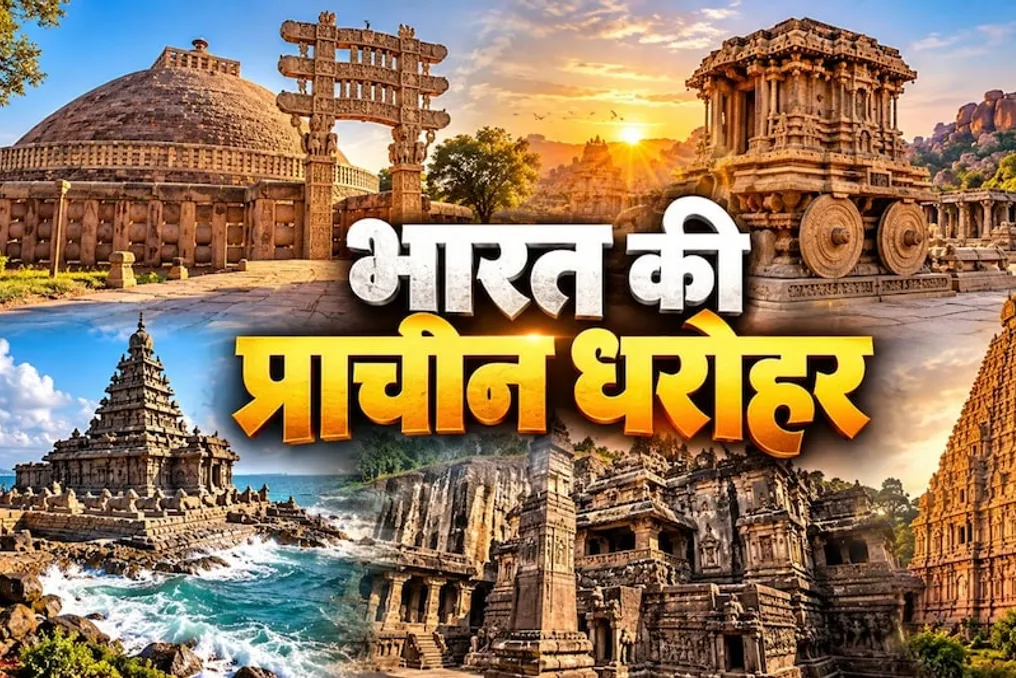
India is home to numerous sites renowned not only for their beauty but also for their long history. Ancient temples, massive stupas, and rock-cut caves are outstanding examples of Indian art and architecture. Notably, many of these monuments are older than a thousand years, yet they continue to impress visitors with their grandeur and unique design.

Detailed carvings on the walls, tall spires, and the finest craftsmanship demonstrate the skill of artisans from that era. Those interested in history and travel should learn about these historical structures of India. Some serve as major centers of religious faith, while others are known worldwide for their unique structure and historical significance. Let us examine eight such historical monuments of India.

Sanchi Great Stupa, Madhya Pradesh

The Great Stupa at Sanchi, located in Madhya Pradesh, is one of the oldest Buddhist monuments in India. Its construction began during the reign of Emperor Ashoka in the third century BCE. This stupa is known as a repository of relics associated with Buddha. The delicate carvings on its entrance gates attract tourists, offering an opportunity to study the history of Buddhism and ancient Indian art in detail.

Shore Temple, Mahabalipuram, Tamil Nadu

The Shore Temple, situated in Mahabalipuram, Tamil Nadu, dates back to the eighth century. It was built during the reign of the Pallava king Narasimhavarman II. Located on the coast of the Bay of Bengal, this temple is famous for its magnificent stone construction. It is considered one of the early stone temples of South India. This temple is included in the UNESCO World Heritage List and serves as a brilliant example of ancient Indian architecture.

Kailasa Mandir, Ellora, Maharashtra

The Kailasa Mandir in Ellora, Maharashtra, is famous for its unusual form. This temple, built in the eighth century, was created by carving out of a single giant rock. The temple is dedicated to the god Shiva, and its structure is believed to be inspired by Mount Kailash. The carvings on the walls, columns, and sculptures of the temple demonstrate the skill of ancient masters. The creation of such a temple from one enormous rock is an example of the amazing engineering of that time.

Hajuraho Temples, Madhya Pradesh

The temples in Khajuraho, Madhya Pradesh, were built during the Chandelas' rule, approximately between 950 and 1050 CE. These temples are known worldwide for their intricate sculpture and magnificent carvings. The stones depict scenes related to deities, dancers, and daily life. The art of these temples reflects the Indian culture, religious beliefs, and way of life of that period. Initially, there were about 85 temples here, of which about 25 have survived to this day.

Barabar Caves, Bihar

The Barabar Caves, located in Bihar, are considered among the oldest rock-cut structures in India. Their construction dates back to the third century BCE, during the Mauryan period. These caves were used by followers of the Ajivika sect. The granite walls and the smooth, glossy surface of the interiors are particularly valuable. Such precise work without the use of modern machinery testifies to the technical understanding of ancient India.

Brihadeeswarar Temple, Tamil Nadu

The Brihadeeswarar Temple in Thanjavur, Tamil Nadu, was completed around 1010 CE during the reign of the Chola emperor Rajaraja I. This temple is dedicated to the god Shiva and is known for its monumental structure. Its high vimana, or main spire, is visible from afar. A huge statue of Nandi is also located within the complex. Despite being over a thousand years old, religious rituals are still performed here.

Lingaraj Temple, Odisha

The Lingaraj Temple in Bhubaneswar, Odisha, is presumed to have been built in the 11th century. It is dedicated to the god Shiva and is a fine example of Kalinga architecture. The temple's tall spire and small shrines within the complex lend it beauty. The fine stone carving makes it unique. In addition to its religious significance, this temple reflects the ancient art and architectural style of Odisha.

Virupaksha Temple, Hampi, Karnataka

The construction of the Virupaksha Temple in Hampi, Karnataka, dates back to approximately the 7th century. It is dedicated to the form of Shiva Virupaksha. The temple's beauty is enhanced by a high entrance, mandapas with massive columns, and delicate sculptures. During the Vijayanagara Empire, the temple was expanded. It is important to note that religious services have been held here for centuries, and this temple is an integral part of Hampi's historical identity.

Badami Caves, Karnataka

The cave temples in Badami, Karnataka, were created between the sixth and seventh centuries. They are considered an example of the magnificent architecture of the Chalukya dynasty. These four caves, carved into red sandstone, contain sculptures belonging to Hinduism and Jainism. Among the main attractions are depictions of Nataraja Shiva and various forms of Vishnu.

Why Are These Ancient Indian Monuments So Important?

These historical monuments of India hold great significance...

How award-winning Bengaluru airport enhances passenger experience through art and design
Read more
yourstory.com

How award-winning Bengaluru airport enhances passenger experience through art and design

Terminal 2 at Kempegowda International Airport in Bengaluru has gained widespread recognition for its eco-conscious design, which is based on lush garden architecture. This year, it entered the Top 5 of Skytrax's global rankings in the 'Best Art in an Airport' category.

This achievement highlights the airport's systemic approach to integrating art into its operational and architectural structure. The created works are not viewed as separate exhibits but are an integral part of the entire passenger journey.

The airport also positions itself as a living museum, paying special attention to showcasing local Karnataka art. The fusion of cultural narratives and spatial design creates a deep and engaging experience for travelers.

Yamini Telkar, advisor for the art program at Bangalore International Airport Limited (BIAL), noted that 'art and culture were conceived as an integral part of the four pillars of design, alongside the Garden Terminal, Sustainability, and Technology.' The art program serves as a cultural bridge for the seamless integration of art into the infrastructure.

She added that this forms an immersive passenger journey focused on two main themes: the rich heritage and culture of Karnataka, and the concept of Navarasa, or nine emotions from Bharata's Natyashastra.

Formally, the Art Program was launched on September 8, 2023. Currently, over 300 artworks by more than one hundred artists are displayed in both domestic and international terminal arrival and departure areas of the airport.

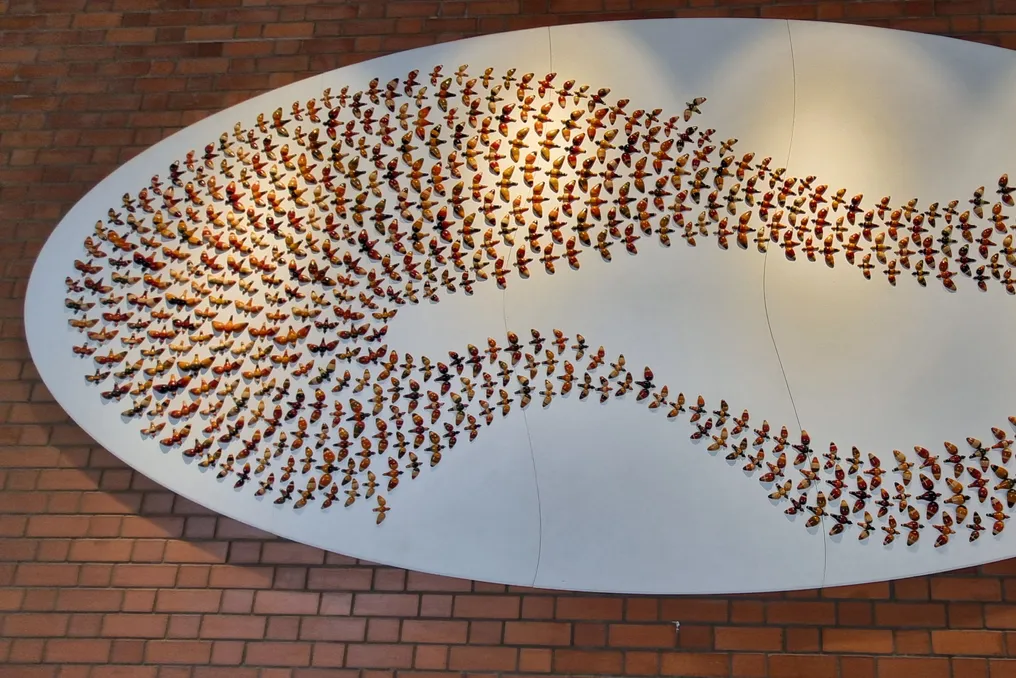
Among the featured artists are Vivek Matthew, Ganesh Shankar, Dinesh Manir, LN Tallur, Madhvi Subrahmanyam, Yayati Godbole, Sakshi Gupta, and many others. Their diverse works include paintings, installations, mixed media, sculptures, and digital displays.

Telkar explained that 'over 90% of the artworks were commissioned specifically for the Art Program. Institutional partners include the Department of Archaeology Museums and Heritage, as well as the Museum of Art and Photography.'

Airports function not only as transport hubs but also as the first and last impression of a destination. However, for many passengers, the airport experience is often defined by queues, navigation issues, crowded spaces, uncertainty, and long waits.

Art and design have the power to transform an airport from a transit point into a place that welcomes, inspires, and connects people, as shown in the photo essay. Integrating creativity into the airport environment makes journeys more memorable and engaging.

Human-centric design, clear navigation, intuitive layouts, and accessible signage can ease passenger movement. Even the flight information displays in Terminal 2 offer passengers recommendations for visiting art installations based on available time.

The use of natural materials, biophilic design, natural light, greenery, and calming color palettes helps make terminals less stressful. Art, immersive installations, and the sound of running water soften the tension in a busy setting.

The integration of local art, crafts, architecture, materials, stories, and cultural references gives passengers an authentic sense of place. Terminals can become cultural showcases, offering visitors a meaningful introduction to the region and instilling pride in local residents.

For example, the Bengaluru airport hosts live performances during festivals. This week marked the six-day cultural celebration of Nadahabba Dasara with live music, dance, traditional crafts, games, and culinary experiences.

The artworks throughout the airport can create unforgettable moments throughout the passenger's journey, making the airport experience unique and contributing to organic word-of-mouth promotion.

It is important, however, to ensure that the creativity enhances usability rather than distracting from important passenger information. This balance was carefully considered in the design of Terminal 2.

For BIAL, the overall architecture and interior design were curated by Skidmore, Owings & Merrill (SOM). However, as Telkar explains, the schematic planning and placement of artworks were carried out by the team of artists.

The identity of Bengaluru is reflected even in the entrance concepts. 'They showcase the lush greenery of Bengaluru and Karnataka in the form of backlit photographs that were specially commissioned,' she describes.

Inspired by the Natyashastra's Navarasa, the airport's Art Program interprets nine fundamental human emotions through various artistic expressions: love, laughter, sorrow, anger, heroism, fear, disgust, wonder, and tranquility.

The collection of works was formed through open competitions, partnerships, loan programs, patronage, commissions, and art events. This multi-layered approach allows the program to unite diverse artistic voices and practices.

The artistic experience extends beyond the airport. In the arrivals area, passengers enjoy an impressive installation titled 'Soul of Bengaluru' by the renowned Catalan artist Jaume Plensa. This sculpture consists of intertwined figures that symbolize the collective human capital that contributes to Bengaluru's growth as a global technology and innovation hub—individual personalities united by a common goal, imagination, and pursuit.

In conclusion, art and design are not just aesthetic additions; they are strategic tools for enhancing efficiency and differentiating the airport. They improve the entire travel process and even encourage passengers to choose specific terminals and airlines for their trips.

Jaipur, India, included in the list of best global destinations for 2027
Read more
www.aajtak.in

Jaipur, India, included in the list of best global destinations for 2027

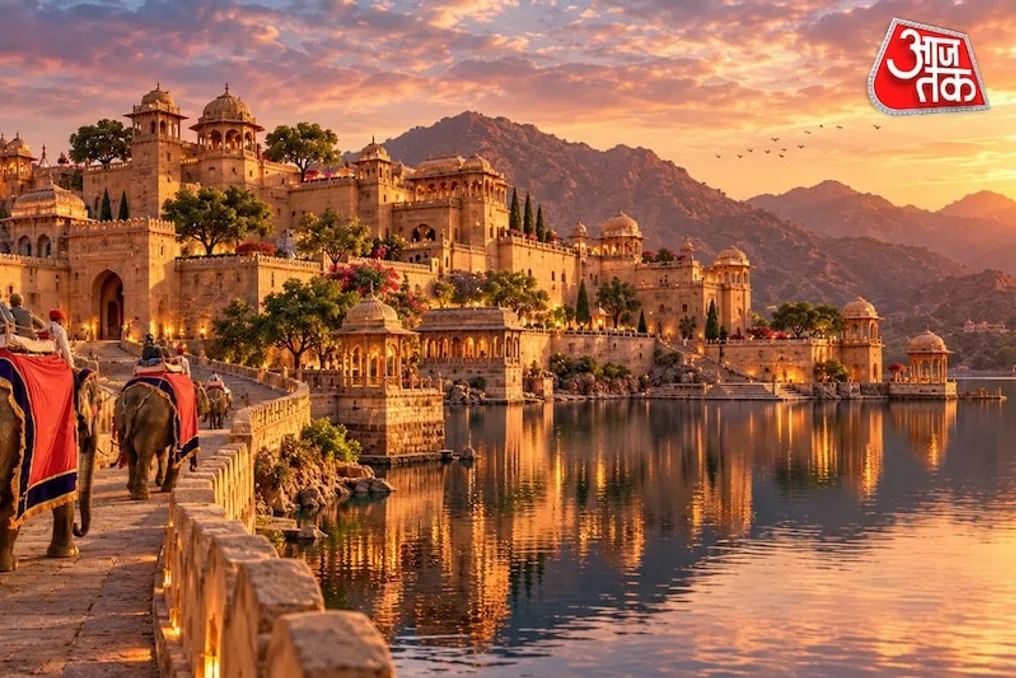
The city of Jaipur, the capital of Rajasthan state, is known worldwide for its magnificent havelis, historic forts, royal palaces, and colorful markets. In 2027, this city has once again attracted attention for a special reason: it marks the 300th anniversary of its founding.

Considering the upcoming significant events and rich heritage, Jaipur has been included in the National Geographic Best of the World 2027 list. This list features 25 destinations across six continents where tourists can experience diverse offerings next year—from historical sites and natural landscapes to cultural events and adventurous journeys.

Jaipur's main attractions are its architecture, traditional crafts, and the renowned Jaipur Literature Festival. The city was founded in 1727 by ruler Kachwaha Sawai Jai Singh II, making 2027 a special moment to celebrate the three-hundredth anniversary.

Jaipur represents a unique blend of history and modern culture: major events related to literature, art, and culture take place alongside centuries-old buildings.

The twentieth Jaipur Literature Festival will be held in Jaipur from January 14 to 18, 2027. This festival brings together writers, readers, thinkers, and literature enthusiasts from all over the world to discuss topics such as literature, history, politics, science, and society. A large number of people attend this event annually, strengthening Jaipur's cultural identity. Tourists visiting in January can include this festival in their trip, combining it with visits to the city's historical landmarks and markets.

Among Jaipur's main historical sites are Amber Fort, known for its vast courtyards, intricate carvings, and royal interiors, showcasing the beauty of Rajasthani architecture. Hawa Mahal, which has become an icon of Jaipur, attracts visitors with its pink structure and unique windows, making it popular among tourists and photography lovers. Another significant location is Jantar Mantar, a UNESCO World Heritage site housing ancient instruments for studying astronomical calculations and celestial body positions, making it interesting for history and science enthusiasts.

The National Geographic Best of the World 2027 list includes various corners of the world that attract tourists due to their unique characteristics. These include Luxor in Egypt and Penang in Malaysia, famous for its cuisine and historic streets. In Niigata, Japan, one can enjoy local food, sake, and beautiful sea views.

The Pacific Coast Highway in the USA features a stunning coastal drive. Additionally, the Southern Ozarks of Missouri and Arkansas offer outdoor adventures. Cape Froward in Chile is renowned for its remote natural areas and Patagonian views, while Malawi offers opportunities for wildlife viewing and walks around Lake Malawi.

Europe's selections include Normandy in France, Santander in Spain, Leipzig in Germany, Dumfries and Galloway in Scotland, and Westland in Norway. The list also features Puerto Rico, Madison and Baltimore in the USA, Chengdu in China, Grenada, Salvador in Brazil, Halifax in Canada, the Transcaucasian Trail in Armenia, Melbourne in Australia, Maya-Kaan in Mexico, Trois-City in Poland, and Quelapa in Peru. Catalina Island in California is specially noted as a reader's choice.

Popular