New study suggests Ice Age giant bird may be variation of common crane
Read more
Super Abril
super.abril.com.br

New study suggests Ice Age giant bird may be variation of common crane

A recent study published in Royal Society Open Science questions the existence of an Ice Age giant bird, suggesting that previously cataloged fossils might simply be larger variations of modern common cranes.

In the nineteenth century, archaeologists investigating caves and swamps in Europe found a vast collection of remains from the ancient Ice Age. Among these findings, the French biologist Alphonse Milne-Edwards described an ancestral species of crane, named Grus primigenia, based on bone fragments taken from a cave in southern France.

Due to the notably larger size of its bones compared to contemporary cranes, the scientific community spent over one hundred and fifty years believing it was a distinct species that inhabited the end of the last Glacial Period, more than twenty thousand years ago.

However, new research, conducted in collaboration with the Centre for Paleogenetics in Stockholm, Sweden, and led by Bournemouth University, reached this conclusion after analyzing ancient DNA samples. The analysis was performed on 18 crane bones collected in England, Wales, France, Germany, and the Balearic Islands.

John Stewart, the article's author, expressed suspicion that these large cranes were, in fact, common European cranes of increased size. He speculates that the classification error might be linked to the size differences between males and females; the ancient males were larger than current birds, while the females of that period had a size similar to modern males.

The methods historically used contributed to this confusion, as previous studies classified these large birds solely based on the shape and size of their bones. With the advancement of genetic sequencing techniques, DNA analysis can now provide a much more accurate determination of these animals' identity.

Stewart also raised possible reasons why modern cranes are smaller. Hypotheses include selective pressures imposed by human activities on the habitats of these birds. Environmental changes could result in lower food availability or force migrations to areas with less resource competition. In times of scarcity, smaller individuals, which require fewer supplies, may gain an advantage.

The researcher emphasizes, however, that further investigation is needed to fully understand this issue. According to him, although many bird species are currently vulnerable to human intervention, it is plausible that the number of past extinctions has been exaggerated, given that some of these cases may only represent changes in the size of species that still exist.

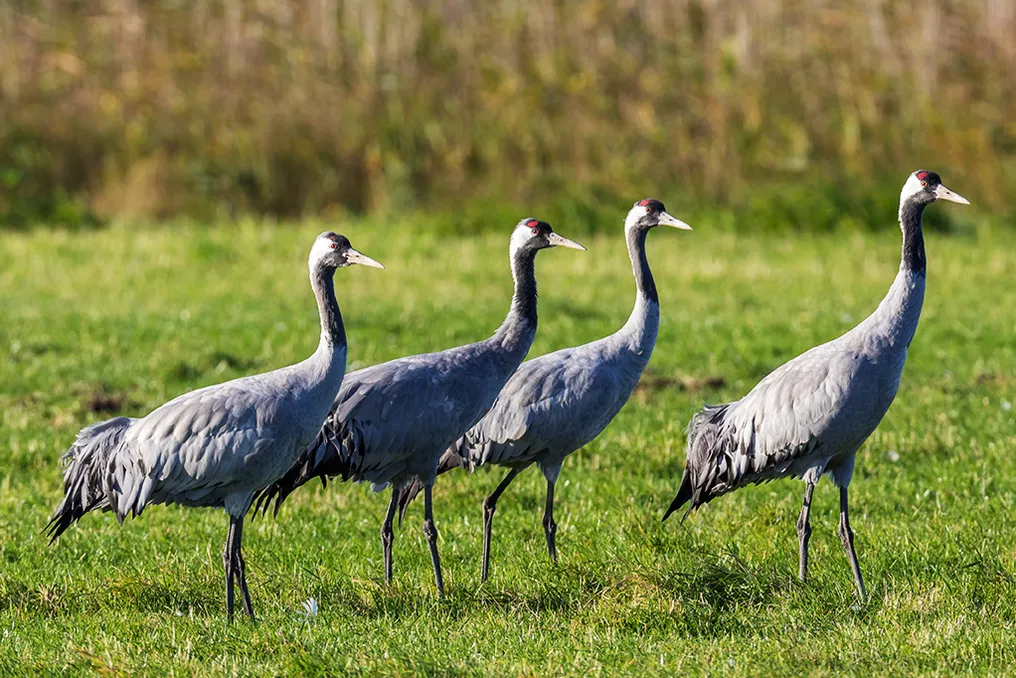
Currently, the common crane can be found in much of Northern Europe, including Norway, Sweden, and Finland, as well as the western part of Asia. Characterized by long legs and necks, gray plumage, and a distinctive red mark on the head, they are known for flying in large groups organized in a V-formation during their migratory journeys.

Similar stories

The Science Behind the Neutrino Observatory Awarded the Nobel Prize in Physics
Read more
olhardigital.com.br

The Science Behind the Neutrino Observatory Awarded the Nobel Prize in Physics

Francis Halzen, a naturalized American and Belgian citizen, was awarded the 2026 Nobel Prize in Physics for his fundamental work in the development of IceCube. This observatory is located deep within the ice at the South Pole in Antarctica and has the capability to identify high-energy neutrinos, providing new information about the most extreme environments in the Universe.

The topic was discussed on the Space View program this Friday (30), where physicist Alexandre Cherman participated to detail how IceCube aids in investigating the most intense cosmic phenomena and what neutrinos can reveal about them. Cherman, who is an astronomer, holds a PhD in theoretical physics, is a data scientist, educator, speaker, and author of eight books, and is also a co-author of the educational game Cosmic Real Estate, produced by Estrela Cultural. He currently leads the Astronomy department at the Rio de Janeiro City Planetarium Foundation.

The concept of using Antarctic ice as a particle detector dates back to 1988. After more than twenty years of development, IceCube began operating in 2010. Its structure covers about one cubic kilometer of ice and is composed of 5,160 optical sensors distributed across 86 vertical cables extending between 1.45 and 2.45 kilometers in depth.

Neutrinos are subatomic particles that have no electric charge and possess very little mass. Generated in various natural events, they can pass through celestial bodies, such as planets and stars, and even the human body, interacting minimally with matter. It is estimated that approximately one hundred trillion of these neutrinos pass through a person every second.

The detection of these neutrinos occurs when they collide with an atom present in the ice, generating charged particles. These, in turn, emit a brief bluish glow known as Cherenkov radiation. The sensors capture these signals, allowing researchers to calculate the energy and determine the direction of the particle's origin.

Unlike conventional telescopes, which function by capturing light, IceCube focuses on observing particles. Due to the lack of electric charge in neutrinos, their paths are not altered by magnetic fields. This allows them to point towards the location of cosmic accelerators, meaning extreme environments capable of generating particles with energies far exceeding those achieved in terrestrial laboratories.

The discoveries made by the observatory have boosted the field of neutrino astronomy, which complements observations made with light and gravitational waves. IceCube remains operational and is receiving continuous improvements to increase its detection capacity, identify new sources of these particles, and aid in understanding the most extreme phenomena in the Universe.

Marcelo Zurita, president of the Paraíba Astronomy Association – APA, a member of the SAB – Brazilian Astronomical Society, technical director of the Brazilian Meteor Observation Network (Bramon), and national coordinator of Asteroid Day Brazil, presents the program, which is broadcast live every Friday at 9 PM (Brasília time) on the official channels of the outlet on YouTube, Facebook, Instagram, X (formerly Twitter), LinkedIn, and TikTok. The original content was published on Olhar Digital.

Critically Endangered Serra Saki Female Gives Birth to Triplets in Minas Gerais
Read more
g1.globo.com

Critically Endangered Serra Saki Female Gives Birth to Triplets in Minas Gerais

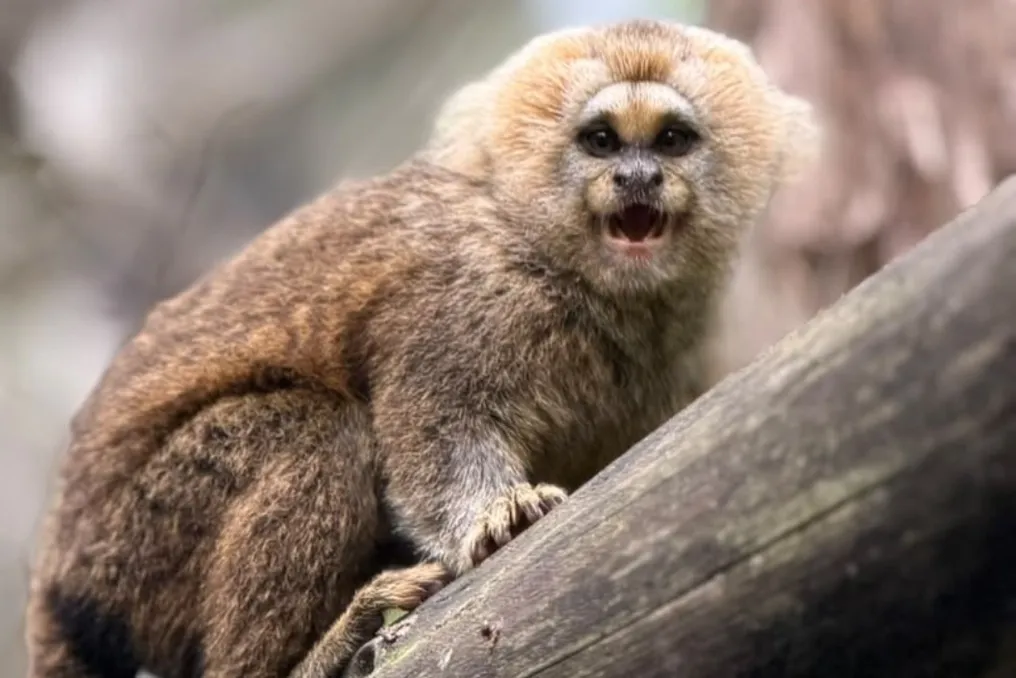
A female of the Serra Saki species (Callithrix flaviceps), which is classified as critically endangered, gave birth to triplets on the 25th within the Serra Saki Conservation Center (CCSS), belonging to the Federal University of Viçosa (UFV), located in Minas Gerais. This event is considered unusual, given that females of this animal usually give birth to only two offspring per gestation.

The conservation program dedicated to the Serra Saki, which began in 2025 and is conducted by UFV, is the only one in the world managing and breeding this species. Professor Fabiano Melo, known as Bião, leads the team and clarifies that the mother of the triplets is part of one of the groups monitored by researchers.

This assisted reproduction program aims to ensure the continuity of the Serra Saki, which is listed as critically endangered by both the International Union for Conservation of Nature (IUCN) and the national list of threatened species. The main threats faced by the species include forest fragmentation, loss of its natural habitat, and genetic hybridization.

Bião Melo details that the female already had offspring from a previous gestation, who are now young. After becoming pregnant again, she gave birth to three live pups. He adds that the survival of the third pup is quite challenging without the collaboration of the older members of the group, as sakis have a social structure where the father, brothers, and sisters help care for the newborns. Currently, the three pups are in good condition.

According to Bião Melo, the reproductive period coincides with the rainy season, occurring from October onwards. The pups usually are born in October, November, and December, with a possible last litter in January and February, although October and November are the most frequent months.

The Serra Saki is endemic to the Atlantic Forest, found in eastern Minas Gerais, the mountainous area of Espírito Santo, and the extreme north of Rio de Janeiro. Its distribution covers altitudes ranging from approximately 200 meters, in the Vale do Rio Doce region, up to locations above 1,200 meters in Espírito Santo. In addition to the triplets, four other pups were born under human assistance at CCSS in October 2026. Two females from the same group became pregnant by the same male, who had been separated previously to promote greater genetic variability in future reproductions.

CCSS is the only place responsible for this type of work. When the Serra Saki population is expanded, the intention is to distribute animals to other institutions dedicated to primate conservation. Bião Melo explains that by increasing the number of animals, they will be distributed to other breeding centers, aiming to strengthen the safety population under human care with robust and consolidated genetics. This will allow for protected genetics in future reintroduction projects. The strategy involves crossing pairs from different locations in the breeding center and, simultaneously, providing these pairs to other institutions with different genetics to maximize reproductive variability.

Classified as one of the smallest Neotropical primates, the Serra Saki weighs about 400 grams in adulthood and has light fur. Like other members of the genus Callithrix, it lives in family groups that can range from three to twenty individuals.

Care Before and After Birth

The triplets were not the only ones born; veterinarian Fabiana Voorwald, an adjunct professor of veterinary surgery at UFV, is also part of the CCSS team. According to her, animal monitoring begins even before birth, with the monitoring of females during gestation. Fabiana describes that weekly weighings are performed at CCSS to track maternal weight gain, in addition to ultrasound and X-ray examinations at appropriate times during pregnancy, according to veterinary assessment. These exams help monitor the development of the pups and identify any alterations, guiding care for the mother and preparation for birth.

The team also adjusts the diet of the females to meet the nutritional needs of each stage of gestation. Supplements are personalized, seeking to prevent nutritional deficiencies that could affect maternal health and pup development, including those related to malformations. Care continues during lactation, ensuring breastfeeding and maintaining the mother's physical condition. The veterinarian adds that this situation offers a unique opportunity to gain deeper knowledge about a little-studied species, as scientific research and daily observations at CCSS provide data on behavior, feeding, health, gestation, parental care, and pup development.

Animal Recovery

Another crucial aspect of the work consists of recovering and improving the health conditions of wild sakis that will be integrated into the breeding stock. Some animals arrive at the center presenting with diseases or endoparasitoses that can endanger their lives, requiring specific treatments before being included in the groups. A significant problem is an infection caused by a worm that affects the intestinal tract of the Serra Saki.

Fabiana Voorwald reports that, in the case of individuals with *Prostenorchis* parasitism, the team developed and applied innovative therapeutic approaches due to the limitations of conventional treatments. The goal is to increase their chances of survival, promote recovery, and allow them to contribute to the safety population. Given the extreme threat to the species, the recovery of each individual is of great relevance to the program.

The veterinary team also actively participates in management decisions, engaging with professionals and students from various areas of UFV, such as biology, animal science, and forestry engineering. Researchers discuss group composition, social interactions, nutrition, enclosure conditions, and environmental enrichment, as the health and behavior of the animals are intrinsically linked. Stress can harm well-being, alter food consumption, and interfere with immune and reproductive response.

Fabiana Voorwald concludes that these results depend on the continuous effort of a multidisciplinary team and the articulation between actions under human custody and the protection of populations and their habitats in nature. CCSS also plays a vital role in training hundreds of students annually, allowing them to practically understand the challenges of conservation, the importance of every management decision, and the need to integrate different fields of knowledge.

The Serra Saki also benefits from public policies, such as the National Action Plan for the Conservation of Atlantic Forest Primates and Ring-tailed Monkeys and the Population Management Program. Both are coordinated by the Chico Mendes Institute for Biodiversity Conservation (ICMBio), in collaboration with institutions such as the Federal University of Viçosa.

[ ]
World's oldest land tortoise, Jonathan, lived to be 194 years old; scientists discovered the secret to his longevity
Read more
noticiasaominuto.com

World's oldest land tortoise, Jonathan, lived to be 194 years old; scientists discovered the secret to his longevity

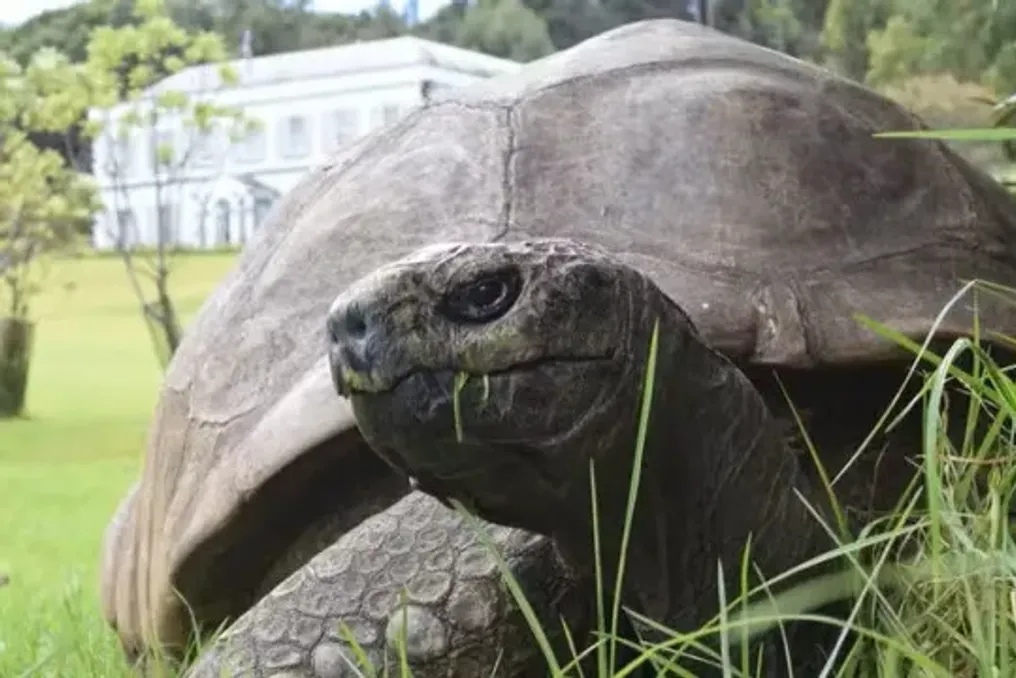
The giant tortoise Jonathan is the oldest land tortoise in the world. He has reached 194 years of age and resides on Saint Helena Island in the South Atlantic, possessing exceptional health. He has survived two world wars as well as major pandemics, including the Spanish flu and COVID-19.

A recent genetic study conducted by an international team of scientists from centers in the USA, the UK, Denmark, and Germany revealed the reason for his longevity. The article, published in the scientific journal Science Advances at the beginning of the month, reports that researchers collected genetic material via a cheek swab and blood analysis. For this, the animal was distracted with food, which allowed scientists easy access to its jaws.

For comparison, four other tortoises of the same species were also analyzed. Scientists concluded that Jonathan possesses not only good genes, like most of his relatives, but also does not show signs of genetic degradation, which constitutes his secret.

Researchers found 287 genetic variants in the animal that reduce typical aging effects. These variants regulate vital bodily processes, preventing cellular aging such as DNA damage repair, reduced inflammation, insulin regulation, and cancer suppression.

More technically, scientists studied Jonathan's complete methylome—the collection of chemical 'tags' in his DNA that determine which genes are activated or deactivated in cells, i.e., the precise instructions guiding the tortoise's development and function.

In the case of the analyzed animal, problems with these chemical 'tags' are minimal both in genes related to mitochondrial function and in RNA processing and genome repair. Thanks to this, Jonathan possesses what scientists call 'high-precision genetic transcription,' which gives him unique resistance to aging. This means that the animal's metabolism and DNA repair genes are very similar to those found in younger tortoises participating in the study.

One of the study's authors, Justin Gerlach from Cambridge University in the UK, told the publication that 'Jonathan's regulatory genes involved in energy production and DNA repair remain stable for almost two centuries, which is an outstanding achievement.'

In turn, Stephen Clark, director of the Callell Foundation, which studies aging processes and participated in the research, emphasized that 'Jonathan's genome represents a model of cellular resilience.'

Currently, the scientists' goal is to 'use this knowledge and apply it to humans.'

Jonathan was born on the Seychelles islands, but in 1882, he was brought to Saint Helena Island as a gift to Governor William Grey Wilson. When the tortoise was already 50 years old, it settled in the gardens of the governor's residence. Nevertheless, it seems to have adapted well to the location, as it has lived there for 144 years.

Popular