Flash flood wave from Bhutan leads to formation of new downstream lake, raising concerns about secondary threats
Read more
The times of India
timesofindia.indiatimes.com

Flash flood wave from Bhutan leads to formation of new downstream lake, raising concerns about secondary threats

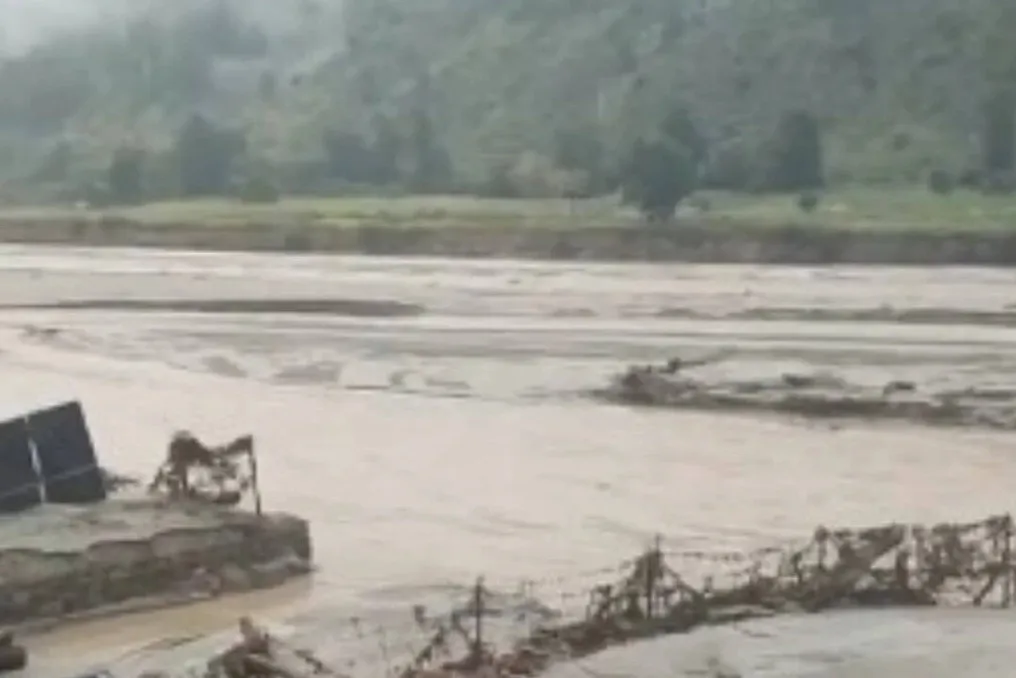
A flood event caused by a Glacial Lake Outburst Flood (GLOF) in Bhutan triggered alerts in parts of Assam and West Bengal on Friday. This incident resulted in the formation of a new temporary lake downstream, which raises concerns regarding potential secondary hazards.

The National Centre for Hydrology and Meteorology of Bhutan (NCHM) confirmed that the outburst led to the creation of an artificial lake in Taktsemahang, located at the confluence of the Singathpu Chu and Lungchu Chu rivers, also known as Gangchen Tag Chu. This newly formed water body is currently under observation for potential secondary flooding threats, and NCHM strongly advises residents of the Mochhu and Punatsangchu river valleys to remain vigilant, avoid riverbanks and low-lying areas.

The GLOF, which occurred on October 29, originated in the Singathpu glacier, which, according to the International Centre for Integrated Mountain Development (ICIMOD), contained between 6 and 7 million cubic meters of water—equivalent to approximately 2,400–2,800 Olympic swimming pools—before the breach. The volume of released water is still being estimated. The Central Water Commission of India (CWC) subsequently issued a special flood warning for West Bengal and Assam, cautioning about a possible sharp rise in water levels in the Alipurduar and Dubri districts as the floodwaters moved through the Sankosh river system.

West Bengal declared a high alert across North Bengal, but the GLOF had a minor or zero impact on the state. On Friday morning, as water flowed down from the hills of Bhutan, the Sankosh River rose 1.5 meters above its normal level but soon began to recede. By Friday afternoon, the crisis appeared to have passed, and people who were in flood shelters returned home. No damage was reported.

The Alipurduar district administration opened 18 flood shelters in the Kumargramduar block on Thursday evening, and about 10,000 people living along the Sankosh banks in the Kumargram tea plantation, Kumargram forest village, Pakriguri, and Bolka found refuge in these centers, along with several thousand people from Assam.

Assam Chief Minister Himanta Biswa Sarma stated that the state is closely monitoring the possible impact of the glacial lake outburst on all vulnerable administrative districts of Dubri and Kokrajhar. He noted: 'Our teams are ready to respond if necessary. Residents are advised to remain vigilant, follow official updates, and cooperate with officials.'

According to Bhutan's national publication 'Kuensel', the floodwaters caused by the GLOF rushed down the Mochhu River, damaging roads, bridges, and public infrastructure in Gasa and Punakha. No casualties were reported. The floodwaters washed away structures in Gasa Tsachu, damaged sections of the second-level Punakha-Gasa National Highway and the Gasa-Laya road, and swept away the Bailey Bridge built in Punakha in 2022 with Indian support.

Ashim Sattar, a glacial hazard expert from IIT Bhubaneswar, told TOI that the formation of temporary lakes downstream is a known risk during such disasters. Sattar explained: 'During a GLOF, powerful floodwaters erode river valleys and carry large amounts of debris, which can temporarily block river channels and form new lakes. Such lakes usually drain naturally, but they can also become secondary flood threats if not regularly monitored.'

He added that Singathpu was a medium-sized glacial lake located near the Lunana glacier complex, a cluster of four lakes including Tortormi, which is considered one of the most dangerous in Bhutan.

According to NCHM, the flooding reached Taktsemahang around 20:27 on Thursday. Warning sirens along Mochhu and downstream Punatsangchu were activated as monitoring stations recorded a sharp rise in water levels. In Yebese, the water level peaked at 6.7 m at 23:00 before dropping to the normal level of 2.84 m around 00:30 on Friday, representing a drop of 3.86 m over 90 minutes.

Sattar noted that the timely activation of the regional early warning network prevented loss of life.

This incident highlights the growing threat of cascading disasters in the Himalayas, where an initial glacial breach can cause secondary hazards downstream through valley erosion, sediment deposition, and temporary river blockages.

Previous assessments by ICIMOD and UNDP identified 47 large potentially dangerous glacial lakes (PDGLs) in the transboundary basins of the Koshi, Gandaki, and Karnali rivers. Current estimates indicate that 388 GLOFs have been documented in the Hindu Kush Himalayan region, including the Karakoram and the Central and Eastern Himalayas.
Similar stories

New study suggests Ice Age giant bird may be variation of common crane
Read more
super.abril.com.br

New study suggests Ice Age giant bird may be variation of common crane

A recent study published in Royal Society Open Science questions the existence of an Ice Age giant bird, suggesting that previously cataloged fossils might simply be larger variations of modern common cranes.

In the nineteenth century, archaeologists investigating caves and swamps in Europe found a vast collection of remains from the ancient Ice Age. Among these findings, the French biologist Alphonse Milne-Edwards described an ancestral species of crane, named Grus primigenia, based on bone fragments taken from a cave in southern France.

Due to the notably larger size of its bones compared to contemporary cranes, the scientific community spent over one hundred and fifty years believing it was a distinct species that inhabited the end of the last Glacial Period, more than twenty thousand years ago.

However, new research, conducted in collaboration with the Centre for Paleogenetics in Stockholm, Sweden, and led by Bournemouth University, reached this conclusion after analyzing ancient DNA samples. The analysis was performed on 18 crane bones collected in England, Wales, France, Germany, and the Balearic Islands.

John Stewart, the article's author, expressed suspicion that these large cranes were, in fact, common European cranes of increased size. He speculates that the classification error might be linked to the size differences between males and females; the ancient males were larger than current birds, while the females of that period had a size similar to modern males.

The methods historically used contributed to this confusion, as previous studies classified these large birds solely based on the shape and size of their bones. With the advancement of genetic sequencing techniques, DNA analysis can now provide a much more accurate determination of these animals' identity.

Stewart also raised possible reasons why modern cranes are smaller. Hypotheses include selective pressures imposed by human activities on the habitats of these birds. Environmental changes could result in lower food availability or force migrations to areas with less resource competition. In times of scarcity, smaller individuals, which require fewer supplies, may gain an advantage.

The researcher emphasizes, however, that further investigation is needed to fully understand this issue. According to him, although many bird species are currently vulnerable to human intervention, it is plausible that the number of past extinctions has been exaggerated, given that some of these cases may only represent changes in the size of species that still exist.

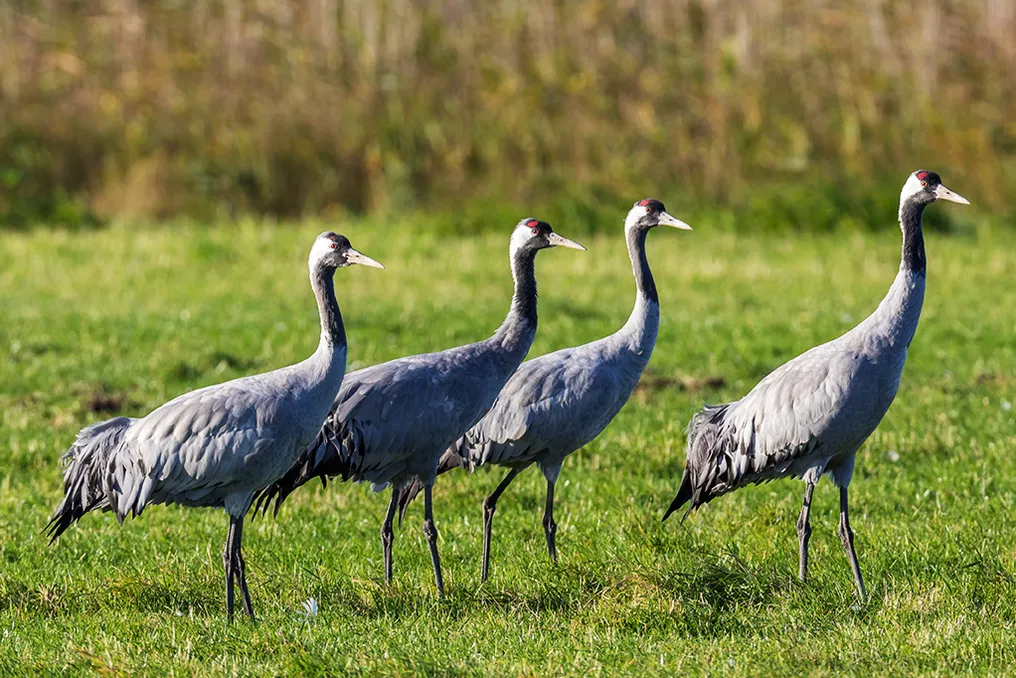
Currently, the common crane can be found in much of Northern Europe, including Norway, Sweden, and Finland, as well as the western part of Asia. Characterized by long legs and necks, gray plumage, and a distinctive red mark on the head, they are known for flying in large groups organized in a V-formation during their migratory journeys.

COP17 on biodiversity approaches end without agreement on key nature preservation points
Read more
noticiasaominuto.com

COP17 on biodiversity approaches end without agreement on key nature preservation points

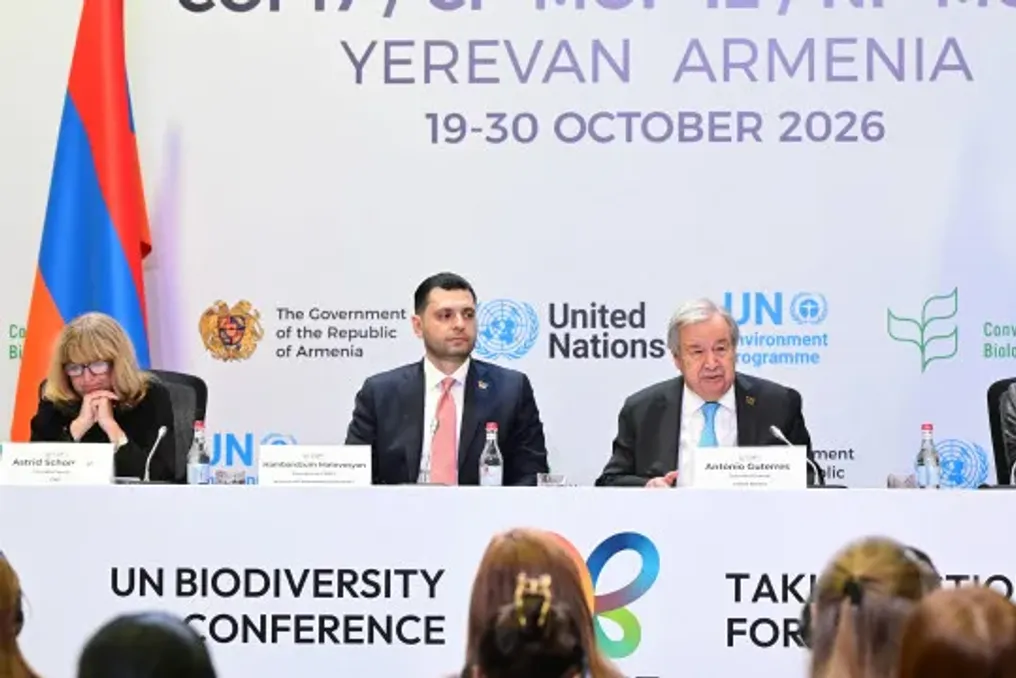
The 17th Conference of the Parties to the United Nations Convention on Biological Diversity (COP17), held in Yerevan, Armenia, is just hours away from its official closing, with participating states showing significant distance from reaching a consensus on the central elements for Nature preservation, which may lead to discussions continuing into the night.

After almost two weeks of proceedings, significant divergences remain regarding crucial topics. These include granting subsidies to environmentally harmful activities, such as oil extraction; defining the best methodology to fund biodiversity protection; and increasing corporate contributions to a United Nations fund dedicated to nature conservation, which faces resource scarcity.

Francisco Ferreira, president of the environmental association Zero, commented in a note sent to Lusa that several vital issues still await a decision. He stressed that although technical advances and important decisions have occurred over the two weeks, the more complex political issues remain unresolved. Ferreira stated that COP17 showed that the world possesses the necessary knowledge to curb biodiversity loss, but the obstacle lies in the absence of political will, funding, and concrete decisions, with progress towards 2030 falling short of the goals set in 2022.

A plenary meeting scheduled for early afternoon was postponed until early evening, while smaller working groups continue to operate. Discussions at COP17 are primarily focused on drafting a 'global stocktake' of progress in the area of biodiversity, a document awaited but still pending despite initial optimism about its completion before the current day.

This stocktake should be based on the results obtained after the 2022 Biodiversity Agreement, known as the Kunming-Montreal Agreement, which is comparable to the Paris Agreement on climate change. This agreement defined 23 goals to be achieved by 2030, such as protecting 30% of terrestrial and oceanic areas, combating pollution and invasive species, and restoring degraded ecosystems; however, most of these goals are behind schedule.

The objective of the global stocktake is to guide states toward the correct path through tangible proposals, but countries face notable difficulties when dealing with issues related to subsidies granted to harmful practices, estimated at $2.6 trillion annually. Another relevant point of contention is determining who should bear the financial objectives set for 2030, in a context where the public finances of many countries are under pressure, leading them to try to avoid the responsibility of increasing allocations.

Francisco Ferreira identified financing as the 'main blockage' of the summit, highlighting an 'enormous contradiction between funding for conservation and subsidies that promote habitat destruction, soil degradation, and overfishing.' In addition to monetary issues, the president of Zero mentioned that the positions adopted by certain countries, specifically Russia and Saudi Arabia, are complicating collaboration between biodiversity and climate change, as well as scientific recognition and articulation with other international pacts.

The president of Zero also expressed concern about the persistence of divergences regarding the effective participation of indigenous peoples and local communities, emphasizing that it is deeply worrying the time spent 'discussing words' instead of implementing concrete actions, given that biodiversity protection sustains both human living conditions and economies.

The European Union has been trying to persuade large emerging economies, such as China, to adhere to the official donor base, without success so far. Efforts to strengthen the 'Cali Fund,' a United Nations mechanism intended to share profits generated by companies exploiting genetic data of plants and other organisms, are also proving challenging.

In previous events, such as the biodiversity summit in Colombia in 2024, negotiations ended without an agreement on conservation funding, which were resumed and concluded in Rome in early 2025. In Yerevan, it is expected to be decided today whether Panama or Ecuador will host the next summit, COP18, in 2028. On the eve of the COP17 closing, Astrid Schomaler, UN biodiversity officer, called on countries to demonstrate 'audacity and innovation to find common ground.'

Popular